


Middle East tensions delay EU steel imports
Import steel shipments to Europe face longer journey times due to re-routing while steel producers also face higher energy costs, amid widespread disruptions triggered by the conflict in the Middle East, according to market sources.
While the full scope of the impact remains uncertain, the EU steel market is closely monitoring developments, avoiding significant purchases.
Longer lead times
European buyers expect import deliveries, which previously went through the Suez Canal, will now have to be rerouted to the Cape of Good Hope, resulting in higher freight costs and longer lead times. In fact, the first ships have already used the alternative route.
Market sources estimated that steel deliveries to Europe from Asia and the Middle East might take an additional two to four weeks compared with original expectations.
“We already face problems with booking orders and making offers for import. There are a lot of uncertainties regarding both prices and delivery times,” a Northwest European trader said.
The delivery delays are critical for European buyers due to the expected tightening of import quotas on steel from July 2026. Under the new quota system, a 47% reduction in volume and a doubling of duties to 50% have been proposed. Lack of details on the country-specific quotas or any caps in the global quotas has made European importers extremely cautious on steel imports arriving in the third quarter. The delivery delays greatly increase the likelihood of exceeding the new tighter quotas.
Import steel prices in Europe are expected to rise due to higher freight costs. This, combined with rising energy costs, is likely to push European prices up as well, sources said.
“I think that freight costs in the EU will increase, and so will delivered prices. On the other hand, the exchange rate is going down, and together with sea freight costs, import prices may increase,” a trader said.
Some sources also said that the lack of slab imports from Iran could push heavy plate prices up. The majority of market participants, however, argued that the volumes in question were not significant enough to cause production issues. Alternative sources of slab are either Brazil, which had no volumes available on the spot market last week, or mills from Asia.
Exporters of steel coil from Saudi Arabia have been more active in the European market recently due to lower CO2 content in the material. Those deliveries are also expected to be affected by geopolitical tensions in the Middle East.
“With no shipments going into the Gulf, all the Asian material will go somewhere else. Exports will also be affected, especially from Saudi Arabia and the UAE,” a German distributor said.
A few market participants said that steel had already been going via the Cape of Good Hope due to earlier Houthi attacks in the Red Sea, and that the impact of rerouting may not be severe.
“The impact on logistics may not be too big, but on energy — and, as a result, on steelmaking — it could be stronger and generate price changes due to recalibration of production costs,” an Italian trader said.
Rising energy costs
The rise in energy costs is expected to have a direct impact on steel production costs in Europe. However some suggested that if the conflict is quickly resolved, the effects could be limited.
The uncertain geopolitical situation is likely to negatively influence steel demand in the EU, sources said.
“At this stage, the Iran situation is mainly an energy price shock rather than a physical steel supply disruption for Europe. Higher oil and gas prices lift production costs and import parity, so the immediate effect supports flat steel prices,” a European distributor said. “Overall, it likely raises the price floor but also limits upside — supportive for margins in the near term, but not for total steel demand.”
European steel prices began recovering at the end of 2025, and the uptrend continued in 2026 due to reduced overseas supply caused by the Carbon Border Adjustment Mechanism (CBAM) and anticipated lower quotas. Demand, in the meantime, has not recovered significantly since 2025.
McCloskey’s weekly price assessment for domestic hot-rolled coil (HRC) in Northwest Europe was EUR680/t ex-works on 27 February, up EUR60/t since the start of the year.

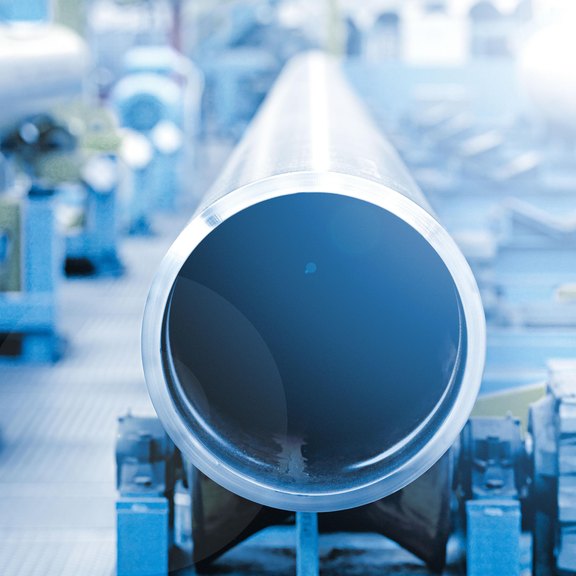
Mannesmann supplies pipes for Germany’s hydrogen network
German gas pipeline grid operator ONTRAS Gastransport has awarded major contracts to two line pipe member companies of the Salzgitter group, Kallanish learns.
Mannesmann Grossrohr (MGR) will be supplying the line pipes for 70.6 km (ca 18,000 tonnes) and Mannesmann Line Pipe (MLP) for an additional 38.2 km (6,000t).
These are line pipes destined for the new FGL 702 project, an H2 pipeline running from Wefensleben to Salzgitter and extending from Angersdorf near Leipzig on to Preusslitz.
For the company’s decarbonisation programme known as SALCOS – Salzgitter Low CO2 Steelmaking, the connection to the hydrogen core network is of tremendous significance, says Andreas Betzler, general manager of the two Salzgitter companies. “The Salzgitter Group is not only a potentially major customer requiring hydrogen – providing its steel products means it also enables hydrogen’s production and supply to customers,” he says.
MGR will be delivering line pipes in a diameter of 813mm. These line pipes will be coated with a three-layer polyethylene topcoat to minimise friction losses as the gas passes through and epoxy Flowcoat for the interior. At a length of 18 metres, the line pipes will weigh around 4.5 tonnes.
Starting February 2027, they will be delivered by truck to pipe storage sites only 37 km away from the rolling mill.
The diameter of the MLP line pipes, also 18m long, measures 610mm and will also be coated.


Global steel sector weighs impact of Iran conflict
The global steel sector is seeking to understand the short- and long-term impacts of the current conflict in the Middle East which escalated over the weekend, Kallanish observes.
A notable area of concern is the Strait of Hormuz now being largely impassable, resulting in energy price volatility and potentially higher steelmaking costs.
“The Strait of Hormuz is the single most important chokepoint in global energy trade, and it now sits in an active warzone. Even without a formal blockade, the commercial consequences are already unfolding: insurers are cancelling cover, shipping premiums are spiking, and vessels are re-routing or pausing transits. The knock-on effects extend well beyond energy,” ING says in a note.
“The Iran war lands on a global trading system that had already been under stress from Trump’s tariff offensive and the lingering fragmentation of supply chains since Covid and the war in Ukraine,” it adds.
Jefferies analysts believe the closure of the Strait of Hormuz will directly impact the iron ore market, with Iran accounting for around 3% of global iron ore production and 1.5% of seaborne iron ore supply.
“The war will have an indirect impact on other commodities as a result of … rising and steepening cost curves due to higher energy prices and supply chain risks,” they note.
Traders say there is very little up to date information about the operational status of steel mills and ports in Iran due to lack of internet connection. They expect electricity supply in the country to likely be disrupted.
“Steel users mainly in Southeast Asia and ASEAN are waiting for Iranian steels,” says one trader. “The conflict will lead to decreased rates of loading and discharging, and cargo flows by ships.”
Iran’s exports of finished and semi-finished steel reached to 10.32 million tonnes during the first ten months of the current Iranian calendar year. Iron ore concentrate and pellet shipments amounted to 20.7mt.
Data by Navigate Commodities show Türkiye, Armenia and Pakistan as top destinations, accounting for 331,705t, 252,632t and 223,401t respectively.
United Arab Emirates and Saudi Arabia market participants meanwhile note that if seaborne raw materials and billet imports are diverted to arrive via Omani ports and then by road, this would increase steelmaking and conversion costs in the region.
As expected, oil and gas prices opened higher on Monday. Commodities analysts at ING saw ICE Brent open higher by as much as 13% initially, trading above $82/barrel.
“Perhaps more surprising is that the market has given back some of these gains, trading just 6% higher at the time of writing,” it adds.
“For gas markets, the real impact will be on European and Asian LNG prices. Around 20% of global LNG supply is at risk, leaving plenty of upside for European gas prices,” it adds, noting EU gas storage is below 30% full.
Veysel Yayan, Turkish Steel Producers Association (TCUD) general secretary, notes that besides affecting Gulf countries, the energy disruption would also directly challenge the United States’ strategic priority of keeping energy prices stable.
Yayan also highlights that competing steel producers across the globe would all be exposed to energy price fluctuations.
“Freight related to the Red Sea has increased a lot, and today a ship owner couldn’t give us an offer. For insurance we added a war clause, causing prices to increase,” one Chinese trader says.
“The relatively small container volumes that transit the Strait of Hormuz should mean the disruption will mostly impact shippers and markets in the region only, though the cutting off of Jebel Ali will also impact ocean volumes that typically continue on from the UAE by air,” notes global freight marketplace Freightos.

EU extends Coal and Steel Research Fund to accelerate steel decarbonization
The European Council has announced that it has reached a general approach on reforming the Research Fund for Coal and Steel (RFCS), approving a package of two Council decisions designed to accelerate and simplify research and innovation investment in the coal and steel sectors.
Program extended to 2034 with €800 million funding
Under the Council’s position, the duration of the program will be extended to 2034 instead of 2030 as initially proposed by the European Commission. Annual financial allocations will be distributed evenly, enabling investments of up to €120 million per year.
Overall, the reform is expected to mobilize approximately €800 million in research and innovation funding over the extended period.
Stronger focus on decarbonization and competitiveness
The revised framework clarifies the fund’s objectives, placing greater emphasis on enhancing competitiveness, supporting decarbonization of the European steel industry and ensuring a just transition in coal-mining regions.
Co-funding rates will be aligned with the Horizon Europe framework. Industrial participants will be eligible for up to 70 percent EU funding, while SMEs, start-ups and academic institutions may receive up to 100 percent support.
The reform is also intended to simplify access to EU funding and increase the fund’s attractiveness while facilitating closer integration with other EU instruments such as the Innovation Fund and Horizon Europe.
Entry into force expected in 2027
Final adoption of the revised legal framework requires the consent of the European Parliament for one decision and consultation for the other.
Following completion of the procedural steps and publication in the EU Official Journal, the reformed Coal and Steel Research Fund is expected to enter into force in January 2027.
Author: SteelOrbis Editorial Team

EU approves €78 million Slovenia aid scheme to offset indirect ETS electricity costs
The European Commission has announced that it has approved a €78 million Slovenian support scheme designed to partially compensate energy-intensive companies for higher electricity costs arising from carbon pricing under the EU Emissions Trading System (ETS).
The measure specifically addresses indirect emission costs, which occur when carbon prices increase wholesale electricity prices.
Steel and other energy-intensive sectors eligible
The scheme applies to companies operating in sectors that are both highly energy-intensive and exposed to international competition. Eligible industries include iron and steel, aluminum and other metals, paper and chemicals.
The support will cover up to 75 percent of indirect emission costs incurred between 2025 and 2027. Payments will be made in the following year, with the final disbursement scheduled for 2028 to compensate costs incurred in 2027.
Efficiency benchmarks and carbon-free power requirement
To encourage energy efficiency, the aid calculation will be based on electricity consumption benchmarks that reward the most efficient production processes.
Companies seeking compensation must demonstrate that at least 30 percent of their electricity consumption is sourced from carbon-free energy. Furthermore, beneficiaries will be required to reinvest the aid in climate protection measures within two years of receiving the final payment.
The Commission concluded that the measure is necessary, appropriate and proportionate to mitigate the risk of carbon leakage and relocation of energy-intensive production to jurisdictions with less stringent climate policies, which could otherwise result in higher global greenhouse gas emissions.
Author: SteelOrbis Editorial Team

France to expand solar and wind power generation with €1.1 billion aid
The European Commission has announced that it has approved a €1.1 billion French state aid scheme aimed at supporting strategic investments in clean technology manufacturing capacity in line with the EU’s Clean Industrial Deal objectives.
The measure was assessed and cleared under the Clean Industrial Deal State Aid Framework (CISAF), adopted on June 25, 2025. It represents the eighth cleantech manufacturing scheme approved under CISAF, bringing the total authorized support volume to more than €10 billion.
Focus on solar, wind, batteries and heat pumps
Under the scheme, France will provide support for investments expanding domestic manufacturing capacity for net-zero technologies listed in Annex II of CISAF.
Eligible technologies include solar panels, offshore and onshore wind technologies, heat pumps and battery technologies. The measure also covers key components of these systems as well as associated critical raw materials.
Aid will be granted in the form of tax credits and will be available throughout the entire French territory. The scheme will remain open until December 31, 2028.

European HRC prices driven higher by restocking amid concerns over imports
European hot-rolled coil prices continued climbing on Tuesday March 3, on an uptick in restocking activity, uncertainty around new imports in relation to existing trade policies and concerns over the escalating conflict in the Middle East, sources told Fastmarkets.
In Germany, several buyer sources reported transactions for HRC with May lead times being done at €700-705 ($821-827) per tonne ex-works, with two managing to “cross the €700 per tonne ex-works line” in recent transactions.
Buyer and seller estimates of achievable prices came in at between €670 per tonne and €700 per tonne ex-works on Tuesday.
Fastmarkets’ daily steel hot-rolled coil index domestic, exw Northern Europe was €694.31 per tonne on Tuesday, up by €1.81 per tonne from €692.50 on Monday March 2.
The index was up by €12.43 per tonne week on week and by €43.24 per tonne month on month.
“Buyers come back for tonnages, even if they have stock – there are concerns that delaying purchases [of HRC] will cost you more,” a buyer source said.
Another transaction was reported by steel-service center at around €680 per tonne ex-works, for a major tonnage of May delivery coil.
Sources also said that the escalating crisis in the Middle East – after the attack by the US and Israel on Iran and it’s region-wide response – has already led to sharp energy price spikes in Europe.
“Electricity prices in Europe are directly linked to gas prices, so with gas prices spiking 30-40% [day on day on March 2] and potentially more on major supply outages, we could have a repeat of the 2022 scenario,” a second buyer said.
A third buyer said: “Energy costs create a massive jump in steel production costs, [so], I guess, European mills withdraw their offers and push for higher prices.”
But any energy price spikes will be more “painful” for electricity intensive electric-arc furnace (EAF) producers than for traditional blast furnace and basic oxygen furnace (BF-BOF) mills. And flat steel products in Europe are predominantly produced via the BF-BOF route.
Electricity accounts for less than 4% of BF-BOF costs, while for EAF mills, electricity can be around 20% of the total, according to sources.
Offers from integrated HRC producers in the region were earlier heard at €700-720 per tonne delivered (around €680-705 per tonne ex-works), with limited room for discounts and most sellers claimed to be largely sold out of April-delivery coil.
And because these higher levels have gradually been achieved in recent transactions, sources said a new round of prices increase announcements was highly likely.
But, at the same time, market participants noted that end-user demand for steel remains weak.
“The recent price rally reminds me of 2022, when we had sharp [flat steel] price spikes on panic buying, followed by sharp and painful prices declines,” a fourth source told Fastmarkets.
“We don’t see any signs of improving demand from end users in the mid-term, so my concern is that the current uptrend is a bubble,” the source added.
In the secondary market in the week commencing February 23, some steel service centers were still selling 4 mm HR sheet aggressively at around €730-740 per tonne CPT, using old HRC feedstock for production that was purchased at lower prices. New offers, however, were heard at prices closer to €800 per tonne CPT, to reflect the higher feedstock costs, Fastmarkets understands.
In Southern Europe, meanwhile, Fastmarkets’ corresponding daily steel hot-rolled coil index, domestic, exw Italy, was calculated at €680.00 per tonne on Tuesday, up by €3.75 from €676.25 per tonne on Monday.
The index was up by €13.75 per tonne week on week and by €33.00 per tonne month on month.
In Italy, offers of May-delivery HRC were reported at around €700 per tonne ex-works from integrated suppliers and re-rollers.
But sources said that some local suppliers still had April-delivery coil available and workable prices continued to be reported at €675-685 per tonne ex-works, while there was one transaction at €680 per tonne ex-works, according to sources.
In terms of imports, however, new offers were scarce, sources said – mainly due to new safeguard regime concerns.
Most second-quarter shipment volumes from Turkey, Saudi Arabia and North Africa have reportedly already been secured by traders, who are now seeking to resell the material to mid-sized buyers at €640-650 per tonne DDP or higher, including Carbon Border Adjustment Mechanism (CBAM) costs.
At the same time, several trading sources said that DDP, CBAM-accounted offers were getting more scarce due to uncertainty over country-specific quotas and CBAM costs.
One Turkish seller sold a 50,000-tonne cargo of HRC to Spain and Italy at $590 per tonne FOB, sources said, which roughly corresponds to €545 per tonne CFR, including the anti-dumping duty. The lead time was reported as June.
HRC offers to Anwerp from Turkey were heard at €550-555 per tonne CFR, sources said, for end-June delivery.
In comparison, in early February Turkey concluded a deal for a sizable quanity of HRC to Europe at around €515–520 per tonne CFR.
Market participants also reported new offers from India at around €520-525 per tonne CFR to the Mediterranean.
