


Romanian flats spot prices remain stable, discounts narrow amid rising EU prices
Romanian flats steel spot prices have remained largely unchanged over the past week, as local traders continue to maintain their offer levels amid a firmer pricing environment across Europe.
The recent increases announced by several EU mills have been partly linked to growing cost pressures, particularly higher energy prices and expectations of rising freight costs due to the war in the Middle East. In response to this broader trend, Romanian sellers have shown less willingness to grant large concessions, and the level of discounts available in the market has gradually narrowed. Although demand in the local market is not particularly strong, market sources note that buyer interest has shown some improvement, as some participants are becoming more attentive to the possibility of further price increases in the European market.
As a result, hot rolled sheet (HRS) offers in the Romanian spot market have remained stable over the past week at €750-780/mt ex-warehouse, unchanged compared to the previous week, while cold rolled sheet (CRS) prices have also held steady at €850-890/mt ex-warehouse.
Although official levels have remained stable, workable prices in the market are slightly lower. Discounts have narrowed compared to previous weeks, with reductions of around €10-20/mt reported for serious buyers and larger volume orders, down from €20-30/mt earlier. Nevertheless, sellers continue to grant such concessions as overall demand remains limited, mainly due to persistent liquidity constraints affecting purchasing activity.
Meanwhile, activity in the import market has shown a slight improvement, particularly in the HRS segment. According to market sources, several lots were booked from a Ukrainian supplier at €700-710/mt CPT during the week. However, these purchases were mainly carried out by larger traders, while many other Romanian buyers remain cautious as liquidity constraints continue to weigh on purchasing decisions and local demand remains uncertain. The Ukrainian mill has kept its official offers unchanged week on week, with HRS and CRS quoted at €700-710/mt CPT and €790-800/mt CPT, respectively. Similarly, Serbian suppliers have maintained their HRS offers stable at €700-710/mt CPT. On the other hand, Turkish mills have increased their HRC offers for April shipment to €515-540/mt CFR, compared to €500-510/mt previously, calculated on the basis of €15-20/mt freight. However, Turkish material remains subject to EU antidumping duties, which continue to limit its competitiveness in the Romanian market.


Hydro plans closure of Lucé extrusion plant in France

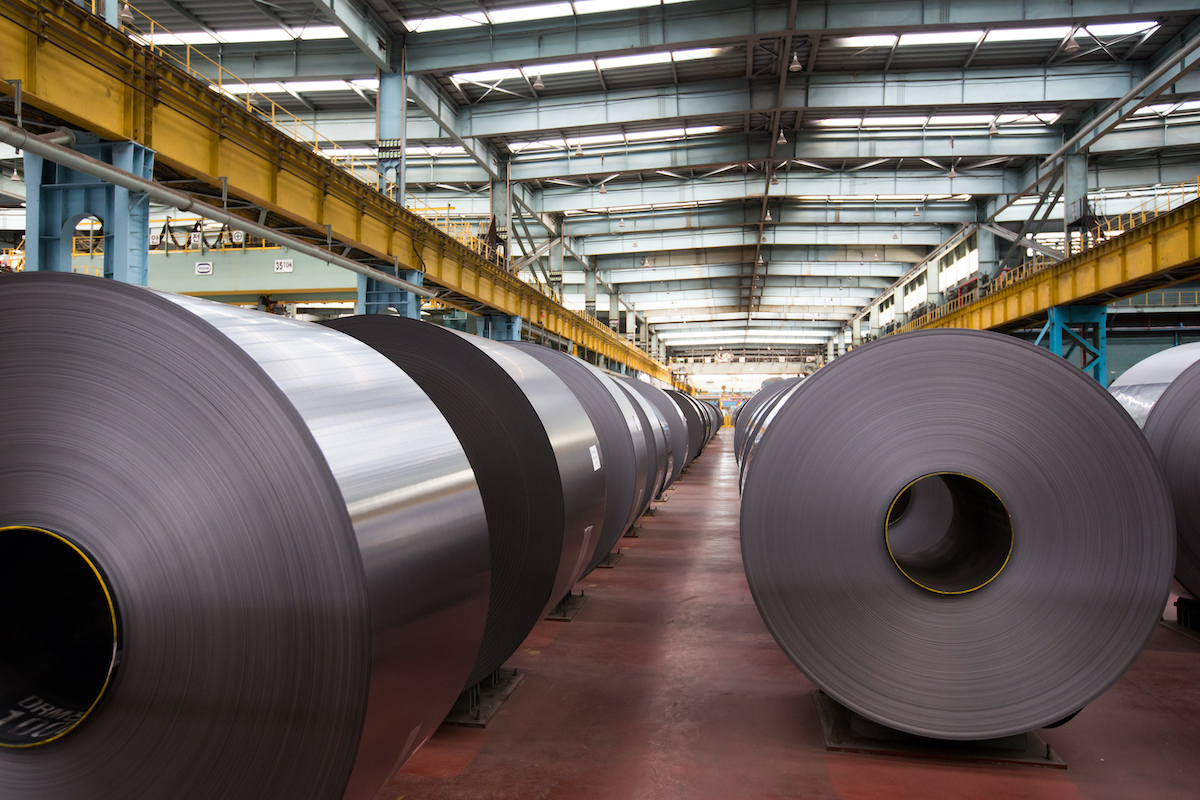
European coil and green steel round-up: EU coil prices hike on supply concerns as import risks compound
Transaction prices for domestic coil in Europe increased in the week to 6 March as buying activity recovered, fuelled by potential shortage fears.
European buyers, both distributors and end users, have been concerned that the conflict in the Middle East, which has already disrupted some of the traditional supply routes, could result in shortages in the EU. Consequently, they were focused on domestic purchases either from the mills or from distributors to build stocks.
Multiple market sources have drawn comparisons between the current situation and the market developments in either 2020 during the COVID-19 pandemic or in 2022 following Russia’s attack on Ukraine. In both cases in the past, shortage fears drove prices to record-high levels and triggered excessive restocking, which was then followed by a price drop and a slump in both real and apparent demand.
The current circumstances, however, are unlikely to follow a similar radical scenario, market sources believe. While a clear uptrend has settled in the European coil market due to delays in import deliveries and rising energy costs, the steelmakers have been taking their time to evaluate the situation.
Rumours that circulated in the market earlier this week that coil producers had withdrawn their offers were unfounded. European steelmakers continued to trade steel coil with selected buyers, as they have sufficient order books and are expected to increase offers soon.
“The steelmakers are cherry-picking deals they want to make and customers they are ready to give offers to,” a Northwest European service center said.
The mills are expected to increase official offers soon, as the current transaction prices have already moved close to their initial target prices in Northwest Europe.
“Last week the sentiment turned more pessimistic due lack of demand improvement and unwillingness of the end users to accept the higher prices. But now the end users are booking volumes, so are distributors, as they think that the market might repeat the situation of either 2020 or 2022,” a mill source said. “The mills are holding back now, and they are trying to figure out the price they should start asking from next week.”
The anticipated offer rise, however, is unlikely to be drastic, multiple sources said. The steelmakers are expected to use the current sentiment to increase prices, but are unlikely to inflate them to the point that it paralyzes the supply chains and scares away buyers, according to market participants.
The domestic supply is expected to be enough to compensate for any missing import volumes, taking into account stable real demand and some planned blast furnace (BF) restarts, including in Poland and Italy. And import supply, although delayed, is expected to resume at a normal pace, sources said.
“So far we do not see big disruptions of deliveries although there are delays for import for sure and there are no major price hikes,” an Italian service center said.
In Northwest Europe, deals for domestic hot-rolled coil (HRC) have been settled at EUR690-710/t ex-works, with the majority of the indications reported at EUR700-710/t ex-works. The deals were settled for smaller lots of material of a few hundred tonnes per lot.
In Italy, domestic HRC transactions were reported at EUR680-700/t ex-works.
In Northwest Europe, prices for both cold-rolled coil and hot-dipped galvanized coil have been heard at EUR790-830/t ex-works
Import offers limited
The number of import offers in Europe has been scarce as suppliers from Asia, which previously went through the Suez Canal, will now have to be rerouted via the Cape of Good Hope, resulting in higher freight costs and longer lead times. In fact, the first ships have already used the alternative route.
While delays in the delivery of imported coil in the EU are unlikely to exceed one month, buyers have grown concerned that the delivery disruptions would result in higher duties. The timing of the potential delays is critical, as the EU’s new quota system is expected to come into force from July this year.
Under the new quota system, a 47% reduction in volume and a doubling of duties to 50% have been proposed. Lack of details on the country-specific quotas or any caps in the global quotas has made European importers extremely cautious on steel imports arriving in the third quarter. The delivery delays greatly increase the likelihood of exceeding the new tighter quotas.
Turkey had reportedly sold significant HRC volumes to the EU and now has increased the prices. While deliveries from Turkey were not impacted by the geopolitical situation, importing larger volumes could result in exceeding the quota, sources said.
HRC offers from Turkey have been heard at EUR540-550/t CIF South Europe, including anti-dumping duties. Exporters from Algeria and Thailand have been offering HRC to Italy at EUR590/t CIF and at EUR570/t CIF, respectively.
HRC offers were reported at EUR605-640/t DDP Italian ports, including CBAM duties.
The weaker euro against the US dollar has also made imports more expensive.
Green Steel
Green HRC premia were rangebound on week as market participants dedicated their attention to mitigating potential effects of the Middle Eastern conflict. Spot premia for low-carbon EAF HRC are stable at around EUR80/t, according to McCloskey’s sources, while ultra-low-carbon or project-destined material trades can secure triple-digit premiums.
That said, there were significant developments in the low-carbon segment this week – though not necessarily of a positive nature – as the European Commission’s publication of the significantly delayed Industrial Accelerator Act confirmed that the EU’s first official green steel definition had been cut from the legislative proposal.
Additionally, while no substantive provisions relating to the low-carbon label have survived to the IAA’s official publication, references in the act’s explanatory recitals to the new standard suggest that the controversial ‘sliding scale’, will only be applied to flat steel products.
Instead, the ‘voluntary low-carbon label’ for steel – one of the Commission’s core commitments in last year’s Steel and Metals Action Plan (SMAP) – will now be pursued under the Ecodesign for Sustainable Products Regulation (ESPR). Steel-related delegated acts are scheduled for later this year.
| Weekly European steel coil | |||||
| EUR/t | Term | 06-Mar-26 | Change | ||
| Weekly Northwest Europe steel coil | |||||
| Northwest Europe ex-works HRC | EX-WORKS | 705.00 | 25.00 | ||
| Northwest Europe ex-works CRC | EX-WORKS | 810.00 | 30.00 | ||
| Northwest Europe ex-works HDG | EX-WORKS | 800.00 | 20.00 | ||
| Weekly South Europe steel coil | |||||
| Italy ex-works HRC | EX-WORKS | 690.00 | 15.00 | ||
| South Europe CIF HRC | CIF | 550.00 | 10.00 | ||
| Source: McCloskey by OPIS. | © 2026 Dow Jones Energy Limited. | ||||
| Weekly green steel | |||
| EUR/t | Term | 06-Mar-26 | Change |
| Green Northwest Europe HRC premium (scopes 1-3 CO2 under 0.8t) | 80.00 | 0.00 | |
| Green Northwest Europe ex-works HRC (scopes 1-3) | EX-WORKS | 785.00 | 25.00 |
| Green HRC premium (scopes 1-2 CO2 under 0.5t) | 80.00 | 0.00 | |
| Green Northwest Europe ex-works HRC (scopes 1-2) | EX-WORKS | 785.00 | 25.00 |
| Green HRC reduced carbon price (scopes 1-3) | 67.20 | 2.88 | |

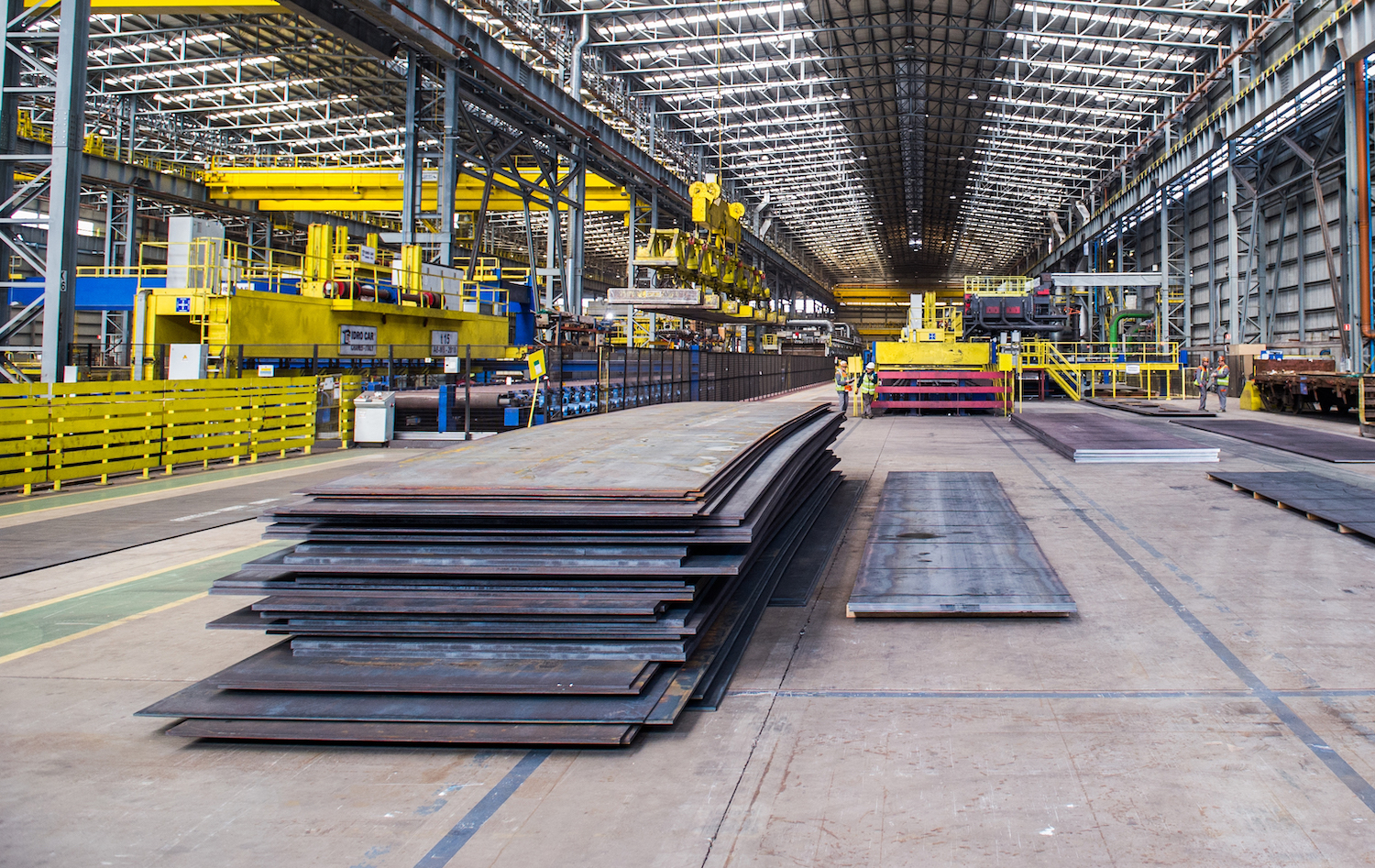
European heavy plate round-up: European heavy plate moves higher on feedstock concerns
European heavy plate prices increased in the week to 6 March. Re-rollers have withdrawn previous offers and are preparing to increase prices.
In Italy, the latest deals for heavy plate have been settled at EUR720-750/t ex-works, up by around EUR15/t on week.
European re-rollers rely on imported slab, mainly from Asia. The geopolitical situation in the Middle East caused deliveries from Asia to Europe to be rerouted from the Suez Canal to the Cape of Good Hope, adding at least two weeks to shipments already on their way. Freight rates also increased and might move further up.
Import offers for slab from Asia have increased due to the situation, with fresh offers reported at $550-580/t CFR Italy. Contributing to higher costs, the euro’s decline against the US dollar has made slab imports more costly.
In addition, market sources were concerned that due to an absence of slab exports from Iran to Asia, global slab supply will become squeezed as local mills will focus on trading within the region. After slab supply from the Black Sea decreased, European re-rollers have been relying on Asian feedstock. This might push slab prices further up, market sources believe.
The rise of energy prices in the EU also supported the bullish sentiment of the European steelmakers.
“The higher gas prices hit re-rollers hard, as that is critical for slab re-heating. And due to rerouting of slab deliveries there will be delays, it is unclear how severe they would be. This can cause delays in heavy plate deliveries from re-rollers and this will fuel the bullish sentiment,” a mill source said.
European re-rollers already had been exposed to higher costs due to the introduction of the Carbon Border Adjustment Mechanism (CBAM) from 2026. Re-rollers estimated CBAM duties for imported slab at EUR30-80/t based on actual emission values. But until exporters obtain the certifications – in 2027 for imports during 2026 – European re-rollers risk that the duties would be calculated based on default values resulting in substantially higher costs.
Heavy plate offers in Germany have also increased to EUR770-800/t ex-works.
| Weekly European heavy plate, slab and green steel | |||||
| Unit | Term | 06-Mar-26 | Change | ||
| Weekly heavy plate | |||||
| Northwest Europe ex-works heavy plate | EUR/t | EX-WORKS | 785.00 | 15.00 | |
| Germany delivered heavy plate (Northwest Europe) | EUR/t | DEL | 820.00 | 0.00 | |
| Italy ex-works heavy plate | EUR/t | EX-WORKS | 735.00 | 15.00 | |
| Weekly steel slab | |||||
| Italy CFR slab | $/t | CFR | 550.00 | 15.00 | |
| Weekly green steel | |||||
| Green heavy plate premium (scopes 1-3 CO2 under 1t) | EUR/t | 25.00 | 0.00 | ||

CBAM: EFDA calls for immediate corrections to avoid jump in production costs of EU products assembled with imported fasteners

What is European industrial associations’ take on Industrial Accelerator Act?
Following the European Commission’s official introduction of the Industrial Accelerator Act (IAA), several European industry organizations have commented on the legislation, expressing general support for its objectives while highlighting a number of shortcomings that could limit its effectiveness.
The Act aims to strengthen Europe’s industrial base and accelerate the transition toward low-carbon manufacturing, but stakeholders across different sectors argue that additional policy measures and clearer definitions will be needed to ensure the framework delivers meaningful results.
Steel industry calls for stronger “Made in Europe” rules
The European Steel Association (EUROFER) welcomed the publication of the Industrial Accelerator Act, describing it as an important step toward reinforcing European manufacturing and supporting the shift to low-carbon industrial production. However, the association warned that the current proposal may not sufficiently support green steel production within Europe. Under the legislation, at least 25 percent of steel used in public procurement and public support schemes must meet low-carbon criteria, but the regulation does not require that this steel be produced within the EU.
EUROFER cautioned that this limitation could significantly weaken the policy’s impact. Public procurement accounts for roughly 25 percent of total steel demand in Europe, meaning the proposed requirement would influence less than five percent of the overall steel market. Differences in public support schemes across EU member states also create uncertainty regarding the actual scale of future demand.
To strengthen the legislation, the association called for a clear definition of “Made in Europe” based on steel that is melted and poured within the EU and the European Economic Area. It also advocated combining both low-carbon and European origin criteria, introducing a robust labelling framework for low-carbon steel products, and ensuring access to affordable electricity to support industrial decarbonization.
Outokumpu supports European preference and clean steel demand
Finland-based stainless steel producer Outokumpu has also welcomed the proposal, stating that the legislation represents a significant step toward strengthening European industry while accelerating decarbonisation.
According to the company, the Act could increase demand for clean industrial products, improve economic security and support the transition of energy-intensive sectors toward lower-carbon production. Outokumpu particularly supports the proposed European preference in public procurement and the “Made-in-EU” requirement, arguing that these measures would ensure public spending supports low-carbon materials produced in Europe rather than indirectly subsidizing emissions embedded in imported products.
At the same time, the company urged policymakers to strengthen several elements of the proposal. Outokumpu called for the introduction of an EU low-carbon steel label that would allow manufacturers to demonstrate their greenhouse-gas performance and help buyers identify cleaner materials. The company also recommended establishing specific low-carbon criteria for stainless steel, noting that production processes and supply-chain emissions differ from those of other steel products. In addition, Outokumpu suggested extending the “Made-in-EU” requirement to explicitly include steel components in order to prevent high-emission steel parts produced outside Europe from being assembled into final products within the EU.
Automotive suppliers stress implementation risks
The European Association of Automotive Suppliers (CLEPA) stated that the legislation provides an important foundation for safeguarding European manufacturing capacity. According to the association, the inclusion of local content and critical component thresholds directly addresses growing concerns among suppliers facing competition from non-EU producers. Nevertheless, CLEPA warned that the effectiveness of the framework will depend heavily on its implementation. The association emphasized that exemptions granted to international partners must be carefully assessed to prevent circumvention through third-country imports.
While maintaining open and interconnected supply chains remains important, CLEPA argued that the regulation must include objective criteria and strong enforcement mechanisms to ensure that the policy genuinely protects European industrial capacity. The association also stressed that limiting incentives primarily to public procurement could significantly reduce the regulation’s overall impact on industrial transformation.
Environmental groups question strength of decarbonization measures
Environmental organizations have responded more cautiously to the Industrial Accelerator Act. While welcoming the European Commission’s intention to accelerate the clean industrial transition, several groups argue that the proposal does not yet include sufficiently strong safeguards to drive a rapid shift away from fossil-fuel-based production.
According to the European Environmental Bureau, the proposed 25 percent quota for low-carbon steel in public procurement may not generate substantial change. Approximately 45 percent of EU steel production already comes from electric arc furnace routes with lower emissions, meaning the requirement could simply reflect existing production patterns rather than accelerate the decarbonization of primary steelmaking.
Another major concern is the absence of a clear definition of “green steel.” The Commission has postponed the introduction of a voluntary steel label, leaving uncertainty over which products will qualify for support under the framework.
The Bureau also criticized the definition of “energy-intensive decarbonization projects” included in the proposal. The wording refers to projects that reduce emissions “to the extent technically feasible”, which they argue is too vague and could allow fossil-fuel-based technologies with only incremental efficiency improvements to receive public funding. Additional concerns have been raised about the proposed Industrial Acceleration Areas, where projects could automatically be classified as strategic and subject to simplified environmental assessments carried out at regional rather than project level.
The Bureau also noted that procurement rules could be waived if low-carbon products are considered more than 25 percent more expensive than conventional alternatives. According to critics, such exemptions could significantly weaken the practical impact of green public procurement measures.
Flacks Group ready to bid for Thyssenkrupp Steel Europe
US-based investment firm Flacks Group has announced that it has it is prepared to bid for German steelmaker Thyssenkrupp’s steel subsidiary Thyssenkrupp Steel Europe if ongoing negotiations to sell the business fail.
Michael Flacks, CEO of Flacks Group, said, “Our main interest is now in Italy, but we are interested in major steel companies, and if the talks regarding an acquisition of Thyssenkrupp’s steel business fail, we are ready to bid for it.”
Thyssenkrupp has been in talks with Jindal Steel International since last autumn regarding a potential sale of its steel division, but negotiations have not yet produced a formal bid.
Possible consolidation in European steel
If a deal were to materialize, it would represent another significant step in the ongoing restructuring of the European steel industry, which continues to face pressure from high energy costs, global overcapacity and weak demand, SteelOrbis understands.
The outcome of the talks with Jindal Steel International will likely determine whether Thyssenkrupp proceeds with that transaction or opens the process to alternative bidders such as Flacks Group.

Local Bulgarian longs prices start to rebound amid market uncertainties after gradual drop
Last month, domestic prices in Bulgaria had been gradually declining, bringing the market to more balanced price levels, after the country had entered the new year with high prices after the switch of the currency to the euro and amid relatively high stocks. As a result, the generally seasonally slow demand and the easing of currency-related speculation led to a gradual fall of €10-25/mt gradual.
However, with the outbreak of war in the Middle East and related concerns and somewhat pessimistic expectations in the European market, some Bulgarian suppliers have started to raise their offers. In particular, according to sources, Promet has increased its rebar prices this week by €15-20/mt to €620-630/mt CPT. Many local suppliers, including traders, have followed suit, while the trend may gain strength in the near future. Some traders have added €5-10/mt to €615/mt CPT over the past week, sources told SteelOrbis. “[It is] not clear yet if buyers will largely accept [higher prices] but let’s say the market is a bit livelier today,” a trading source said.
In the import rebar segment, according to local market players, some purchases have already been concluded for the second quarter quota, but some quota is still reported to be available for the first quarter. Ex-Turkey rebar is on offer at $545-555/mt FOB for March-April shipments, up $5/mt over the past week, or at around $565-580/mt CFR Bulgaria, with estimated freight of $20-25/mt. Egyptian mills have increased their rebar prices for April-May shipments by $5-10/mt over the past week to $550-555/mt FOB, which is around $575-585/mt CFR with the increased freight rate of $25-27/mt. Rebar offers from Italy are as usual on the high side – at €635-640/mt CPT, while it is reported that these levels are not attracting any demand.

Tight import supply, healthy order books help European HRC steel prices firm
The escalation of the conflict between Iran and the US almost immediately resulted in higher energy costs and increased freight and insurance rates, and led to partial re-routing of marine traffic from the Suez Canal to the Cape of Good Hope, which extended cargo delivery times by at least two weeks.
This had an additional negative effect on imports, which were already hampered by the introduction of the Carbon Border Adjustment Mechanism (CBAM) earlier this year.
Sources in Northern Europe said tradeable levels for local hot-rolled coil had moved to €700 ($812.35) per tonne ex-works and above, with mainly May-delivery material now available.
Earlier this week Fastmarkets heard about several cargoes changing hands within the range of €700-710 per tonne ex-works.
A few sources, however, still considered €685 per tonne ex-works to be tradeable.
Fastmarkets’ daily steel hot-rolled coil index, domestic, exw Northern Europe was assessed at €700.00 per tonne on March 6, down slightly by €0.63 per tonne from €700.63 per tonne on March 5.
The index was up by €13.93 per tonne week on week and by €43.75 per tonne month on month.
Fastmarkets’ daily steel hot-rolled coil index, domestic, exw Italy was €680.83 per tonne on March 6, up by €0.83 per tonne from €680.00 per tonne on March 5.
The index was also up by €10.20 per tonne week on week and by €32.91 per tonne month on month.
Suppliers said April-delivery cargoes were unavailable and that May volumes were being gradually offered, with €700 per tonne indicated as the desired level. Estimates of workable prices remained around €680 per tonne ex-works.
Central European domestic steel hot-rolled coil prices also moved upward amid mounting concerns linked to the conflict in the Middle East, Fastmarkets heard.
“With the situation in Iran it is difficult to predict what will happen and whether this will lead to tensions in the market,” a source said.
Fastmarkets’ weekly price assessment for steel hot-rolled coil domestic, exw Central Europe was €670-700 per tonne on Wednesday, rising from €665-690 per tonne in the previous assessment period.
The increase was supported by higher offers heard at €685-700 per tonne ex-works, while transactions were heard at €670-690 per tonne ex-works.
