


European coil and green steel round-up: EU coil prices continue upward trend as costs and import barriers bite
Domestic prices for hot-rolled coil (HRC) in Europe increased further in the week to 13 March due to rising costs, limited imports and some revival in buying activity.
In Northwest Europe, deals for domestic HRC have been reported at EUR690-730/t ex-works, with both ends of the range representing a limited number of the deals. The majority of transactions have been heard at EUR700-720/t ex-works.
While buying activity in the region has seen some revival due to buyers’ concerns over shortages, the average tonnage of the transactions was smaller as mills have good order books and feel under no pressure to chase volumes. Buyers, in the meantime, have also been cautious in their restocking, as they evaluate whether the geopolitical conflict in the Middle East and consequent energy price increases and delivery disruptions would be more impactful on supply or demand. Northwest European mills have limited volumes of May shipment coil and some have been preparing to offer June rolling.
In Italy, unlike in northern Europe, trading activity has been muted due to higher stocks of the distributors. But sentiment, nonetheless, has been bullish as the steelmakers felt no need to chase volumes.
“The trend is upwards, but the high stocks of the buyers slowdown the impact of energy prices, logistics costs and lack of import offers,” an Italian distributor said.
Some deals and workable prices for domestic HRC in Italy have been heard at EUR690-700/t ex-works.
Import offers limited
The number of coil offers from overseas has been limited due to the impact of rising freight and other costs and logistical issues. Suppliers from Asia, which previously went through the Suez Canal, will now have to be rerouted via the Cape of Good Hope, resulting in higher freight costs and longer lead times. In fact, the first ships have already used the alternative route.
Some sources reported orders cancelled by exporters from Asia due to the sharp rise in freight costs. But such instances were not widely reported in the market.
While delays in the delivery of imported coil in the EU are unlikely to exceed one month, buyers have grown concerned that the delivery disruptions would result in higher duties. The timing of the potential delays is critical, as the EU’s new quota system is expected to come into force from July this year.
Under the new quota system, a 47% reduction in volume and a doubling of duties to 50% have been proposed. Lack of details on the country-specific quotas or any caps in the global quotas has made European importers extremely cautious on steel imports arriving in the third quarter. The delivery delays greatly increase the likelihood of exceeding the new tighter quotas.
Import offers for HRC from Turkey have been heard at EUR570-580/t CIF Italy and from India at EUR570/t CIF Italy.
Only larger buyers, such as pipemakers, have been willing to risk acquiring steel on a CIF basis. Smaller importers have switched to DDP purchases to reduce risks related to the Carbon Border Adjustment Mechanism (CBAM) duties.
European buyers estimated CBAM duties for imported HRC at EUR40-80/t based on actual emission values. But until exporters obtain the certifications – in 2027 for imports during 2026 – European importers risk that the duties would be calculated based on default values resulting in substantially higher costs.
Import offers on a DDP basis have been reported at EUR630-680/t – much closer to European domestic prices.
And taking into account the expected quota reduction, buyers have been showing more interest in less risky domestic supply of coil.
CRC supply scarce
European steelmakers continued to avoid sales of cold-rolled coil (CRC) due to higher exposure to energy costs. And taking into account the recent rise of energy prices, buyers have been concerned that steelmakers will continue to avoid sales of the product.
European steelmakers have been focused on either HRC sales or on trading of hot-dipped galvanized coil (HDG), which use HRC as feedstock.
Domestic CRC prices in Northwest Europe were reported at EUR790-820/t ex-works.
Interest in imported CRC has been restricted as buyers await the results of the anti-dumping case into imports from India, Japan, Turkey, Vietnam and Taiwan, China.
HDG premiums rise
Domestic prices for HDG were heard at EUR795-820/t ex-works, with some suppliers trying to achieve EUR850-860/t ex-works.
The logistics disruptions combined with higher energy costs drove zinc prices up. As a result, some European steelmakers have revised the extras lists for the coating, adding around EUR20-30/t to existing price lists.
Green steel market
Demand for green steel remained muted as buyers have been focused on the changes in the traditional steel market. Although some mills said that they have seen higher demand from end users that choose to approach them directly as distribution cannot satisfy the needs for low-CO2 steel. Construction and automotive remain the two primary industries involved in green steel trading.
Market sources estimated green steel premiums for HRC with CO2 content of around 0.7t at EUR80-100/t.
Some sources said that similar products from overseas are available with significantly lower premiums – around EUR30/t – from mills that can prove their CO2 emissions with certificates.
While the green steel market remains small, market sources believe that the European Commission’s proposed Industrial Accelerator Act could boost demand for low-CO2 steel.
| Weekly European steel coil | |||||
| EUR/t | Term | 13-Mar-26 | Change | ||
| Weekly Northwest Europe steel coil | |||||
| Northwest Europe ex-works HRC | EX-WORKS | 710.00 | 5.00 | ||
| Northwest Europe ex-works CRC | EX-WORKS | 810.00 | 0.00 | ||
| Northwest Europe ex-works HDG | EX-WORKS | 800.00 | 0.00 | ||
| Weekly South Europe steel coil | |||||
| Italy ex-works HRC | EX-WORKS | 695.00 | 5.00 | ||
| South Europe CIF HRC | CIF | 550.00 | 0.00 | ||
| Source: McCloskey by OPIS. | © 2026 Dow Jones Energy Limited. | ||||
| Weekly green steel | |||
| EUR/t | Term | 13-Mar-26 | Change |
| Green Northwest Europe HRC premium (scopes 1-3 CO2 under 0.8t) | 90.00 | 10.00 | |
| Green Northwest Europe ex-works HRC (scopes 1-3) | EX-WORKS | 800.00 | 15.00 |
| Green HRC premium (scopes 1-2 CO2 under 0.5t) | 90.00 | 10.00 | |
| Green Northwest Europe ex-works HRC (scopes 1-2) | EX-WORKS | 800.00 | 15.00 |
| Green HRC reduced carbon price (scopes 1-3) | 56.20 | -11.00 | |

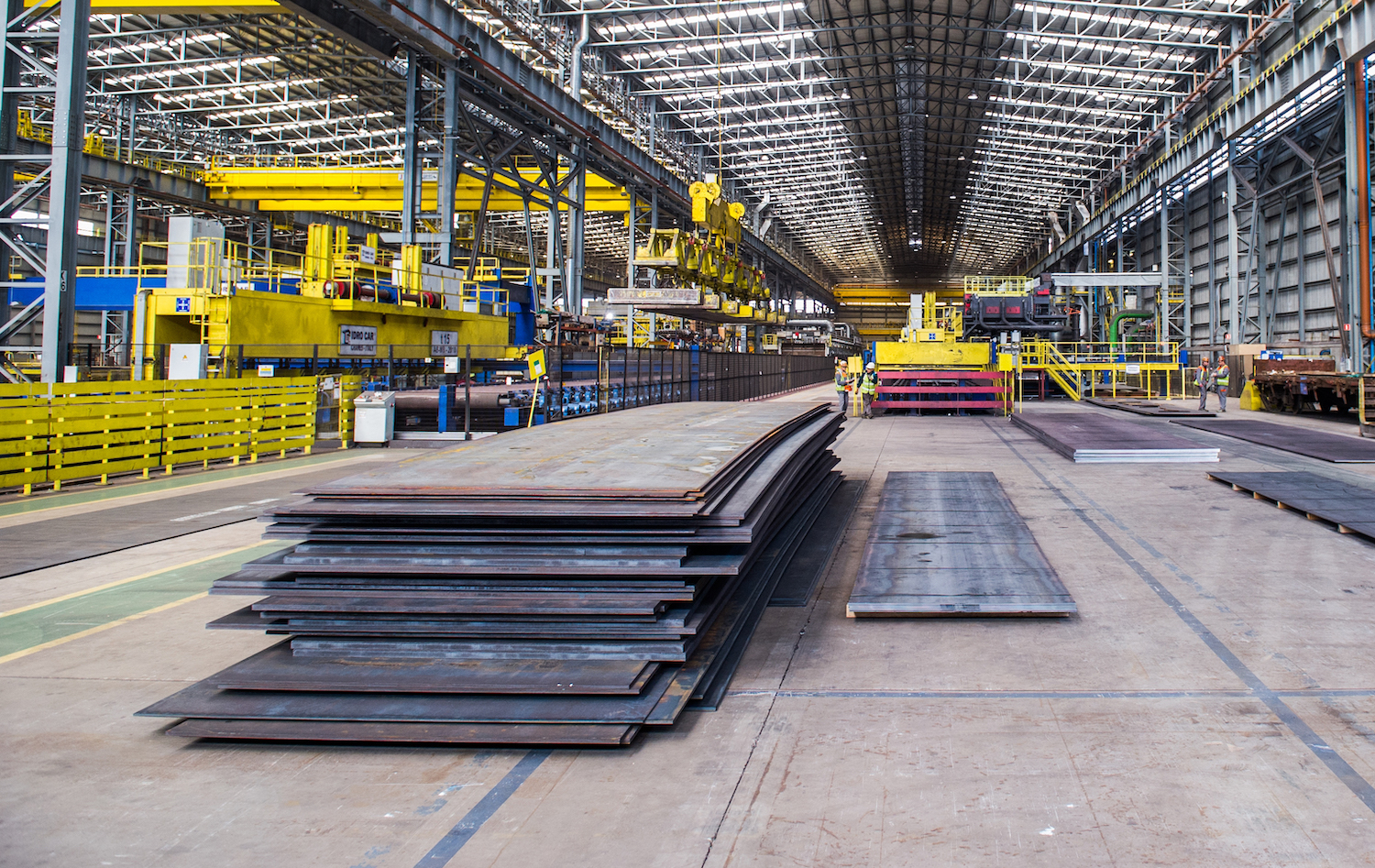
European heavy plate round-up: European heavy plate prices jump on destabilisations to slab trade flows
European heavy plate prices jumped in the week to 13 March, driven by disruptions to trading flows from the conflict in the Middle East and resultant upward pressure on input slab imports.
McCloskey reported offer price increases of EUR30-50/t from European re-rollers earlier this week, back in the market after withdrawing previous offers in response to rising freight and energy costs.
Heavy plate prices in Northwest Europe were heard at around EUR800/t ex-works for s235jr grade, or around EUR850/t delivered for s355 material.
In the re-roller dominant Italian market, market participants reported trading between EUR750-770/t ex-works against offers as high as EUR800/t ex-works, though mill sources said a significant portion of the market continue to hold back from proactively offering, preferring to settle prices in direct negotiation with interested buyers or refrain from trading entirely until the geopolitical outlook is more clear.
“Plate prices are higher due to costs,” said a re-roller source. “Energy, logistics, slabs – customers couldn’t deny some increases.”
Chinese exporters are keeping slab offers at high prices as traders step up their inquiries to fill the gaps from Iranian supply, though the steep levels are deterring many buyers from committing on deals.
Slab import offers to the EU were reported at $550-580/t CIF from Asian exporters, and these imports will themselves be subject to further costs from CBAM, compounding pressures. Volume availability is also a concern for importers due to limited supplies of June shipment slab from Asia.
Fortunately for buyers, inventories are sufficient to constrain significant panic buying at present, though distributors remain uncertain as to potential developments moving forward.
“Customers aren’t buying, the picture is not clear,” said an Italian distributor. “Most customers purchased before the conflict so pressure to buy isn’t so high, especially as consumption isn’t increasing.”
| Weekly European heavy plate, slab and green steel | |||||
| Unit | Term | 13-Mar-26 | Change | ||
| Weekly heavy plate | |||||
| Northwest Europe ex-works heavy plate | EUR/t | EX-WORKS | 800.00 | 15.00 | |
| Germany delivered heavy plate (Northwest Europe) | EUR/t | DEL | 850.00 | 30.00 | |
| Italy ex-works heavy plate | EUR/t | EX-WORKS | 750.00 | 15.00 | |
| Weekly steel slab | |||||
| Italy CFR slab | $/t | CFR | 550.00 | 0.00 | |
| Weekly green steel | |||||
| Green heavy plate premium (scopes 1-3 CO2 under 1t) | EUR/t | 25.00 | 0.00 | ||

ArcelorMittal to restart BF No.1 at Fos-sur-Mer in June
ArcelorMittal plans to restart blast furnace No.1 (BF No.1) at its Fos-sur-Mer plant in southern France in June, bringing the number of operating units at the site to two, the company said.
BF No.1 is currently undergoing maintenance aimed at extending its operational life. The plant’s other unit, BF No.2, was restarted in December 2025 after an almost three-month stoppage following a fire.
The decision to return to dual blast furnace operations reflects expectations that EU protective measures, notably import restrictions and the Carbon Border Adjustment Mechanism (CBAM), will be implemented effectively to support the domestic steel industry, the company said.
The definitive phase of CBAM began on 1 January, while new EU tariff-rate quotas are expected to replace existing safeguard measures, which are set to expire on 30 June 2026.
Earlier this month, ArcelorMittal also said it had begun preparations to restart BF No.3 at its Dąbrowa Górnicza steelworks in Poland.
Jindal Steel back in the running to acquire ADI
Indian steelmaker Jindal Steel has expressed interest in acquiring troubled Italian flat steel producer Acciaierie d’Italia (ADI), Minister of Enterprise and Made in Italy, Adolfo Urso, told the Senate on 12 March.
“Indian Jindal Group, a leading global steelmaker, submitted an expression of interest last night for the entire steel complex with an ambitious industrial plan, guaranteeing the full decarbonisation process,” Urso said.
ADI has two potential buyers now – Jindal Steel and Flacks Group, a United States-based investment firm focused on the turnaround of distressed businesses.
Market sources suggested that the Italian authorities will review both proposals by 15 April.
Jindal Steel was previously in the running to acquire ADI, but withdrew from the tender in September 2025 as it was unable to reach agreement with the Italian authorities, particularly regarding the plant’s gas supply. The company submitted a non-binding offer for German Thyssenkrupp’s Steel Europe division after abandoning the race for ADI. In the week to 13 March, German media reported that the potential deal between Thyssenkrupp and Jindal Steel could collapse as the parties have been unable to agree on some key issues.
Flacks Group told McCloskey earlier this month that it was considering the acquisition of Thyssenkrupp if Jindal Steel decided to step away from the purchase.
In February, ADI temporarily idled blast furnace (BF) No. 4 for maintenance until the end of April. BF No. 2 was restarted on 10 February. The steelmaker plans to double steel production to 4 mt/y by end April 2026, and to continue operating two furnaces. However, a recent court ruling ordering ADI to suspend production at the Taranto plant from 24 August on health grounds could disrupt those plans.

EU steel demand signals stability after three-year contraction
According to the first quarter report of the 2026-2027 economic and steel market outlook published by the European Steel Association (EUROFER), steel demand in the European Union has begun to show signs of stabilization following three years of contraction. However, the report stated that the recovery will be limited and consumption levels will remain well below pre-pandemic levels in the coming years.
According to the report, the industrial outlook for 2025 has improved slightly compared to previous expectations, and steel demand showed signs of stabilization, particularly in the second half of the year. However, it was stated that this improvement largely stems from comparisons with the very low volumes recorded in the second half of 2024. In this framework, steel consumption is expected to increase by 2.4% in 2025, instead of the -0.2% decline projected in the previous outlook. It was noted that this increase will occur thanks to stronger-than-expected demand in some national markets and will partially offset the impact of trade disruptions, including US customs duties.
On the supply side, EU crude steel production continued its decline. According to the report, production in 2025 fell to 125.8 million tonnes from the 130 million tonnes level in 2024, decreasing by approximately 3% on an annual basis. EUROFER emphasized that this situation points to the ongoing contraction in the European steel sector and permanently low capacity utilization due to weak demand and increasing import pressure.
According to data on the EU steel market, apparent steel consumption recovered in the third quarter of 2025 following declines in the previous two quarters. During this period, consumption reached 32 million tonnes, increasing by 4.6% annually. Domestic deliveries followed a similar trend, showing a 3.4% increase in the third quarter after a -1.6% decline in the previous quarter. In contrast, domestic deliveries had experienced declines in previous years due to weak demand, falling by -4.6% in 2023 and -2.8% in 2024.
A remarkable increase was observed on the import side. Steel imports into the EU, including semi-finished products, increased by 10% quarter-on-quarter in the third quarter of 2025. Consequently, the share of imports in the EU’s apparent steel consumption rose from 25% in the previous quarter to a record level of 29%. In the entirety of 2024, the share of imports had been 27%.
Developments in steel-using sectors were also included in the report. The Steel Weighted Industrial Production (SWIP) index recorded an increase of 1.8% in the third quarter of 2025 after six quarters of decline. Nevertheless, the index continued to reflect the impact of weakness in the automotive sector, as well as mechanical engineering, household appliances, and metalware sectors, which are more exposed to global trade and external shocks.
The report stated that the construction sector has given limited recovery signals since the second quarter of 2025. In the third quarter, a partial recovery was seen in manufacturing activities and steel-using sector production, thanks to modest improvements in industrial indicators and the delayed effects of low interest rates.
According to EUROFER, the SWIP index decreased by -3.5% in 2024, despite showing resilience in the previous two years. The decline in construction and automotive production was decisive in this fall. While a more limited contraction (-0.3%) is expected in 2025 due to increasing uncertainties, declines of -4.3% and -0.8% are projected for automotive and mechanical engineering production, respectively.
In the medium term, a limited recovery is expected. SWIP growth is projected to rise to 1.9% in 2026 and reach 2.2% in 2027. The report stated that this increase will be supported particularly by growth in the construction sector and the recovery in automotive production.


EU extends sanctions against Russia for six months
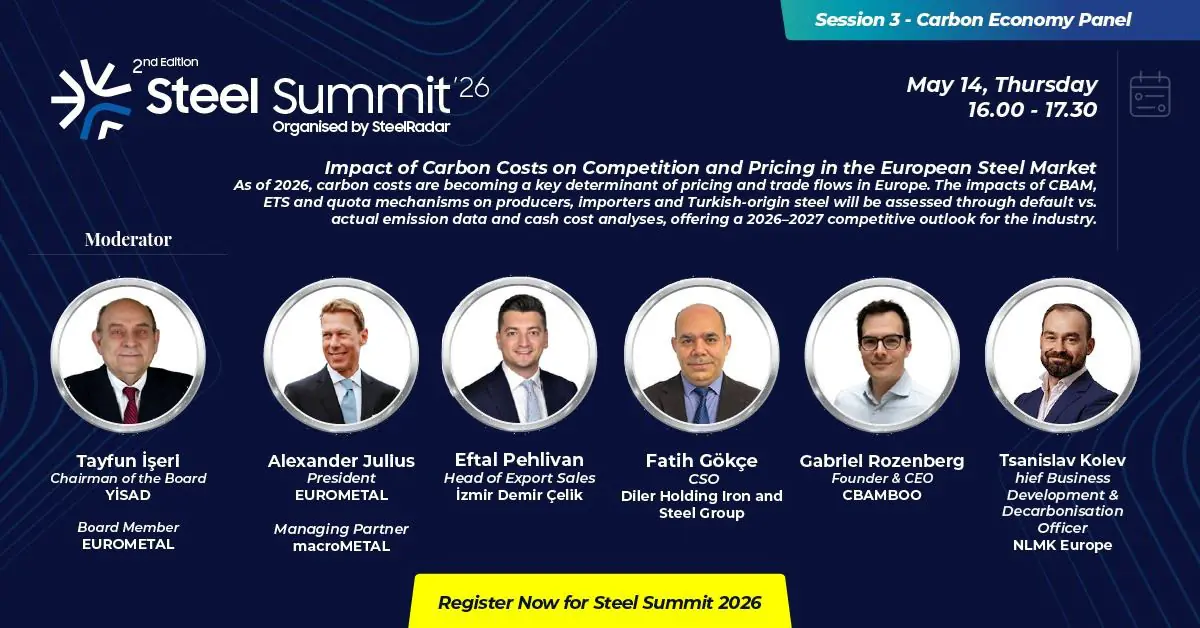
How Will Carbon Costs Reshape the European Steel Market? A Critical Turning Point Under Discussion at Steel Summit 2026

European steel plate prices increase on higher slab and energy costs
Steel heavy plate domestic prices increased in Northern and Southern Europe in the week to Thursday March 12, with some re-rollers already booked until June, market participants told Fastmarkets on Thursday.
They linked the rise to the continuing conflict involving Iran, Israel and the US, which began on February 28 and has pushed up steel slab feedstock and natural gas prices.
Fastmarkets’ weekly price assessment for steel slab import, cif Italy was $550-560 per tonne on Thursday, widening upward by $37 from $523-550 per tonne a week earlier.
Southern Europe
Local deals for steel heavy plate in Italy were reported at €700-770 ($803-884) per tonne ex-works. The range is wide because market sources said buyers were trying to secure deals for April at lower prices, but said the latest levels were starting at €750.
Suppliers stepped out of the market on March 5 because of uncertainty over the conflict’s effect on plate production costs and returned on Wednesday, according to market participants.
“We have closed almost all of April [bookings] last week. Before we have stopped sales, most stockists were on the market trying to secure orders at previous prices. The same strong order intake was reported by competitors,” a producer source told Fastmarkets on Thursday, adding that some plate re-rollers were sold out until May or June.
They said €750 increasingly seemed like the new minimum local price, compared with €700-710 a couple of weeks ago, noting that the overall effect on production costs over the past two weeks has been more than €40 per tonne.
Offers for domestic plate in Italy were at €720-780 per tonne ex-works in the week to March 12, increasing after re-rollers returned to the market on Wednesday, a trader said.
A second trader source linked the rise mainly to the conflict in Iran and reduced plate imports, saying demand was still not good. The producer, however, told Fastmarkets they had been seeing stronger demand for plate recently.
Fastmarkets’ weekly price assessment for steel domestic plate 8-40mm, exw Southern Europe was €730-770 ($706-729) per tonne on Thursday, widening upward by €70 from €700-730 a week earlier.
A producer reported plate imports from South Korea to Spain at €664 per tonne CFR two weeks ago, with offers from Japanese suppliers at similar levels. Other market sources did not report new deals, but said there was plate available in ports.
Plate import activity to Europe has been limited recently because of Carbon Border Adjustment Mechanism (CBAM)-related costs, which vary by origin and leave buyers uncertain about final pricing.
Fastmarkets’ weekly price assessment for steel plate (8-40mm) import, cfr main port Southern Europe was €650-664 per tonne on Thursday, widening upward by €17 from €647-650 per tonne a week earlier.
Northern Europe
Offers for domestic steel plate in Northern Europe were reported at €720-790 per tonne ex-works, but trading activity was muted.
“Market participants are now waiting for next week to see the new price levels,” the producer said.
Fastmarkets’ weekly price assessment for steel domestic plate 8-40mm, exw Northern Europe was €740-770 per tonne on Thursday, narrowing upward by €20 from €720-770 per tonne a week earlier.
Regarding imports, market sources said Indian suppliers were offering plate at €625-629 per tonne CFR Antwerp, but nothing was heard from Indonesia or South Korea and no new deals were reported.
Fastmarkets’ weekly price assessment for steel plate (8-40mm) import, cfr main port Northern Europe was €609-650 per tonne on Thursday, unchanged from February 5.


European HRC prices continue to rise amid higher costs, limited availability and restricted imports
Local hot-rolled coil prices in Europe extended gains on Friday March 13 amid a mix of factors such as limited supply, increased costs as well as import curbs.
In Northern Europe offers from integrated mills and re-rollers for May and in some cases.
June-delivery coils varied within the range of €700-735 ($807.34-841.94) per tonne ex-works versus €690-735 per tonne ex-works a day earlier.
Market sources reported market leaders achieved €720-730 per tonne in deals for minor tonnages amid limited supply.
Meanwhile, a source from Germany said that several local supplier continued to stay out of the market due to the recent rise in energy and fuel costs triggered by the aftermaths of the US-Iran conflict.
The same source reported some improvement in buying in the recent days caused by expectations of further price rises.
Fastmarkets’ daily steel hot-rolled coil index domestic, exw Northern Europe was calculated at €713.57 ($822.99) per tonne on Friday, up by €6.38 per tonne from €707.19 per tonne on March 12.
The index was up by €13.57 per tonne week on week and by €57.74 per tonne month on month.
Meanwhile, in Southern Europe, Fastmarkets calculated its daily steel hot-rolled coil index domestic, exw Italy at €692.50 per tonne ex-works on March 13, stable day on day.
The index was up by €11.67 per tonne week on week and by €45.00 per tonne month on month.
Offers from local suppliers came at €695-700 per tonne ex-works, while buyers estimated the market levels at €680-690 per tonne ex-works.
Import continued to be restricted by a number of factors such as higher costs which followed the implementation of the Carbon Border Adjustment Mechanism (CBAM) earlier this year, concerns over reduced import availability in the second half of the year due to new safeguards as well as increased transportation costs and timing, which followed the US-Iran conflict.

Energy-intensive industries call for lower electricity costs in EU electrification plan
Energy-intensive industries in Europe have urged the European Commission to prioritize competitive electricity prices and investment support in the upcoming EU Electrification Action Plan (EAP), warning that persistently high energy costs threaten industrial competitiveness and decarbonization efforts.
In a joint position paper, industry groups representing sectors such as steel, chemicals, metals, cement and paper said the EU’s economic and energy outlook is putting industrial electrification investments at serious risk unless electricity prices are brought down.
The industry groups, including EUROFER and European Metals, said the Electrification Action Plan should first focus on restoring competitive electricity prices for industrial consumers. According to the position paper, reducing electricity costs is essential for maintaining Europe’s industrial base while pursuing climate neutrality.
Accelerating electrification and energy integration
In addition to lowering power costs, the industry groups recommend several structural measures, including creating better conditions for industrial electrification investments, accelerating development of the EU Single Market for Energy, expanding cross-border electricity interconnections, and increasing system flexibility through renewable and low-carbon energy sources.
They argue that improved flexibility and stronger cross-border electricity trading could help reduce energy price disparities between EU member states and improve overall system efficiency.
Industry stakeholders warn that Europe risks losing competitiveness globally if electricity prices remain structurally higher than in other regions. They emphasize that the Electrification Action Plan should support both climate objectives and industrial competitiveness, ensuring that energy-intensive sectors can continue operating while transitioning toward lower-carbon production technologies.
Author: SteelOrbis Editorial Team
