


Why is strengthening EU ETS crucial for maintaining industrial competitiveness?
According to Paris-based think tank the Institute for Climate Economics (I4CE), proposals to weaken the EU’s carbon market rules would represent a strategic mistake.
Economists Benoît Leguet and Jean Pisani-Ferry argue that Europe should instead strengthen the EU Emissions Trading System (ETS) in order to support industrial competitiveness, accelerate technological innovation and maintain global leadership in low-carbon technologies.
EU carbon market central to climate policy
The EU ETS has placed a cap on emissions from European industry since 2005. The system currently covers approximately 40 percent of the European Union’s greenhouse gas emissions, including electricity generation, energy-intensive industries and intra-European aviation.
Under the ETS framework, companies must hold emission allowances for their carbon output. These allowances are tradable, creating a carbon market that provides financial incentives for reducing emissions. Following earlier adjustments, the carbon price has stabilized at roughly €60-€80/mt of carbon in 2025.
System entering new phase from 2026
The carbon market is now entering a new phase that has raised concerns among some industrial producers.
Two major policy changes are scheduled to begin in 2026. First, free emission allowances for energy-intensive industries will start declining more rapidly before being completely phased out by 2034, increasing carbon costs for producers. Second, the EU has introduced the Carbon Border Adjustment Mechanism (CBAM) to prevent carbon leakage. However, the current CBAM framework does not fully address competitiveness concerns faced by European exporters.
Complementary policies needed rather than ETS weakening
According to the I4CE analysis, these challenges should not lead to weakening the ETS itself. Instead, policymakers should introduce complementary policies that protect industry while maintaining the integrity of the carbon market.
One proposed solution is strengthening the CBAM framework or extending it to downstream sectors in order to better address carbon leakage along industrial supply chains without weakening ETS.
Electrification and renewables seen as long-term advantage
The think tank also emphasized that Europe’s long-term industrial competitiveness depends on reducing reliance on imported fossil fuels and accelerating the deployment of low-carbon technologies.
Greater electrification of industrial processes, combined with expanded renewable energy capacity and declining energy storage costs, could create structural advantages for European manufacturers. France, for example, is considered well positioned due to its relatively large supply of low-carbon electricity and biomass resources.
Policy priorities for the next ETS phase
The authors identified several policy priorities for strengthening the system while supporting industry. These include maintaining the planned phase-out of free allowances to provide long-term regulatory visibility, using ETS auction revenues more strategically to fund industrial decarbonisation projects and expanding CBAM coverage to protect European supply chains.
They also warned against introducing a carbon price cap within the ETS. Artificially lowering the price of carbon could undermine investment incentives for clean technologies and weaken the economic case for decarbonisation projects. Instead, the economists suggested that a carbon price floor could provide greater predictability for industry while preserving incentives to reduce emissions.
Author: SteelOrbis Editorial Team


UNESID: Spanish steel output down 24 percent in January 2026
According to the Spanish steelmakers association UNESID, in January this year Spain’s steel production totaled 789,000 mt, rising by 15.0 percent month on month and dropping by 24.0 percent year on year.
In the given month, the Spanish steel industry recycled 695,000 mt of scrap to be used for new steel products, up by 20.9 percent compared to the previous month and down by 13.0 percent year on year.
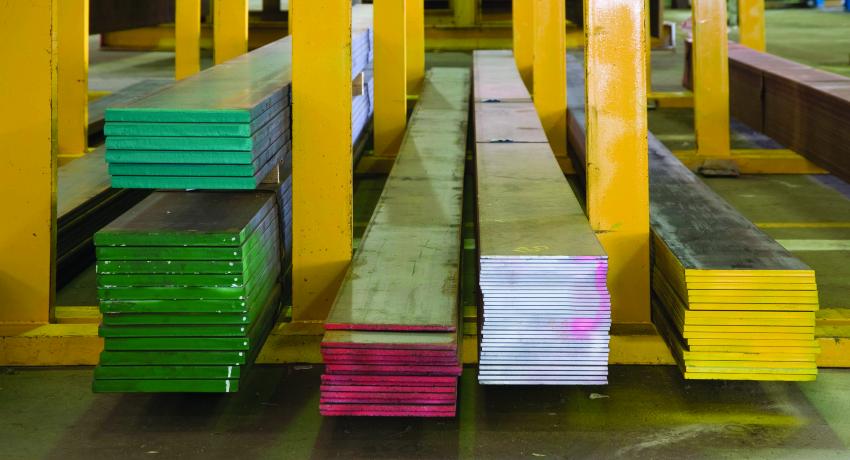
European longs market “tense and static”, price hikes attempted but demand still slow
The European longs market has remained “tense and static” this week, with producers’ attempts to raise prices, that continue to fail to appeal to buyers.
In the Italian rebar market, for example, producers have tried to increase price requests by between €30/mt and €50/mt depending on the mill, raising them to a range of €350-360/mt ex-works base (€610-620/mt ex-works including regular extras). However, according to sources, buyers continue to withdraw previous orders at €280-290/mt ex-works base (€540-550/mt ex-works including regular extras). However, volumes available at these prices “are now running out”, a source said. “Producers are worried,” another source commented. “This war [in the Middle East] is having a major influence, investments have collapsed, people are afraid to spend,” he concluded.
Italian producers have chosen to implement various strategies to cope with the high energy prices caused by the war and with demand at an all-time low. Several of them, in fact, have reduced or idled production for varying periods of time, from a few days to over a week, waiting to have a clearer picture of demand.
As far as the wire rod market in Italy is concerned, quotations are still suspended for now. “The situation is tense and demand is still very low. Hopefully local mills will not increase prices too much, otherwise the little demand there is risks disappearing completely,” a market player stated. “Demand remains low,” another source confirmed. “Just as the conflict in Iran has generated increases in energy – and therefore steel – prices, it is now also stopping demand. Unlike 2022 [post-Covid and war in Ukraine], when the market reacted by holding prices, there is now a lot of uncertainty. The market is not responding,” he concluded.
In other European countries, wire rod offers are also temporarily suspended, and a large manufacturer is renegotiating current orders with some customers. As far as rebar is concerned, prices for central Europe are now standing at €580-590/mt ex-works.
Export markets remain silent, while imports from Turkey have recorded some hike attempts due to the influence of freight costs, which are strongly affecting deliveries by vessel. “In addition to the increase in freight costs, deliveries are being delayed by three to four months,” a European trader commented. “Ships are simply impossible to find,” said another.
Import prices from Turkey to southern Europe this week are reported to be standing at around €530/mt CFR for rebar, up by €10-30/mt week on week, while for wire rod they have been reported at around €540/mt CFR, also up by the same range week on week.
€1 = $1.15 (European Central Bank, March 12)