


ASMAG expands North American footprint with acquisition of US Mill Masters
The Austrian machinery manufacturer ASMAG Group has announced the acquisition of Mill Masters, a US-based manufacturer of tube and cable mills located in Jackson, Tennessee.
The transaction marks a strategic step in strengthening ASMAG’s presence in North America while expanding its technological capabilities in tube welding mills.
Mill Masters, which has delivered more than 150 tube and cable mills worldwide, specialises in systems for smaller tube dimensions. Its portfolio complements ASMAG’s existing focus on larger-dimension tube mills, enabling the combined group to serve a broader range of customer requirements.
According to Johann Vielhaber, the acquisition supports ASMAG’s long-term strategy to expand its technological offering and establish a stronger operational presence in the United States, bringing the company closer to customers and partners in the region.
Bill Panthofer highlighted that joining the ASMAG Group will allow Mill Masters to leverage global resources and innovation while maintaining its established standards of quality and precision.
Mill Masters will continue to operate under its existing name and remain at its current site in Jackson, Tennessee. The company will be integrated into the ASMAG Group structure while ensuring continuity in customer relationships, expertise, and service.
ASMAG already operates a sales office in Chicago, Illinois. With this acquisition, the group establishes its first full production and service facility in the United States.
The ASMAG Group’s network now comprises five key locations, including sites in Austria and Germany, alongside its expanded presence in the US market.

European Commission agrees to amend ETS, review allowances
The European Commission will “within days” implement measures to update Emissions Trading System (ETS) free allocations benchmarks and enable the Market Stability Reserve to reduce carbon price volatility, says Commission President Ursula von der Leyen.
The benchmark adjustment will “take into account the concerns of industry”, she said after the European Council meeting had concluded after midnight on Friday, Kallanish notes.
In the medium term, the Commission will work on an ETS review which will include “a more realistic trajectory” for free allowances for industries beyond 2034.
It also proposes an “ETS Investment Booster”, a fund of €30 billion ($35 billion), financed by 400 million ETS allowances, assigned to financing projects for decarbonisation. This will operate on a first come, first serve basis, while prioritising funding for lower-income members states.
The European Council said the review should come by July at the latest and should include measures to reduce carbon price volatility and mitigate its impact on electricity prices. But it needs to preserve the “essential role of the ETS in the climate and energy transition through a market-based price signal for carbon emissions that drives investment and innovation”.
As for energy prices, the Commission will prepare a legal proposal to improve the productivity of grid infrastructure and allow member states to reduce grid charges for energy-intensive industries – these average at about 18% in the EU.
It will also propose to mandate lower tax rates on electricity – to make sure that electricity is taxed less than fossil fuels.
In the run-up to the meeting on Friday, ten EU countries, including Italy, Poland and Austria, called on the Commission to bring forward the ETS review to May. Major steelmaking representatives, such as Federacciai, voestalpine and Moravia Steel, have in recent months called for ETS to be overhauled to ease the cost burden on industry. Polish President Karol Nawrocki called for it to be scrapped altogether.


300 departures planned at ArcelorMittal Luxembourg
ArcelorMittal is to reduce its workforce in Luxembourg: the “Lux2029” agreement, signed on Friday 20 March, provides for up to 300 departures in response to the sector’s difficulties.
The government announced in a press release on Friday 20 March the signing of the new “Lux2029” agreement between the State, ArcelorMittal and the LCGB and OGBL trade unions, following negotiations that began on 1 October 2025. The text ratifies a reduction in the workforce in Luxembourg: around 300 positions are currently deemed surplus to the group’s needs.
To absorb this gap, “early retirement and pension measures, partial unemployment, voluntary departures, internal transfers and natural departures will be implemented”, the government states in a press release, which also mentions the setting up of a redeployment unit to support the employees concerned.
This reorganisation takes place in a difficult context for the European steel industry, faced with rising raw material costs, competition from low-cost imports and an uncertain geopolitical environment. In this context, ArcelorMittal intends to “adjust its internal organisation and fixed cost structure” in order to improve its competitiveness and secure its operations in Luxembourg.
The agreement was signed by the Minister for Labour, Marc Spautz (CSV), the Minister for the Economy, Lex Delles (DP), the Minister of Finance, Gilles Roth (CSV), as well as by ArcelorMittal’s management and the social partners.
Parallel investments
In return, the group is planning an investment programme of between €290.5m and €334.5m over the period 2026–2029, including €44m for facility maintenance. The stated aim is to support the development of the Luxembourg sites and ensure their long-term viability.
A number of projects have been mentioned, notably concerning the digitalisation of production and administrative activities, with the planned creation of a centre of excellence in cybersecurity to support the group’s global operations. Collaborations with academic and research institutions on advanced technologies are also planned.
Moreover, a “Maintenance Academy” is being studied. This training centre would aim to strengthen skills in industrial maintenance professions and create bridges between training, industry and employment.
ArcelorMittal finally confirms that it will maintain its headquarters in Luxembourg, as well as continuing construction of its new building.

Upward trend seen in European longs market, but demand is still weak
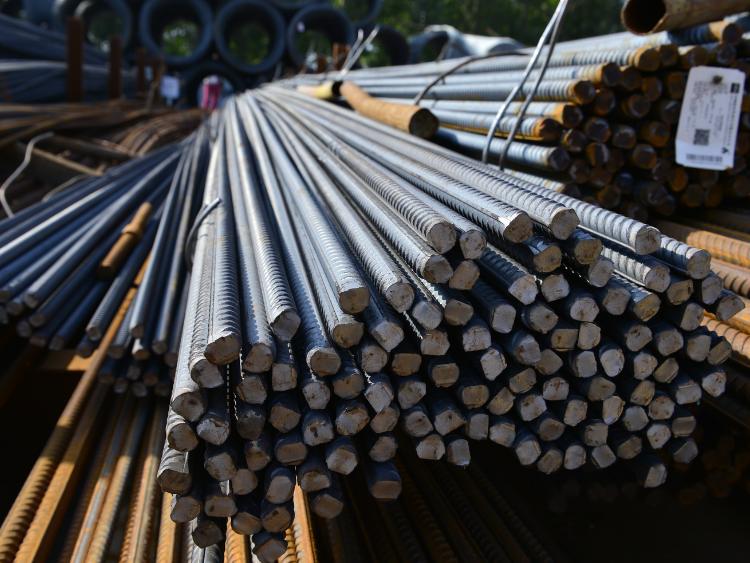
The first price increases have materialized in the European longs market this week, mainly driven by the fact that supply needs are forcing end consumers to accept the requested prices. Nevertheless, both orders’ income and production are extremely slow, and market players keep waiting for a clearer development of the Middle East situation.
As for the rebar market in Italy, the new order level is standing at last week’s objective, i.e. around €350/mt ex-works base (€610/mt ex-works including regular extras). However, a source has reported that after this price’s confirmation, producers have again suspended rebar quotations and are considering even higher increases. “I’m expecting significant increases in the market,” an Italian trader said. “Whoever wants to buy will have to accept them.”
“[Producers] are trying to increase wire rod prices as well, but the current situation is not helping, they are struggling a lot and demand is low,” another trader said. On the producers’ side, in fact, one of the main Italian mills continues to refrain from proposing new offers both on domestic and export markets, causing prices to remain unchanged again.
Speaking of export markets, rebar prices offered by Spain to southern European ports stands at around €610/mt FOB. On the import markets, on the other hand, new rebar and wire rod offers from Egypt have been reported at €535/mt CFR and €540/mt CFR, respectively.
1 EUR = 1.15 USD (European Central Bank, March 19)


SSAB opens new steel service center in Mumbai to expand India presence
Swedish steel producer SSAB has announced that it has opened a new steel service center in Mumbai, India, aimed at strengthening its presence in the growing Indian market.
The investment reflects SSAB’s strategy to expand its value-added services and downstream processing capabilities in key growth markets. India’s industrial and infrastructure sectors continue to drive demand for advanced steel applications, making it a strategic location for service center expansion.
The facility will focus on producing and supplying parts, kits and advanced components made from SSAB’s Hardox® wear plate and Strenx® performance steel.
Focus on value-added steel processing
According to the company, the new service center, located in an industrial park with convenient access to Mumbai, Navi Mumbai and Thane, will provide specialized workshop processing, enabling manufacturers to receive ready-to-assemble components tailored to their needs. The offering is designed to support customers requiring high-strength and wear-resistant steel solutions, particularly in demanding industrial applications.
The new center includes a warehouse with storage capacity for more than 10,000 mt of steel plate.
The Mumbai facility will primarily serve Indian manufacturers in transport equipment, construction machinery, and lifting equipment sectors. By delivering pre-fabricated steel components, SSAB aims to help customers improve efficiency and reduce production time.