


OECD Steel Committee warns global steel excess capacity crisis deepens as China exports surge
According to the statement made by the chair of the OECD Steel Committee, Sheryl Groeneweg, after its 99th Session on March 23-24, 2026, in Paris, which brought together 288 government officials and industry representatives from 42 delegations, global steel markets are under renewed strain as excess capacity continues to expand, Chinese exports reach record levels and demand remains subdued, raising serious concerns regarding the long-term sustainability of the sector.
Global steel demand remains under pressure
The OECD Steel Committee stated that global steel demand has declined for four consecutive years, with the contraction exceeding two percent in 2025. Although a modest recovery is expected in 2026, the outlook remains uncertain, particularly due to geopolitical risks linked to the Middle East.
China’s steel demand is expected to continue its structural decline, albeit at a slower pace compared to the estimated 6.5 percent drop recorded in 2025. Meanwhile, the OECD region is projected to experience only a partial recovery, after a 1.5 percent decline last year. In contrast, emerging regions such as India, Southeast Asia and the MENA region continue to demonstrate relatively stronger growth potential.
Global excess capacity reaches record levels
Global steel excess capacity increased to 640 million mt in 2025, exceeding total OECD steel production by more than 200 million mt, according to the OECD Steel Committee. At the same time, global steelmaking capacity rose for the fourth consecutive year, reaching 2.445 billion mt.
The divergence between regions has become more pronounced, with capacity contracting in OECD countries while expanding significantly in non-OECD economies. Growth has been particularly notable in India, Southeast Asia and the Middle East, especially Iran. The committee emphasized that continued over-investment is further exacerbating oversupply and intensifying global trade tensions.
China’s exports reshape global trade flows
The OECD Steel Committee reported that China’s steel exports reached 131 million mt in 2025, marking a record high and nearly doubling over the past three years. As domestic demand weakens, Chinese producers are increasingly redirecting surplus output to international markets. This trend has placed considerable pressure on producers in Europe, North America and Latin America, whose export volumes have declined in recent years as a result.
Trade measures rise but face circumvention challenges
Trade defense measures have continued to intensify globally, with governments increasingly relying on antidumping and countervailing duties, tariff-rate quotas and national security-based restrictions.
In 2025, a total of 75 new antidumping and countervailing duty investigations were initiated. However, the OECD Steel Committee noted that the effectiveness of these measures is being undermined by growing circumvention practices. These practices include the rerouting of steel through third countries, particularly in Southeast Asia, minor modifications to products to bypass tariffs, overseas investments aimed at changing the origin of steel, and the export of steel embedded in downstream products that are not subject to trade measures.
Subsidies continue to distort competition
The committee highlighted that market-distorting subsidies in the steel sector continue to increase, particularly outside the OECD region. According to the latest data, the median Chinese steel company received 15 times more subsidies relative to its asset size than firms elsewhere in 2024, compared to ten times in previous years. Additionally, China’s subsidy rate has nearly doubled since 2019, while 59 new provincial and municipal subsidy programs were introduced in 2025.
The committee also pointed out that capacity replacement programs aimed at reducing emissions are not resulting in net capacity reductions, as new low-emission capacity is being added without fully retiring existing facilities.
Energy security and geopolitical risks in focus
Amid ongoing geopolitical tensions, particularly in the Middle East, the OECD Steel Committee emphasized the growing importance of energy and raw material security. Ensuring affordable, stable and reliable energy supply has become a key priority for maintaining industrial competitiveness and safeguarding national economic security. These concerns are expected to remain central to policy discussions in the near term.
Call for stronger international coordination
The committee stressed that existing policy tools are insufficient to fully address the scale of the global steel crisis. In this context, delegates welcomed the ongoing efforts of the Global Forum on Steel Excess Capacity (GFSEC), which is working to develop a comprehensive framework for coordinated action by June 2026. This framework is expected to include enhanced monitoring of non-market practices, improved import surveillance mechanisms and stronger measures to combat trade circumvention.


EUROFER: EU auto sector faces prolonged pressure despite limited recovery signs
According to the Economic and Steel Market Outlook 2026-2027/Q1 2026 Report from the Economic Committee of the European Steel Association (EUROFER), in the third quarter of 2025 automotive output in the EU increased slightly by one percent year on year, compared to the 4.2 percent drop in the previous quarter.
Ongoing supply chain bottlenecks that continue to delay orders, combined with war-related disruptions, weak consumer confidence, limited growth in disposable incomes and broader economic uncertainty, kept EU car demand under pressure in 2025. Nevertheless, a slight improvement has been observed in the first four months of this year, while total new car registrations in the EU increased by 1.8 percent year on year in 2025, although volumes remained significantly below pre-pandemic levels.
The automotive sector expects a limited output recovery for 2026, with growth of 0.9 percent, followed by a moderate increase of 1.7 percent in 2027. Despite this, output levels are forecast to remain well below those recorded in 2019.
A full recovery in global trade and external demand from key markets, particularly the United States and China, appears unlikely in the near term, given intensifying global trade tensions. This includes the recent introduction of 15 percent US tariffs on EU car exports. As a result, significant challenges are expected to persist, especially the continued rise in Chinese electric vehicle exports to the EU and the negative impact of newly imposed US tariffs on EU-made cars, which are likely to substantially affect EU exports to the US.

Benteler to boost tube production capacity by 15% with €17 million investment in Germany
Austria-based Benteler Group has announced a €17 million investment to expand tube production capacity at its Schloß Neuhaus plant in Paderborn, Germany.
The investment is part of the company’s strategy to strengthen its Steel/Tube division and reinforce its position among Europe’s leading producers of seamless and welded steel tubes.
Capacity increase to meet automotive demand
The expansion is expected to increase production capacity at the site by approximately 15 percent, allowing Benteler to respond more efficiently to rising demand, particularly from the automotive sector.
The project focuses on seamless and cold-drawn tubes used in applications such as airbag tubes and rotor shafts.
New production line and equipment upgrades
The investment includes the installation of a new production line for drawn tubes, incorporating drawing preparation, a drawbench and additional heat treatment capacity. The project also covers integrated systems for straightening, testing and cutting, along with upgrades in quality control, preservation and packaging processes. The drawbench is scheduled to become operational by the end of May, while additional capacity for cutting short tube sections will also be introduced.
Currently, the Schloß Neuhaus facility produces around 160,000 mt of tubes annually, with approximately 250,000 tubes manufactured and delivered to customers worldwide on a daily basis.
Continued investment in German operations
Benteler confirmed its long-term commitment to the Paderborn region, highlighting sustained investment in its local operations. Since 2022, the company has invested more than €30 million annually, with total investments expected to exceed €50 million in 2026, driven by ongoing expansion in its Steel/Tube division.

German crude steel output up 9.9 percent in Jan-Feb 2026
In February this year, Germany’s crude steel output went up by 4.8 percent year on year to 2.83 million mt, according to the information provided by the German Steel Federation Wirtschaftsvereinigung Stahl (WV Stahl). In the first two months of this year, crude steel production in Germany rose by 9.9 percent year on year to 5.92 million mt.
In the given month, Germany’s pig iron output amounted to 1.81 million mt, up by 6.1 percent, while in the January-February period it increased by 12.5 percent to 3.85 million mt, both on year-on-year basis.
In February, the country’s hot rolled steel output grew by 8.3 percent to 2.56 million mt, while rising by 5.7 percent to 5.3 million mt in the first two months this year, both compared to the same periods of the previous year.
Germany’s Salzgitter reports lower net loss and revenues for 2025
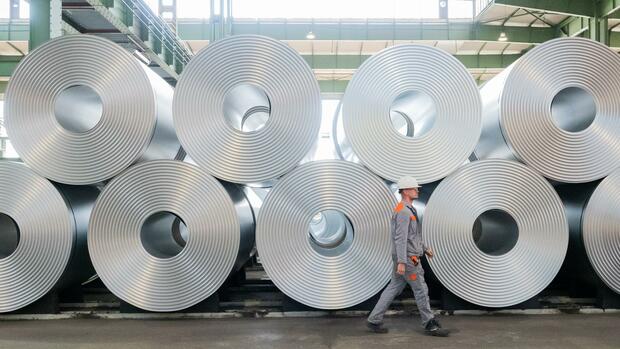
Germany-based steelmaker Salzgitter Group has announced its financial and operational results for the fourth quarter and the full year of 2025.
In the given quarter, the company posted a net loss of €23.3 million, compared to a net loss of €150.2 million in the previous year, while the company’s sales revenues amounted to €2.12 billion, down by 7.4 percent year on year. In addition, Salzgitter’s EBITDA for the fourth quarter rose to €152.3 million, compared to €124.6 million in the same quarter of 2024.
In the given year, the company posted a net loss of €69.8 million, compared to a net loss of €347.9 million in the previous year, while the company’s sales revenues amounted to €8.98 billion, down by 10.3 percent year on year. In addition, Salzgitter’s EBITDA for 2025 amounted to €376.3 million, compared to €445.2 million in 2024.
In the fourth quarter, the company’s crude steel production totaled 1.48 million mt, dropping by 3.7 percent from 1.53 million mt recorded in the same quarter of the previous year, while in 2025 its crude steel production fell by eight percent year on year to 5.88 million mt.
According to Salzgitter’s statement, Germany’s economic situation remains tense, also at the outset of 2026. The government’s planned investment and infrastructure programs have not yet resulted in a marked economic recovery. Instead, it anticipates positive stimulus for the domestic steel industry from the EU’s trade defense measures. All in all, Salzgitter expects only moderate improvement in the economic environment.
As for 2026, the company expects its sales revenues to be about €9.5 billion.

European flat steel prices broadly firm, imports limited
European domestic flat steel prices were largely stable in the week to Wednesday March 25 amid limited demand, despite recent price rises, Fastmarkets understands.
According to trade sources, the market was currently taking a wait-and-see approach with buyers cautious about accepting higher offers from domestic producers, while the availability of imported materials was still limited.
The introduction of the EU’s Carbon Border Adjustment Mechanism (CBAM) at the start of this year has curtailed import volumes into the bloc. This has, in turn, lent support to domestic prices across European markets.
Meanwhile, the escalation of the conflict in the Middle East has increased production costs for European mills by spiking prices for energy and raw materials, while also affecting freight costs and logistics.
In Northern Europe, estimates of tradable prices were heard within the range of €700-720 ($812-836) per tonne ex-works, but no fresh trading was reported during the day.
Fastmarkets’ daily steel hot-rolled coil index, domestic, exw Northern Europe, was calculated at €715.00 per tonne on March 25, down by €1.00 per tonne from €716.00 per tonne on March 24.
The index was up by €4.88 per tonne week on week and by €29.17 per tonne month on month.
Meanwhile, the Italian market also remained quiet, with offers heard at €700.00 per tonne ex-works during the day.
“Demand in Italy is very weak because buyers hold enough stock,” a source in Italy told Fastmarkets, adding that mills were comfortably booked and expected that offer levels would continue to rise.
Estimates of workable prices in Italy were also heard within the range €690-700 per tonne ex-works.
Fastmarkets’ steel hot-rolled coil index, domestic, exw Italy, was calculated at €697.14 per tonne on Wednesday, down by €0.36 per tonne from €697.50 per tonne on March 24.
The index was down by €1.19 per tonne week on week but up by €31.31 per tonne month on month.

India, US, Germany output buck global trend again
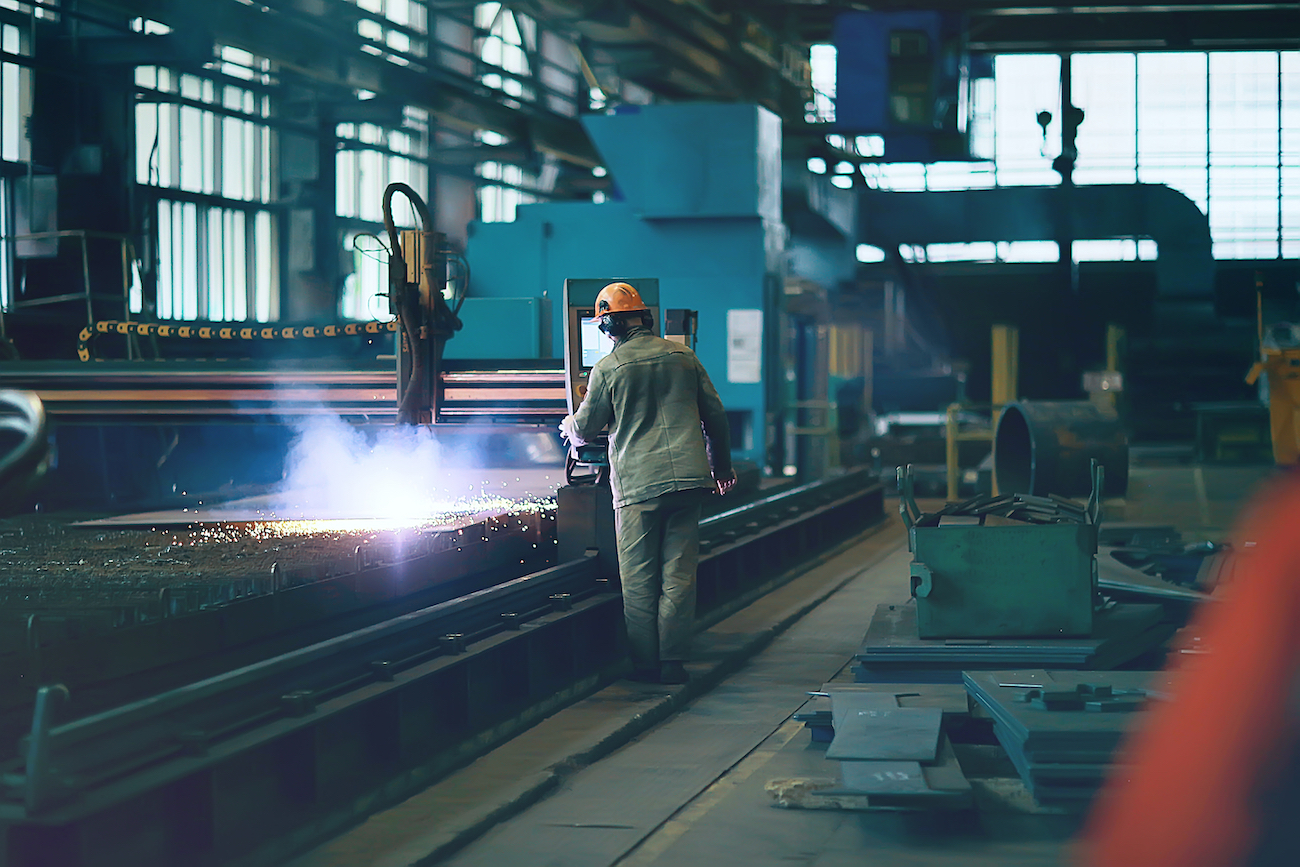
Global crude steel production fell for a sixth consecutive month in February, by 2.2% on-year to 141.8 million tonnes, despite another notable jump in German production, while US and India output continued to buck the trend, Kallanish notes from worldsteel data.
As was the case in January, the figure is nevertheless based on estimated Chinese output, given at 76.09mt in February, which would be down 3.6% on-year. Indian output rose 7.7% to 13.6mt; however, it fell from the all-time January high.
Japanese output was flat at 6.4mt and South Korean production rose 0.2% to 4.82mt.
EU production fell 3.6% to 9.83mt in February, despite German production rising 4.8% to 2.83mt and Italian output hiking 2.7% to 1.87mt. Spanish production slumped 23% to 807,000t.
Turkish output rose 3.4% to 3.03mt.
US crude steel production surged 5.8% on-year in February to 6.5mt, but Brazilian output fell 5.7% to 2.5mt.
Russian production was estimated down 10.2% to 5.03mt and Ukrainian output was confirmed down 9.9% to 515,000t.
January-February global crude steel production thus fell 1.5% on-year to 298.2mt, with India, the US, South Korea, Turkey and Germany bucking the trend.

UK Steel Strategy confirms EAF shift, workforce reduction
The recently published UK Steel Strategy acknowledges that the shift to electric arc furnaces will result in a reduction of the workforce compared to blast furnace operation, Kallanish observes.
It notes that the UK’s remaining blast furnaces are reaching the end of their operational lifespan, and “it will be increasingly uneconomical for steel producers to sustain these ageing assets”.
As this infrastructure is replaced, steelmaking will move to decarbonised forms of production such as EAFs, aligning with both the “clear economic realities” and the UK’s Net Zero goals.
“Steel production is evolving, and the size and structure of the workforce will need to adapt,” it notes.
The workforce needed to support EAF production does look different to that of traditional blast furnaces, and likely smaller. Transition plans should therefore account for the impact of potential job losses, while maximising opportunities for new jobs in a future facing sector, it adds.
Carbon emission intensive methods like unabated blast furnaces face increasing carbon costs at home and abroad. The Strategy says retrofitting Capture, Utilisation and Storage (CCUS) to an aging blast furnace would be technically difficult, have operational efficiency limitations and would entail significant capital and operating costs, while it is not yet commercially proven.
However, it adds that blast furnace production will continue for the immediate future, and it is vital to security of supply that a managed transition is undertaken to maintain steelmaking and protect economic resilience.
No timeframe for this shift was published as part of the Steel Strategy. British Steel received planning permission approval for EAFs in Scunthorpe and Teesside in spring 2024. However, this was before the government’s intervention in early 2025.
The government continues to seek out private sector investment, both in existing steel sites and to deliver new steelmaking capacity and capability. It says it continues to work with British Steel’s owners to find a pragmatic, realistic solution for the future of the steelmaker. It has repeatedly expressed its preference to find a private sector partner for the transition.
As part of the EAF shift, it highlights scrap becoming a more valuable commodity, which will reduce reliance on iron ore and end the use of coal entirely.
However, producing certain grades of steel will require supplementing scrap with primary iron. The UK Primary Steelmaking Review recommends that in the short term, this can be met through imports of pig iron or DRI products from established market routes.
The economic case for domestically produced DRI will rely on energy pricing, the future development of the global DRI market, the chemistry of scrap supplies and progress in process or product innovation. Increased UK steel production would further improve the business case for investment in onshore DRI production.
Italy assesses ADI bids as deadline closes
The special commissioners of Acciaierie d’Italia (ADI) are currently evaluating the two competing industrial plans for future of the steelworks formerly known as Ilva.
Italy’s minister of Enterprises and Made in Italy, Adolfo Urso, confirmed to local media that the bids were submitted by the deadline last Friday, Kallanish notes.
According to sources close to the matter, the proposal from India’s Jindal Group involves a transition from the current blast furnace route to green, electric-based steelmaking. The strategy, however, will focus on boosting Taranto’s re-rolling capacity rather than primary steelmaking.
Over the next four years to 2030, the Taranto plant would operate with two blast furnaces while one electric arc furnace (EAF) is constructed. From 2030 onwards, the blast furnaces would be shut down and dismantled, with production shifting to EAF steelmaking, significantly reducing Taranto CO2 emissions.
This would meet the decarbonisation objectives of the sale tender by phasing out the blast furnace route.
The government aims to reach production levels of around 6 million tonnes in the coming years. Jindal plans to achieve this through the integration and boost of Taranto’s re-rolling capacity, supplying imported slabs from its future Oman operations.
The group is expected to invest around €1.5 billion ($1.74 billion). Taranto would become a strategic hub within Jindal’s global steel and re-rolling network.
In contrast, the plan presented by US investment firm Flacks Group aims to increase production capacity at the Taranto steelworks investing over €5 billion.
Sources previously shared with Kallanish that Jindal’s plan could result in the permanent loss of capacity, with employment also impacted (see Kallanish 17 March).
Last year, Jindal Steel Duqm, part of the Jindal Group, rescheduled the launch of operations at the first phase of its hydrogen-ready green steel complex in Oman’s Special Economic Zone at Duqm (SEZAD) to 2028. The plant will include two direct reduced iron modules of 2.5m t/y each. The first unit is expected to be operational by December 2028, with the second to follow in 2030.
Jindal Group did not comment before press deadline.