


Portugal’s Mota-Engil evaluates Bamin acquisition
Portugal-based Mota-Engil has confirmed its interest in a potential partnership with Kazakhstan’s Eurasian Resources Group (ERG) to develop its Brazilian iron ore subsidiary, Bahia Mineração (Bamin), Kallanish reports.
The project includes the Pedra de Ferro mine, targeting an output of 26 million tonnes/year, the West-East Integration Railway (FIOL) and Porto Sul in Bahia state.
During an investor event, the engineering and construction group’s executive chief, Manuel Mota, said the company is evaluating opportunities for acquisitions, joint ventures, or other business transactions based on its strategic priorities.
“One of our objectives is to establish a strategic partnership to co-finance the next phase of growth, strengthening our financial capacity and long-term alignment within the mining sector,” explained Mota. “We are currently studying and evaluating the Bamin project, which fits in with the group’s strategy.”
The Portuguese construction company held a meeting at the Planalto Palace on 26 January, attended by the Brazilian President, Luiz Inácio Lula da Silva, the minister of transport, Renan Filho, and the Bahia state governor, Jerônimo Rodrigues, at which it presented a proposal for the development of the project.
The negotiations advanced, with Mota-Engil, currently evaluating the financial, legal and operational conditions before the deal’s completion, which could take place in the second quarter.


Tata Netherlands, VW progress in zinc-coated steel research
A consortium consisting of Tata Steel Nederland, Volkswagen Group and several academic research institutes has announced significant progress in the development of a new zinc coated, ultra-strong steels specifically designed for automotive crash structures.
The project – Warm Press Formed Zinc Coated Third Generation Advanced High Strength Steels with High Crash and Corrosion Resistance and Minimized Microcracking (WarP-AHSS) – aims to improve passenger safety and support more sustainable steel production.
Ultra-strong steels used in automotive crash structures are usually hot-formed at very high temperatures. At those temperatures, the zinc coating on the steel can melt, resulting in cracking. For that reason, manufacturers often use aluminium silicon coated steels. Those can withstand high temperatures but offer lower corrosion resistance, Kallanish understands.
“By developing this new high quality steel grades, we address these limitations,” says Radhakanta Rana, metallurgist at Tata Steel Nederland and project leader of WarP-AHSS. “By combining ultra-high strength with exceptional in-service formability, these new steels can absorb significantly more crash energy.”
For automotive manufacturers, a zinc coating, processed at lower temperatures, eliminates the need for additional processes such as sand blasting and provides improved corrosion resistance, Tata notes. In addition to better safety performance, the steel facilitates simpler manufacturing processes, and lower part-making costs, says Christina Sunderkötter, project manager Sustainability Solutions from Volkswagen group.
WarP-AHSS is funded by the European Research Executive Agency (REA) on behalf of the European Commission. The project runs from 2023 until 2027.
Salzgitter expects to own HKM by June
Salzgitter expects to become the exclusive owner of Duisburg-based mill Hüttenwerke Krupp Mannesmann (HKM) by June, Salzgitter’s ceo Gunnar Groebler has said during its annual results conference, attended by Kallanish.
Earlier this year, thyssenkrupp Steel and Salzgitter announced an agreement that also involves HKM’s third co-owner, Vallourec.
Groebler notes that talks are proceeding positively, and that while some approvals from antitrust authorities will still have to come, he had no reason to expect the process to take beyond May.
HKM produces slab but has no rolling facility. Groebler expects the mill will become an important supplier of slab to the European market to fill the gap of expiring supplies from Russia. He points out that HKM slabs will also be used for steels for the defence sector, where Salzgitter is stepping up activities.
Regarding the plan of a technical transition of HKM, Groebler says this is projected to be realised in a matter of three years. “This is an ambitious timetable,” he says, adding that it is based on a three-year plan for public subsidies. Talks between HKM and technical suppliers are currently ongoing, he says.
Meanwhile, HKM will launch an intermediate reline of one of its blast furnaces in May that will last throughout the summer.

Italian HRC market slows as downstream demand falters
Italian coil prices are stable week-on-week, with subdued activity reported across the value chain, Kallanish notes.
Demand remains weak and limited to small tonnages. Service centres report similar conditions in the sheet segment, with high inventory levels slowly absorbed by the current real demand.
Both coil buyers and derivative consumers are adopting a cautious, wait-and-see approach amid negative sentiment linked to the US-Iran conflict, which is driving up logistics and energy costs.
Indexed HRC contracts continue to cover most service centres’ requirements, with spot purchases limited to small volumes to fill gaps in the stocks.
On the import side, transactions are limited to delivered duty paid (ddp), with traders assuming CBAM risk. However, traders are raising ddp offers to about €700/tonne ($810.73/t) while alternative sources are scarce. Turkish material is offered at around €620/t cif or slightly below, but buyers must pay duties and CBAM costs on top, as the quotas are exhausted.
As a result, import prices are currently uncompetitive compared to domestic, and buyers are largely staying away from imports.
One source notes that the conflict, combined with a potential revision of the ETS that could alter CBAM calculations, is once again reshaping the context. Another questions the viability of the upcoming safeguard measures, warning that in a market already plagued by sharp cost increases linked to the war, and stricter quotas could risk bringing activity to a standstill.
Several sources confirm that end-users are already changing their purchasing behaviour. Faced with rising costs, buyers are reducing volumes and focusing on short-term needs. “Given how rapidly the international situation has changed, planning has become extremely difficult. Implementing strict safeguard measures in this context would have a significant impact across the entire value chain,” one buyer says.
Downstream, hot-rolled sheet prices are also stabilising at €770–780/t ex-works, with service centres targeting €800/t. The brief uptick in demand seen following the conflict has now faded. Customers are relying on inventories purchased at lower price levels. They have limited visibility and increasing difficulty in passing on further price rises.
Market participants express growing concern that the current wave of sharp increases, combined with the loss of the Middle East market, could weigh on the downstream “Made in Italy” manufacturing sector, with potential repercussions upstream.

EUROFER calls on the EU to take urgent trade measures against global steel overcapacity
The European Steel Association (EUROFER) stated that the latest OECD data released in Paris confirms the deepening global steel crisis and called on the European Union to swiftly implement new steel trade measures.
According to OECD data, global steel overcapacity reached approximately 640 million mt in 2025, exceeding total OECD steel production by more than 200 million mt. During the same period, global steel production capacity rose to a record level of 2.4 billion mt.
Axel Eggert stated that the OECD findings clearly show that global steel overcapacity is not only at high levels but continues to increase, adding that this situation poses a serious threat to steel production, investments, and employment in Europe.
EUROFER emphasized that the new EU steel trade measure, currently under negotiation, is critical to preventing further market instability. The proposed system is said to include a tariff-rate quota (TRQ) mechanism aimed at keeping imports at controlled levels without completely halting them, thereby protecting the EU market against global overcapacity and trade diversion.
The association warned that any weakening of the measure would reduce its effectiveness, while also pointing out that the current safeguard measures are set to expire in June. Eggert called on EU negotiators not to dilute the new trade measure and to implement it without delay.
EUROFER cautioned that any resulting gap could leave the European steel market vulnerable at a critical time.

thyssenkrupp Steel invests in a new laboratory for future iron ores
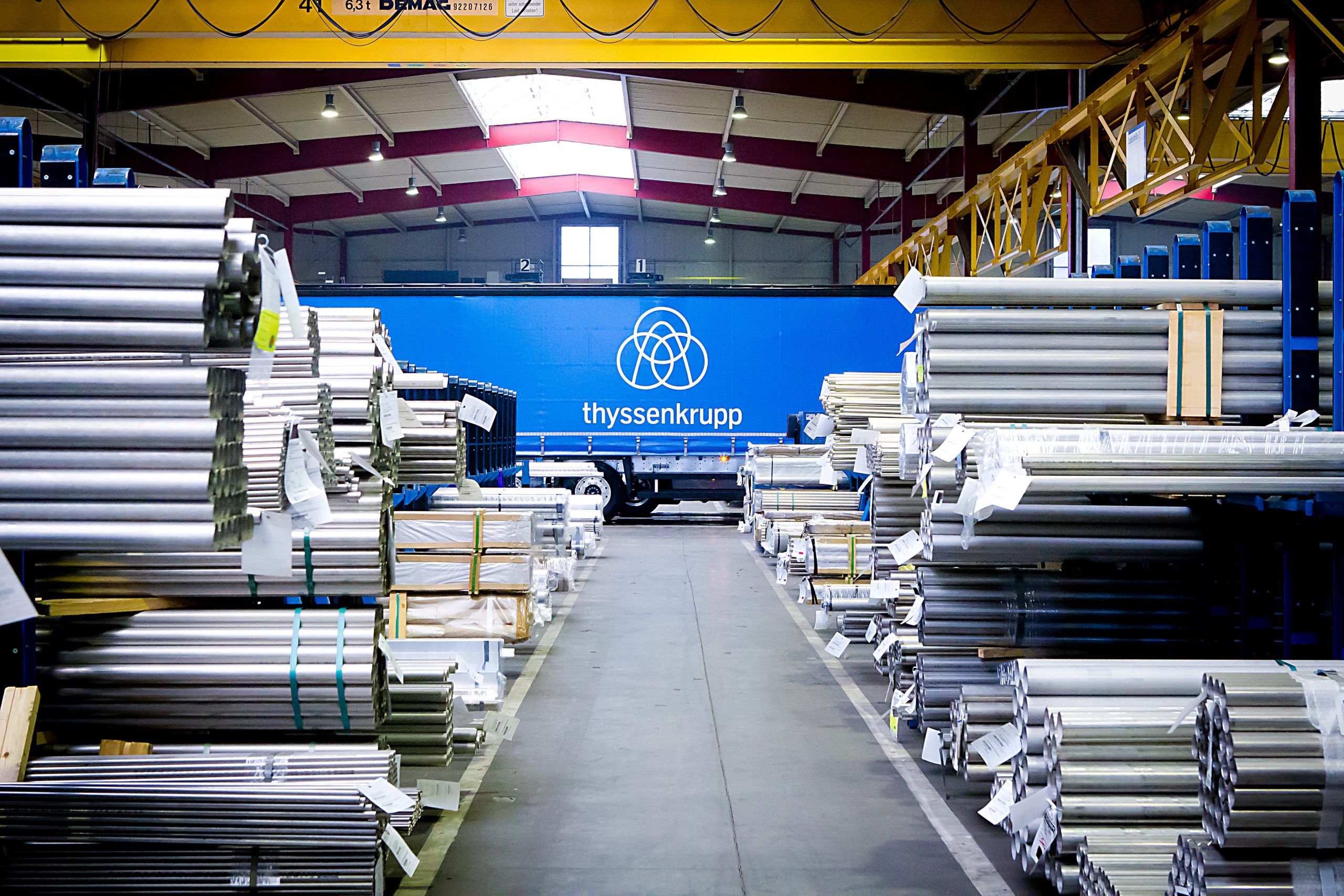
thyssenkrupp Steel is investing in a new test laboratory at its Schwelgern site in Duisburg, Germany, as part of its transition to climate-neutral steel production. With this investment, the company aims to expand the capacity of its existing metallurgy laboratory and strengthen the raw material testing infrastructure required for the direct reduction (DR) plant it plans to commission in the future.
According to the statement, the contract for the new laboratory investment has been awarded to Heat & Power, which previously designed and built a pilot sinter plant for thyssenkrupp Steel. The total value of the project is reported at EUR 2.4 million.
The existing metallurgy laboratory at Schwelgern already provides comprehensive testing capabilities for traditional blast furnace raw materials, including sinter, iron ore pellets, lump ore, and blast furnace coke. With around 2,000 tests conducted annually, the facility serves as a key component of quality assurance across the blast furnace production chain. The new investment will expand this capacity in line with the requirements of hydrogen-based direct reduction.
The direct reduction process differs significantly from the conventional blast furnace route. While blast furnaces operate with carbon monoxide-rich gases at temperatures well above 1,000°C, direct reduction takes place at around or below 1,000°C in a hydrogen-rich gas environment. As a result, the performance of pellets and lump ore must be tested in accordance with ISO standards tailored to direct reduction conditions.
Under the new laboratory setup, the behavior of raw materials in direct reduction conditions will be analyzed in detail, including their tendency to stick or agglomerate during reduction, degradation rates, and reducibility characteristics. Reducibility is particularly critical, as it directly impacts reaction rates and overall plant efficiency.
Marco Richrath stated that the new DR laboratory will enable the analysis of raw materials under realistic hydrogen-based conditions, adding that the results will provide a solid basis for both iron ore quality assessment and the stable and efficient operation of the future direct reduction plant.
The testing environment will be designed to reflect future production conditions. While hydrogen content in blast furnace process gases is currently around 2%, it has already reached approximately 45% in direct reduction testing. The company plans to gradually adjust testing conditions to higher hydrogen concentrations in line with increasing hydrogen usage. Test furnaces will also allow steam injection, enabling more comprehensive analysis of raw material behavior during reduction.
A key element of the company’s future production strategy is the integrated use of a direct reduction plant with electric remelting furnaces. This approach will allow the use of both DR-grade pellets and conventional blast furnace pellets. The application of specialized slag metallurgy in electric remelting furnaces will enable the removal of impurities in pig iron, providing greater flexibility in raw material sourcing.
The limited systematic testing to date of blast furnace pellets under direct reduction conditions increases the importance of laboratory-based quality assurance. With the new facility, thyssenkrupp Steel aims to carry out these assessments in-house.
Alongside the laboratory investment, the company is also placing emphasis on training programs to enhance employee technical capabilities. Laboratory teams will undergo comprehensive training in the use of new testing equipment, data analysis, and the safe handling of hydrogen-containing gases.
The new DR laboratory is set to become a key infrastructural milestone in thyssenkrupp Steel’s green transformation, supporting the transition to direct reduction and electric melting processes and playing a critical role in adapting the Duisburg production network to climate-friendly steelmaking.
SSAB releases 2025 report: Leadership in green steel and strategic transformation accelerate
SSAB has released its 2025 annual report, outlining both its financial performance and the progress achieved in its transition toward fossil-free steel production. The report, published on March 17, 2026, highlights that despite weak global steel demand and ongoing geopolitical uncertainties, the company has remained aligned with its strategic objectives while advancing its green steel vision into a tangible business model.
The company’s financial results point to a relatively resilient performance under challenging market conditions. SSAB reported total revenue of SEK 96.2 billion for 2025, while operating profit (EBIT) reached SEK 6.1 billion. Earnings per share stood at SEK 4.92, and the board proposed a dividend of SEK 2.00 per share. Strong operating cash flow of SEK 7.6 billion underscored the company’s solid balance sheet, with officials emphasizing that its premium product strategy and geographic diversification helped offset the impact of lower market prices.
In terms of market positioning, SSAB maintained its leadership in the advanced high-strength steel (AHSS) segment, holding an estimated 20% global market share. The company continues to benefit from strong customer loyalty driven by brands such as Hardox and Strenx, enabling higher value-added offerings. Premium products accounted for 55% of total shipments, remaining a key driver of margins.
As part of its “Accelerating Premium Leadership” strategy, SSAB updated its targets, aiming to increase the share of premium products to 65% by 2030 and 75% by 2035. The company also made progress in operational excellence, achieving its lowest-ever lost time injury frequency rate of 0.56 in 2025, reflecting continued improvements in safety and efficiency across its operations.
Investments in fossil-free steel production remain central to SSAB’s transformation strategy. At its Oxelösund site in Sweden, construction of a new electric arc furnace (EAF) to replace blast furnaces is progressing as planned, with operations expected to begin in early 2027. Meanwhile, the Luleå mini-mill project stands out for its environmental impact, with the potential to reduce Sweden’s total carbon emissions by approximately 7% upon completion.
Strategic partnerships across the value chain also featured prominently in the report. Volvo Cars is set to become the first automaker to use “SSAB Zero™” in serial production, alongside initiatives to recycle high-quality scrap from its operations. Toyota Material Handling Europe secured supply agreements to support its low-carbon manufacturing goals, while collaborations with Alfa Laval and Outokumpu aim to reduce the carbon footprint of heat exchanger steel by up to 60%.
Overall, the report indicates that SSAB, leveraging its expertise since 1878, is not only maintaining financial resilience but also strengthening its position as a key player in the global transition toward low-carbon steel production.
Acerinox achieved strong profit growth in 2025
Acerinox’s 2025 financial results demonstrated that the company delivered a resilient performance despite ongoing volatility and pricing pressures in the global steel sector.
Total revenue reached EUR 940.7 million, while operating profit was recorded at EUR 266.2 million. Net profit for the period increased to EUR 202.3 million, marking a strong rise compared to the previous year. Based on this performance, the Board of Directors is preparing to propose a dividend distribution of EUR 0.62 per share to the General Assembly.
On the operational side, cash generation capacity stood out. Cash flow, which reached EUR 330.9 million, indicated that the company maintained balance sheet resilience and preserved financial flexibility. Dividend income from group companies remained a key component of the revenue structure, while significant impairment charges recorded during the year were among the factors putting pressure on profitability. Nevertheless, the company delivered a balanced financial outlook supported by a strong revenue mix.
Assessments of its market position showed that Acerinox continues to be a strong player in the stainless steel and high-performance alloys segment. The company operates across a wide geographical footprint, particularly in the United States, Europe, and Africa, and maintains its competitive advantage through a focus on high value-added products. Alloys used in aerospace, energy, and advanced engineering applications play a critical role in the company’s growth strategy.
In this context, the acquisition of Haynes International completed in 2024 stands out as a strategic move that strengthens Acerinox’s position in the high-performance alloys segment. Through this acquisition, the company expanded its presence in the U.S. market while also broadening its customer base in aerospace and advanced technology sectors.
Within the strategic transformation process, portfolio optimization also emerged as a key focus area. The sale of the Malaysia-based Bahru Stainless subsidiary was considered part of the strategy to exit low value-added production and shift towards higher-margin segments. With this step, the company aims to reshape its presence in the Asian market into a more selective and efficiency-driven structure.
On the financial structure side, Acerinox maintained its strong capital base. As of 2025, total assets stood at EUR 2.88 billion, while equity increased to EUR 1.12 billion, supporting the company’s financial strength. A controlled leverage profile was maintained, while financing costs and foreign exchange impacts remained manageable throughout the year.
Meanwhile, the company continued to actively manage its investment and financing activities. Significant investments were made in subsidiaries during the year, while a balanced structure was maintained on the financing side through repayments. Dividend payments also remained a key component in terms of shareholder returns.
Overall, the picture indicates that Acerinox, which has been operating since 1970, not only strengthened its financial performance in 2025 but also accelerated its strategic transition towards a higher value-added, globally competitive, and sustainable business model. The company’s strong subsidiary structure, broad geographic footprint, and investments in the high-performance alloys segment stand out as key drivers supporting its growth potential in the coming period.

EU CBAM process accelerates: First carbon certificate price to be announced on April 7
The European Union’s Carbon Border Adjustment Mechanism (CBAM) is gaining momentum, with significant developments emerging regarding both its pricing framework and scope.
The European Commission announced that the first carbon certificate price under CBAM will be published on April 7, 2026. Prices will be calculated in the first calendar week following each quarter and shared publicly on the first business day of the following week. This marks a shift from CBAM being a theoretical regulation to generating tangible costs for companies.
Meanwhile, expanding the mechanism’s coverage remains a top priority on the EU agenda. A proposal presented by the Commission in January foresees CBAM extending beyond primary products to include downstream goods. Approximately 180 new products are expected to be added to the system, with the main goal of preventing regulatory circumvention. If consensus is reached among stakeholders, this expansion is expected to come into effect on January 1, 2028.
On the political side, the process continues to progress in the European Parliament. Mohammed Chahim has been reappointed as CBAM rapporteur and has invited stakeholders to share their views and proposals. This underscores the important role that sector feedback will play in shaping the final regulation. In his role as rapporteur, Chahim is recognized as a key figure supporting a fair industrial, energy, and climate transition under the European Green Deal while overseeing the CBAM regulation aimed at preventing carbon leakage.
In terms of the implementation timeline, 2026 and 2027 will be critical transition years for companies. Under the 2026 schedule, the first carbon certificate price will be announced on April 7, followed by the second-quarter price on July 6. A major infrastructure milestone is set for September 30, 2026, when CBAM verifiers can request access to the system, with the third-quarter carbon price shared publicly on October 5.
From January 1, 2027, a 20% adjustment for default values (excluding fertilizers) will take effect, and fourth-quarter prices will be published on January 4, followed by weekly updates. The deadline for the first-quarter CBAM certificate holding requirement is March 31, while the first annual declaration for 2026 imports is scheduled for September 30. The deadline for the resale of surplus certificates is October 31, and their cancellation will take place in November. At the end of the year, in December 2027, a report evaluating CBAM’s impact on carbon leakage will be published alongside a revision report on default values and sector-specific adjustment rates.
The implementation of CBAM is expected to increase import costs and alter competitive dynamics. With the planned scope expansion in 2028, not only raw steel but also processed products are expected to be subject to carbon costs.

CLEPA: EU automotive sector needs policies to strengthen competitiveness
The CLEPA stated that China’s surpassing of the European Union (EU) in value-added production threatens Europe’s global leadership in the automotive sector.
For decades, Europe’s automotive supply industry has maintained a strong trade surplus as a driver of global value creation; however, today this engine is approaching a standstill.
The most striking shift is taking place in production value. China has rapidly expanded its capacity and now produces nearly twice the value-added output of the European Union. This growth, combined with rising imports from low-cost centers, is actively eroding the trade surplus that forms the backbone of Europe’s industrial strength. At the same time, a decline is being observed in exports to traditional markets such as the United Kingdom and the United States.
Benjamin Krieger, Secretary General of CLEPA, noted that these trends are rapidly undermining Europe’s role as a global powerhouse in automotive components. Krieger emphasized that, in order to remain competitive, the EU must preserve its manufacturing capacity, address structural cost disadvantages and implement targeted measures that support investment in domestic production. He warned that without decisive action, thousands of jobs could be lost and European companies may relocate their production outside the region.
As China’s automotive supply sector grows faster than ever, European suppliers are coming under increasing competitive pressure. Krieger stated that, for Europe to remain a key production hub, policies must be implemented to enhance competitiveness and ensure a level playing field for suppliers.
CLEPA announced that, under the Industrial Accelerator Act, it has set a balanced strategy as its main objective, aiming to preserve Europe’s industrial strength while promoting employment and investment.