EU fixes rebar TRQ misuse loophole
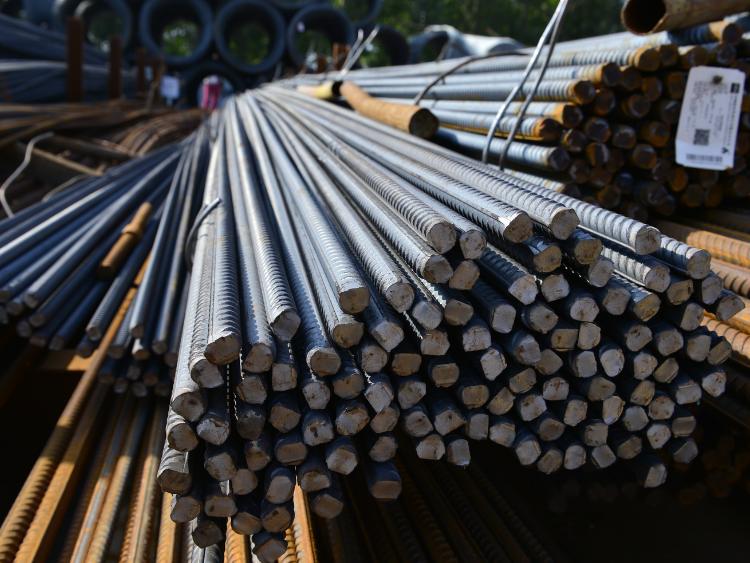
The European Commission has amended its steel safeguard measures by introducing new TARIC sub-codes to distinguish rebars from merchant bars and to ensure correct classification under the relevant TRQ categories, Kallanish notes from the Official Journal on 10 April.
The changes come without expanding the scope or changing duty-free volumes.
The measure targets product categories 12 (merchant bars) and 13 (rebars), where since 2025 significant rebar volumes have been imported under the merchant bar category by slightly modifying chemical composition to access larger duty-free quotas. This led to an abnormal rise in imports under CN code 7228 30 69, up around 250% in 2025, undermining the safeguard system, distorting traditional trade flows, and limiting access to quotas for genuine merchant bar suppliers and users.
To address this circumvention and restore market balance, the Commission has introduced new TARIC sub-codes, assigning rebars under 7228 30 69 11 and other products under 7228 30 69 99.
The decision enters into force immediately.


H2 availability, cost remain issues for decarbonisation: MHI
The availability of hydrogen and its cost competitiveness “remains an issue” for decarbonising the steel sector, Mitsubishi Heavy Industries (MHI)’s Maria João Duarte said during a hydrogen conference in Vienna last week monitored by Kallanish.
“In Europe right now, hydrogen-based DRI is obviously not economically available,” Duarte, representative to the EU Institutions at MHI EMEA, adds. “We don’t have renewable energy available to produce renewable hydrogen. We don’t have the infrastructure to import that hydrogen from elsewhere yet, so there is also an infrastructure gap that has to be met. We are talking about high capex and opex, and we are also looking at a sector that is very sensitive to international competition and energy prices.”
The steel industry benefits from multiple decarbonisation pathways, such as electrification, direct reduction with carbon capture and storage, and switching the fuel from natural gas to hydrogen. However, the pace of decarbonisation has been “slower than we anticipated,” she warned, stressing the need to derisk existing decarbonisation technologies.
Duarte argues that decarbonisation of steel is fundamentally a policy‑driven process. She calls for policies that can turn decarbonisation into a “viable business case”, emphasising that “it has to make sense from a competitiveness point of view.”
“Having a strong EU ETS coupled with a strong CBAM is fundamental to go ahead,” Duarte concluded. “Having structural changes, perhaps on how electricity prices are formed and the signals there are given, is also another important measure. We need demand-side policies and pools that bring all these benefits across the supply chain up until the consumer.”
Meanwhile, also speaking at the event, Austrian steelmaker voestalpine’s Matthias Pastl noted the company is prioritising electrification, not hydrogen, for decarbonisation (see related story).

UK unveils CBAM framework for emissions calculation and verification rules
The UK government has released its draft emissions and verification regulations, establishing the framework for calculating embedded emissions in goods covered by its Carbon Border Adjustment Mechanism (CBAM). The mechanism is set to enter into force on January 1, 2027, and will apply across the entire UK, including Northern Ireland.
This is in addition to other second draft of rules setting out details of the administrative requirements, CBAM rate and carbon price relief, as SteelOrbis reported previously.
Key definitions and calculation methodologies
The draft regulations express emissions in metric tons of carbon dioxide equivalent (CO₂e) and permit two calculation approaches.
Where default values are used, emissions are calculated by multiplying the weight of the CBAM good by the applicable default value. Where actual emissions data is available, a step-by-step methodology applies, including identifying the monitoring period, calculating total production emissions, converting them into carbon dioxide equivalent, incorporating emissions from precursor goods, determining emissions intensity, and multiplying by the product weight.
The framework clarifies how emissions from precursor goods are incorporated into total emissions. Actual data is used where available, while default values apply in the absence of verified information. An emissions conversion data is also included in the regulations, enabling the conversion of non-carbon gases such as nitrous oxide and fluorinated gases into carbon dioxide equivalent values.
Monitoring and verification requirements
Emissions must be monitored over a defined calendar year, with specific rules depending on the import timing of goods. Verified emissions data must be assessed by independent accredited verifiers. These entities are required to evaluate emissions data, perform verification procedures, and issue reports covering installation details, monitoring periods, and the accuracy of emissions calculations. Accreditation bodies will oversee verifiers, ensuring compliance with technical standards, competence, and independence.
Importers of CBAM goods will be required to retain detailed records for six years. These include information on production installations, operators, emissions intensity, monitoring periods, and verification reports. These requirements form part of the UK CBAM’s implementation as a tax mechanism under the Finance Act 2026.
Industry concerns over competitiveness
UK-based trade association UK Steel has warned that the proposed CBAM design could unintentionally disadvantage domestic producers.
Under the UK Emissions Trading Scheme, UK steelmakers already face high carbon costs based on verified emissions. However, imported steel, often produced with higher emissions, could enter the UK at a significantly lower effective carbon cost. This imbalance stems from several design issues. Imported products may be assessed using default global emission values rather than actual verified emissions, which can substantially reduce their calculated carbon liability. In addition, some downstream steel-containing products may fall outside the current CBAM scope, allowing them to avoid carbon costs altogether. Industry stakeholders have called for several revisions to address these concerns. Proposals include adopting more conservative default values aligned with EU practices, introducing product- and production route-specific benchmarks, and expanding CBAM coverage to downstream steel products.
There are also calls to address export-related challenges to maintain the international competitiveness of UK producers. Without such adjustments, stakeholders warn that the mechanism could risk undermining decarbonization efforts and weakening domestic supply chains rather than supporting the transition to low-emission steel production.


Italian longs prices hold onto recent gains
Italian longs prices are holding steady following the increases implemented in March in response to rising costs linked to the US-Iran conflict. Further hikes are being applied or considered this month, but the market is showing resistance to additional increases.
Several sources tell Kallanish they are in a wait-and-see mode ahead of the Tube and Wire trade show in Düsseldorf this week.
Domestic merchant bar prices have risen against pre-conflict levels, with a further €20-30/tonne ($23.37-35.06/t) increase under consideration or already implemented, depending on mill.
Demand, however, remains subdued, with multiple buyers and sellers reporting low activity levels. One source notes that volumes purchased in March could take up to three months to deplete, while several sellers and distributors describe last month as solid, with apparent demand having resurfaced. That momentum has since faded, particularly for merchant bar but also across other long products including rebar, Kallanish notes.
Current contracts for merchant bar are heard at €300-320/t base ex-works, equivalent to €720-730/t including size extras. Some mills are now implementing further increases to €330-340/t due to persistently high costs.
March was initially a slow month for sections sale as the European increases have encountered refusals in some countries, particularly in Germany.
In Italy after an initial resistance soon after the conflict, demand has picked up at increased prices. Section prices in Italy rose by some €40-50/t compared to the beginning of March. The first category of sections is now at €800-810/t delivered on average with the sellers increasing their prices by another €20/t pushing up new levels to €830/t. Agents and buyers report steady activity in the sections segment with steady demand coming from infrastructure projects.

ArcelorMittal Hunedoara sale to UMB Steel approved by Romanian Competition Council
Romania-based investor UMB Steel, part of the construction focused UMB Group owned by Dorinel Umbrarescu, has received clearance from the Romanian Competition Council for its acquisition of Romanian steelmaker ArcelorMittal Hunedoara, reinforcing its ongoing efforts to expand its footprint in the domestic steel sector.
As previously reported by SteelOrbis, the company has acquired the production assets of ArcelorMittal Hunedoara for €12.5 million, marking a concrete step forward in strengthening its position within the local market.
ArcelorMittal Hunedoara has been idle since September 2025, with operations suspended due to high energy costs, weak domestic demand and pressure from low-priced imports. The plant had been producing around 200,000-300,000 mt of long steel products annually and had already been operating under challenging conditions prior to the shutdown, reflecting broader difficulties faced by regional producers.
The relatively low acquisition price points to an opportunistic move into distressed assets. However, market players remain cautious regarding the likelihood and timing of a potential restart, given continued pressure on margins, limited pricing power and still subdued demand in the Romanian market.
At the same time, the deal is viewed as part of a longer-term positioning strategy. If successfully implemented, it could gradually reshape supply dynamics in Romania’s long steel segment by reducing reliance on imports and aligning production more closely with infrastructure-driven demand.
The approval follows UMB Steel’s earlier acquisition of the Otelu Rosu plant in 2024 and its attempt to acquire Liberty Galati in October 2025, which did not materialize, underlining the group’s increasing interest in building a more integrated presence in the domestic steel industry.

Europe’s green steel market stuck in wait-and-see mode amid muted demand
The European market for green steel remained quiet in the week to Thursday April 9, with spot activity close to nil; buyers focused on long-term offtake agreements to ensure future supply security, Fastmarkets heard on Thursday.
Market participants said that demand for long-term offtake agreements remains in place, particularly for green steel deliveries scheduled for 2028-2030 and later. They expect interest in lower-carbon steel to grow over time, supported by evolving regulatory frameworks.
A European buyer noted that although green steel output is set to increase in the next decade, the pace of expansion has been slower than initially anticipated.
New capacity additions across Europe are expected to come mainly from electric-arc furnaces (EAFs) and direct-reduced iron (DRI) facilities. But many producers, including Salzgitter and ArcelorMittal with SALCOS and Gijón respectively, have delayed or postponed integrated DRI projects to focus resources on EAF construction, Fastmarkets reported.
New EAF-based green steel output, using a mix of natural gas-based DRI, pig iron and scrap, is forecast to reach around 35 million tonnes in 2030, Fastmarkets estimates.
In the spot market, meanwhile, buyers’ readiness to pay premiums for reduced-emissions steel remains limited. Sources highlighted high premiums and ongoing uncertainty around definitions and standards for green steel in Europe as a key factor restraining wider adoption along the value chain.
Under Fastmarkets’ framework, European green steel refers to material produced with combined Scope 1, 2 and 3 emissions not exceeding 0.8 tonnes of CO2 per tonne of steel.
Buyer estimates suggest that achievable premiums for such material are typically in the range of €100-150 ($117-175) per tonne, although some deals may have been concluded at minimal or zero premium for strategic or marketing reasons. In contrast, mill sources indicated that premiums should be at least €150-170 per tonne.
During the assessment period, offers for qualifying green steel were reported at €200-300 per tonne above conventional material, although producers acknowledged that discounts could be negotiated for larger volumes.
No new spot sales were reported during the assessment week.
“We had two inquiries [for green steel] since the beginning of April, 100-150 tonnes, but no sales,” a supplier source said.
As a result, Fastmarkets’ weekly assessment for the green steel domestic, flat-rolled, differential to HRC index, exw Northern Europe was unchanged week on week at a premium of €100-150 per tonne on April 9, narrowing downward from €100-170 per tonne seven days earlier.
Meanwhile, Fastmarkets’ assessment of the flat steel reduced carbon emissions differential, exw Northern Europe was €0-50 per tonne on Thursday, stable week on week.
For steel produced in blast furnaces with reduced carbon emissions of 1.4-1.8 tonnes of CO2 per tonne of steel, offers for premiums were reported at €70-80 per tonne.
Estimates of achievable premiums came in at €0-50 per tonne.
Market participants also pointed to uneven demand from end-use projects, with activity remaining sporadic rather than consistent. While projects such as thyssenkrupp Steel’s recent supply of around 1,000 tonnes of CO2-reduced bluemint® steel — a mass-balanced product with a higher share of recycled content — for a water pipeline in Angola highlight the use of green steel in infrastructure, such cases remain limited in scale. Sources said that project-driven demand has yet to provide a steady or material uplift to overall consumption, reinforcing the view that uptake across the market remains gradual and fragmented.


Balanced positions curb trading momentum in European domestic steel HRC market, sentiment positive
The European domestic markets for steel hot-rolled coil showed little movement on Friday April 10, with an the absence of urgency among both buyers and sellers curtailing activity. With neither side under pressure to secure volumes, business was limited.
Nevertheless, sentiment remained positive and some mills have already indicated higher asking prices for material scheduled for delivery in the third quarter amid expectations of further reductions in import activity because of imminent sweeping changes in the region’s safeguarding system.
Second-quarter coil availability was largely exhausted at integrated mills in Germany and the Benelux area, although a few suppliers were still offering limited June-delivery HRC tonnages within the range of €720-730 ($856-868) per tonne ex-works, with estimates of workable prices at €710-720 per tonne ex-works.
No major deals were heard during the day. A seller source said that if some business was being done now it was only “back to back.”
Indications of offers for July-delivery material were heard at €740-760 per tonne ex-works earlier this week.
Fastmarkets’ daily steel hot-rolled coil index, domestic, exw Northern Europe, was €720.00 per tonne on April 10, unchanged day on day.
The index was, however, up by €1.24 per tonne week on week and by €15.62 per tonne month on month.
The corresponding daily steel hot-rolled coil index, domestic, exw Italy, was calculated at €700.00 per tonne ex-works on April 10, up by €1.00 per tonne from €699.00 per tonne on April 9.
The index was up by €1.25 per tonne week on week and by €12.50 per tonne month on month.
Trading in the Italian market was also muted, with no major deals reported during the day.
Market sources reported limited supplies due to a local re-roller being forced to suspend production earlier this month for technical reasons. Demand, however, also left much to be desired.
Market participants estimated a workable price to be €700 per tonne ex-works.
Industry sources from both Northern and Southern Europe said that this week was quiet because of Easter holidays, and expected at least some clarity or revival of activity next week, during the Wire & Tube trade fair in Dusseldorf, Germany, over April 13-17.
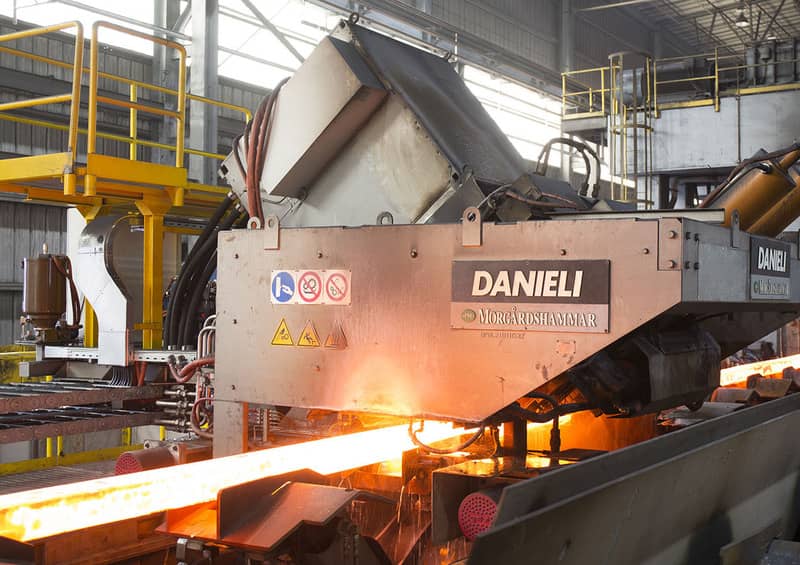
Utva Silosi signs agreement with Danieli for new ERW pipe mill in Serbia


voestalpine secures nearly EUR 1 billion in aerospace and space orders