

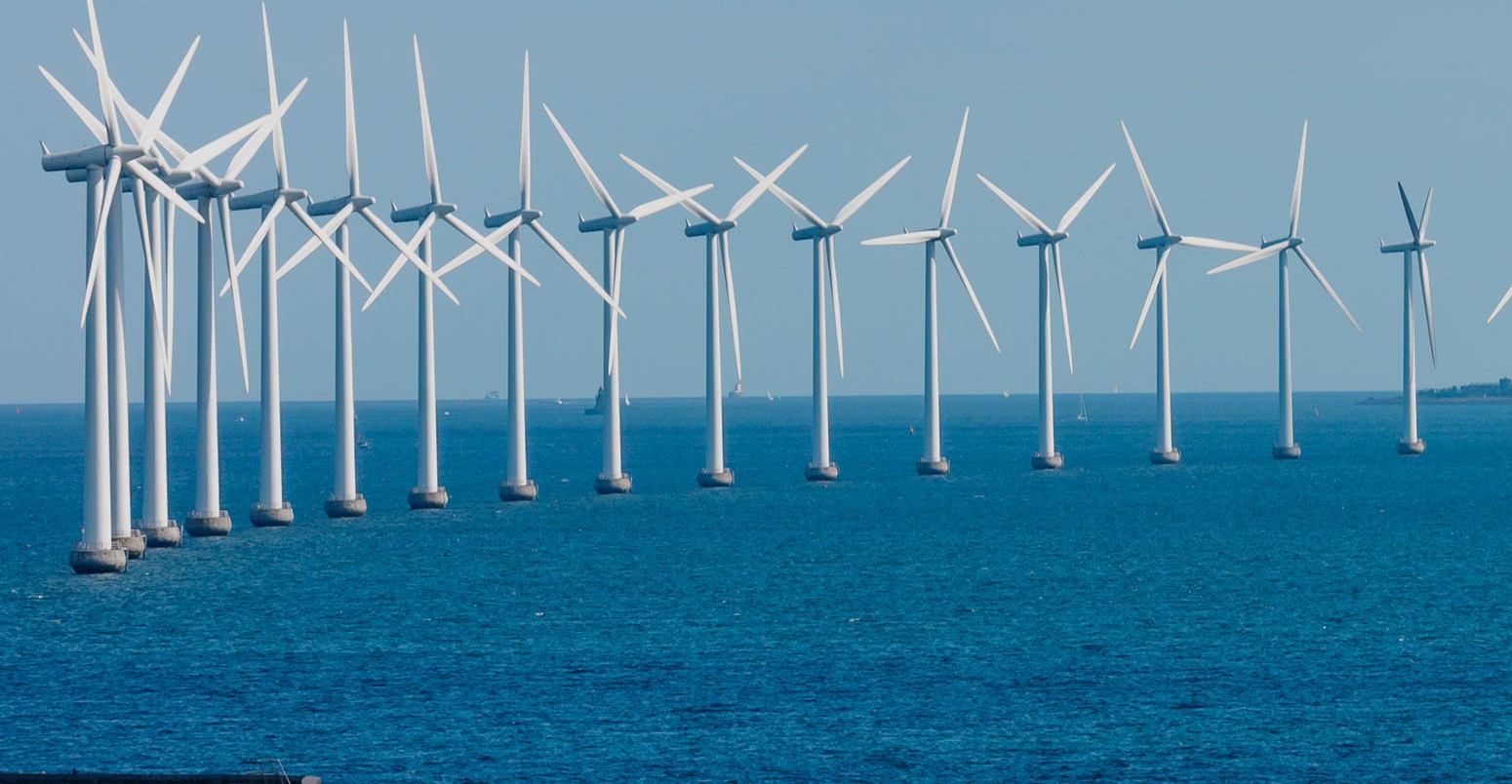
Denmark offshore windfarm installs CO2-reduced steel towers
Denmark’s largest offshore wind farm, known as Thor, says it has installed the world’s first turbine with CO2-reduced steel towers and recyclable rotor blades, according to project operator, RWE.
The German-based energy group says it is the first company worldwide to use Siemens Gamesa’s GreenerTower. The tower plates are made from steel with at least 63% lower CO2 emissions than conventional steel by using renewable-powered furnaces and scrap steel, Kallanish understands.
In addition, the Thor windfarm will feature Siemens Gamesa’s recyclable rotor blades. Due to an innovative resin, the composite materials in these blades can be separated and reused, for instance in new casting applications in the automotive or consumer goods industries. RWE explains.
The Thor offshore wind farm off Denmark’s west coast will be laid out for a capacity of 1.1 gigawatts. In total, 72 wind turbines, each with a capacity of up to 15 megawatts, will be installed by the end of 2026. Half of them will be equipped with steel towers produced with a lower carbon footprint, and 40 turbines will feature a total of 120 recyclable rotor blades.
When fully operational in 2027, Thor will be capable of producing enough green electricity to supply the equivalent of more than one million Danish households. Thor offshore wind farm is a joint project between RWE (51%) and Norges Bank Investment Management (49%). RWE is in charge of construction and operations throughout Thor’s lifecycle.


Stegra to boost Boden construction after new funding
Swedish green steel start-up Stegra says it will accelerate construction activities following an in-principle €1.4 billion ($1.65 billion) financing agreement, Kallanish reports.
Wallenberg Investments has led the financing round with a consortium with Temasek and IMAS. Existing Stegra shareholders, including Altor, Hy24 and Just Climate, also participated. The new capital, subject to credit approvals, will enable the completion and commissioning of Stegra’s green steel plant in Boden.
“After several slower months during the funding activities, Stegra will now ramp up construction activities,” the company says, noting the project timeline is currently under review.
The plant is designed to produce up to 5 million tonnes/year of green steel by 2030, running an electrolysis capacity of 700 megawatts.
The first steel production was initially expected this year. However, the company previously confirmed a temporary construction break late last year. It denied that financial struggles were risking the viability of a new Swedish start-up, following the downfall of battery maker Northvolt.
Stegra’s chief executive Henrik Henriksson says the financing reflects the “strong conviction” in its business model amid a “very challenging macro-environment”.
“We are convinced of the competitiveness of Stegra and the commercial attractiveness of green steel … while remaining clear-eyed about the challenges that lie ahead,” comments Leif Johansson, adviser to the consortium led by Wallenberg Investments. “We also consider the project to be of great importance to Sweden’s position as an industrial nation.”
SteelWatch executive director Caroline Ashley welcomes the announcement saying it signals the change towards “truly clean” steelmaking at scale is happening. “Naysayers have had their day,” she adds.
Stegra expects the deal to close in June, when Johansson will become Stegra’s new chair of the board. Wallenberg Investments’ senior industrialist Håkan Buskhe and Altor’s managing partner Paal Weberg will also join the board.
Kallanish has contacted Stegra for clarification on the new timeline.

Marcegaglia advances Fos-sur-Mer coil mill plans
Italian steelmaker and processor Marcegaglia has awarded a contract worth approximately €450 million ($530.37m) to equipment maker Danieli for its coil mill project in Fos-sur-Mer, southern France, Kallanish learns from the company.
A final investment decision for the project is expected by end-2026, subject to completion of the permitting process.
The total investment for the mill, known as the Mistral Project, will amount to approximately €1 billion, the largest investment in Marcegaglia’s history, a company source confirms. The plant will have an annual capacity of up to 3 million tonnes of stainless and carbon steel hot-rolled coil, covering roughly 35% of the group’s total coil and slab requirements. Output will primarily supply its Italian downstream facilities.
The new mill will have an electric arc furnace, a single‑strand continuous slab caster producing thick slab, and a hot-strip mill. This will ensure “the utmost flexibility by applying different charging mix, stable production performance, consistent product quality, and operational robustness across a wide range of flat steel grades,” a company note explains.
The use of scrap, low-carbon HBI, and nuclear and renewable energy is expected to cut greenhouse gas emissions by up to 80% compared to conventional steelmaking routes.
The complex will be engineered to meet European environmental and safety standards, incorporating advanced automation and energy-efficient technologies.
Price hikes, geopolitics temper European stainless flats sentiment
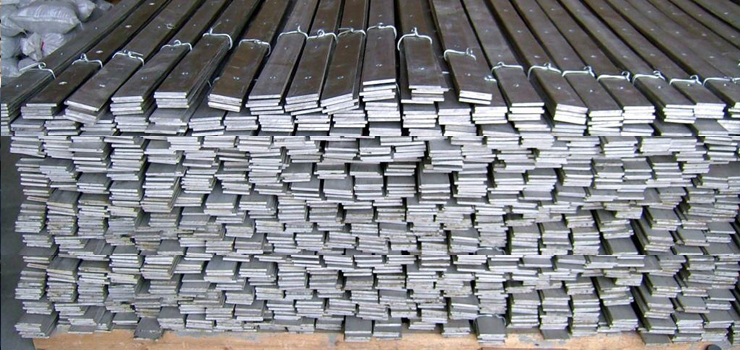
Sentiment in the stainless flat steel market remains cautious with the geopolitical situation weighing on downstream activity and the outlook mixed for European end-users, sources attending the Tube and Wire trade show in Düsseldorf tell Kallanish.
European stainless flats prices continue to rise sharply, with further increases being implemented across cold and hot rolled coil, sheet and tube. While demand has recovered compared to a difficult 2025, one source at the event expresses disappointment at persistently subdued end-user activity.
European mills are reported to be closing June order books and beginning to quote for July. For May delivery, mills have quoted and agreed CRC deals at €2,550-2,570/tonne ($3,005-3,029/t) delivered. They are offering and obtaining CRC at around €2,600-2,630/t delivered for June delivery while quoting at €2,700/t delivered for July.
Mill sources say they are concerned by cost pressure linked to the US-Iran conflict, and fast-rising scrap prices. Grade 304 scrap has reached €1,400/t delivered across most EU countries this month.
Additional pressure is emerging from Indonesia, where the Ministry of Energy and Mineral Resources has revised its HPM benchmark calculation for nickel ore with a recent ministerial decree. The new HPM formula, effective 15 April, is seen lifting the price of 1.5% nickel ore from $26.66/wet metric tonnes (wmt) to $48.42/wmt. This is seen impacting the entire supply chain.
One mill source at the trade show notes the Indonesian decree will primarily affect imported coil prices but adds that nickel values have risen by $1,000/t this week, which could impact finished steel prices.
The outlook among several sources for the coming months is cautious, with slower activity expected as geopolitical uncertainty and rising costs continue to weigh on market sentiment.
According to a mill source, however, prices will be able to sustain the upward trend. No European buyer, large or small, who spoke to Kallanish expects prices to decline in the medium term, with all sources reporting improved margins thanks to the recent increases.
Stainless CRC imports have fallen sharply in recent weeks, driven by CBAM charges, the upcoming safeguard changes and geopolitics. Two large processors, one in southern Europe and one in northern Europe, confirm that imports from Asia have effectively ceased.
Stocks in Italy and Poland remain high, although slightly lower than last month. Italian coil buyers confirm they are purchasing only to fill gaps in their stock rather than building inventories at current price levels.
Italian prices continue to lag behind the European market, though the gap is narrowing. CRC contracts for June delivery have reached €2,600/t delivered, with some variation depending on buyer.
Downstream, European sheet prices are also rising. While European mills are quoting sheet at €2,750-2,800/t, Italian levels remain at €2,700/t. Service centre sources argue that sheet prices need to rise by at least €100/t given CRC quotes of €2,700/t for July delivery.

Italian re-rollers mull increases at trade show
Italian tube makers at the Tube and Wire trade show in Düsseldorf are considering price increases of around €50/tonne ($58.93/t), with changes depending on re-roller, as they look to align tube values to coil increases, sources tell Kallanish.
One tube maker confirms they have suspended sales and will take a few days to come up with new quotes. No formal announcements have been made as companies use the trade show to gauge market sentiment, though several are expected to potentially announce these before the event closes.
While prices of coils continue to steadily tick up, with further increases expected from the new safeguards, Italian tube prices have been stagnating over the past month.
The sector is dealing with weak demand with a particularly quiet market in March. Tube discount levels remain between 40-42 points. Re-rollers are considering decreasing them by three points.
Downstream clients are bracing for price increases in the coming months but report concern over weak demand and their ability to remain profitable with the current elevated costs.
As current coil stock levels deplete in the coming weeks, some sources anticipate that hot rolled coil could reach €900/t after the summer.
Payment defaults and delays are beginning to emerge downstream, adding to the current complexity. The main concern among buyers at the trade show appears to be the disconnect between the reality of the current market consumption and continued upstream price increases.
One large buyer of sheets and tubes tells Kallanish that the manufacturing sector is now starting to feel the full weight of high prices driven by protectionism and eroding competitiveness, caught between rising upstream prices and a market unable to absorb further increases.
An Italian purchasing group reports high stocks and weak downstream demand for coil derivatives, with most steel processors recording negative performance and no visibility on tube orders.