


Trump threatens higher tariffs on European cars, trucks
US President Donald Trump on May 1 threatened to increase tariffs on EU car and truck imports to 25% for what he claims is a failure to comply with the US-EU trade agreement.
The US and the EU reached a deal in Turnberry, Scotland, in July 2025 to lower tariffs to 15% on most EU imports, including cars and car parts. Trump, in a May 1 Truth Social post, accused the EU of failing to comply with the trade deal.
“It is fully understood and agreed that, if they produce Cars and Trucks in U.S.A. Plants, there will be NO TARIFF,” Trump wrote.
The increased tariff will be implemented under Section 232 of the Trade Act of 1974, a White House official told Platts, part of S&P Global Energy. This is the same trade law that Trump has used to impose 50% tariffs on steel, aluminum and some copper imports.
“While the Trump administration has kept our end of the bargain, the EU has failed to make substantial progress on their agreed-upon commitments, including on auto trade barriers, digital services, carbon taxes, and other provisions of the agreement,” the White House official said.
Section 232 differs from the legal justification Trump used to implement country-specific tariffs on dozens of US trading partners, which the Supreme Court in February determined was unconstitutional.
Trump’s move shows “clear unreliability,” Bernd Lange, chair of the European Parliament’s International Trade Committee, said in a post on X, formerly known as Twitter.
“Trump’s plan to impose 25% tariffs on EU cars is unacceptable,” Lange said. “[The European Parliament] is still honouring the Scotland deal, working to finalise legislation. While the EU delivers, the US side keeps breaking its commitments.”
The EU briefly suspended work on the trade deal in February, accusing Trump of departing from the terms of the trade agreement after he implemented a 10% global tariff following the Supreme Court’s tariffs decision.
The US and EU recently signed a memorandum of understanding setting a framework for a strategic strategic critical minerals agreement.
Author: Rachel Looker


Irepas: CBAM to favour verified mills by 2027
Mills with verified emissions data are expected to gain a competitive advantage as buyers prioritise suppliers with reliable carbon data by 2027, Kallanish learns from the producers committee at the recent Irepas meeting in Amsterdam.
However, only a limited number of suppliers, particularly in Japan and South Korea, are currently prepared.
Trade policy remains a central concern for producers, with the EU’s Carbon Border Adjustment Mechanism (CBAM) not expected to trigger immediate price changes, while producers anticipate medium-term disruption.
Overall, despite relatively stable demand and pricing conditions, the outlook remains uncertain, with energy costs, geopolitical developments and regulatory pressures posing ongoing risks to the global steel sector.
Meanwhile, the global steel industry is under pressure from rising costs, weak economic growth and regulatory complexity. Raw material prices have increased significantly, while limited ability to pass costs to customers continues to squeeze margins (see separate story).
Demand remains fragile, with subdued growth across regions limiting recovery, while energy markets are highly volatile due to tensions in the Middle East, with no clear timeline for resolution.
Logistical constraints are adding to cost pressures. Port congestion in the Middle East, limited truck availability and rising freight costs, driven by higher bunker fuel prices and fuel shortages, are increasing delivery costs.
Production disruptions in Iran have also impacted the global semis supply, with around 10 million tonnes of capacity reportedly damaged and recovery expected to take six to 12 months, contributing to higher Chinese semi-finished exports.
On the raw materials side, availability remains a structural constraint. European producers reliant on scrap have limited flexibility to switch to alternative inputs such as HBI due to high energy requirements, suggesting little change in production routes in the near term.
Author: Elina Virchenko

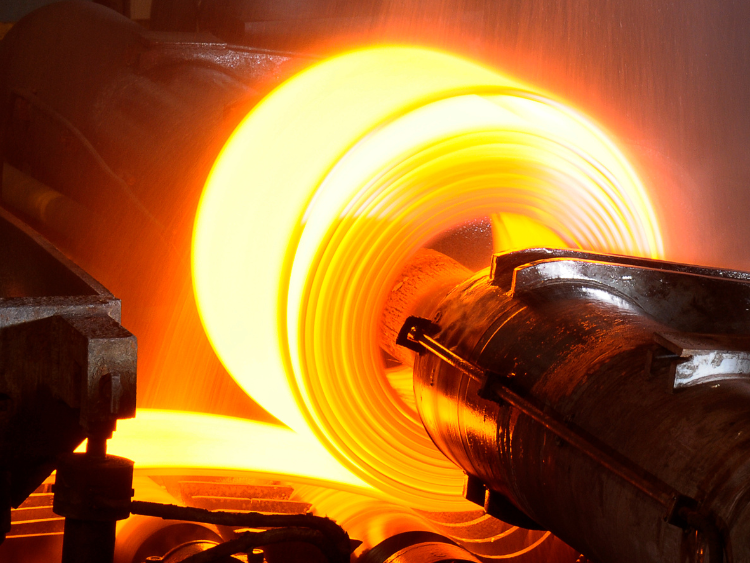
European HRC prices flat amid holiday lull, with buyers convinced ceiling has been reached
Labor Day holiday are being celebrated in most European states, excluding the UK, Ireland and the Netherlands, leaving the steel sector very quiet.
Market participants broadly agree that the price gains seen in the first quarter of 2026 were driven by the region’s evolving regulations – notably the new trade measures set to take effect in July and the implementation of Carbon Border Adjustment Mechanism (CBAM) – but domestic HRC prices now appear to be stabilizing, with limited further upside expected in the near term.
“No changes, no market and no bookings, apart from back-to-back [deals],” a source in the Netherlands said.
Market participants also acknowledged that some June-delivery tonnes remain to be placed, but few expect to see much of a pick-up in demand helping to clear it, with underlying buying activity subdued and showing no signs of turning.
But some European steelmakers sitting on unsold June-delivery tonnages have been forced to let go of those volumes at below the €700 ($819) per tonne ex-works threshold, sources said.
And a buyer in Northern Europe told Fastmarkets that mills with remaining second-quarter HRC still on their books were now moving it on at around €680–700 per tonne ex-works.
Looking ahead to July, initial offers for HRC deliveries into Germany and the Benelux region came in at €730-750 per tonne delivered – equivalent to €715-735 per tonne ex-works – earlier this week.
But buyer appetites are limited, sources said.
“Mills are trying to hold the line on pricing, but there’s virtually no traction,” a distributor source said, adding that steel service centers were refusing to absorb prices at the current levels, largely because they have no room to push those costs further down the supply chain.
Fastmarkets’ daily steel hot-rolled coil index domestic, exw Northern Europe was calculated at €702.50 per tonne on Friday May 1, down by €1.50 per tonne from €704.00 per tonne on Thursday April 30.
The index was down by €7.50 per tonne week on week and by €10.58 per tonne month on month.
Prices have recovered by over €100 per tonne over the past seven months and the index averaged €712.67 per tonne at the midpoint in March 2026, compared with a monthly average of €589.40 in October 2025.
Despite the recent decline, however, most industry stakeholders said the current downturn was likely to be only temporary and expect domestics prices to rise later in the year, supported by the trade regulations.
However, slow real demand was seen as a major stumbling block for any substantial rebound, sources said.
“Real demand is [likely to be] quite dull for the rest of the year; but CBAM and the new trade regime will probably help to secure some uptick in [HRC] prices – due to the shift away from imports,” a buyer source said.
In Southern Europe, Fastmarkets’ daily steel hot-rolled coil index domestic, exw Italy was calculated at €695 per tonne ex-works on Friday, unchanged from Thursday.
The index was down by €5.00 per tonne week on week but stable month on month.
The Italian market was totally quiet on Friday due to the Labor Day public holiday.
Earlier this week, local Italian mill offers for June delivery were heard at around €720 per tonne delivered (€705 per tonne ex-works). But most sources, including sellers, put the realistic transaction level in Italy at €680-700 per tonne ex-works
Some went further, suggesting that €700 per tonne delivered (€685 ex-works) represented the ceiling of what the market will actually bear – with deals also possible closer to €690 per tonne delivered, or €675 per tonne ex-works. These lower levels are not showing up on formal mill price lists, but they reflect the level at which actual trades are happening.
Turkish coil was booked at €590-600 per tonne CFR to Italy earlier in the week, including the anti-dumping duty, and a medium-sized cargo of Algerian HRC was sold to the Iberian market at around $765 per tonne CFR.
A large tonnage of Egyptian HRC was sold into Spain at around €618 per tonne CFR, including the anti-dumping duty. The definitive dumping duty for Egyptian flat products was set at 11.7% in September 2025.

Polish steel rebar prices up on improved demand, but growth limited
Some rebar offers from mills were heard at 3,050 zloty ($843) per tonne CPT, but no trading activity was reported at such prices during the assessment period.
Buyers were heard to be resisting higher prices, with market sources saying that although there were some requests for materials from key sectors such as infrastructure, it still was “not enough” to say that demand was good.
“Buyers are buying just to replenish their stocks. Demand from real estate is fine but there are no big infrastructure projects,” one sector source said.
Over the week, market participants reported rebar transactions around 2,800-2,900 zloty per tonne CPT, noting signs of upward market pressure.
Fastmarkets’ weekly price assessment for steel reinforcing bar (rebar), domestic, cpt Poland, was 2,800-2,900 zloty per tonne on Thursday, widening upward from 2,800-2,850 zloty per tonne the previous week.
The recent growth in Polish domestic rebar prices matched similar trends across Europe, where prices have also been following an upward trajectory amid higher production costs.
Fastmarkets’ weekly price assessment for steel reinforcing bar (rebar), domestic, delivered Northern Europe, was €700-735 ($821-862) per tonne on April 29, widening upward from €700-710 per tonne on April 22.
Meanwhile, the weekly price assessment for steel reinforcing bar (rebar), domestic, exw Italy, was €700-730 per tonne, also widening upward, from €700-725 per tonne the previous week.
On the other hand, prices for drawing quality wire rod in Poland were unchanged, with market sources citing low buyer appetite for material, but with some expectation that the market will improve during the summer.
Estimates of tradable prices were heard at 3,000-3,050 zloty per tonne, delivered.
Fastmarkets’ weekly price assessment for steel wire rod (drawing quality), domestic, delivered Poland, was 3,000-3,050 zloty per tonne on Thursday, unchanged week on week.
Author: Melissa VanDervort
