


France’s metal industry output up 0.3 percent in Mar 2026 from Feb
France’s manufacturing output in March this year decreased by 0.3 percent month on month, after rising by one percent in February this year, according to the statistics released by France’s National Institute of Statistics and Economic Studies (INSEE).
In the January-March quarter, France’s manufacturing output increased by 0.9 percent year on year and decreased by 0.9 percent quarter on quarter.
In March, France’s production in manufacture of basic metals and fabricated metal products, except machinery and equipment, advanced by 0.3 percent month on month, after remaining unchanged in the previous month.
On the other hand, in March production of France’s motor vehicles, trailers and semi-trailers industry grew by one percent on month-on-month basis after dropping by 1.2 percent on month-on-month basis in the previous month, while the output of the domestic construction industry decreased by 0.2 percent month on month in the given month after going down by 1.3 percent in February compared to January.
In the January-March quarter, output of the domestic construction industry decreased by 1.3 percent compared to the previous quarter.
Author: SteelOrbis Editorial Team


Zirkel Technologies sharpens industry focus on European steel and metal distribution
Zirkel Technologies GmbH, an enterprise technology consulting and implementation firm serving the European Mittelstand since 2016, has sharpened its industry focus on steel and metal distribution — with explicit attention to stockholding distributors, steel service centers, and the metal processing trade across Europe.
The Frankfurt-headquartered IT services provider, with additional offices in Vienna, Zurich, Oakville, Riga, and Noida, is targeting a market segment under sustained margin pressure, volatile freight rates, and rising compliance demands — from EN 10204 material certificates to CBAM reporting and EU safeguard quota administration — that increasingly depends on resilient, integrated system landscapes.
The firm’s portfolio spans SAP S/4HANA, SAP Business One Production, Microsoft Dynamics 365, Salesforce, MuleSoft, Data & AI, legacy modernization, and managed services. Unlike most ERP houses, Zirkel Technologies operates explicitly as a vendor-neutral advisor: it holds no formal ties to any ERP supplier, and software license resale is not part of its business model. “Which system fits a steel distribution business is decided by process content — transparency in cutting and processing operations, processing depth, scrap and yield factors, batch control, EN 10204 material certificate requirements, and much else besides. It is certainly not decided by an ERP vendor’s commission structure,” says Managing Director Kapil Gupta.
The decision to focus on this sector is strategic. European steel and metal distribution combines high operational complexity — from high-bay warehouses with radio-controlled magnetic cranes to end-to-end material documentation — with system landscapes accumulated over decades, in which siloed point solutions are the rule rather than the exception. From the company’s perspective, this is precisely where the greatest value-creation potential lies in the years ahead. Practical applications range from sub-2-second stock checks via MuleSoft APIs and integrated CBAM certificate handling to AI-driven inventory optimization linked back into core ERP and warehouse management.
For clients, this translates into independent ERP evaluation, a domain-grounded project team, and a DACH-Noida delivery model — combining German-speaking consultants with Indian engineering scale — that keeps project budgets predictable.
Zirkel Technologies GmbH is a vendor-neutral consulting and implementation firm for the Mittelstand, covering SAP S/4HANA, Microsoft Dynamics 365, Salesforce, MuleSoft, and Data & AI. Frankfurt-headquartered with offices in Vienna, Zurich, Oakville, Riga, and Noida; founded 2016. Digital transformation that moves your business forward.
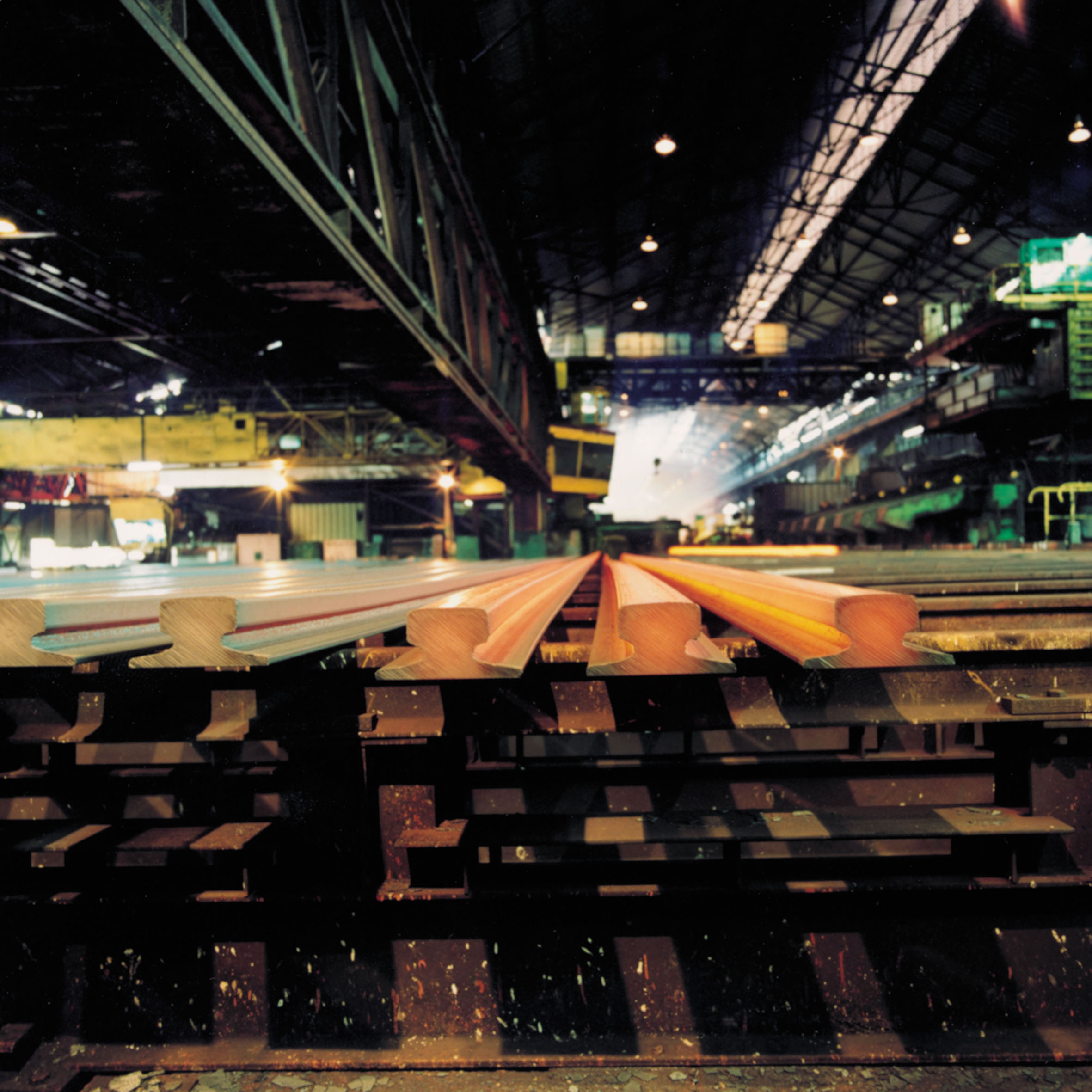
New railway line launched between Ukraine and Romania

EU approves acquisition of HKM by Salzgitter Mannesmann
The European Commission has approved the acquisition of Germany-based Hüttenwerke Krupp Mannesmann (HKM) by local company Salzgitter Mannesmann GmbH under the EU Merger Regulation. The transaction was reviewed under the simplified merger procedure.
According to the Commission, the proposed acquisition does not raise competition concerns within the European Economic Area.
The Commission concluded that the transaction would not significantly impede effective competition due to the companies’ market positions and the limited overlap between their activities.
In February, thyssenkrupp Steel and Salzgitter AG reached an agreement on the future of the HKM joint venture with thyssenkrupp selling its HKM shareholding to the latter, as SteelOrbis previously reported. As part of the arrangement, HKM’s steel deliveries to thyssenkrupp Steel will end at the close of 2028, four years earlier than the previously planned 2032 deadline.
Deal strengthens restructuring efforts in German steel sector
The acquisition is part of broader restructuring and consolidation efforts within Germany’s steel industry, which continues to face weak demand, high energy costs, pressure from decarbonization investments and rising import competition.
The transaction is expected to support operational optimization and long-term strategic positioning for the involved companies.
Author: SteelOrbis Editorial Team

ArcelorMittal Germany to develop large-scale battery storage system at Bremen plant
ArcelorMittal Germany and EDF Power Solutions Germany have signed an agreement to develop a large-scale battery energy storage system at the Bremen steelworks, marking another step in the steelmaker’s broader strategy to improve energy efficiency and reduce carbon emissions.
The planned facility will have a power output of 25 megawatts and a storage capacity of 50 megawatt-hours. According to the companies, this will make it one of the largest battery storage projects currently planned in northern Germany.
Under the agreement, EDF Power Solutions Germany will manage the full project scope, including technical design, installation, maintenance, and service operations. The cooperation includes a 10-year service contract.
Focus on electricity optimization and grid stability
The battery system is designed to optimize electricity consumption at the steelworks and reduce pressure on the power grid. By charging and discharging during predefined periods, the system will help smooth electricity demand and avoid costly peak loads during steel production.
Steelmaking facilities require continuous operation and cannot easily pause production during periods of high electricity prices. The battery installation is expected to provide additional operational flexibility while helping lower energy procurement costs.
Additional revenues through electricity markets
Beyond internal energy management, the battery system will also participate in electricity markets. The storage facility is expected to generate additional revenues through power trading and grid balancing activities.
Rainer Böse, CEO of ArcelorMittal Germany, stated that the project represents another important step toward lowering carbon emissions while contributing to grid stability through continuous electricity consumption management.
Author: SteelOrbis Editorial Team

Attestor finalises Padana Tubi acquisition, appoints new ceo
Italian re-roller Padana Tubi and UK-based investment firm Attestor have completed their acquisition deal, appointing Mariano Armengol as chief executive and announcing a new board of directors.
The new governance structure coincides with Attestor’s entry into Padana Tubi’s share capital as majority shareholder.
“The transaction… reflects the intention to support Padana Tubi’s future growth with a solid, competent and long-term oriented management and governance structure,” a joint note obtained by Kallanish says.
The board of directors is composed of chairwoman Claudia Alfieri, ceo Mariano Armengol, Angela Alfieri, Fabio Alfieri, vice-chairman David Alhadeff, Ovi Petreaca and Matteo Zingaretti, with the latter three representing Attestor.
“A new chapter opens today for Padana Tubi. We are determined to continue the company’s growth path,” David Alhadeff comments.
While according to Armengol, Padana Tubi is “solid, deeply rooted, with an excellent industrial platform and a capacity to deliver results that few businesses in Europe can match”.
In the last financial year, Padana Tubi achieved a turnover of €900 million ($1 billion) and employs 800 workers.
Under the terms of the agreement, the Alfieri family will retain a significant minority shareholding and will continue to play a central role in governance and strategic direction.
Author: Natalia Capra

Klöckner & Co expects higher European sales volumes
Steel distribution group Klöckner & Co expects a gentle recovery of demand, and higher shipments in the second quarter of the year, especially in Europe.
Its outlook is cautiously upbeat about the developments in Europe as well as Americas. On the main customer industries on both continents – construction, transportation machinery, energy – it expects a growth rate of 1-2%.
For the second quarter, the company expects a slight increase in shipments and a considerable increase in revenue compared to the preceding quarter.
In the first quarter, shipments came to 1.1 million tonnes, down 6.4% from the prior-year quarter. However, the drop is primarily attributable to the divestment of eight distribution sites in the US completed at the end of 2025. On a comparable basis, year-on-year volumes rose by 2.1%.
A drop in the Kloeckner Metals Americas segment was partly offset by the positive development of Kloeckner Metals Europe. Here, the group achieved a volume growth of 4.3%, “which is remarkably positive after three years of recession”, chief executive Guido Kerkhoff said during an online conference, monitored by Kallanish.
Group revenue was €1.6 billion ($1.9 billion) in the first three months, down 5.9% compared with the prior-year period, mainly due to lower shipments. When adjusted for the divestment, revenue increased by 2.1%.
Operating income (Ebitda) before material special effects rose by 5% year-on-year to €46 million, including significantly positive contributions from its remaining traditional European markets of Germany and Switzerland.
Author: Christian Koehl

IAA needs revision to generate transition investments
The Industrial Accelerator Act (IAA) proposal’s failure to include a “Made in Europe” mandate for steel means it will not generate the investment needed for the low-carbon transition of Europe’s steel industry, says Eurofer.
The European Commission confirmed in March its IAA legislative proposal includes a stipulation that 25% of steel volume procured for public projects launched from 2029 must be low-emission. However, given the forthcoming new steel trade regime, a “made in EU” requirement was not included.
“If Europe wants to decarbonise its steel industry, it must create demand for low-carbon steel made in Europe. Otherwise, the EU risks funding foreign production while weakening investment, jobs and industrial capacity at home,” Eurofer director general Axel Eggert says in a note sent to Kallanish.
Although steel in public procurement does not include an EU mandate, other industries do, including automotive, a large steel consumer.
“While CO2 credit schemes require steel of Union origin, this does not apply to vehicles purchased under public procurement and public schemes that require low-carbon steel. This risks market confusion and weakens the demand signal. Therefore, products that are classed as ‘Made in EU’ should also include a substantial minimum share of low-carbon steel of Union origin,” Eurofer notes.
Eurofer is also calling for a single, clear definition of Union origin, based on steel that is melted and poured in the EU, to ensure that public procurement and support schemes genuinely prioritise European production.
“A central concern is the lack of robust and consistent ‘Union origin’ rules. Under the current proposal, products labelled as ‘Made in EU’ could include steel produced outside the EU and only processed within Europe. As more than 75% of EU steel imports come from free trade agreement partners, products from nearly 80 countries could qualify for EU support schemes despite not being subject to comparable carbon costs leaving the European steel industry at a distinct disadvantage,” the association notes.
It is also seeking higher minimum shares of low-emission steel in public procurement and support schemes and a broader scope covering strategic sectors such as wind energy and electrical steel components.
Without these adjustments, the IAA risks shifting emissions and investment abroad, Eurofer asserts.
The European Economic and Social Committee (EESC) Employers’ Group concluded in a debate last week that substantial revisions are needed to the IAA. This is because it does not sufficiently guarantee demand for low-carbon industrial products produced in the EU, nor does it adequately address the cost gap associated with decarbonisation.
In its IAA impact assessment, the Commission noted that mandating low-emission steel use in the EU’s construction and automotive sectors would allow steel to gain a green premium that will be partially passed on to the price of final products. This could push further decarbonisation investment decisions.
Author: Adam Smith

Greensill silence on Trasteel bid risks Magona bankruptcy
Trasteel has confirmed to authorities its interest in coil service centre Magona and submitted an offer to lease and subsequently acquire control of the company, sources close to the dossier tell Kallanish.
The move could give a strong boost to efforts to restart the Piombino facility. “Of great concern, however, is the communication from Magona’s lawyers indicating that the administrator of Greensill Bank has yet to respond to Trasteel’s offers. This situation is prolonging an unacceptable period of uncertainty not only for workers, but also for Italian institutions,” Italy’s Ministry of Enterprises and Made in Italy (Mimit) says in a note seen by Kallanish.
A new round of talks was held last month at Mimit in Rome on the future of Magona, which has been involved in a prolonged crisis following the collapse of its owners, Liberty Steel and its controlling shareholder, lender Greensill Bank. Magona has not operated since August last year, except for a section of the mill operating for two weeks in December, a union source confirms.
“Trasteel has done what was needed to at least lease the company for the moment. We have the buyer but we don’t have the seller,” another informed source comments. Magona is at risk of bankruptcy by mid-June, they add. Trasteel is said to be willing to pay €45 million ($52.93m) to lease the company, a sum that would be deducted from the eventual purchase price.
The collapse of Greensill in March 2021 left Liberty on the brink of insolvency and the firm has since been battling to find new sources of financing to continue operations.
Trasteel was not available for comment before press deadline.
Author: Natalia Capra

European Commission clears ArcelorMittal CLN merger
The European Commission has cleared the merger between ArcelorMittal and its Italian flat steel service centre joint venture, ArcelorMittal CLN Distribuzione Italia, which it has co-owned with CLN since 2015, Kallanish learns from the Commission.
“The Commission concluded that the notified transaction would not raise competition concerns, given the companies’ limited market positions resulting from the proposed transaction. The notified transaction was examined under the simplified merger review procedure,” it says in a note.
The transaction will give ArcelorMittal, which currently holds a minority stake in the service centre, full control over AMCLN. This follows a difficult period for CLN, which has faced financial pressure due to deteriorating conditions in the automotive sector.
AMCLN combines several service centre assets in Italy and operates subsidiaries including Delna, active in metal storage and pickling, and Tamagnone, specialising in coil transport and storage.
Author: Natalia Capra