


European steel industry demands stricter origin rules in EU act
Europe’s steel industry is urging the EU to introduce stricter rules of origin in the proposed Industrial Accelerator Act, warning that without such measures, public procurement and support schemes could end up funding foreign steel imports rather than domestic production.
The legislation must define Union-origin steel as material melted and poured within the EU to ensure decarbonization investments genuinely support European steelmakers, according to Eurofer, the European Steel Association. Under current drafting, products labeled “Made in EU” could include steel produced outside the bloc and only processed within Europe, the industry body said.
“If Europe wants to decarbonize its steel industry, it must create demand for low-carbon steel made in Europe,” Axel Eggert, director general of Eurofer, said. “Otherwise, the EU risks funding foreign production while weakening investment, jobs and industrial capacity at home.”
The warning comes as the European Commission pushes ahead with the Industrial Accelerator Act, which aims to expedite industrial decarbonization and increase manufacturing contribution to at least 20% of EU gross domestic product. A central plank of the legislation is the creation of lead markets for low-carbon steel across sectors, including automotive, defense and construction.
This is not the first time the association has called for strict labeling; this time, it has set out more details with its paper.
Origin concerns
Eurofer’s concerns center on the lack of robust Union-origin requirements in the current proposal. The steel body said more than 75% of EU steel imports come from free trade agreement partners, meaning products from nearly 80 countries could qualify for EU support schemes despite not facing comparable carbon costs.
This would leave the European steel industry at a distinct disadvantage, Eurofer said. In a separate paper published on May 6, the association is also calling for a single, clear definition of Union origin — based on steel that is melted and poured in the EU — to ensure that public procurement and support schemes genuinely prioritize European production and prevent circumvention and market confusion.
In the paper, Eurofer also called for greater ambition in public procurement and support schemes, urging minimum shares of at least 50% low-carbon Union-origin steel applied to 100% of support scheme budget allocations. The requirements should extend to Net-Zero Industry Act technologies and strategic components, it said.
The steel body warned that without these improvements, the Industrial Accelerator Act risks shifting emissions and investment abroad rather than anchoring them in Europe, weakening both industrial competitiveness and the EU’s strategic autonomy.
Other recommendations include swift implementation of low-carbon steel labeling to support transparent lead markets, flexible designation of acceleration areas to cover geographically dispersed industrial sites, and inclusion of strategic sectors such as wind energy and electrical steel components in foreign direct investment screening.
Eurofer said the energy-intensive industry definition should not be conditional on being located in an acceleration area.
Author: Annalisa Villa

Tenaris appoints Gabriel Podskubka to succeed ceo Paolo Rocca
Tenaris has appointed Gabriel Podskubka as its new chief executive, the company says in a statement seen by Kallanish. Podskubka succeeds Paolo Rocca, who will continue to serve as chairman of the board.
“We would like to express our profound gratitude to Paolo Rocca for his outstanding leadership in building the company into the clear global leader that it is today and for being the architect of the continuous growth of Tenaris over the past 25 years,” the global pipe manufacturer states.
Podskubka has been Tenaris’ chief operating officer since 2023. He joined the company in 1995 and has held leadership positions across marketing, commercial and industrial functions, including heading the Luxembourg-based company’s Eastern European operations in 2009. He served as president of its Eastern Hemisphere operations from 2013 to 2023.
Author: Todor Kirkov

Klöckner steps up sale of SSC Becker
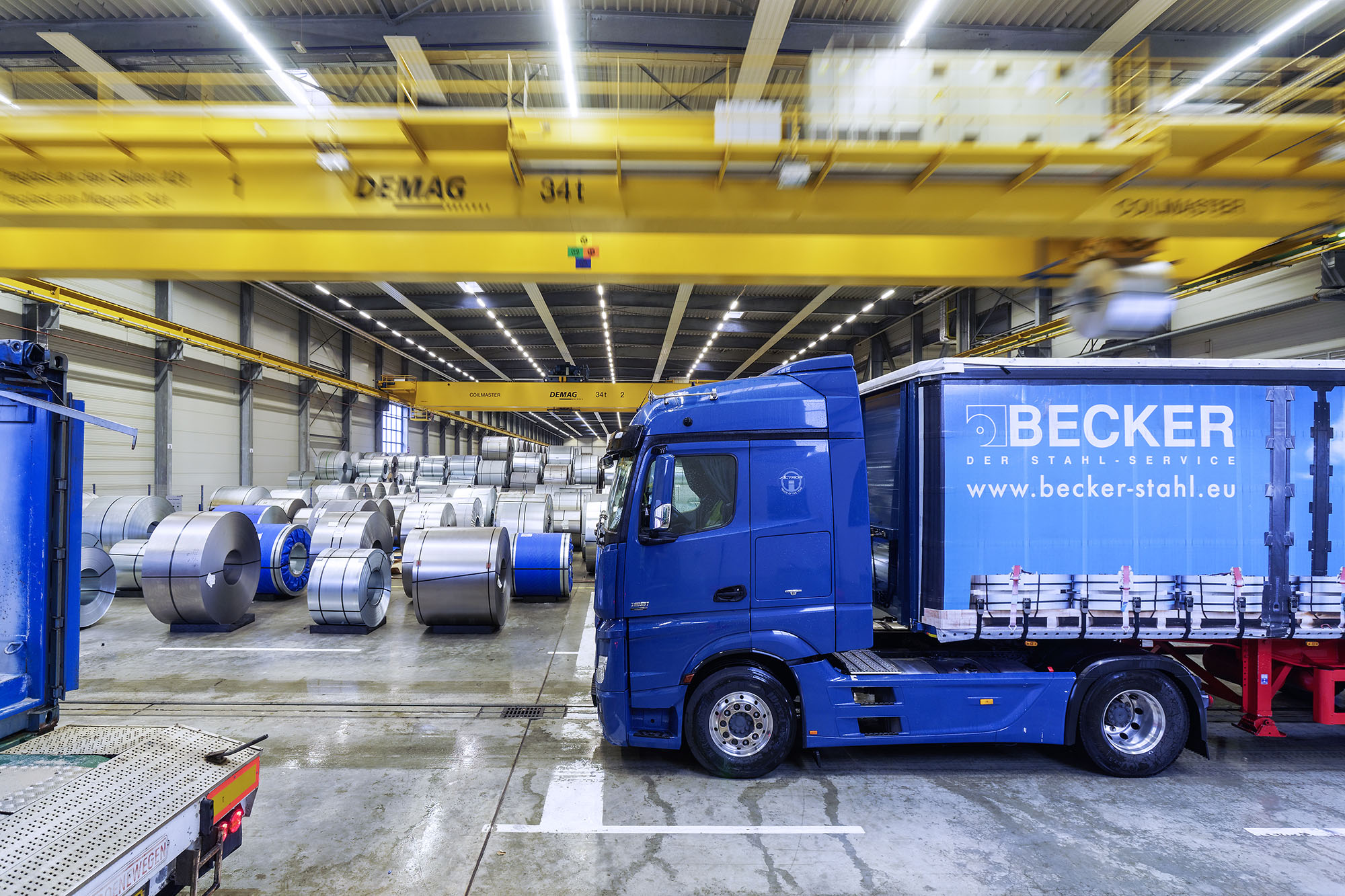
Steel distribution group Klöckner & Co is making progress with the sale of its unit Becker Group and is shortlisting candidates for a takeover, Kallanish observes.
The divestment process for Becker Group, which was announced in January “is proceeding as planned,” Klöckner has said while announcing its quarterly results.
It says that several non-binding offers were received after 31 March, and that the prospective buyers are currently in the due diligence phase.
Becker Group consists of steel service centre Becker Stahl and Becker Aluminium-Service in Bönen, as well as Becker Stainless in southern Germany, and Umformtechnik Stendal in eastern Germany.
Becker Stahl is Germany’s largest steel service centre with a capacity to handle 1 million tonnes/year of coil/strip. It was sold by its founder and then managing owner Ulrich Lollert to Klöckner around 16 years ago.
The intention of selling Becker was announced at the same time as the takeover move by US group Worthington Steel became known. Klöckner did not say if the two moves are related, or if the divestment of Becker was part of the negotiations with Worthington.
Market sources believe this to be the case, with Worthington reportedly interested in Klöckner’s successful US operations.
Author: Christian Koehl

France’s steel product export value down 6.1 percent in Jan-Feb 2026
According to the statistics released by the French Ministry of Economy, Finance and Industry, in the January-February period this year France’s basic steel product and ferroalloy exports amounted to a value of €1.52 billion, decreasing by 6.1 percent year on year.
In the given period, France exported €186.17 million of steel pipes and tubes – down 9.8 percent, €77.52 million of cold rolled steel bars – up by 3.1 percent, €108.02 million of cold rolled steel strip – up 14.2 percent, €52.96 million of cold drawn wire – increasing by 4.6 percent, and €124.78 million of metal structures and parts – down by 11.8 percent, all compared to the same period of 2025.
Imports amounted to a value of €1.5 billion, decreasing by 2.7 percent year on year
In the given period, France imported €338.67 million of steel pipes and tubes – up 2.1 percent, €82.04 million of cold rolled steel bars – down by seven percent, €105.29 million of cold rolled steel strip – dropping by 8.4 percent, €75.16 million of cold drawn wire – falling by 9.3 percent, and €377.11 million of metal structures and parts – decreasing by 13.5 percent, all compared to the same period of 2025.
Author: SteelOrbis Editorial Team


MEPs urge Commission to ‘reassess’ CBAM for Ukraine
During a 5 May debate on the CBAM carbon border levy, MEPs in the environment committee, ENVI, called for a rethink on how the EU’s flagship tax on carbon-intensive imports applies to war-hit Ukraine.
The move comes after the CEO of leading Ukrainian steelmaker Metinvest told Politico that the Commission was in talks with Kyiv about a possible exemption. Last year, Ukraine was the leading exporter, by volume, of CBAM-covered goods to the EU, particularly iron and steel.
Germany’s Peter Liese, ENVI coordinator for the centre-right EPP, seemed to back a potential exemption, while Dutch MEP Mohammed Chahim of the centre-left S&D and rapporteur for a CBAM proposal under negotiation, said “we have to reassess” the file’s force majeure clause.
EPP and liberal Renew MEPs agreed. A Commission official present at the hearing did not comment on the matter. Metinvest told Contexte that it wasn’t directly involved in talks with the Commission.
The EU executive said it is “aware of the concerns expressed by the Ukrainian industry over exports of steel and aluminium”, adding it was working with Kyiv to “facilitate” CBAM’s implementation.
A Commission report in December found no grounds to trigger a force majeure exemption for Ukraine.


CBAM rapporteur seeks cross-party push to widen scope of carbon border tax
Dutch S&D rapporteur Mohammed Chahim invited members of environment committee ENVI to draft joint amendments to potentially include more sectors under the CBAM tax on carbon-intensive imports.
Chahim told a 5 May ENVI hearing that amendments could be negotiated in trilogue talks with the EU Council. This comes as co-legislators debate Commission proposals to bring more steel and aluminium byproducts under CBAM.
Chahim’s draft report on the CBAM extension proposal, finalised last month, doesn’t go beyond the Commission’s proposal, which would extend CBAM to about 180 additional goods from 2028. At the hearing, MEPs from the Greens, the liberal Renew and ultraconservative ECR groups signalled support for broadening the scope.
ENVI also debated a parallel file setting up a temporary decarbonisation fund to help certain CBAM-covered sectors cope with the levy. Renew rapporteur Pascal Canfin’s pitch to tie funds more closely to actual exports was backed by S&D, Green and EPP MEPs. But a Commission official warned this could breach World Trade Organization rules.
The official also questioned Canfin’s push to open funding to downstream operators subject to CBAM but not to the ETS carbon market, saying this could limit available funds.