


thyssenkrupp Steel appoints Georgios Giovanakis to the Management Board as CSO


Trump warns EU to fulfill trade commitments by July 4 or face higher tariffs
US President Donald Trump has stated via social media that he held a phone call with European Commission President Ursula von der Leyen to discuss geopolitical issues, EU-US trade relations, and tariff policy. Both sides also discussed broader regional security concerns, according to him.
Trump referred to what he described as a “historic trade deal” agreed in Turnberry, Scotland, in July last year. He claimed that the EU had committed to reducing tariffs to zero under the agreement and warned that the bloc has until the US’ 250th anniversary on July 4 to fulfill those commitments. According to Trump, failure to implement the commitments could result in significantly higher tariffs on EU products.
EU-US trade agreement still pending
As SteelOrbis reported previously, the proposed trade agreement between the US and EU would introduce a 15 percent import tariff on most EU goods, compared to the previously threatened 30 percent level. However, the agreement has not yet entered the implementation phase despite the European Parliament reaching a compromise on implementation terms earlier this year.
According to media reports, Bernd Lange, chair of the EU Parliament’s trade committee, stated that EU lawmakers and member states are continuing negotiations aimed at removing duties on US goods. He noted that progress is being made, although divisions remain among some of the EU’s 27 member states regarding safeguard measures. Lange expressed confidence that an agreement could be reached during the next negotiation rounds scheduled for May 12 or May 19.
Trump also discusses trade with Brazil
Trump additionally stated that he had concluded talks with Luiz Inácio Lula da Silva focused on trade relations and tariffs. According to Trump, both sides discussed multiple trade policy issues and agreed to continue negotiations through additional meetings in the coming months if necessary.
Author: SteelOrbis Editorial Team


Assofermet Acciai: Italian steel market faces weak demand, geopolitical uncertainty
According to the latest monthly market report issued by Assofermet, the association representing Italian companies active in the trading, distribution and processing of steel, scrap and nonferrous metals, the Italian steel market continues to operate in a climate of widespread uncertainty and strong concerns, affected by the evolution of international crises and by the lack of concrete prospects for diplomatic solutions, at least in the short term.
In the carbon flat steel segment, the association stated that the combination of armed conflicts and US protectionist policies, which have yet to find a balance, is leading to a slowdown in demand from final users in European manufacturing. The market is also being weighed down by uncertainties related to the economic impact of the Carbon Border Adjustment Mechanism (CBAM) and by concerns ahead of the entry into force, on July 1, of the new EU safeguard measure, which provides for a 47 percent reduction in available quotas and a doubling of the duty for the clearance of volumes exceeding the quarterly quotas.
In this scenario, Assofermet noted, EU steelmakers appear to be able to support prices more through trade barriers than through any real strengthening of demand. No significant progress is expected in May, although service centers, despite lower sales volumes, may be able to recover part of the margins needed to offset the new purchase price levels. The growing difficulty in sourcing within the EU market all the grades required to meet customer needs also remains a critical issue, as these had previously been guaranteed by regular import flows which are now severely compromised.
The association also referred to the recent initiative promoted by EUROMETAL, called “Call to Action”, addressed to the governments of EU member states and to the European Commission, urging greater attention to the interests of European manufacturing. The document, also signed by Assofermet together with more than 400 European federations and companies, calls for measures to protect the European steel and metals industry, which is threatened by unfair competition, high energy costs and new global trade tensions. The requests include the extension of duties and CBAM to downstream and steel-intensive products, the introduction of the “Made in EU” principle in public procurement, and a reduction in energy and bureaucratic costs.
In the stainless flat steel segment, April saw a slowdown in demand, in a market environment still affected by geopolitical tensions and higher energy costs. Despite weak consumption, prices continue to rise, supported mainly by the sharp contraction in imports and the resulting strengthening of European producers’ bargaining power.
As for stockholders, April also confirmed a climate of strong caution, with sales down both in value and volume compared to the same month of 2025. End-user demand remains weak and purchases continue to be limited to immediate needs only, with no signs of restocking. Purchasing decisions are also being held back by US tariff policies and by uncertainty affecting the automotive and heavy mechanical engineering sectors.
By product, Assofermet reported a widespread decline in long products, a contraction in volumes in flat products and a mixed trend in hollow sections. Stainless steel remains the most affected segment, particularly tubular and long products, while some types of sheets and plates showed partial resilience thanks to demand from the food and chemical-pharmaceutical sectors.
Looking ahead to the coming months, the market is expected to remain in a wait-and-see phase at least until two key deadlines: July 1, when the new EU safeguard measures are set to enter into force, and August 1, the deadline for trade negotiations between the United States and the European Union. Distribution prices may remain supported by upstream pressure from producers, with possible effects on the margins of traders and service centers. CBAM, which became fully operational at the beginning of 2026, is also starting to represent a competitive advantage for operators sourcing from European producers, while progressively penalizing extra-EU import flows.
Author: SteelOrbis Editorial Team

SBQ distributor ASS Stahlservice joins GABO Stahl
ASS Stahlservice, a distributor in Neresheim in the German state of Baden-Württemberg can continue business with its 50 employees, after becoming insolvent last September.
The company now ASS Stahl, will become part of the larger GABO Stahl group, which is headquartered in nearby Essingen. According to a company press release, the creditors of the company have approved of the transfer.
In the restructuring process, stakeholders were assured of the company’s substance, with long-standing customer relationships, knowledge of the market, and experienced staff, Kallanish understands.
“The transaction is an encouraging sign that an insolvency procedure can be the starting point for a structural renewal,” insolvency administrator Martin Hörmann is quoted as saying.
ASS Stahlservice was founded in 2001, and last year moved to its new location in Neresheim. It handles bright bar, grained structural steel, and cast iron, among other products, for customers in mechanical engineering and drive technology.
GABO Stahl group also specialises in special bar qualities. It has a storage capacity of 30,000 tonnes at five sites, in Essingen, in nearby Aalen, and in Dortmund, state North Rhine Westphalia.
Author: Christian Koehl

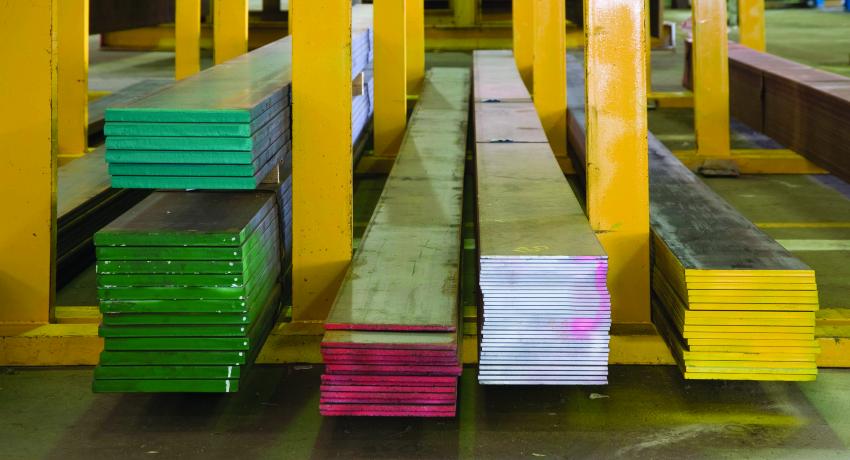
German longs market falling behind, distributors under pressure
While sections prices keep showing improvement in European countries, Germany is not seeing the same momentum, observers tell Kallanish.
“Industries in the countries around us are quite busy, but we are not,” says one manager of a distribution company, who complains about a prevailing low in tenders for construction projects, for example.
Distributors have become aware that Germany’s sections mills are quite well utilised, while they are not. End user demand in Germany remains low, and orders for new rollings are coming in from neighbouring countries.
According to one observer, new orders are being accepted for rollings from July. Meanwhile, distributors are competing fiercely to sell the material they have in stock.
“The mills have an international customer base; we distributors act mainly locally, or nationally. This is why the sun these days shines for the mills, but not for us,” he says.
This also means that the mills have a relative power over pricing which does not translate to the distributors. The gradual increase seen this year allows mills to bag €840/tonne ($989/t) delivered for Category 1 sections.
“They will sure reach €850-860/t for orders June,” one manger believes. Given the separate upward price trend for truck freights, prices could be notably higher for customers without railway connections.
One buyer has heard the next big step announced by the market leader, targeting €900/t for later this summer, which he dismisses as wishful thinking. “They are known for always trying for leaps of €50/t,” which in reality does not work, he says.
Author: Christian Koehl