Ahmet Özkan elected president of YİSAD
Ahmet Özkan has been elected as the new President of YİSAD – Flat Steel Exporters and Industrialists Association following the association’s 12th Ordinary General Assembly Meeting, held on 8 May 2026 at the Kavacık Trade Center in Türkiye.
Özkan, who also serves as Chairman of Dempaş Demir, succeeds to the presidency of the association after elections which also confirmed the appointment of new members to the Board of Directors and Audit Committee.
In the new administration, Metin Tayfun İşeri and Ahmet Soybaş were elected as vice-presidents. Murat Eryılmaz was the general secretary and Hakkı Can Şaylan assumed the role of accountant.
The members of the Board consisted of Gökhan Demiruz, Mehmet Ali Fincan, Akın Tatoğlu, Abdullah Akgün, Tolga Erdoğdu and Ahmet Koyuncu. Ersoy Yılmaz, Halil Bayık and Mustafa Kemal Akmermer were elected as members of the Supervisory Board.
YİSAD represents companies active in the flat steel sector and plays an important role within the Turkish steel industry and export community.
EUROMETAL congratulates Ahmet Özkan on his appointment and wishes him success in his new role.
British Steel nationalisation proceeds as Jingye talks fail
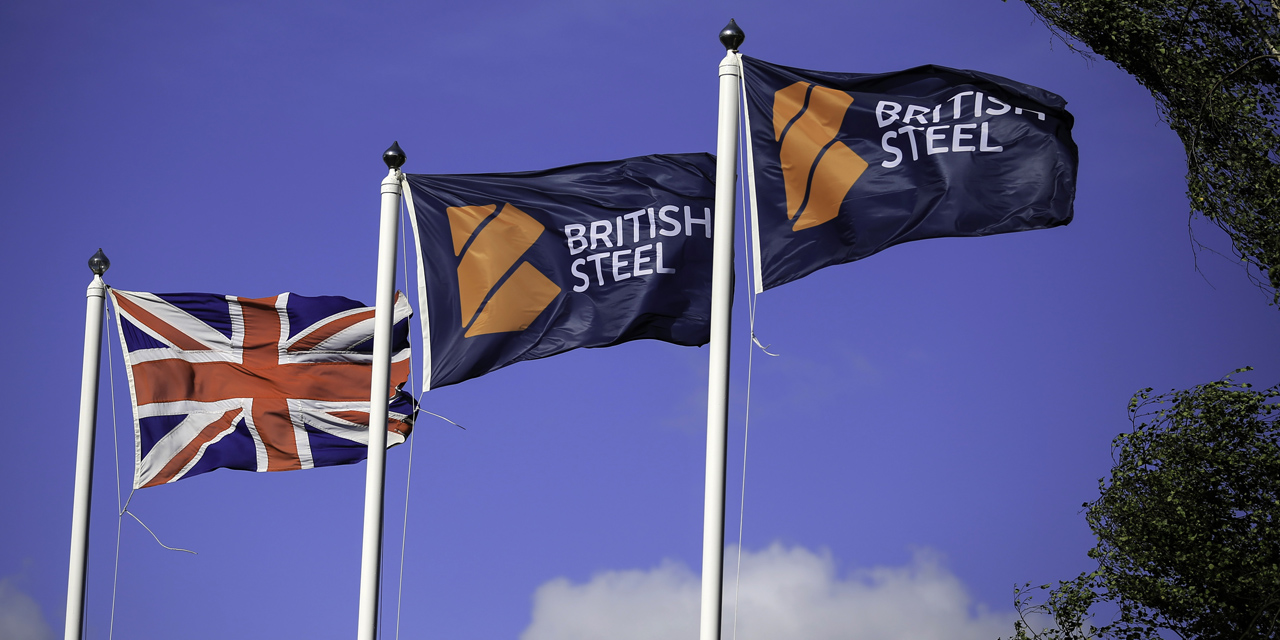
The nationalisation of British Steel looks set to go forward after the UK government announced it will introduce legislation that will give it powers to bring the steelworks into public ownership, Kallanish learns.
UK Prime Minister Keir Starmer made the comments on Monday morning in a speech.
“Steel is the ultimate sovereign capability. Strong nations in a world like this need to make steel. That’s why we’re backing steel in Port Talbot and across the UK. But in Scunthorpe we’ve been negotiating with the current owner and a commercial sale has not been possible. And now a public interest test could be met,” he said.
“So, I can announce that legislation will be brought forward this week to give the government powers, subject to that public interest test, to take full national ownership of British Steel. Public ownership in the public interest,” Starmer added.
The public interest test considers factors including national security, maintaining critical national infrastructure and supporting the economy.
The government notes in a statement that it does not believe an agreement could be reached with the current owners which would deliver acceptable value for money for taxpayers.
The new legislation will be part of the King’s Speech, which will take place on Wednesday.
The statement adds that “primary legislation would give Government a route to safeguard UK steelmaking capacity and avoid sudden halt of production at Scunthorpe, while it considers options for British Steel to help deliver on government’s Steel Strategy ambitions.”
The UK government took control of the Scunthorpe works on 12 April 2025, and had spent at least £419 million ($570m) on working capital, raw materials and salaries as of March 2026.


Morocco and Norway sign carbon market agreement to reduce emissions

UK prepares to fully nationalize British Steel

UK steel sector still needs imports: Stace
The UK steel sector still needs some level of imports, despite the planned reductions in quota allowances, according to UK Steel’s director-general, Gareth Stace.
He told the Green Steel Challenge podcast, co-produced by Kallanish, that unlike the EU, the UK does still require imported tonnages.
“The EU could be self-sufficient … but in the UK, we need imports,” he added.
He described 30% of UK demand being met domestically as “unsustainable”, which will not attract investment, compared to 80% in the US and 75% in the EU.
“Yet both of those steel sectors, economies and governments are putting in very strict and very significant trade remedies policies to protect their industry,” he added.
He also highlighted that one-third of UK government steel procurement is from abroad.
Stace noted that steel production in China and other Far East countries is “being highly subsidised by their governments” and therefore able to be exported at any cost, undermining prices in other countries. Other producers cannot compete with this, no matter how competitive they are.
“You can never compete with steel that is 70% or 80% state owned and 100% state controlled and fully subsidised by their government,” he added.
He also expressed concern over the EU’s quota reductions as 80% of UK exports go to the region, which could cause job losses if there is not a deal between the two economies.
“I think we should allow lots of imports from the EU and the EU should allow lots of exports from the UK into the EU market,” he said. “I hope that we can work with similar economies to ours that don’t want to see dumped steel, subsidised steel, undermining and wrecking our market and stopping investment.”
He expects a rapid rise in market share for domestic producers, following the new quotas starting on 1 July, noting the government’s ambition to reach 50% of domestic consumption being met by UK produced material. “I’d like to think that was within one year, two years, I hope,” he added.
However, he noted that British Steel is losing market share in the construction steel segments of sections and girders due to “short-sighted” emissions requirements. “Architects are specifying they want green steel, and they see green steel as electric arc furnace steel,” he said.
Stace also highlighted the Welsh government stipulating electric arc furnace steel for all of its publicly funded projects.
“If you continue to buy imports of electric arc furnace steel rather than support British Steel at the moment to make that transition to electric arc furnace production, then it’s never going to be able to do it,” he said. “If we don’t see a quite a quick sea-change in the construction sector in those specifications of what they’re specifying, then I think we’ll see further loss of market share from British Steel and further imports on sections from other countries, whether that’s in Europe or somewhere else.”
“Those countries in Europe will make sure that they’re sending their EAF sections to the UK market and perhaps keeping their blast furnace sections for their home market. Therefore, in the scheme of things, it doesn’t really help global emissions and it certainly doesn’t help the UK steel industry,” he concluded.

Liberty Galati to be auctioned again: reports
Troubled Romanian steelworks Liberty Galati has filed a new restructuring plan with the Galati Court in Romania and is likely to be put up for auction again, Kallanish learns.
The plan has been submitted by two restructuring administrators, Euro Insol and the CITR Galați subsidiary, according to Romanian media reports.
The key proposal is the sale of the company through open auction. The initial price of the asset is set at €444 million ($522m), according to News.ro reports.
According to the document, selling the plant as a single property complex is considered the most viable option for preserving production operations and jobs.
“The auction is expected to attract a new owner capable of providing the necessary investment in working capital and modernising its facilities,” it adds.
The €444m price has been reduced to 70% of the initial asking price of €709m. This amount is the minimum threshold that will allow for partial repayment of senior creditors. The plan envisions the new investor receiving assets free of historical debt, which should increase the asset’s appeal to major international industry players.
In March, the auction for Liberty Galati did not take place due to a lack of bids.
Liberty Galati did not reply to a request for comment by Kallanish before the publishing deadline.
Liberty Galati is in a difficult financial situation due to high debt and unfavourable conditions on the European steel market. Over the past year, the plant has experienced repeated operational interruptions, including the shutdown of blast furnace No.5 and a shortage of raw materials.
The restructuring administrators note that previous attempts at internal financial recovery have failed to produce the desired results, making a change of ownership a necessary step to prevent bankruptcy. In addition to the sale price, the buyer’s commitment to invest in the green transition will be taken into account.
The plant has annual production capacity of around 2.5 million tonnes of steel for the construction, naval, oil and gas, and power generation sectors. It was acquired by Liberty Steel Group from ArcelorMittal in July 2019.

Protecting Europe’s steel value chain: strategic debate on Steel Derivatives held at the European Parliament
On 5 May 2026, EUROMETAL participated in the event “Protecting Europe’s Steel Value Chain: the Strategic Role of Steel Derivatives”, hosted at the European Parliament in Brussels by MEP Elena Donazzan.
The meeting was organised by Electromechanics Synergy Network (ESN) in collaboration with ArcelorMittal and brought together representatives from European institutions, industry, and downstream manufacturing sectors to discuss the growing challenges affecting Europe’s steel value chains.
EUROMETAL was represented by President Alexander Julius, alongside stakeholders from across the European steel ecosystem.
Discussions focused on the impact of increasing imports of steel derivatives and semi-finished products on European manufacturing competitiveness, industrial resilience, and employment. Particular attention was given to the need for effective trade defence measures, the extension of CBAM-related considerations across the value chain, and the importance of preserving a level playing field for European industry.
The event also included exchanges with representatives of the European Commission, Members of the European Parliament, and industrial companies from several EU Member States.
The debate highlighted the increasing attention being given at European level to downstream steel products and their strategic importance for Europe’s industrial future.


ADI acquisition open to new bidders, minister says
Interested parties beyond the two existing bidders for Acciaierie d’Italia (ADI), previously known as Ilva, may submit an offer at any time, provided it improves on those already received, Kallanish learns.
Adolfo Urso, Minister of Enterprises and Made in Italy (MIMT) made the comments during question time at the Chamber of Deputies, adding that the process remains open, comparative and competitive, as stated in the tender terms.
Negotiations for the acquisition of ADI are continuing, with the two international bidders remaining in the running, Flacks Group and Jindal Steel International, Urso confirms.
Both are in active discussions with the commissioners, local authorities in Puglia and Liguria, and various financial institutions and agencies, reflecting the scale and complexity of the planned investments.
The commissioners have asked Flacks Group to provide documentary evidence of its financial capacity, with due diligence ongoing between the respective teams.
In parallel, the commissioners are in discussions with Jindal Steel International, which has submitted a plan directly linked to the group’s facilities in Oman, Urso explains.
The industrial plan envisages integrating Ilva’s current product range, which includes coils, tubes and plates, with products targeting the automotive, defence and renewable energy sectors.
“The commissioners are now assessing the scale and timeline of the investments the group intends to deploy, as well as the related implications for maintenance and modernisation of the equipment, environmental protection and decarbonisation, particularly in light of the damage caused during Mittal’s management, with €7 billion [$8.23m] in certified damages to the plants and the company,” Urso states.
He adds that Jindal’s plan also includes total production of 4 million tonnes during the transitional phase, rising to 6mt upon completion of the green transition.
Some 3,850 workers are currently on temporary layoff, with an extension of the scheme being sought to cover 4,450 employees, the minister confirms.
Meanwhile, last month the Italian government approved a further €149m loan for ADI to sustain operations at Taranto. The loan, published in the Official Gazette, was granted to prevent the immediate and irreversible shutdown of the blast furnaces, protect workers and preserve the ongoing sale negotiations with the bidders.
Last week, Flacks confirmed his group asked the Italian government for a €500m bridge loan to support the site’s relaunch, which he has committed to repaying within six to 12 months (see Kallanish passim).

European steel market conditions to remain steady in May: Platts survey
European steel market participants expect prices to increase and production and inventory levels to remain steady in May, data from the latest Platts European Steel Sentiment Survey showed.
Price index
The overall price index for May stood at 75 points, down from 92.50 in April, indicating that market participants still expect prices to increase, but at a slower pace than last month.
Trader, stockholder and service center sentiment on price was measured at 75 points, with producers also sharing the same opinion.
This comes after steel markets, particularly flat markets, have seen a cooling in prices, largely driven by high stock levels and weak end-user demand. Buyers have adopted a wait-and-see approach to evaluate the new safeguard measures, which are yet to be finalized, and as a result, activity has dwindled.
Platts, part of S&P Global Energy, assessed domestic HRC in Northern Europe May 6 at Eur695/metric ton ex-works Ruhr, down Eur15/mt month over month. Platts assessed domestic HRC in Southern Europe at Eur690/mt ex-works Italy, down Eur5/mt over the same period.
Platts assessed medium sections in Europe at Eur820/mt delivered, up Eur30/mt month over month.
| Month: | December 2025 | January 2026 | February 2026 | March 2026 | April 2026 | May 2026 |
| Index: | 70.83 | 70.83 | 76.88 | 91.67 | 92.50 | 75 |
Production index
The overall production index stood at 47.50 points, down from 61.25 points in April, highlighting a potential slowdown in output as the market approaches the typically subdued summer months.
Trader, stockholder and service center sentiment decreased month over month, from 60 points in April to 45 in May. Producer sentiment was recorded at 50 points, down from 62.50 over the same period.
| Month: | December 2025 | January 2026 | February 2026 | March 2026 | April 2026 | May 2026 |
| Index: | 37.50 | 37.50 | 68.75 | 58.33 | 61.25 | 47.50 |
Inventory index
The overall index for inventory was measured at 50.83 points, largely unchanged from the 52.50 points seen in April, highlighting that market participants expect stock levels to remain steady.
This was made up of 60 points from traders, service centers and stockholders, and about 42 points from producers.
Sources have continued to observe high stock levels in the market, as buyers purchased a lot of material back in the third and fourth quarters of 2025 in anticipation of new regulatory measures.
However, market participants also said buyers will eventually need to restock, or else stock levels will fall, which could increase demand for domestic material, given the current lack of import availability.
| Month: | December 2025 | January 2026 | February 2026 | March 2026 | April 2026 | May 2026 |
| Index: | 25 | 25 | 53.75 | 33.33 | 52.50 | 50.83 |
Road ahead
Despite slightly weaker expectations for May, participants said that when the European Commission announces the finalized quota volumes for each country, the market could expect further price increases, as buyers will be able to resume purchasing with a bit more certainty.
Even when considering CBAM and safeguard quota risks, some buy-side sources suggested certain mills in Turkey, North Africa and Asia could still remain competitive, but for now, it is a waiting game.
Author: Riley Waters