


EUROMETAL participates in Steel Summit 2026 in İzmir
EUROMETAL was proudly represented at the Steel Summit 2026, organised by SteelRadar and held from 13 to 15 May 2026 in İzmir, Türkiye.
The event gathered leading representatives from the international steel industry to discuss market developments, sustainability, trade, decarbonisation, and the future competitiveness of the steel sector in an increasingly complex geopolitical and regulatory environment.
EUROMETAL President Alexander Julius and EUROMETAL Board Member Tayfun İşeri actively participated in the conference, contributing to high-level discussions on the evolving carbon economy and the impact of European climate policies on the steel market.
On 14 May 2026, both representatives took part in the “Carbon Economy Panel”, dedicated to the theme “Impact of Carbon Costs on Competition and Pricing in the European Steel Market”. The session focused on the growing influence of carbon costs on pricing structures, competitiveness, and trade flows within the European steel industry, including the implementation of CBAM, the EU ETS, safeguard quotas, and the implications for producers, importers, and Turkish-origin steel exports in the 2026–2027 market environment.

The panel was moderated by Tayfun İşeri, Chairman of the Board of YİSAD and Board Member of EUROMETAL, and featured Alexander Julius, President of EUROMETAL and Managing Partner at Macrometal, alongside Fatih Gökçe, CSO of Iron & Steel Group at Diler Holding, Gabriel Rozenberg, Founder & CEO of CBAMBOO, and Tsanislav Kolev, Chief Business Development & Decarbonisation Officer at NLMK Europe.
During the debate, Alexander Julius was asked about the future of the European steel industry in a context where the European Union is increasingly moving towards a more protective market environment for steel production. He stressed that Europe must not only protect primary steelmaking capacity, but also safeguard the entire steel processing, distribution, and manufacturing ecosystem that depends on a competitive and secure steel supply chain.
He explained that the future competitiveness of the European steel industry will depend on Europe’s ability to reconcile decarbonisation ambitions with industrial competitiveness, fair trade conditions, and effective protection against carbon leakage across the full value chain. According to EUROMETAL, maintaining a strong industrial base in Europe requires balanced policies capable of protecting both upstream steel production and downstream manufacturing industries.
In this context, he presented EUROMETAL’s most recent advocacy actions aimed at protecting Europe’s steel processing and manufacturing industries. EUROMETAL has repeatedly warned European institutions that insufficient protection of downstream sectors could seriously undermine the competitiveness of European industry and place millions of industrial jobs at risk across the continent.
The discussion also highlighted the strategic importance of extending effective trade and carbon measures to steel derivatives and manufactured goods in order to avoid the displacement of industrial production outside Europe.

German Salzgitter unit expands military steel certification for armored vehicles
Ilsenburger Grobblech GmbH, the heavy plate subsidiary of Salzgitter AG, has gained certificates for the military use of additional steel grades, it said May 13.
The company’s newly approved SECURE security steel grades will now cover approximately 80%-90% of the steel requirements for a military vehicle, allowing it to supply a wider range of components and protection concepts with certified material, marking a major milestone in its defense applications, it said.
Ilsenburger Grobblech completed a comprehensive approval campaign, certifying several steel grades for military use in accordance with Bundeswehr technical delivery conditions. The newly approved grades include: SECURE 400: 6-45 mm thickness; SECURE 450: 6-30 mm thickness; SECURE 500: 6-40 mm thickness, and SECURE 600: 6-22 mm thickness.
Previously, only SECURE 450 and SECURE 500 were certified, and only within limited thickness ranges. The broader certification range enhances the company’s competitiveness in European defense tenders, especially where local sourcing and approved materials are prioritized, it said.
Amid rising European defense spending, demand for certified heavy plate used in armored vehicles is increasing. The approvals reinforce the importance of qualification, traceability and performance standards in the defense steel market, the company said.
The company indicated that the initial scope for SECURE heavy plate had now been fulfilled.
Author: Annalisa Villa


European Commission launches roundtable ahead of July ETS review
The European Commission opened high-level consultations on overhauling the EU Emissions Trading System on May 12, seeking to balance industrial competitiveness with climate goals as it prepares legislative proposals for July that will reshape the bloc’s carbon market in the coming years.
“Climate policy has become industrial and security policy,” Kurt Vandenberghe, director-general at the European Commission’s DG CLIMA, said at the opening of the session. He emphasized the need to make the ETS “more of an innovation and investment engine” while ensuring decarbonization proceeds in a “gradual, orderly manner” amid current geopolitical challenges.
The roundtable at EU headquarters in Brussels brings together industry representatives, civil society groups, and policymakers to discuss how the bloc’s flagship carbon market can drive decarbonization while supporting European manufacturers facing mounting cost pressures and global competition. The consultation follows guidance from the European Council in March and comes as the Commission prepares to align the ETS with the EU’s 2040 climate targets.
Review timeline
Beatriz Yordi, director for carbon markets and clean mobility at DG CLIMA, outlined the review timeline, saying the Commission aims to present proposals in July with parliamentary consideration through the first quarter of 2027. Implementation of core decisions would begin in 2028, she said.
“The ETS will not disappear,” Yordi said, stressing the system must provide “a stable, predictable long-term signal for decarbonization” while driving industrial competitiveness. She said the review would examine the pace and scale of carbon removals and include updates to the Market Stability Reserve and benchmark values through implementing acts.
Europe’s flagship carbon market is buckling under political pressure as a growing chorus of EU leaders question whether climate policy is crushing heavy industry. The backlash has sent carbon prices tumbling nearly Eur30/mtCO2e ($35.24/mtCO2e) from their mid-January peak near Eur93/mtCO2e.
Platts, part of S&P Global Energy, assessed EU Allowances for December 2026 at a three-month high of Eur77.24/mtCO2e on May 11, recovering from an 11-month low of Eur63.64/mtCO2e hit on March 19 amid the political storm.
Free allocation debate
A key focus of the discussions centered on the future of free allowance allocations, which have been a cornerstone of the ETS since its 2005 launch. Heiko Kunst, head of the unit for implementation and policy support at DG CLIMA, said more than 20 billion allowances have been allocated for free since the system began, mostly to energy-intensive industries.
For the 2021-2025 period, free allowances covered around 85% of verified emissions from these sectors, Kunst said. However, “this has not led to expected investments in decarbonization,” he added, signaling potential changes ahead.
The review will assess how existing experience with conditionalities can help unlock the investment potential of free allocation alongside its carbon leakage protection role, Kunst said. The Commission on May 11 proposed updated benchmark values for 2026-2030 that would continue covering about 75% of industrial emissions on average, down from current levels.
The discussions highlighted tensions between maintaining carbon price signals and protecting energy-intensive industries. An ArcelorMittal representative warned of a “structural squeeze” on the steel sector from escalating ETS costs, calling for targeted relief measures and the channeling of ETS revenues back to affected industries.
“ETS costs escalation” is creating pressure on electrical steel and other products, the company official said, urging that free allocations for steel benchmarks be maintained in 2026 and that new benchmarks preserve current support levels.
The EU ETS, which caps emissions from power plants and industrial facilities, has been credited with driving significant reductions in greenhouse gas emissions since its launch in 2005, but critics argue it needs to be adjusted to prevent carbon leakage and preserve industrial capacity within the bloc.
Aviation emissions
During the event, Polona Gregorin, head of unit for air, rail, water and intermodal policy at DG CLIMA, confirmed the Commission is considering extending the EU ETS beyond intra-EU flights to cover extra-European routes, particularly departures to international destinations outside the bloc.
Since 2012, aircraft operators in the European Economic Area have been required to monitor, report and verify their CO2 emissions and surrender allowances against those emissions. Airlines currently purchase allowances for carbon emissions under the bloc’s ETS only for intra-regional flights.
The potential expansion comes as the airline industry grapples with rising costs from higher energy prices due to the US-Iran war, even as the EU has long weighed extending carbon costs to international flights beyond the region.
Author: Eklavya Gupte

EU challenges Australia’s steel safeguard case over lack of evidence
An Australian industry application that triggered a safeguard investigation into imported fabricated steel lacks evidence of a surge in imports or a causal negative impact on the local industry, an EU official told a May 14 hearing.
Australia’s government tasked its independent advisory group, the Productivity Commission, with investigating the matter, which it did in January following lobbying by the Australian Steel Institute.
ASI executives kicked off the commission’s three-day investigation on May 13, requesting an emergency safeguard measure in the form of a 50% tariff rate quota on fabricated structural steel products at import levels seen from 2022 to 2024 while the inquiry is undertaken this year.
The ASI’s November 2025 application for Australian provisional and definitive safeguards on fabricated structural steel called for the TRQ based on the average volume of imports over the five years beginning January 2020.
“Australian producers had increasingly low-capacity utilization and, in many cases, declining sales volumes” from 2020 to 2024, the ASI’s application said, and “the imports have, therefore, come at the expense of Australian producers.”
Canberra, Australia-based Joanna Pocztowska, head of the trade and economic section of the EU’s delegation to Australia, told the investigation hearing on May 14 that the evidence provided thus far “does not appear to include a comprehensive analysis of the evolution of imports over the relevant period” into Australia.
“The claim relies on a simple end point comparison of 2020 to 2024 without examining the trends over time. This falls short of the evidentiary standards required under [World Trade Organization] rules,” Pocztowska said.
Therefore, the European Commission believes that the PC’s investigation should be terminated, as “the most appropriate course of action in light of the concerns raised,” Pocztowska said.
This reflects the European Commission’s April 9 submission to the PC’s inquiry, saying that “the investigation, as currently constituted, does not comply with the substantive and procedural requirements of the WTO Agreement on Safeguards and should be terminated. Any alternative course of action would be inconsistent with the applicable WTO rules and obligations.”
The ASI’s application also failed to demonstrate serious injury, Pocztowska said.
“Key economic indicators point to a stable and, in some cases, improving situation of domestic industry with significant increases in profitability, sales and employment,” Pocztowska said.
“Diverging performance among Australian producers suggests internal competitive dynamics, not injury caused by imports. These elements would appear to warrant further careful examination when assessing whether the threshold of serious injury is met,” Pocztowska added.
Pocztowska also said the application “does not provide a sufficient reason and evidence-based analysis demonstrating the causal link between imports and alleged injury, nor does it adequately assess the role of other factors.”
Wait for data gathering
In response, ASI Chief Executive Mark Cain told Platts, part of S&P Global Energy, on May 14 that his group’s application being referred by the EU was “merely a request for an investigation to be initiated and not the sum total of the evidence.”
“The role and mandate of the PC is to conduct an independent investigation that will gather the necessary data required to make a determination as to whether conditions are met for a safeguard or not,” Cain said.
Cain also said in a May 13 statement that “the preliminary evidence clearly supports a finding that increased imports of fabricated structural steel have caused and are threatening to cause serious injury.”
Commissioner Barry Sterland told the hearing after Pocztowska’s May 14 opening statement that the PC was “still in the early stages of the investigation.”
The PC will release a draft report by Sept. 23 laying out its reasoning and the evidence that will be assessed, then invite interested parties to comment on it before making final recommendations about definitive measures, Sterland said. The final report will be handed to the government by Nov. 23.
According to the ASI’s April 20 submission to the PC’s inquiry, “imports of fabricated structural steel have surged sharply, both in absolute terms (16% over CY2022-CY2024) and relative to domestic production (import market share from 38% to 45% over the same period).”
“This has been driven by unforeseen circumstances, chiefly the escalation of Chinese excess capacity, collapse of domestic Chinese demand and subsequent global redirection of trade flows following safeguard and antidumping measures imposed by the key trading partners,” including the US, EU and Canada, the ASI’s submission said.
Global policy impacts
Sterland said some submissions to the PC’s inquiry have “argued that trade measures in a range of countries, including the EU and others, may have had an impact on imports to Australia.”
On April 13, the European Council presidency and the European Parliament reached a provisional agreement on a regulation introducing a new framework to protect the EU steel sector from global excess production and trade diversion.
The regulation will replace the current EU steel safeguard measures, which are due to expire on June 30.
On July 1, the new post-safeguard regulation will enter into force with annual tariff quotas and a 50% out-of-quota duty, according to industry group EUROMETAL.
Author: Anthony Barich

Spanish consortium to build electric arc furnace for ArcelorMittal
A 50-50 consortium between Spanish companies Técnicas Reunidas and Idom has commenced its support to the transformation and decarbonization of the steelmaking site operated by ArcelorMittal at Dunkirk in northern France, following the award of the contract to build a new steelmaking plant at the site.
The consortium’s work, under an EPCM contract, will comprise project management, detailed engineering, procurement, construction, commissioning, and testing at the steelmaking plant, including the development of an electric arc furnace (EAF) and a ladle furnace (LF) for secondary refining.
The project also includes the development of auxiliary systems and infrastructure, site preparation, and subcontracting certain studies and services to third parties.
The new facilities will be integrated into the existing steelworks, thus representing a significant transformation of the site’s steel complex and, above all, making a very significant contribution to decarbonization.
The new electric arc furnace route will generate 0.6 mt of CO2 per mt of steel produced, using a mix of scrap, direct-reduced iron (HBI/DRI), and hot metal, resulting in three times less CO2 than the blast furnace route. The EAF will have a production capacity of 2 million mt/year of steel. The start of operation of the new facilities is estimated for 2029.
This contract builds on the work previously carried out by Técnicas Reunidas, in a consortium with Idom, during earlier phases of the project, in which it provided consultancy and engineering services under a front-end engineering design contract.
Author: Gianluca Baratti
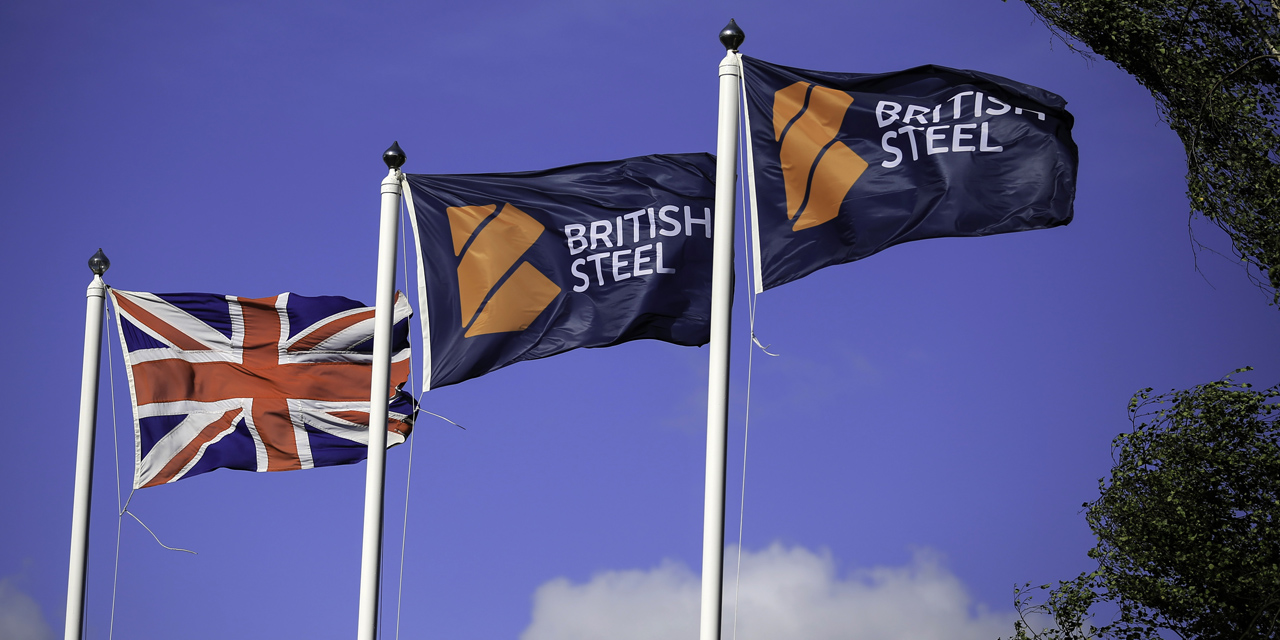
UK seeks to nationalize British Steel; China urges respect for investor rights
The UK government introduced a bill to nationalize steel companies such as British Steel, owned by the Chinese company Jingye Group, if it is in the public interest, the UK Department for Business and Trade said on May 14.
The bill will have its first reading on May 14, followed by a second reading, expected in the near future, during which MPs will have their first opportunity to debate the bill and give their opinions.
“We strongly welcome the Prime Minister’s announcement to legislate for the nationalisation of British Steel. This provides vital certainty for the workforce, the company’s customers and the wider supply chain at a critical moment,” said Gareth Stace, Director General of UK Steel, a trade association representing the British steel industry. “Steel is a foundation industry and a recognised strategic national asset. Maintaining domestic production capability for British Steel’s products is essential not only for economic growth but also for our national security and resilience,” he added.
The government intervened at British Steel in April 2025 under the Steel Industry (Special Measures) Act to ensure uninterrupted production and avoid the closure of blast furnaces that would have disrupted supply chains and threatened thousands of jobs. Since then, officials have held discussions with British Steel’s owner to find a commercial solution but failed to reach an agreement that would deliver acceptable value for taxpayers, the government said.
“Whatever actions the UK government takes, it should fully consider the substantial investment of the Chinese enterprise in British Steel and its contributions to the UK economy and society, respect the will of the enterprise and market principles, and avoid abuse of administrative coercion, while actively seeking fair and proper solutions acceptable to both sides with the Chinese enterprise,” the spokesperson for China’s Ministry of Commerce said a statement on May 14.
“We hope the UK government will follow the principles of fairness, justice, and non-discrimination, think carefully before acting, make prudent decisions, effectively protect the legitimate rights and interests of Chinese enterprises, and maintain the hard-won positive atmosphere of China-UK economic and trade relations. China will closely monitor the development of the event and take strong measures to safeguard the legitimate rights and interests of Chinese enterprises.”
The UK government spokesperson, when contacted for comment by S&P Global Energy on May 14, said that they “remain committed to respecting the rights of businesses and we would only use the powers in the Bill where the public interest test has been met.”
Platts, part of S&P Global Energy, assessed Steel Hot Rolled Coil (HRC) DDP West Midlands UK GBP/Mt Wk May 7 at GBP695/mt, unchanged week over week.
Author: Annalisa Villa

EU HRC prices soften further despite mills’ attempts to support July offers
European hot rolled coil (HRC) prices have moved down further over the past week across both northern and southern Europe, since weak demand, sufficient stock levels and growing pressure from lower import prices have continued to weigh on the market. While mills have been attempting to maintain relatively firm official offers for July delivery, achievable transaction levels have declined further amid limited buying interest and cautious sentiment ahead of the expected safeguard quota adjustments.
In northern Europe, mills’ official offers have been reported at around €705/mt ex-works for June delivery and approximately €715/mt ex-works for July delivery, compared to target offers of €715-735/mt ex-works reported last week. However, tradable prices have fallen further to €670-690/mt ex-works, versus workable levels of €680-700/mt ex-works heard previously, while some deals are reported to have been concluded at around €680/mt ex-works.
In Italy, official HRC offers from mills have been estimated at €690-705/mt ex-works for June-July delivery, compared to around €705/mt ex-works (€720/mt delivered) reported last week. According to sources, tradable prices in the Italian market have now settled at €670-685/mt ex-works, down from achievable levels of €680-700/mt ex-works heard previously, reflecting continued pressure from subdued consumption and cautious purchasing strategies.
In the import segment, activity has remained relatively limited, though lower-priced offers have continued to put pressure on the local market. Most import offers on DDP basis have been reported at around €640-650/mt DDP southern Europe, down from indicative buyer targets of €660-670/mt DDP mentioned last week. Offers from Indonesia have been voiced at €650-660/mt DDP, according to sources. “We heard rumors about a deal for around 45,000 mt of HRC booked through a trader from Indonesia this week, but the final deal price has not been disclosed so far,” a local trader said.
Meanwhile, indicative offers for import HRC on CFR basis have settled at €590-650/mt levels, down by €10/mt on the lower end of the range week on week. Ex-Turkey HRC offers have been heard at around €610-620/mt CFR, including duty, mainly the same as last week, while offers on DDP basis have settled at around €660/mt, compared to the previous indicative levels equivalent to around €680-685/mt DDP southern Europe.
Meanwhile, ex-India HRC offers have been reported at $690-720/mt CFR, equivalent to approximately €590-615/mt CFR, compared to indicative Indian offers at €600-615/mt CFR reported last week.
Furthermore, according to sources, ex-Algeria HRC offers have settled at $745-750/mt CFR, which translates to around €635-650/mt CFR, with the Algerian supplier reported to have been able to conclude a sale for around 10,000 mt at $730/mt FOB. “The estimated CFR prices is at $750/mt CFR, as freight to southern Europe is around $20-30/mt, making the material still relatively competitive compared to local European prices,” a market insider told SteelOrbis.
“Market sentiment in the EU HRC sector has remained largely negative, with buyers continuing to postpone sizeable purchases amid weak end-user demand and expectations of further price adjustments,” a representative of a mill said.
“We are closely monitoring potential revisions to EU safeguard quotas and broader trade policy developments, with some announcements regarding safeguard measures expected next Monday, May 18,” another source said. However, no major clarification has emerged so far. Until a clearer regulatory direction is provided, and demand shows signs of recovery, most sources expect the market to remain under pressure in the near term.
Author: SteelOrbis Editorial Team


Romanian longs prices rise further, market doubtful of sustainability of uptrend
Romanian longs prices have continued to increase this week, extending the upward trend seen in recent weeks despite demand conditions still falling short of fully supporting the current pace of price growth.
Compared to last week, the market has moved to noticeably higher levels, although trading activity remains largely selective and focused on the short term. Market participants indicate that demand from large construction projects and infrastructure works is still relatively solid, while the residential segment continues to show a weaker performance. At the same time, firmer European pricing, supportive scrap price trends and the ongoing impact of CBAM- and quota-related restrictions on imports have continued to support the bullish market mood. Meanwhile, different pricing approaches among traders have become more visible, with larger traders trying to slow down overly aggressive increases in order to preserve sales volumes, while some medium-sized and smaller traders have continued to push prices upward more aggressively amid firm sentiments.
As a result, rebar prices in the Romanian spot market have increased from €625-640/mt ex-warehouse last week to €650-665/mt ex-warehouse, while wire rod prices have also moved up, from €660-680/mt to €690-700/mt ex-warehouse.
On the production side, Romania’s sole domestic rebar producer, Beltrame Group, has continued to indicate rebar prices at €630-640/mt ex-works. However, market sources report that the producer is currently selling mainly from existing stocks, while some commonly requested rebar dimensions are reported to be unavailable in their stocks. In addition, several sources state that some previously booked lower-priced orders were reportedly cancelled in recent weeks, leaving a number of traders exposed after already committing volumes to downstream customers.
In the import market, trading activity in Romania has remained selective, with buyers still proceeding carefully due to quota- and CBAM-related uncertainties, though regional price increases have continued to affect offer levels. According to reports, Bulgarian rebar offers to Romania have remained stable week on week at €655-670/mt CPT. By contrast, Greek suppliers have moved their offers higher, with rebar now heard at €670-680/mt CFR Romania and wire rod at €660-670/mt CFR.
Meanwhile, on the non-EU side, Egyptian suppliers have kept their June shipment offers unchanged at €550-560/mt CFR for rebar and at €555-570/mt CFR for wire rod. Turkish suppliers have meanwhile raised their rebar offers slightly to €530-545/mt CFR Romania, compared to €525-545/mt CFR heard last week, based on an exchange rate of €1 = $1.17 and estimated freight costs of €25-30/mt.
Author: SteelOrbis Editorial Team

Import steel HRC prices soften in Europe amid cautious demand
The continuing uncertainty connected with the EU’s Carbon Border Adjustment Mechanism (CBAM) and related extra costs, as well as approaching implementation of new tighter safeguard measures on July 1, were some of the key factors weighing on trading activity in the region.
In such conditions, offers were limited.
In Northern Europe, offers of Indian material were reported at $660-670 per tonne CFR, which would be equivalent to €560-570 per tonne CFR.
Turkish material was heard available at €650 ($762) per tonne CFR including anti-dumping duty, which would be equivalent to around €610 per tonne CFR excluding the duty. This price was nevertheless said to be unworkable by the customer.
In such conditions, Fastmarkets’ weekly price assessment for steel hot-rolled coil, import, cfr main port Northern Europe, was €560-600 per tonne on May 13, down from €600-630 per tonne the previous week.
Due to the lack of inputs, Fastmarkets’ weekly price assessment for steel hot-rolled coil, import, cfr main port Southern Europe, was calculated at €550-615 per tonne on May 13, down from €590-645 per tonne.
After the assessment was filed, however, a source reported at Indian offer at $700-720 per tonne CFR, which would be equivalent to €597-614 per tonne CFR, as well as Algerian offers within the range of $735-760 per tonne CFR.
Several sources reported an Indonesia-origin cargo being sold to Italy at €660 per tonne DDP during the week.
Offers from Turkey were heard at €700-720 per tonne DDP to Italy.
And in Spain, offers from different suppliers were heard within the range of €690-750 per tonne DDP.
As a result, Fastmarkets weekly price assessment for steel hot-rolled coil, import, ddp Southern Europe, was €660-700 per tonne on May 13, versus €650-725 per tonne on May 6.
Also due to the lack of inputs, Fastmarkets’ weekly price assessment for steel hot-rolled coil, import, ddp Northern Europe, was €660-695 per tonne on May 13, versus €650-720 per tonne on May 6.


Italian rebar producers push for higher prices despite low buyer appetite; rest of European market remains stable
Market participants reported that demand conditions showed only slight improvement supported by production cuts but remained insufficient to support higher price levels across most regions.
“The market demand is slightly improving, so prices are consolidating,” a buyer source said to Fastmarkets.
Deals continued to be concluded within the established range, with buyers showing resistance to higher price levels.
In the North, tradable levels were estimated in the range of €710-730 ($830-854), unchanged week on week. In the South, transactions took place within the range of €750-770 with only minor tonnages sold at the upper end of the range.
Fastmarkets’ weekly price assessment for steel reinforcing bar (rebar), domestic, exw Italy, was €710-750 per tonne on May 13, unchanged week on week.
In Spain, tradable levels of rebar delivered were reported at €750 per tonne delivered base (16 mm diameter), indicating firm market conditions, which was reflected in the corresponding Fastmarkets assessment, steel reinforcing bar (rebar), domestic, delivered Spain.
In Germany, tradable levels of domestic rebar were reported within the range of €710-730 per tonne, with limited variation in pricing levels across the country.
Thus, Fastmarkets’ weekly price assessment for steel reinforcing bar (rebar), domestic, delivered Northern Europe, was €710-730 per tonne in the week to May 13, unchanged compared with the previous week.
Wire rod prices showed mixed trends in Europe in the reported week.
In Northern Europe, prices edged higher, reflecting slightly improved tradable levels in the region.
Fastmarkets’ weekly price assessment for steel wire rod (mesh quality), domestic, delivered Northern Europe, increased to €705-720 per tonne on May 13, from €700-720 per tonne in the previous week.
In contrast, wire rod prices in Southern Europe remained unchanged, with limited trading activity reported.
Fastmarkets’ weekly price assessment for steel wire rod (mesh quality), domestic, delivered Southern Europe, was €690-720 per tonne on May 13, unchanged week on week.