


Nippon Steel assumes USSK direct ownership, eyes growth
Nippon Steel will transition US Steel Kosice (USSK) to direct ownership and rename the unit to Nippon Steel Slovakia effective 1 October. The Japanese steelmaker says it will therefore become more directly involved in enhancing the profitability of the European business and aims to capitalise on policy-driven European domestic mill market share growth, Kallanish notes.
Unlike US Steel, which secured special conditions when acquired by Nippon last year, including retaining its name, brand and headquarters in Pittsburgh, the 4.5 million tonnes/year crude steel capacity Slovakian mill will firmly bear the hallmarks of the Japanese steelmaker.
Europe is a mature market with large demand for high-grade steel, for which Nippon Steel can leverage its “state-of-the-art” product technologies, the Japanese steelmaker notes.
In Central and Eastern Europe, USSK’s main markets, steel demand is expected to increase in the medium to long term due to factors such as the relocation of customer bases to the eastern regions, it adds. The share of steel demand is shifting towards eastern Europe.
“Europe is undergoing a major structural transformation due to trends in decarbonisation and geopolitical uncertainties. It is also a market with a high intra-regional self-sufficiency rate due to factors including tariffs, safeguards, and the Carbon Border Adjustment Mechanism (CBAM). Nippon Steel therefore finds it important to capture the growing demand as an insider,” Nippon Steel says.
“By direct ownership of USSK, Nippon Steel will establish the company as a core hub for its European operations in its global strategy, and become more directly involved in enhancing the profitability and accelerating the growth of its European business,” it adds.
Takahiro Mori, representative director and vice chairman of Nippon Steel, as well as US Steel chairman, says: “I would like to express my sincere respect for USSK’s 60-year history of outstanding operations and development, as well as its strong business performance under US Steel since 2000. Going forward, Nippon Steel will further deploy cutting-edge technology and management resources to USSK to enhance its business foundation, while also advancing mid to long-term investments, including decarbonisation initiatives. Through these efforts, we will continue to contribute to European industry and our customers.”
US Steel president and chief executive Dave Burritt notes Nippon Steel has “values that align closely with the culture and capabilities built at USSK over many years.” He adds: “This transition also sharpens US Steel’s focus on our US-based operations and our historic growth strategy in America.”
Nippon Steel will also take direct ownership of Sweden-headquartered special steelmaker Ovako once Nippon completes in April 2027 its merger by absorption of subsidiary Sanyo Special Steel, which owns Ovako.
Author: Adam Smith

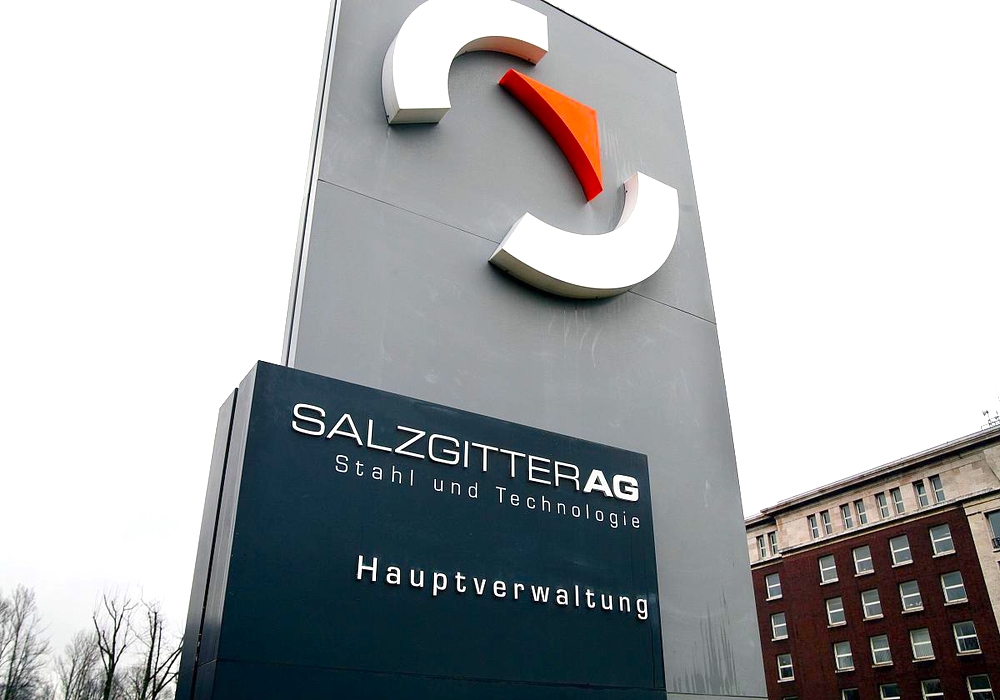
Salzgitter expects delayed safeguard replacement-driven demand growth
EU measures against steel imports will not boost domestic demand much before the third quarter, says the chief financial officer of Salzgitter AG, Birgit Potrafki.
“The impact from the safeguard measures as of 1 July will not come right away,” she said during a conference call this week monitored by Kallanish. Pointing at existing inventories being at sufficient levels, she expects that “we will see the improvement at the end of the year, rather than mid-year”. There has been some increase of inventory amid higher imports frontloaded before the introduction of CBAM and the new trade measure, she added.
Her outlook for steel prices is similarly modest. She expressed disappointment that the surge in European hot-rolled coil values got stuck at around €700-710/tonne ($822-834), “and even slightly below €700”.
The company is now in negotiations with customers on long-term contracts. Potrafki gave no indication of the potential rate of increases, also because of the widely differing term periods of contracts.
However, she did say negotiations have been factored into the company’s guidance, which has been brought up since the publication of the 2025 annual results two months ago. At that time, the company predicted an Ebidta of €500-600 million for full-year 2026. On the grounds of satisfactory sales in the first fiscal quarter, this range has been lifted to €625-725m.
On the crisis in the Middle East, she noted that events have had a negative effect on the company’s international business, but are yet to slow orders from domestic customers.
Author: Christian Koehl