European coil and green steel round-up: EU coil prices hold stable as mills target higher contract prices
Domestic spot prices for steel hot-rolled coil (HRC) in Europe remained stable in the week to 29 May due to a slow market, but EU steelmakers have increased their target prices for the second half of the year for long-term contracts.
A major steel producer has been aiming for a EUR80/t rise in long-term contracts. Market sources reported an increase in offers by EUR50-120/t for July-December agreements with end consumers, depending on the buyer, seller, and previous contract prices. The long-term prices are likely to increase, though they may not reach mills’ targeted prices. Some market participants expressed concerns that steel consumption by end users, particularly carmakers, could decrease due to the geopolitical situation in the Middle East and lower car sales in the region and globally.
The offer rise was not reflected in the spot market, where steelmakers kept prices stable to fill their production lines for summer, a period traditionally characterized by low market activity. Some steelmakers made attempts to offer third-quarter HRC at EUR730-750/t delivered, but they were quick to adjust the offers down to below EUR700/t ex-works in an attempt to attract buyers.
In Northwest Europe, domestic HRC prices were around EUR680/t ex-works.
In Italy, domestic prices have settled at EUR680/t delivered, equivalent to EUR665-675/t ex-works.
Activity remained muted due to a combination of high distributor stocks, declining prices for processed steel coil, and a lack of clarity regarding the new import quotas.
“The European flat steel market is in a temporary deadlock. Spot activity is quiet due to slowing automotive and industrial demand. While domestic mills are using upcoming import restrictions to aggressively push for higher prices on paper, buyers are successfully resisting by drawing down existing warehouse stocks,” a Northwest European distributor said.
The sentiment was echoed by an Italian trader: “It is impossible to buy new rolling coil with the current prices for cut material. Everyone has no choice but to consume material from stock and wait for a price recovery across the supply chain.”
This gives some hope to market sources that trading activity is likely to pick up when stocks decline.
New, tightened steel import quotas are due to take effect from 1 July and, while the general framework is clear — promising an overall quota reduction of 47% and a doubling of duties to 50% — no decision has been announced regarding allocations to country-specific quotas.
Market participants have mixed expectations regarding the impact of the import restrictions. The number of import offers has remained limited in May as exporters are uncertain about which volumes they could sell to the EU risk-free. An announcement on quota volumes is expected to support a revival in trading activity, with buyers booking what they can from overseas and sourcing the remaining volumes from domestic suppliers. Sources have different views on the scale of the impact the new quotas might have, with some suggesting that imports would return from countries able to offer competitive prices, while others believe that the regulations would force more purchases from EU mills and drive prices up.
Offers of HRC from Turkey have been reported at EUR600/t CIF Italy, but interest in the material has been low as exporters had already sold substantial volumes to the EU and the risks of exceeding the quotas were high.
Material from Asia and Algeria has been available at EUR720-750/t DDP South European ports.
Domestic coil prices are expected to remain stable in the short term, and mills will attempt to push offers up for the third quarter using the new regulations as leverage. Buyers largely agree that a price decline is unlikely, but the prospect of a rise was questioned by some sources due to the unlikely recovery of real demand this year.
Green steel
Spot demand for green steel remains muted as distributors prefer to avoid risks related to putting premium material in stock without having a particular customer in mind. End users, particularly the automotive and construction segments, remain the driving force behind low-CO2 steel consumption.
The end users, however, were reportedly showing less interest in mass-balanced material in favour of steel with lower embedded emissions.
Official offered premiums from trial plants remained close to EUR300/t, and some end users accepted them earlier as they were able to dilute the additional costs in the total cost of a product. Steelmakers, however, were more open to reviewing those premiums down to around EUR200/t to secure contracts.
Buyers estimated workable premiums at EUR80-150/t.
| Weekly European steel coil | |||||
| EUR/t | Term | 29-May-26 | Change | ||
| Weekly Northwest Europe steel coil | |||||
| Northwest Europe ex-works HRC | EX-WORKS | 680.00 | 0.00 | ||
| Northwest Europe ex-works CRC | EX-WORKS | 790.00 | -5.00 | ||
| Northwest Europe ex-works HDG | EX-WORKS | 800.00 | -10.00 | ||
| Northwest Europe CIF HRC | CIF | 620.00 | 0.00 | ||
| Northwest Europe DDP port HRC | DDP Port | 695.00 | -25.00 | ||
| Show more… | |||||
| Source: McCloskey by OPIS. | © 2026 Dow Jones Energy Limited. | ||||
| Weekly green steel | |||
| EUR/t | Term | 29-May-26 | Change |
| Green Northwest Europe HRC premium (scopes 1-3 CO2 under 0.8t) | 90.00 | 0.00 | |
| Green Northwest Europe ex-works HRC (scopes 1-3) | EX-WORKS | 770.00 | 0.00 |
| Green HRC premium (scopes 1-2 CO2 under 0.5t) | 90.00 | 0.00 | |
| Green Northwest Europe ex-works HRC (scopes 1-2) | EX-WORKS | 770.00 | 0.00 |
| Green HRC reduced carbon price (scopes 1-3) | 69.99 | 5.67 | |
Author: Benjamin Steven and Maria Tanatar


European heavy plate round-up: Italian plate prices down further, re-rollers squeezed by CBAM
Italian heavy plate prices declined in the week to 29 May as the impact of weak demand offset the effects of high slab costs.
In Italy, deals for S235JR/S275JR-grade heavy plate have been settled at EUR730-750/t ex-works. The number of transactions has not been high enough to secure order books for summer, and market participants anticipate longer maintenance shutdowns in July-August.
Several sources noted that prices of EUR730/t ex-works are already at breakeven with production costs, taking into account the latest transactions for imported slab settled at $590-600/t CIF Italy.
Some Chinese steelmakers have pushed slab offers to $630/t CIF Italy this week, citing rising raw material costs. The new prices were not accepted by EU buyers.
The introduction of the Carbon Border Adjustment Mechanism (CBAM) adds costs and risks for European re-rollers that traditionally rely on imported semi-finished material. Market sources estimated CBAM duties for Asia-origin slab at EUR50-80/t. However, until exporters secure the required verification — which will take place in 2027 for imports customs-cleared in 2026 — European importers face the risk that duties will be calculated using default values, potentially leading to significantly higher costs.
In Germany, demand also remained muted, with sources citing delays to some wind power projects, which did not improve sentiment. German mills, however, remained firm in their prices, offering heavy plate at EUR820-850/t ex-works.
While the defence industry has been showing healthy demand for heavy plate, competition for these sales has been strong, and the volumes have not been sufficient to change the market trend.
| Weekly European heavy plate, slab and green steel | |||||
| Unit | Term | 29-May-26 | Change | ||
| Weekly heavy plate | |||||
| Northwest Europe ex-works heavy plate | EUR/t | EX-WORKS | 815.00 | 15.00 | |
| Germany delivered heavy plate (Northwest Europe) | EUR/t | DEL | 840.00 | 0.00 | |
| Italy ex-works heavy plate | EUR/t | EX-WORKS | 740.00 | -10.00 | |
| Weekly steel slab | |||||
| Italy CFR slab | $/t | CFR | 595.00 | 0.00 | |
| Weekly green steel | |||||
| Green heavy plate premium (scopes 1-3 CO2 under 1t) | EUR/t | 25.00 | 0.00 | ||

European steel HRC prices rise, trading limited
Domestic steel hot-rolled coil prices in Northern Europe and Italy rose on Friday May 29, while trading remained largely muted. But market sources that Fastmarkets spoke to indicated wider ranges for workable prices.
In Northern Europe, a mill source reported an indication of €680-700 ($791-814) per tonne ex-works during the day, while buyers indicated varying workable prices within the range of €670-705 per tonne ex-works.
“There are higher and lower numbers based on the mill and the buyer,” a buyer said on Friday.
Sources mentioned the increase in new offers from leading European steelmaker ArcelorMittal that was announced during the week and which reached as high €80 per tonne, but noted that were still waiting to see the market reaction to the higher offer levels.
“Arcelor had showed its intention to get higher numbers,” a mill source said on Friday, adding that they were curious to see how the increase is received by the market.
According to a second buyer, the increase in offers from the leading producer was dependent on the size of the order, with a smaller increase expected for larger volumes, while smaller volumes saw a bigger increase.
The buyer also said upward movements in the market may be seen in September, but not before then.
Sources told Fastmarkets on May 28 they had enough HRC in stock until September, some until October, and there was no need for restock at the moment.
“[The] problem of the pricing is not the price itself, but the extremely low demand,” a third buyer said on Friday, adding that this would change only if European policy changes.
The third buyer said they did not expect better conditions in the market until Russia’s war with Ukraine ended, along with the conflict in the Middle East, which began in late February.
Fastmarkets’ daily steel hot-rolled coil index domestic, exw Northern Europe was calculated at €690.92 per tonne on Friday, up by €10.19 per tonne from €680.73 per tonne on Thursday.
The index was also up by €10.92 per tonne week on week but down by €18.81 per tonne month on month.
In Italy, trading of HRC was also muted on Friday, with mill sources reporting indicative prices of around €670-690 per tonne ex-works and a bid at €660 per tonne ex-works.
Two buyers reported indications for local HRC prices in the range of €660-680 per tonne ex-works, while a third buyer said offers from Italian mills were at €670-690 per tonne ex-works.
According to one of the above buyers, mills were more aggressive pricewise in local sales, but less flexible for exports.
“Everybody waits for quotas information [country-specific allocations] – this can give a real direction for the domestic prices,” the source said on Friday.
New trade defence measures were expected to come into force on July 1, aimed at shielding the EU steel industry from global overproduction and unfair trade practices. The new measures included lower steel import quotas to the EU and higher out-of-quota duties.
“Mills are convinced that [HRC] prices will increase significantly in late third quarter and going forward, boosted by the imports shortage amid new trade regime, but it’s hard to say how much [of an increase] the market can actually absorb,” the a buyer said on Friday.
Fastmarkets’ daily steel hot-rolled coil index domestic, exw Italy was calculated at €671.67 per tonne on Friday, up by €1.25 per tonne from €670.42 per tonne on Thursday.
The index was down by €5.83 per tonne week on week and down by €27.33 per tonne month on month.
The latest import activity in Southern Europe included a large but unconfirmed HRC sale reported on Thursday from Indonesia to Spain around €590-600 per tonne CFR, without Carbon Border Adjustment Mechanism (CBAM)-related costs.
A mill source on Friday said offers from Indonesia to Italy at $650-670 per tonne CFR were heard from different European customers, but no fresh deals were confirmed.


Mexico-EU agreement may boost steel trade, but US to remain Mexico’s preferred partner: sources
The newly signed Mexico-EU (EU) trade deal could signal a shift in steel trade toward the EU, but Mexican steelmakers will still prefer trade within North America, a steel producer told Fastmarkets.
Mexico and the EU signed the Modernized Global Agreement (MGA) and interim Trade Agreement (ITA) on May 22 to “strengthen political dialogue and cooperation,” according to a statement released by the EU. Mexico and the EU’s trade relationship currently totals €100 billion ($117 billion) in trade annually, the statement said.
“The modernization and signing of the EU-Mexico trade agreement is a positive development overall for the Mexican industrial and manufacturing sectors,” a Mexican producer source told Fastmarkets. “[Having] broader trade access and diversification opportunities is generally beneficial for long-term industrial growth.”
While the trade deal will open other avenues for Mexican steel, “[logistics], freight costs, lead times and existing regional integration within North America will continue to favor the United States-Mexico-Canada (USMCA) market for many steel products,” the producer said.
Mexico has exported 451.55 tonnes of steel to the EU since the start of 2026, according to Mexico’s Steel Trade Monitor. Mexico mostly exports oil country tubular goods (OCTG) to the EU, sending 379.23 tonnes to the bloc this year, the trade data shows.
Mexico exported 160,000 tonnes to the US so far in 2026.
Meanwhile, Mexico has imported 95,200 tonnes of steel from the EU, consisting mostly of cold-rolled coil and galvanized sheet. Mexico has imported more than three times that amount from the US in 2026, according to the trade log.
“For the Mexican steel industry, having additional commercial alternatives and stronger trade relationships outside of North America can provide more flexibility and stability,” the producer said, “particularly during periods of market uncertainty or trade tension.”
The Mexican steel market has faced a wave of uncertainty and volatility since the reintroduction of Section 232 tariffs on steel, which US President Donald Trump reimplemented last year. Currently, Mexico is subject to a 50% levy on steel and a 25% levy on automobiles and auto parts. The tariffs led to a significant decrease in exports to the US, Mexico’s largest trading partner.
Despite the recently inked trade deal, “the US will remain Mexico’s most important steel and manufacturing partner by far due to the highly integrated supply chains between both countries,” the producer said. “The integration between Mexico and the US manufacturing sectors is extremely strong and difficult to replace.”
However, the EU is more “aggressive” compared with the US in finding alternative supply chains that avoid China, Jorge Guajardo, former Mexican ambassador to China, told Fastmarkets on Thursday May 28. The EU deal with Mexico will enhance the Mexican-based steel supply chain “at a time when the EU is facing increased energy prices making it difficult to de-risk globally,” Guajardo said.
The US has averaged 34,304 tonnes of imported Chinese steel since the Section 232 tariffs went back into place on March 12, 2025, data from the US International Trade Administration (ITA) shows, representing a 16.3% decline in imports from China from the year before. Between March 12, 2024 and March 12, 2025, imports of Chinese steel averaged 40,987 tonnes.
Mexico has curbed its steel imports from China significantly since the country introduced a series of tariff measures against countries it lacks trade agreements with. Imports of Chinese steel totaled 909,000 tonnes in 2025, averaging 75,750 tonnes per month. Since the start of 2026, Mexico has imported 70,900 tonnes of Chinese steel, according to Mexico’s Steel Trade Monitor.
The Mexico-EU trade deal comes amid the renegotiation of the United States-Mexico-Canada (USMCA) trade agreement, which some steel industry members anticipate will result in multiple treaties between the countries.
Market participants also say that the tariff-free environment will not return between the three trading partners.
“Free trade — forget it; there will be tariffs,” Oscar del Cueto, American Chamber of Commerce Mexico (AmCham Mexico) and Canadian Pacific Kansas City Mexico president, said during a May 5 conference.
The Mexico-EU trade deal should not threaten ongoing USMCA discussions, Guajardo said.
“I don’t think it affects the USMCA negotiations,” Guajardo said, “but it gives a first step in Mexico’s long journey into diversifying from the US market.”
The producer source agreed with the sentiment, stating that the deal does not amend Mexico’s position toward the US.
“I would not necessarily characterize this agreement as a move against the US,” the producer told Fastmarkets, “but rather as part of Mexico’s broader strategy to diversify trade relationships and strengthen global competitiveness.”
The deal will still allow Mexico to maintain “a very close economic relationship with the United States,” the producer said.
Fastmarkets’ latest calculation of the weekly steel hot-rolled coil index, delivered Monterrey, Mexico was 15,763.29 Mexican pesos ($910) per tonne on May 28, while the corresponding steel hot-rolled coil index, delivered Bajio, Mexico was 15,642.39 pesos per tonne.
Fastmarkets’ price assessment for steel reinforcing bar (rebar), delivered Monterrey, Mexico was 16,200-16,900 pesos per tonne on Thursday. The corresponding assessment for steel reinforcing bar (rebar), delivered Bajio, Mexico was 16,300-17,000 pesos per tonne on the same day.
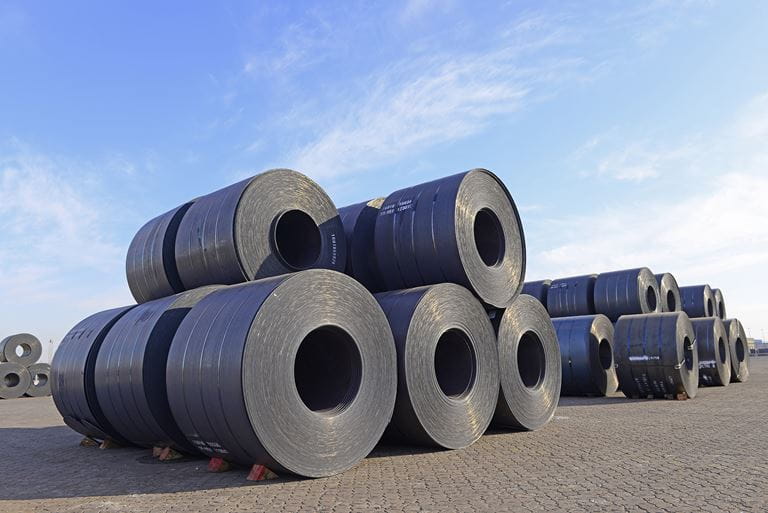
EU HRC market shows modest domestic demand, while import trade is thin amid quota uncertainty
The hot-rolled coil (HRC) market in the EU has seen little change in terms of business activity, with demand remaining at modest levels amid relatively high or medium stock levels depending on the country and region.
While import HRC offers, both on DDP and CFR bases, have barely moved over the week, trade in the segment has remained shy, sources say. Still, workable domestic prices have slid in some cases, particularly in the southern part. However, most market players are not considering it a slump, but as a result of thin overall demand and some mills being under a bit more pressure to sell versus those already sold out for July. The quota distribution issue remains the key factor weighing on import demand, particularly while, in theory, Turkish and Algerian HRC still has some advantage due to lower estimated CBAM costs compared to Asian material.
In northern Europe, most mills’ official HRC offers have been reported at around €700/mt ex-works for July deliveries, versus earlier targets at €700-710/mt ex-works. The tradable levels have been mostly settled at €680-690/mt ex-works, the same as a week ago, though some sources reported small deals at closer to €700/mt ex-works as well.
In the Italian market, mills’ official offers for HRC have been reported at €680-690/mt ex-works, down from the €690-705/mt ex-works targets of the past week. The workable HRC prices in the southern part of the EU, according to sources, have settled at €670-685/mt ex-works, although some traders have reported that €665/mt ex-works levels are reachable in some cases as well. “There are talks about €680-690/mt delivered [from a large mill] offers and even that is considered high at the moment,” a source told SteelOrbis.
In the import segment, the HRC offers from Algeria have been reported at €730/mt DDP, while Turkish material has been available this week at €690/mt DDP versus discussed deals of the past week at €675-685/mt DDP. In addition, according to sources, ex-Vietnam HRC has been on offer at €690-700/mt DDP in the southern part of Europe. In the meantime, HRC offers from South Korea have been reported at €700/mt DDP.
Import HRC offers on a CFR basis have been reported at €610-615/mt CFR from Turkish mills and at €645-650/mt CFR from Algeria. However, next week there should be greater clarity on HRC from both these origins as the mills will be back from the religious holidays. “Turkey, I think, will be focused on pushing sales for August-September shipment as their quota for Q3 might be already exhausted considering that some sales were concluded back in March-April,” a trader told SteelOrbis. “The Algerian mill controls the quota, but the volume is limited as per the others’ cap,” a source added.
In addition, ex-India HRC offers have been reported at $685/mt CFR, or €590/mt CFR, pretty much in line with the past week. Some sources have also informed about HRC offers from Indonesia at around €550/mt CFR, which is considered quite aggressive under the current market conditions. Sources report that the potentially high CBAM costs for Indonesian material, coupled with duty-related issues, make Indonesian material rather risky to purchase.