

IREPAS Short Range Outlook : June 2026
Relatively stable business environment in global longs market, regional differences more pronounced than ever
The overall business environment in the global long steel products market remains relatively stable. However, regional differences have become more pronounced than ever. Protectionist measures in the United States, combined with the implementation of CBAM in Europe and the upcoming reduction of EU import quotas, are reshaping trade patterns and market dynamics.
Ongoing conflicts continue to create uncertainty and raise costs
At the same time, the ongoing conflicts in Ukraine and the Middle East continue to create uncertainty, disrupt trade flows and influence supply-demand balances across multiple regions. Higher oil and natural gas prices have increased transportation and production costs, while steel availability from Gulf region suppliers has become extremely limited. Marine insurance costs for cargoes have also risen due to increased geopolitical risks. Expectations that these disruptions will be short-lived have largely disappeared. As a result, many distributors and stockists are holding onto inventories amid concerns about future supply availability and stock replacement costs. Consequently, the market remains highly fragmented, with conditions varying considerably depending on geography.
EU market sees last-minute import buying ahead of new quota system on July 1
In the European Union and in the United Kingdom, the market is now starting to search for a new equilibrium because of the changes in the import regime from July 1. During the past few weeks, some last-minute import buying has been taking place, as buyers and traders try to position themselves before the new quota system enters into effect. After this, market players will have to adjust their strategy to the supply which is actually available in the market. There will still be imports, of course, and there will still be competition, but buyers will have to build their strategies around actual market availability, not around the cheapest theoretical import offer.
Scrap prices remain strong despite weak demand
There is no demand to support the continuing strength of scrap prices, but it seems that prices will stay where they were before the Eid holiday or they may come down by a few dollars to motivate Turkish buyers to resume buying. Deep sea scrap prices for Turkey remain some way above US$400/mt CFR despite weak Turkish rebar sales, while the strong scrap prices provide support for finished product prices. Meanwhile, Turkish mills do not expect much long product demand from the EU because of the new quotas to be introduced shortly in the region. Regional differences will certainly create different results for different regions and producers, especially for those who source scrap from the US and the EU and need to export their products.
Turkey’s production costs may increase, political situation to impact investment
Turkish mills were enjoying cheap energy costs due to the rainfall during the winter season. This will most probably end when temperatures start rising and the country starts using cooling systems. With the political turmoil in the country, investments will slow down, which will also be another factor causing demand for long steel to slacken.
Iran’s demand for semis contributes to higher long steel costs
Iran’s demand for semis is another factor contributing to increased costs of long products. In this context, Chinese exports of slabs and billets increased to around 900,000 mt in the January-April period this year.
Long steel market in Germany remains very weak
The market in Germany is still very weak. After the shockwave of higher energy prices (the impact of the Iran war) and price increases for all steel products and for logistics, many projects were put on hold. Consequently, cut and bend prices did not move up but are on the way back down. Benders are desperately looking for orders at somehow manageable prices. German and Polish mills have had to adjust prices down as well, otherwise benders do not buy. So, there has been a drop of around €30/mt in prices despite the seasonal improvement which reflects the level of investment in Germany right now. Better prices for benders from imports are practically not available anymore. Reduced quotas, CBAM and high ocean freight rates make business very difficult. New building permits went down by 10-15 percent and industrial projects by 20-30 percent. There is not even any input from the public sector.
Mixed bag of positive and negative factors in US market
In the United States, inflation remains a concern, and expectations for interest rate cuts have largely been pushed back, with higher rates now expected to continue into 2027. This has negatively impacted housing and construction activity, keeping demand relatively subdued. Meanwhile, steel imports remain restricted by the 50 percent Section 232 tariffs, higher freight costs and logistical uncertainties. Reduced import competition continues to support a gradual increase in domestic steel prices despite overall moderate demand. On the other hand, domestic steel prices are moving closer to import parity, which may improve future import opportunities. In addition, inventories remain relatively low, and continued investments in AI infrastructure, energy and industrial projects are providing some support for steel demand. The primary area of growth remains AI infrastructure and data center investments, although this business is largely supplied directly by domestic mills and these big projects are for consumption of reinforcing steel 12-18 months from now. However, these positives are still overshadowed by geopolitical uncertainty, high interest rates and weak construction activity.
Some positive developments in terms of investments
One of the key positives in the marketplace is the substantial level of investment being directed toward infrastructure projects, energy-related developments and data centers, all of which generate significant demand for reinforcing steel products. In addition, many governments in developed economies are increasingly focused on addressing housing affordability challenges. Policies aimed at expanding residential construction could support additional demand for long steel products in the medium term. Another positive factor for certain markets is the implementation of measures designed to protect domestic industries from unfairly priced imports. While these measures support local producers, they also reduce market access opportunities for exporting countries, highlighting the differing impacts across regions. There are areas like the Balkan and Baltic regions where demand is really great and investment in infrastructure is huge.
China’s crude steel output decreases, its iron ore imports increase
China’s crude steel production decreased by 4.1 percent in January-April, but its iron ore imports increased by eight percent to 418 million mt in the same period, and port stocks are close to 160 million mt. This is a very strange situation: steel production is characterized by weakness, but iron ore imports remain strong.
Divergence between open and protected markets
Competition remains extremely intense in international markets that are open to imports. Excess production capacity in several regions continues to put pressure on prices and margins. In contrast, markets that benefit from trade protection measures or restricted import access generally experience more balanced competitive conditions.
Current market status stable and challenging, outlook varies according to region
Under these circumstances, the current status of the market can be described as stable and challenging. While demand remains generally subdued in many regions, market participants have largely adapted to current conditions and no major short-term disruptions are anticipated. The outlook, on the other hand, varies significantly by region. In Europe and the United States, market sentiment is relatively decent, supported by infrastructure spending and protective trade measures. In many other parts of the world, however, the outlook remains difficult to predict.
Supply side will need to be monitored if Middle East crisis is resolved
Even if geopolitical tensions in the Middle East ease, the resulting increase in availability of supply could place additional pressure on already oversupplied open-trade markets. Furthermore, the current interest rate environment continues to weigh on construction activity and investment decisions in several regions.


Steel tariff boosts US industry, raises costs for end-users
The 50% tariff that the US imposed on steel and aluminum imports in June 2025 has scrambled trade flows, driven up prices and inspired some new investment. This is part one of a three-part series examining the effects one year later.
When US President Donald Trump imposed a 50% tariff on imports of steel and aluminum in June 2025, officials said the new duties would revitalize the nation’s industrial base by leveling the playing field for domestic producers that were undercut by inexpensive imports.
One year later, US steel producers have reaped the benefits of the tariff. Steel imports have plummeted, allowing domestic prices to outpace global prices. US production and capacity utilization have gradually increased as imports declined, despite largely unchanged demand.
But the promised manufacturing boom has yet to materialize for steel consumers. The tariffs have driven up input costs for some downstream sectors, cutting into their profit margins.
“Production is rising, and the industry is in a stronger position than 18 months ago,” Tiago Vespoli, a senior research analyst at consulting firm Wood Mackenzie, told Platts. “But the output response has been gradual, reflecting the realities of building new capacity, and the broader manufacturing sector has yet to show a jobs uplift that can be tied directly to the steel tariff.”

Higher costs for steel end-users
The US Bureau of Labor Statistics’ producer price index for iron and steel increased 10.4% between April 2025 and April 2026, and the steel mill products index rose 13.3%. Both are major inputs for the construction sector and automotive sectors, which accounted for 46% of net steel shipments in 2025, according to the US Geological Survey.
Until Trump’s tariff took effect, the industry’s input costs had remained relatively flat since 2023, according to Zack Fritz, an economist for the trade group Associated Builders and Contractors.
“Higher input prices mean higher construction costs, and that means fewer projects pencil out and proceed,” Fritz told Platts. “I think that’s been a contributor to the fact that nonresidential construction spending has been in a state of decline for some time now.”
Nonresidential construction spending in the US peaked at $791 billion in December 2023, according to Census Bureau data. In March, spending was reported to be $729.3 billion, down 2.1% from March 2025.
The decline is largely due to the end of the large projects incentivized by a pair of Biden-era laws, the bipartisan infrastructure act and the CHIPS and Science Act, which pumped money into the construction sector. But higher input costs have also been a factor.
The increased input costs have left some downstream sectors, including automotive and metals fabrication, to negotiate within their supply chains as they face tighter margins.
Platts assessed the TSI US EXW Indiana price for hot rolled coils of steel at $1,201.50/metric ton on May 26, up 31% since Trump imposed the tariff on steel and 58% since Trump took office.
The US price for hot rolled coil is more than double the Southeast Asia price of $571/mt, assessed May 26.
“The cost recovery within the supply chain to account for the tariffs is something that many suppliers are very focused on,” Ann Marie Uetz, an automotive supply chain attorney with Foley & Lardner, told Platts. “It’s really negotiations with their customers, all the way up to the [original equipment manufacturers], for that cost recovery for tariffs.”
A series of charts shows US steel imports falling and prices rising after a 50% tariff was imposed in June 2025.
Limited capex from end-users
The domestic steel industry is in the middle of a $50 billion capital spending wave, Vespoli said, adding that Nucor Corp. alone has several projects ramping up, including a new melt shop in Arizona, a rebar micro mill in North Carolina, and galvanizing lines at its Indiana and South Carolina sites.
End-users have been slower to make new commitments. The most significant announcement since the tariffs took effect is Toyota Motor’s $2 billion investment in a new vehicle assembly line at its Texas manufacturing complex.
Among heavy machinery manufacturers, Caterpillar is planning a $725 million expansion of an engine production facility in Indiana and Volvo Construction Equipment is increasing excavator production in Pennsylvania. However, the machinery and equipment sector accounted for only 3% of steel consumption in 2024, according to the US Geological Survey.
Additional policies beyond the 50% tariff will be needed to spur growth in downstream steel sectors, American Iron and Steel Institute President Kevin Dempsey told Platts.
Environmental regulations and permitting policies “are going to be really important for a lot of downstream industries,” Dempsey said. “And, you know, nothing happens, especially in government, as quickly as you would like, but I think things are moving in the right direction.”
Job numbers unchanged
Employment for the general US manufacturing sector has remained mostly flat at 12.6 million workers through early 2026, while the ISM manufacturing employment index suggests that many subsectors are contracting rather than expanding, according to Vespoli.
The steel industry has added a few hundred new jobs in the past year as steel producers increased capacity, but employment in iron and steel mills and ferroalloy manufacturing has remained largely unchanged.
The sector employed 84,300 workers in March, slightly down from 84,500 workers in March 2025, according to the most recent data available from the Bureau of Labor Statistics. Total employees reached 85,100 in January before marginally falling.
However, the tariff’s impact on domestic manufacturing is not primarily in employment numbers, but rather in input costs, sourcing decisions and trade flows, according to Marc Gilbert, global lead at Boston Consulting Group’s Center for Geopolitics.
And a recent revision to the tariffs framework has imposed similar duties on steel-derivative products, including machinery and automotive components.
“For manufacturers exposed to tariffed materials, the questions of whether to shift sourcing, redesign products or relocate manufacturing capacity to the US require a long-term view and confidence on the return in invested capital,” Gilbert said.
Author: Sarah Elbeshbishi

Tata Steel’s Port Talbot site hit by processing‑line fire
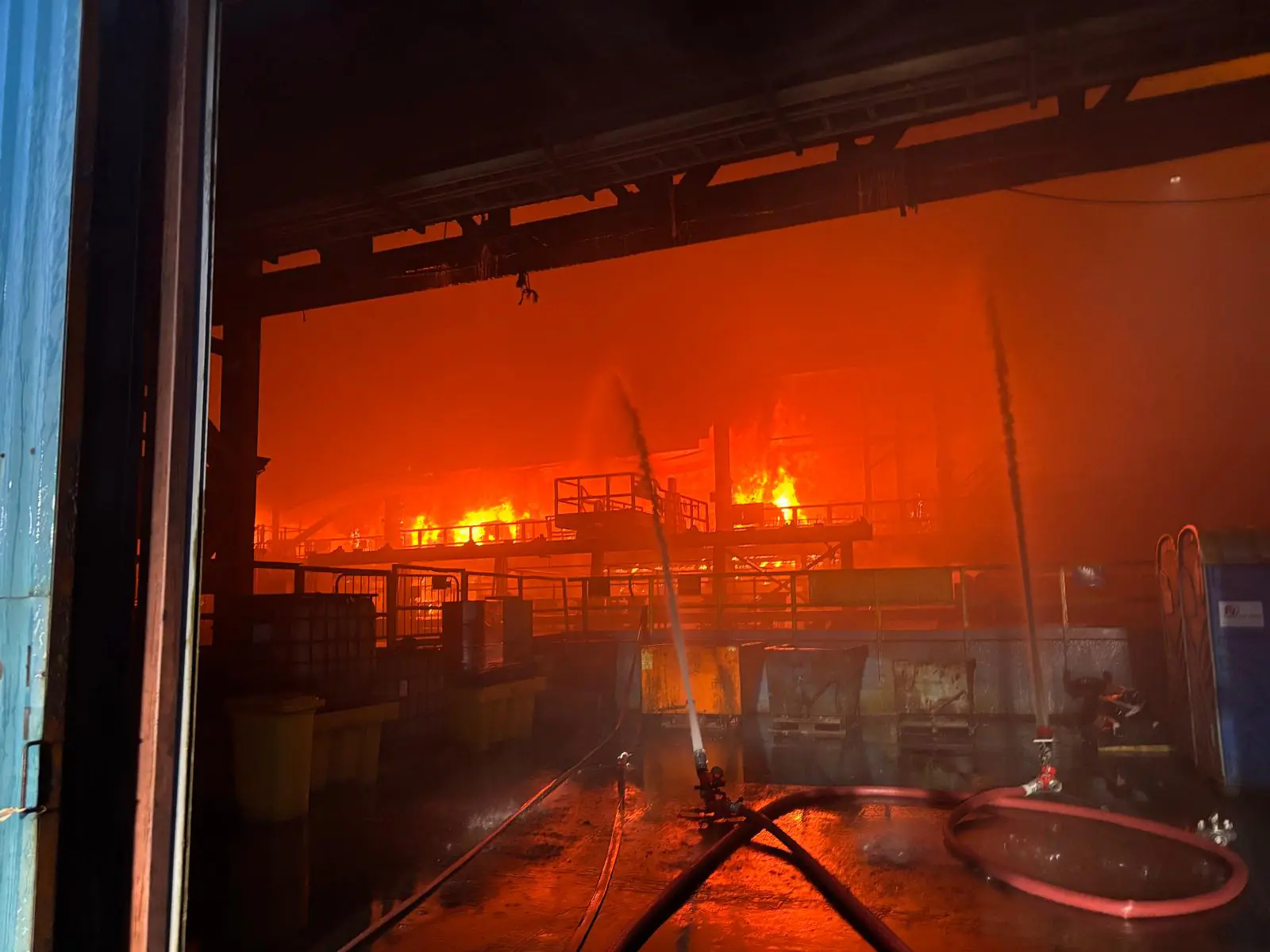
Tata Steel said in a statement on June 4 that a fire broke out on the evening of June 3 in one of its processing lines at the Port Talbot steelworks.
The company said the incident is not related to the recent demolition of its empty, redundant gas holder.
Mid and West Wales Fire Service arrived at the site at 8:00 pm local time to deal with the fire, and Tata said all personnel had been accounted for and evacuated from the area safely. In an update, as of the evening of June 4, the steelmaker said the fire service was still on the site to retain control of the area of the cold mill where the fire occurred.
A company spokesperson said the fire was restricted to a confined area and that despite a pause in the unaffected hot-rolling mill, production was expected to restart promptly.
Tata said in a statement that it was still unable to assess the cause of the fire and its potential impact on operations. The company added that it was “investigating a number of options” to minimize the impact on customers.
The incident comes just weeks before the UK’s new steel safeguard measures come into force, which are set to tighten imports in an attempt to boost domestic production.
“The fire doesn’t look great,” a trader said. “It is seriously bad timing with these quota announcements coming up.”
Platts, part of S&P Global Energy, assessed hot-rolled coil in the UK at GBP705/metric ton DDP West Midlands, up GBP5/mt week over week, and up GBP190/mt since the start of the year.
Photo Credit: Mid and West Wales Fire and Rescue Service
Author: Riley Waters

OECD: Global steel excess capacity set to reach 745 million mt by 2028
Global steel excess capacity is projected to surge to 745 million metric tons by 2028, worsening an overcapacity crisis that threatens the viability of market-oriented producers worldwide, according to the OECD Steel Outlook 2026, released June 4.
The forecast comes as global steelmaking capacity reached a record 2.445 billion mt in 2025—its fifth consecutive year of expansion—even as steel demand contracted for the fourth straight year. Excess capacity climbed to 640 million mt in 2025, already exceeding total OECD steel production by more than 200 million mt.
The widening gap between capacity and demand will push utilization rates down to 74% or lower by 2028, from 76% in 2025, intensifying financial pressure across the industry. Planned capacity additions of up to 138.8 million mt through 2028 represent a 5.7% increase from 2025 levels, with most expansion occurring outside the OECD area.
Demand stagnation
The capacity buildup is colliding with persistently weak demand. Global steel consumption declined 2.6% in 2025 and is projected to remain nearly flat in 2026, with growth averaging just 0.9% annually through 2030, reaching 1.89 billion mt.
China, the world’s largest steel consumer, saw demand plunge 6.9% in 2025 as its property sector downturn deepened. Chinese demand is expected to contract by another 0.6% in 2026 and continue to decline through 2030, the OECD said.
The weakness in China has triggered a massive export surge, with Chinese steelmakers shipping a record 131.2 million mt to foreign markets in 2025, up 13.8%, in contrast to the 6.2% decline in worldsteel exports. China’s exports have more than doubled during 2019-2025, and the country’s share of world exports has soared to 41% in 2025 from 19% in 2019. Association of Southeast Asian Nations (ASEAN) exporters also saw their exports more than double during 2019-2025, reaching 20.8 million mt in 2025.
India and Southeast Asia showed stronger growth prospects, with Indian demand rising 9.8% in 2025 and projected to grow 5.1% annually through 2030. Both regions, however, are also adding significant capacity, with India planning up to 31.8 million mt of new capacity by 2028 after adding 41.4 million mt during 2021-2025.
Subsidy distortions
The OECD report highlighted growing distortions from government subsidies, particularly in China. The median Chinese steel company received 15 times more subsidies relative to asset size than producers elsewhere in 2024, the report said.
Less-subsidized steel firms are losing market share to more heavily subsidized competitors, despite stronger financial performance, the OECD said.
Trade actions have intensified in response to import surges, with antidumping and countervailing duty investigations increasing globally. The OECD, however, warned of growing evidence of trade remedy circumvention and diversion.
The report also flagged rising export restrictions on steelmaking materials, particularly ferrous scrap, which are compounding pressure on raw material prices and threatening industry viability.
Author: Annalisa Villa

EU steel exports to US down 34% one year after Trump’s 50% tariffs
European steel exports to the US have declined by one-third since the introduction of the US administration’s 50 percent steel tariffs, according to new data released by the European Steel Association (EUROFER).
The association reported that EU steel exports to the US fell by 34 percent year on year during the three quarters following the implementation of the tariffs on June 4, 2025. Export volumes declined from 2.93 million mt to 1.94 million mt over the period.
Tariffs continue to weigh on European steel sector
The 50 percent tariffs were introduced under the US Section 232 framework and were later expanded to cover a range of steel-intensive downstream products. According to EUROFER, steel and aluminum remain the only sectors still subject to the full 50 percent US tariff rate, with the measures continuing to affect both European steel producers and manufacturing supply chains.
The association stated that the sharp decline in exports demonstrates the ongoing impact of the tariffs on transatlantic steel trade.
EU-US trade agreement includes safeguard provisions
The figures were released shortly after EU member states approved legislation implementing the latest EU-US trade arrangement.
Under the agreement, the European Commission has the authority to suspend parts of the deal if the United States continues applying tariffs above 15% beyond the end of 2026 on steel- and aluminum-intensive derivative products that became subject to US tariffs after June 4, 2025.
The arrangement also foresees further discussions between Brussels and Washington regarding:
- tariff-rate quota (TRQ) solutions,
- steel and aluminum trade,
- cooperation to address global overcapacity.
EUROFER calls for permanent solution
Axel Eggert, general director of EUROFER, said the data clearly illustrates the impact of the tariffs on European exports and argued that market access issues remain unresolved one year after the measures took effect.
According to Eggert, both sides share an interest in maintaining strong transatlantic cooperation, but he stressed that balanced trading conditions have not yet been restored.


Romanian longs spot prices ease as slow trade prompts market correction
The Romanian long steel spot market has moved slightly lower this week, with traders gradually reducing prices after the sharp increases recorded in recent weeks.
Market participants indicate that overall demand remains subdued, despite ongoing activity from selected infrastructure and construction projects, while most buyers continue to limit purchases to immediate requirements. As a result, the higher price levels reached previously have become increasingly difficult to sustain, prompting retailers to adopt a more competitive pricing approach in an effort to stimulate sales. Meanwhile, sentiment in the import market remains cautious, with safeguard quota restrictions and CBAM-related uncertainties continuing to discourage buying interest. On the other hand, Romania’s sole domestic rebar producer, Beltrame Group, has maintained its offer levels despite the softer market conditions, although sources report limited sales activity and continued shortages of some commonly requested rebar dimensions.
Consequently, rebar spot prices in Romania have declined from €650-665/mt ex-warehouse last week to €635-640/mt ex-warehouse, while wire rod prices have softened from €690-700/mt to €685-690/mt ex-warehouse.
On the production side, Beltrame Group is still indicating rebar prices at around €640-650/mt ex-works.
Meanwhile, in the import segment, Romanian buyers remain largely quiet, with no significant non-EU transactions reported recently as buyers continue to act cautiously amid CBAM- and quota-related uncertainties, as well as weak demand. However, some buying activity was heard last week, with Romanian buyers sourcing material from nearby EU suppliers, particularly Bulgaria, benefiting from shorter lead times and easier procurement procedures. Meanwhile, Italian rebar offers have been heard at around €650-665/mt CFR. On the other hand, Greek suppliers have offered rebar at €655-665/mt CFR and wire rod at €665-675/mt CFR. Previously, their offers were reported at around €670-680/mt CFR for rebar and €660-670/mt CFR for wire rod. Meanwhile, on the non-EU side, offers from Egyptian suppliers have been heard at €545-550/mt CFR for rebar and €560-565/mt CFR for wire rod, down from €550-560/mt CFR for rebar and €560-570/mt CFR for wire rod last week. Turkish suppliers have, meanwhile, raised their rebar offers slightly to €535-545/mt CFR Romania, compared to €530-545/mt CFR heard last week, based on an exchange rate of €1 = $1.16 and estimated freight costs of €25-30/mt.

Bulgarian rebar prices soften amid financial uncertainty, wire rod remains resilient
The Bulgarian longs market has shown mixed trends this week, with weaker domestic demand weighing on rebar prices, while wire rod values have remained relatively firm.
Market participants report that business activities have slowed amid growing financial uncertainty following recent political developments and the revision of several state funding programs. As a result, purchasing activity has remained cautious, with most buyers limiting orders to immediate requirements and avoiding significant restocking. Despite the subdued domestic market, some attractive offers have been observed in the import segment, particularly regarding EU-origin material. Sources indicate that Italian suppliers have become increasingly aggressive in their rebar pricing strategies, seeking to attract buyers in a market where overall consumption remains weak. In contrast, interest in non-EU imports continues to be limited, as safeguard quota restrictions and CBAM-related concerns discourage new bookings and reduce the competitiveness of import material.
Against this backdrop, workable rebar prices in Bulgaria have softened slightly and are currently reported at around €630-640/mt CPT, compared to €640-650/mt CPT recorded previously. The wire rod segment has, meanwhile, remained more resilient, supported by relatively balanced supply conditions and the absence of significant selling pressure. Current offers are reported at €680-700/mt CPT, up from €680-690/mt CPT, although most transactions continue to be concluded closer to €680-690/mt CPT.
In the import market, Turkish rebar offers are currently estimated at around $590-600/mt FOB. After accounting for freight costs of approximately €20-25/mt, these levels would translate to roughly €530-540/mt CFR Bulgaria, compared to €525-545/mt CFR heard a week earlier. Egyptian suppliers are, meanwhile, estimated to be offering rebar at around $600-610/mt FOB and wire rod at approximately $620-625/mt FOB. Based on prevailing freight rates of around €25-30/mt, these indications would correspond to approximately €535-550/mt CFR Bulgaria for rebar and €555-565/mt CFR Bulgaria for wire rod.
As for EU-origin material, Italian rebar offers have recently been heard at around €665/mt CPT Bulgaria. Meanwhile, Romanian rebar is estimated at approximately €660-670/mt delivered to Bulgaria, reflecting current domestic levels in Romania and transportation costs of roughly €30/mt. However, market participants indicate that workable levels around €20/mt lower may still be achievable in selected transactions.
European steel heavy plate prices dipin Italy; Northern Europe stable on slow demand
Domestic steel heavy plate prices decreased in Italy in the week to Thursday June 4, reflecting weak demand for summer deliveries, while prices in Northern Europe remained stable amid slow trading, Fastmarkets was told.
Italy
Deals for steel heavy plate in Italy were reported in the range of €730-750 ($849-873) per tonne ex-works on June 4, unchanged from bookings heard a week earlier.
Market sources said that offers were at heard €730-760 per tonne, slightly lower than previous pffers at €740-760 per tonne ex-works, with the lower end reflecting competition for commodity-grade volumes.
“Demand is limited. There is no rush on the distributors’ side to book for July and August delivery. Their sales from stocks are also limited,” a producer said on Thursday, adding that other suppliers “compete a lot on all levels.”
“I do not see a sudden resolution for July-August, we’ll most probably be conditioned by the demand, and no price strength is in sight,” the producer added.
A trader source also noted that trading was still subdued, and insufficient to fill mills’ summer order books, “leading market participants to expect extended maintenance shutdowns during July and August.”
Fastmarkets’ weekly price assessment for steel domestic plate 8-40mm, exw Southern Europe, was €730-750 per tonne on Thursday, narrowing downward from €730-755 pert tonne a week earlier.
Northern Europe
Offers of heavy plate in Germany were heard in the range of €800-850 per tonne ex-works. The lower end around €800-820 per tonne ex-works was linked to material delivered to Belgium, Italy and France, a producer said.
Indications were reported within the range of €830-850 per tonne ex-works, but no significant trading was heard during the week.
The producer said that some deals for German plate at €790-800 per tonne ex-works had been concluded, also for deliveries to Belgium, Italy and France, but some of these destinations fall outside the Northern Europe assessment scope.
“We did not see any competing offers from German mills. These are the prices confirmed from Italy, Belgium and France by re-rollers,” the producer said on Thursday. “I would not exclude that Germans prices [are] higher but they are not really visible in [the] daily spot commodity market.”
A distributor said that the cost of freight from Italy to Germany was quite high, making Italian plate less competitive in Northern Europe. “You can get cheaper plate in Germany, Denmark and Belgium,” the source said.
The distributor added that prices were mostly stable, but mills were “not so satisfied” with booked volumes and were expecting more orders. “Order books are low, especially in Germany, because stockholders are not buying much because of the [seasonal lull in] summer,” the source said.
Meanwhile, a trader noted that demand in Germany remained weak, partly due to delays to wind-energy projects. “While the defense sector continues to generate solid demand, competition for these volumes is intense and has not been sufficient to alter the overall market trend,” the source added.
Fastmarkets’ weekly price assessment for steel domestic plate 8-40mm, exw Northern Europe, was €800-850 per tonne on Thursday, unchanged week on week.


Worldstainless appoints Acerinox’s Velázquez as new chairman
The World Stainless Association (worldstainless) has elected Bernardo Velázquez, executive of the Acerinox Group, as its new chairman during the organisation’s 30th annual conference in Johannesburg, South Africa, Kallanish notes.
Yosuke Sakai, the executive officer and head of Stainless Steel & Titanium unit of Nippon Steel Corp, Sudhakar Sivaji, chief executive of Aperam, and Lee Jieun, head of Posco’s marketing, have been elected as vice chairmen. The ceo of Swiss Steel Group, Frank Koch, will serve as treasurer.
The Board includes an additional six representatives from China Baowu Tisco, Acerinox Europa, Daido Steel, JFE Steel and North American Stainless.
Tim Collins continues in his role as secretary-general of worldstainless, while Edwin Basson, the director general of the World Steel Association, remains an ex officio member of the board.

Padana Tubi creates business units following acquisition
Italian re-roller Padana Tubi is creating two dedicated business units to strengthen its commercial operations.
The new stainless steel business unit will be led by Luca Cavallari, while the carbon steel division will be jointly managed by Giorgia Benetti and Marco Fornasari, the company says in a note obtained by Kallanish.
The reorganisation will be “strengthening our strategic focus and commercial specialisation,” the note says. It will enable integrated end-to-end management of commercial activities, with greater focus on customers, markets and results.
In May, UK-based investment firm Attestor completed its acquisition of the firm, appointing Mariano Armengol as chief executive and announcing a new board of directors.
The new governance structure coincides with Attestor’s entry as Padana Tubi’s majority shareholder (see Kallanish passim).
In the last financial year, Padana Tubi achieved a turnover of €900 million ($1 billion) and employs 800 workers.