


Global steel overcapacity deepens: OECD
Global excess steelmaking capacity is projected to reach 745 million tonnes by 2028, as planned capacity growth of 5.7% continues to outpace demand growth of just 0.9% annually, according to the Organisation for Economic Co-operation and Development’s (OECD) Steel Outlook 2026, monitored by Kallanish.
The figure would exceed current OECD steel production by 319mt and approach the peak levels seen during the last global steel crisis.
Subsidies and other non-market policies continue to drive excess capacity and distort competition. In 2024, the median Chinese steel producer received support equivalent to 15 times that of producers elsewhere relative to asset size. Chinese steel exports reached a record 131mt in 2025, exceeding the European Union’s total steel production that year, as weak domestic demand pushed producers to seek export markets.
Following antidumping and countervailing duty actions against Chinese steel products, exports of the same products from China to Southeast Asia increased, while shipments of those products from Southeast Asian countries to OECD markets rose. The OECD says these trends point to growing concerns over trade diversion and the circumvention of trade measures.
China’s semi-finished steel exports to Southeast Asia surged 300% in 2025, suggesting that material may be processed in third countries before being re-exported to markets where trade restrictions are in place.
The OECD warns that excess capacity is eroding the competitiveness of market-oriented producers, depressing prices and keeping capacity utilisation rates at unsustainable levels. Global utilisation rates could fall from 76% in 2025 to 74% or lower by 2028, intensifying financial pressure across the industry. The organisation further cautions that excess capacity is delaying investment in lower-emission steelmaking technologies and has already contributed to the postponement of several decarbonisation projects worldwide.
Additional pressures stem from rising energy costs, supply chain disruptions, growing raw material constraints and expanding export restrictions. Scrap exports are now restricted by 42 countries, while controls on chromium and nickel ores are becoming common, adding further uncertainty for steelmakers.
Transitional arrangement announced for UK steel quota changes
The UK Department for Business & Trade has announced changes to the soon-to-be introduced tariff rate quotas on steel imports, Kallanish learns.
The time-limited transitional arrangement means that relevant goods under contract before 14 March will be fully exempt from 50% out-of-quota duty between 1 July and 30 September. The new steel tariffs will not apply to goods imported into the UK between the above-mentioned dates or imported in satisfaction of an obligation under a contract entered into before 14 March. For the latter part of the arrangement, this includes goods released to the UK market from a customs warehouse between the same dates.
The department adds that goods that make use of this transitional exemption will not count towards quota allocations for the first quarter. To access this, traders must hold verifiable evidence demonstrating that the consignment was ordered before the cut-off date.
One trader expresses concerns that some market participants could try to circumvent the rules with faked documents in a bid to avoid the duties. However, for those who do not break the rules, there are indirect benefits as this would free up some quota availability and potentially reduce their duty burden by up to £400,000 ($537,956) across its vessels.
The trader expresses annoyance over this rule being announced just 27 days before implementation but acknowledges this will apply only for one quarter, limiting the impact.
An HM Revenue & Customs spokesperson tells Kallanish: “We take customs compliance very seriously and have robust processes in place to tackle fraud. Traders must retain supporting evidence for their declarations and provide it when requested.”
This comes as calls have grown for revisions to be made to the proposed changes over concerns on availability and price. Additionally, the new trade measure will not apply to steel goods originating in Ukraine. The UK government says this reflects the country’s “continued support in light of Russia’s ongoing invasion”.
Instead, existing preferential tariff arrangements for UK-Ukraine trade in steel will remain in place, as set out in the Political, Free Trade and Strategic Partnership Agreement with Ukraine.

Fire breaks out at Tata’s UK operations
A fire at Tata Steel’s UK site in Port Talbot has damaged some of its operations, Kallanish learns.
The Mid and West Wales Fire Service attended the site on Wednesday evening at around 20:00 to deal with a fire at one of the site’s processing lines. As of 07:00 local time Thursday, the emergency services remained on site and were working with local teams to completely extinguish the fire, a Tata Steel spokesperson states.
The fire service retains control of the area of the cold mill where the fire first took place, an updated Tata Steel statement says.
The steelmaker adds: “We are therefore currently unable to assess the cause of the fire, the scale of the damage or the potential impact on operations. Nevertheless, the company is investigating a number of options in order to minimise the potential impact on its downstream businesses and external customers.”
Tata notes that the fire was restricted to a confined area. While the site’s hot rolling mill was paused as a precaution, it was unaffected and is expected to re-start production shortly.
All personnel have been accounted for and evacuated from the area safely.
Tata says the incident is not related to the safe and successful demolition of the empty, redundant gas holder earlier yesterday evening.
In a statement, Sharon Graham, general secretary of workers union Unite, says that the fire has caused “substantial damage to a vital production line”. She is calling for Tata and the government to ensure that operations are rebuilt as swiftly as possible and that jobs are protected during any period of disruption.
Photo Credit: Mid and West Wales Fire and Rescue Service
Author: Carrie Bone

Commission launches consultation on the type of evidence to be provided on country of ‘melt and pour’
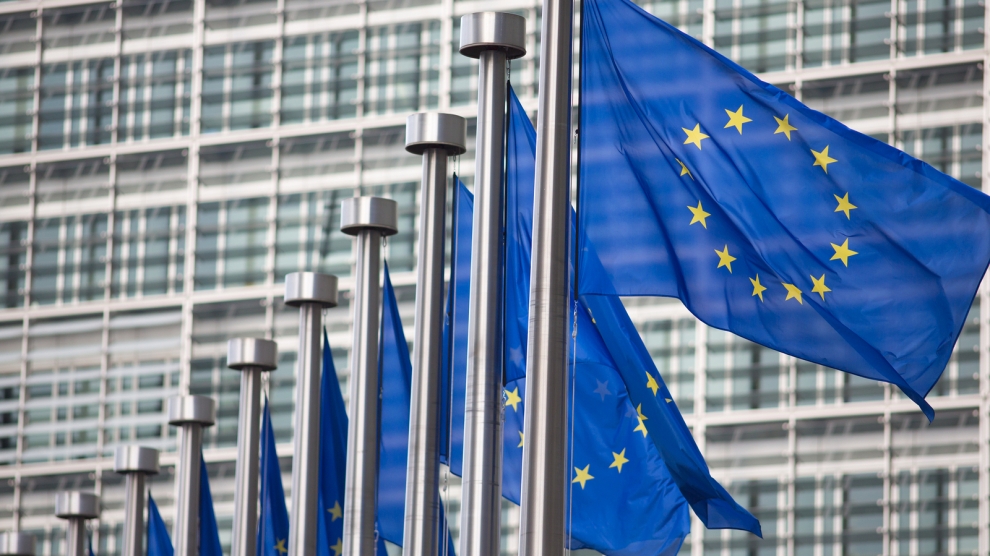
The European Commission has launched a targeted consultation on the documentary evidence that importers will be required to provide to demonstrate the country where steel was originally melted and poured under the new EU Steel Regulation.
The consultation, organised by the Directorate-General for Trade and Economic Security (DG TRADE), opened on 4 June 2026 and will remain open until 2 July 2026.
The initiative forms part of the implementation of the EU Steel Regulation, which will enter into force on 1 July 2026 and aims to address the negative trade-related effects of global steel overcapacity on the European market.
A key component of the new Regulation is the introduction of “melt and pour” traceability requirements. To operationalise these provisions, the Commission will adopt an Implementing Act specifying the type of documentary evidence that importers of steel products must submit in order to demonstrate where the steel was originally melted and poured.
The consultation is open to steel producers, steel users, manufacturers, importers, traders, industry associations, legal practitioners, public authorities and other interested stakeholders. Through this exercise, the Commission seeks to identify the most practical, reliable and effective forms of documentation that can be used to verify the country of melt and pour of steel imported into the European Union.
Following the consultation, the Commission will analyse stakeholder feedback as part of the preparation of the Implementing Act. The measure is expected to be adopted by 31 August 2026 and enter into force on 1 October 2026.
The EU Steel Regulation establishes a new framework designed to address the effects of global steel overcapacity and increasing trade diversion towards the European market. From 1 July 2026, it will introduce a system of duty-free import quotas totalling 18.3 million tonnes, while imports exceeding those quotas will be subject to a 50% duty. The Regulation also introduces mandatory melt and pour traceability requirements to improve transparency throughout steel supply chains.
The measure will apply to all origins except EEA countries. Nevertheless, steel products originating in EEA countries will remain subject to the melt and pour traceability requirements.
According to the European Commission, the Regulation is intended to provide effective protection for the European steel industry against the negative effects of global overcapacity while supporting its long-term competitiveness, sustainability and resilience.
EUROMETAL encourages all members and stakeholders involved in steel production, distribution, processing, importing and manufacturing to review the consultation carefully and contribute practical feedback based on their experience with steel traceability and international supply chains.