


UK steel safeguard plans face industry backlash as July looms
The UK steel market remains largely opposed to the sweeping new trade quota system; despite expectations it would lend significant support to domestic price levels.
Speaking at the International Steel Trade Association networking event June 11, market participants criticized the proposed quotas that will come into force July 1 and remained skeptical that any changes would be made to the proposals prior to the commencement of the measures, despite additional pressure voiced by trade unions this week.
Other sources at the fair referred to UK steel producers’ systematic inability to either meet product demand or actually produce certain types of steel. For instance, hot-rolled coil over 2 meters wide is not domestically produced in the UK market, forcing consumers to look abroad for this material. However, despite not being produced domestically, it would still fall under the general category 1A quota for HRC.
The category 1 quota was significantly slashed by UK policymakers. For EU origin material, a revised annual quota was proposed of 68,226 metric tons from July 1, about a 90% decrease from quota levels under the current measures. For South Korea, a new country-specific quota was proposed, allocating just 3,258 mt per year. India will also have its own annual quota of 12,405 mt.
The ISTA organization has repeatedly called for the proposed safeguards, as part of the UK’s Steel Strategy, to be significantly altered, stating via LinkedIn that “importing steel once these measures are fully in place will be in practical terms, nearly impossible for many products,” and that “the duty risk of 50% will make pricing uncompetitive for the final end users.”
“I expect prices to increase regardless of demand,” said a service center source, at the event. “It will really tighten the market, and unless something changes, specific grades just won’t come through.”
The same source said that he expects the recent fire at Tata Steel’s Port Talbot site to have little impact on the UK’s finalized quota decision, and that only the supply of hot-rolled pickled and oiled material could be affected.
Platts, part of S&P Global Energy, assessed HRC [S275JR] in the UK at GBP 705/mt DDP West Midlands June 11, stable week over week, but up GBP190/mt since the start of the year.
Although broader attitudes towards demand remain largely negative through this period, market participants have cited that the market continues to hold regulatory-based support, with some stock building ahead of the quota start date.
“People have booked heavily for June,” one EU-based mil source said.
“I think service centers are out of the market for the time being, and their stock may take them into July or August,” the source added.
Author: Charles Thompson, Riley Waters


EUROFER: EU ministers make progress but loopholes on circumvention, downstream and exports remain
Eurofer has noted improvements made by EU ministers to the proposed reform of the Carbon Border Adjustment Mechanism (CBAM), but warns loopholes remain that could weaken both Europe’s climate ambitions and industrial competitiveness.
Meeting today, the Economic and Financial Affairs Council (ECOFIN), which gathers the EU27 Economy and Finance Ministers, adopted its position on the European Commission’s CBAM review proposal. The European Steel Association (EUROFER) noted several improvements, including stronger references to “melt and pour” rules and clearer recognition of the risk that producers outside Europe may circumvent the system through ‘resource shuffling’ practices.
Axel Eggert, EUROFER’s Director General, said. “The Council has taken a step in the right direction, but it will not be sufficient to prevent carbon leakage, as major loopholes remain on circumvention, downstream products and exports. If they are not closed, carbon emissions will shift, not fall.”
One of the biggest concerns for the steel sector is resource shuffling. This occurs when foreign producers send lower carbon steel to Europe while continuing to sell more carbon-intensive steel elsewhere. While the Council proposal better recognises this risk, it still relies largely on uncertain corrective measures rather than preventing it from happening in the first place.
The Council also proposes extending CBAM to around 200 additional steel-containing products. EUROFER welcomes this extension but warns this fails to provide a comprehensive and structural coverage to many steel-intensive goods, leaving parts of Europe’s manufacturing value chain exposed to imports that do not face comparable carbon costs.
EUROFER also regrets that Member States maintained the Commission’s proposal to include pre-consumer steel scrap as a CBAM precursor without first carrying out a dedicated impact assessment. The association warns this could create unintended consequences for scrap markets and Europe’s circular economy.
The Council also amended article 27a, which sets conditions for temporary removal of goods from the CBAM scope. Rather than relying on such an unpredictable “emergency brake” mechanism, a more effective approach would be to adjust the pace of the CBAM/free allocation transition.
Finally, the steel industry expressed concern that little progress has been made on a long-term solution for European exports. While CBAM applies to imports entering the EU market, European producers exporting abroad continue to face carbon costs that many international competitors do not.


Romanian longs spot prices stable, but softer sentiment still persists
The Romanian long steel spot market has remained largely stable this week, although the softer sentiment observed in recent weeks continues to weigh on trading activity.
Market participants indicate that demand remains limited, with buyers continuing to focus primarily on immediate requirements amid generally slow market conditions. The approaching summer holiday season has also contributed to a cautious atmosphere, restricting new purchasing activity and reducing overall market momentum. While most traders have kept their official prices unchanged, sources report that some traders remain open to discounts in spot transactions, particularly for serious buyers and larger tonnages, reflecting the ongoing difficulty in generating stronger sales volumes.
As a result, rebar spot prices in Romania have remained stable at €635-640/mt ex-warehouse, while wire rod prices are still reported at €685-690/mt ex-warehouse.
On the production side, Beltrame Group has continued to indicate rebar prices at around €640-650/mt ex-works, maintaining unchanged offer levels compared to the previous week.
Meanwhile, activity in the import market has remained slow this week, in line with the subdued conditions in the domestic market. Buyers have shown limited interest in new bookings, and no fresh import deals have been heard by the time of publication. Bulgarian rebar offers have been heard at around €650-665/mt CFR. On the other hand, Greek suppliers’ offers have remained stable, with rebar at €655-665/mt CFR and wire rod at €665-675/mt CFR. Meanwhile, on the non-EU side, offers from Egyptian suppliers have been heard at €545-555/mt CFR for rebar and €555-565/mt CFR for wire rod, compared to €545-550/mt CFR for rebar and €560-565/mt CFR for wire rod last week. Turkish suppliers have, meanwhile, slightly decreased their rebar offers to €530-545/mt CFR Romania, compared to €535-545/mt CFR heard last week, based on an exchange rate of €1 = $1.15 and estimated freight costs of €25-30/mt.


Bulgarian longs prices weighed down by low demand, suppliers show greater flexibility
The Bulgarian longs market has faced further pressure this week, as sluggish demand and ongoing liquidity constraints have continued to weigh on market sentiments. Market participants report that buyers have remained cautious, focusing primarily on immediate requirements rather than larger-volume purchases amid challenging financing conditions.
Trading activity has therefore remained relatively limited, while weaker buying interest has resulted in lower price levels being observed across the market. At the same time, suppliers have been facing increasing pressure to secure orders, contributing to a more competitive market environment compared to previous weeks
“Demand remains limited and pricing can vary significantly depending on tonnage, destination and payment terms. For serious buyers, lower levels than the official market indications may still be achievable,” a trader told SteelOrbis.
In the local market, rebar prices have declined to around €625-635/mt CPT Bulgaria, compared to €630-640/mt CPT heard previously. Nevertheless, sources indicate that levels of €620-625/mt CPT have also been heard in the market recently, particularly from suppliers seeking to secure larger tonnages. Wire rod prices have, meanwhile, moved down to around €670-690/mt CPT, compared to €680-700/mt CPT reported a week earlier.
Despite the slow pace of domestic demand, Bulgarian buyers continue to monitor import opportunities, particularly as foreign suppliers seek to maintain their competitiveness in the market. Although no fresh import bookings have been reported so far this week, interest in imported material remains present. Turkish rebar offers are currently estimated at around $585-595/mt FOB. After accounting for freight costs of approximately €20-25/mt, these levels would translate to roughly €530-540/mt CFR Bulgaria, broadly unchanged from the levels heard a week earlier. Egyptian suppliers are, meanwhile, estimated to be offering rebar at around $595-600/mt FOB and wire rod at approximately $605-610/mt FOB. Based on prevailing freight rates of around €25-30/mt, these indications would correspond to approximately €540-550/mt CFR Bulgaria for rebar and €550-560/mt CFR Bulgaria for wire rod, compared to €535-550/mt CFR and €555-565/mt CFR, respectively, reported last week.
As for EU origin material, Italian rebar offers have remained at around €665/mt CPT Bulgaria. Similarly, Romanian origin rebar is still estimated at approximately €660-670/mt delivered Bulgaria, reflecting current domestic levels in Romania and transportation costs of roughly €30/mt. However, market participants indicate that workable levels around €20/mt lower may still be achievable in selected transactions, particularly for larger-volume purchases.
Changes to quota system for UK steel imports expected amid industry backlash
Alterations to the UK’s provisional steel import quota measures are highly likely ahead of the policy’s implementation on July 1, 2026, British steel association UK Steel said this week.
In March, the UK government unveiled a sweeping support package for its steel sector, combining a long-term industrial strategy intended to increase domestic output and safeguard local supply chains with a stricter import quota system.
Under the import measures from July, overall quota levels for steel imports will be reduced by 60% compared with current arrangements and steel coming into the UK above these levels will be subject to a 50% tariff, the UK government said on March 19.
The tariff applies “to imported steel products where they can be made in the UK,” it said.
Downstream pushback
But the proposed regulation has attracted significant opposition from the UK’s downstream steel industry, including stockholders, processors and traders, who argue that the policy would imperil their businesses, as reported by Fastmarkets in early April.
The UK has domestic capability to produce a number of commodity-grade steels. These include: rail and wire rod from a basic oxygen furnace (BOF) process in Scunthorpe, northeastern England; rebar from a scrap-fed electric-arc furnace (EAF) in Cardiff, Wales; and hot-rolled coil produced by rolling semi-finished materials in Port Talbot, Wales.
But it does not currently produce a range of special steel grades due to a lack of local capacity and the mothballing of Liberty Speciality Steel UK (SSUK) in Yorkshire.
Following industry pressure, the government on June 2 introduced a transitional exemption within the UK’s new steel trade measures, whereby relevant goods under contract before March 14, 2026, will be fully exempt from the 50% out-of-quota duty between July 1 and September 30, 2026.
But the tweak did little to quell opposition to the stricter quotas and market participants ramped up their objections further this week following a fire on June 3 that damaged a major processing line at Tata Port Talbot, which is expected to hamper local flat steel supply.
Acceptance from UK Steel, which represents upstream UK steel producers that stand to benefit from greater import protection, that the quota system could be reshaped entirely is the latest twist to the policy’s fate.
“The steel quota numbers published on March 14 by the UK government were provisional and while officials noted that there was a high bar to change, we have fully accepted that there will be alterations before the measure is introduced on July 1,” UK Steel said on Wednesday June 10.
“UK Steel has made comprehensive proposals to the Department for Business and Trade to remove certain commodity codes, make amendments to quota sizes and utilize authorized use schemes that will allow certain sectors specific access to the steel they require,” the group said.
Panic buying
Delays in confirming the quotas are hurting industrial confidence and raising steel prices in the UK even before any rule changes have taken effect, according to market participants.
The UK’s Construction Leadership Council (CLC) steel tariffs working group has said that uncertainty around quota availability has triggered “panic buying” behavior for steel in the UK ahead of July, increasing short-term demand and extending procurement lead times, according to a report by trade media Construction News on June 9.
“There are now just 21 days until the new steel quota arrangements are due to come into force on July 1 and, as far as I can tell, we still do not have the final details,” Nigel Roberts, managing director of Megasteel Prestressing Wire & Strand, based in Malmesbury, southwestern England, said via social media on Thursday June 11.
“At this stage, the delay probably tells us something. My suspicion is that the volume of feedback from manufacturers, importers, distributors and steel users has caused those involved to take another look at what was originally proposed,” Roberts said.
But even if major changes are made to the quota rules, “uncertainty comes at a cost,” he said.
“The irony is that delay now risks creating two groups of losers,” he said. “If the government presses ahead with the original proposals, industry has endured weeks of uncertainty while waiting for confirmation.”
“If the government changes its mind, what about all the businesses that have spent time, money and effort putting mitigation plans in place based on the original announcement? What about the companies that have accelerated purchases, increased stock levels or adjusted supply arrangements in anticipation of what was coming?” he added.
“Misguided quota reductions, compounded by the inevitable imposition of tariffs, have left metal stockists and manufacturers facing increasing commercial pressures, tighter margins and the prospect of job cuts across the supply chain,” Stephen Morley, president of the Confederation of British Metalforming (CBM), said on May 18.
Special grades
Although the quotas are designed to protect markets for UK-based steelmakers, several downstream companies across the UK have said that the tariffs encompass grades and sizes of steel not currently manufactured within the UK.
Derbyshire-based engineering firm West Special Fasteners Ltd, via social media on June 9, called for the quotas to be “amended, delayed or canceled at the earliest opportunity. It’s vital to the whole of the UK manufacturing industry and only 22 days until they start.”
The company produces a variety of specialist products such as hex nuts, hex bolts and slotted fasteners using high grades such as corrosion-resistant stainless steel and high-strength alloys, which it says cannot currently be procured from the UK.
Yorkshire-based stockholder Cleveland Steel & Tubes, a major importer of steel grades, would be facing a spike in costs and reduced competitiveness due to the quotas, according to Roy Fishwick, the firm’s managing director.
“For one specific size of steel that we supply, the entire 2026 quota has been swallowed by a single infrastructure project on Merseyside,” Fishwick said in an interview with local newspaper The Northern Echo on May 29.
The UK imported 7.15 million tonnes of iron and steel products in 2025, according to UK customs data cited by Global Trade Tracker. This was an increase of 10.9% year on year from 6.45 million tonnes the previous year, partly driven by Tata’s switch to importing semi-finished materials for HRC production after it closed its BOFs in late 2024.
Support for local mills
On the other hand, domestic crude steel production in the UK has been on a downtrend in recent years, partly driven by plant closures.
UK steel output fell to 2.50 million tonnes per year in 2025, down by 38% year on year, according to the World Steel Association.
But despite the significant downstream opposition to the quota system, UK Steel argues that the policy is already helping the upstream British steel sector.
“The announcement of this measure has already led to a number of UK steelmakers ramping up capacity, creating jobs and reshoring supply chains in this critical industry. We expect more announcements of mothballed capacity returning to production in the near future,” Gareth Stace, UK Steel director, said on Wednesday.
The bill to grant the UK government powers to nationalize steel companies such as British Steel continues to progress through parliament, with the government running the firm’s BOF complex in Scunthorpe.
Meanwhile, Cardiff-based steelmaker 7 Steel UK in late May announced plans to invest almost £100 million ($134 million) in its British operations, targeting plant upgrades and technology improvements.
And Norwegian steel startup company Blastr was understood to be the preferred bidder for the previously Liberty-owned SSUK’s EAF complex in Yorkshire, Fastmarkets heard in April.

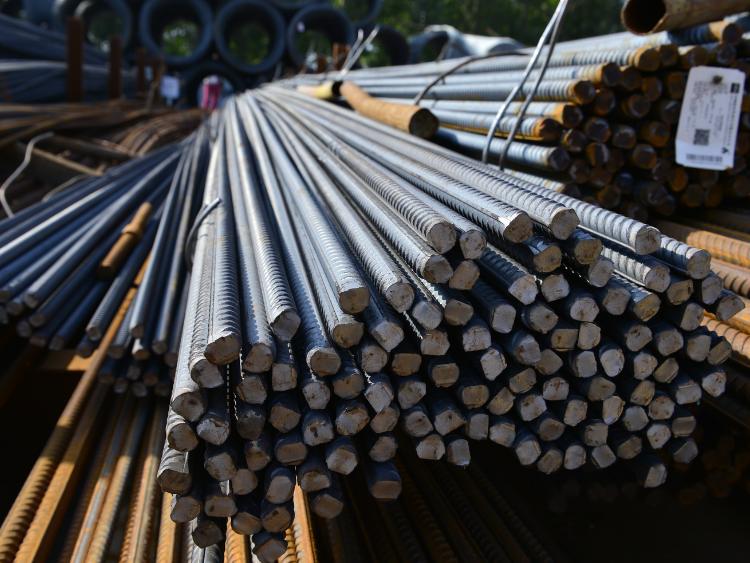
European long steel prices stable amid weak demand, low buyer appetite
European domestic rebar prices remained steady in the week to Wednesday June 10, despite continued upward pressure from Italian mills amid weak demand and low buyer appetite.
Market participants said that consumers remained in a wait-and-see mode, with no significant improvement in demand across Europe due to high prices and slow project development.
“This slowdown in demand is further compounded by the adverse weather conditions of this period, which are inevitably affecting operational activities,” one buyer source told Fastmarkets.
In Italy, tradable prices remained within the wide range of €710-770 ($820-889) per tonne ex-works, depending on the region, with deals continuing to be concluded within these levels and buyers resisting higher prices.
In the north, offers were reported at around €710-730 per tonne ex-works, while in the south, mills’ prices remained at about €750-770 per tonne ex-works, with limited volumes traded at the upper end of the range.
Higher indicative offers were heard, with mills attempting to raise the minimum price to €720 in the north and €760 in the south, although market acceptance remained limited.
Fastmarkets’ weekly price assessment for steel reinforcing bar (rebar) domestic, exw Italy was €710-750 per tonne on June 10, unchanged week on week.
In Spain, tradable prices for steel reinforcing bar (rebar), domestic, delivered Spain, remained at €750 per tonne (16mm base), in line with Fastmarkets’ assessment.
In Germany, domestic rebar prices were also stable, with tradable levels reported within the range of €710-730 per tonne delivered.
Fastmarkets’ weekly price assessment for steel reinforcing bar (rebar) domestic, delivered Northern Europe was €710-730 per tonne in the week to June 10, unchanged from the previous week.
Steel wire rod followed the overall trend in European long steel markets and remained unchanged over the same period.
Fastmarkets’ weekly price assessment for steel wire rod (mesh quality) domestic, delivered Northern Europe was €705-720 per tonne delivered on June 10, unchanged compared with the previous week.
In Southern Europe, tradable levels were reported within the range of €690-720 per tonne delivered, with transactions heard at the upper end of the range.
Fastmarkets’ weekly price assessment for steel wire rod (mesh quality) domestic, delivered Southern Europe was €690-720 per tonne, stable week on week.

EU eyes additional restrictions on Russian metals
The European Commission has proposed the 21st sanctions package against Russia, focusing primarily on energy revenues, the financial sector and sanctions-circumvention networks, while introducing new trade restrictions affecting certain metals, alloys and metal ores, Kallanish notes.
In a statement released on Tuesday, European Commission President Ursula von der Leyen says the package would introduce additional export restrictions on metals and alloys used by Russia’s aerospace and defence industries, alongside new import bans covering certain metals and metal ores.
“We are targeting more metals and alloys used in the aerospace and defence sectors,” von der Leyen states. She adds that the proposed import restrictions are intended to “lock in Europe’s diversification away from Russian imports”.
The commission does not specify which metals, alloys or ores would be affected by the publication deadline. The proposed measures form part of a broader package covering goods worth around €60 million ($69.2m), including certain metals, metal ores and automotive parts.
The sanctions package’s main measures target Russia’s oil revenues and financial system. The commission proposes adding 30 more vessels to the sanctions list, restricting sales of LNG tankers to Russia, targeting infrastructure involved in Russian oil trade, expanding transaction bans to 31 additional Russian banks, and imposing measures on third-country banks, crypto firms and oil traders accused of helping Russia circumvent existing sanctions.
The proposal will require approval from EU member states before entering into force.
Author: Elina Virchenko


tk accelis: Thyssenkrupp Materials Services rebrands with new name
Thyssenkrupp Materials Services, Germany’s largest steel distribution company, with locations elsewhere in Europe and in North America, has renamed itself tk accelis, effective immediately.
“The new brand highlights the company’s transformation from a pure materials distributor to a supply chain service provider,” the company says in a statement seen by Kallanish. The business has been trending towards more value-added processing services and solutions.
Furthermore, the new brand supports the company’s path to becoming an independent company in line with thyssenkrupp AG’s ACES 2030 strategy programme, the statement says.
For its steelmaking unit tk Steel Europe, the thyssenkrupp conglomerate has been trying to find a joint venture partner for some time. For the distribution unit, a potential spin-off became a topic more recently as the parent company seeks to become the holding company of the independent businesses.
The group intends to keep at least half of the ownership in tk accelis, a spokesperson recently told Kallanish. This comes after another large German player in steel distribution, Klöckner & Co, was acquired by Worthington Steel.
The new brand name derives from “accelerate” and “access”, conveying swift delivery and process efficiency as well as the availability of materials and services, the company explains.
“The new brand embodies what we stand for: speed, reliability, and seamless processes along global supply chains,” says Ilse Henne, ceo of tk accelis. And she adds: Our new name supports our preparations towards capital market readiness.”
In the fiscal year through September 2025, tk Material Services achieved an order intake of €11.4 billion ($13.1 billion), with 7.6 million tonnes of materials sold.
Author: Christian Koehl

ATRACKSYST: ArcelorMittal Spain steel traceability project advances
ArcelorMittal continues to make progress in the digital transformation of its industrial processes and in strengthening product quality control in Spain, Kallanish notes.
The steelmaker’s so-called ATRACKSYST steel traceability project has completed the pilot phase and achieved formal validation. ArcelorMittal says it has obtained very satisfactory results from the initiative at the Gijón wire rod mill, confirming the system’s operational acceptance.
In a sample of 144 randomly selected billets, the system achieved a 96% correct identification rate, even in cases where tracking information was incorrect or missing.
“The project addresses the strategic need for more robust, flexible and reliable traceability systems in complex steelmaking environments, reducing uncertainty regarding material history, improving operational decision-making and contributing to more efficient and sustainable production, in line with decarbonisation targets,” the company observes.
During the testing phase, ArcelorMittal expanded the use of the ATRACKSYST to other products, such as blooms. Furthermore, the technology has been defined and implemented to ensure the traceability of material sourced from other facilities, a key aspect in the current context of the company’s reorganisation of production flows.
The ATRACKSYST project was developed under Spain’s strategic recovery and resilience plan (Perte).
Author: Todor Kirkov

Kallanish Europe Steel Markets panel expects higher prices at year-end
Participants in the closing panel discussion of Kallanish Europe Steel Markets in Vienna this week anticipated steel prices to pick up towards the end of the year. Their views however diverged on the degree of increase and what factors would play a crucial role.
The panellists were unanimous about the impact of EU trade measures on imports, including the Carbon Border Adjustment Mechanism (CBAM) as well as the new tariff rate quota system due from July. The effect will not be felt immediately, but likely after the summer break, when buyers will think about replenishing their inventories, said Philip Edmonds of M7 Metals. His guess is that by the end of the year, hot-rolled coil in Europe could reach €800/tonne ($925/t).
Alexander Soboll of Salzgitter Mannesmann, in principle, agreed with Edmonds’ view that buyers will evaluate their stock levels in September, but said he is more conservative, expecting €750/t. In particular, he warned that mills might revive capacities they had ramped down, which would undermine efforts to stabilise prices.
The argument was picked up by Kamal Arifi, director commercial transformation at SSAB Europe. If European mills reactivate more capacity than now, “we will lose the benefits we get from the safeguards”, he noted.
In that regard, Edmonds is more optimistic. “I think EU mills will be disciplined. They are much better at getting €100 more per tonne than producing another half a million tonnes,” he said.
Another factor was pointed out by Emanuele Norsa of Siederweb: scrap prices, which he finds are too low and not correspondingly aligned with steel prices.
“We need first to see scrap pick up more. The differential at this moment is too big,” Norsa said. In his assessment, HRC prices at year-end will be between €700/t and €750/t, “but not higher”.