

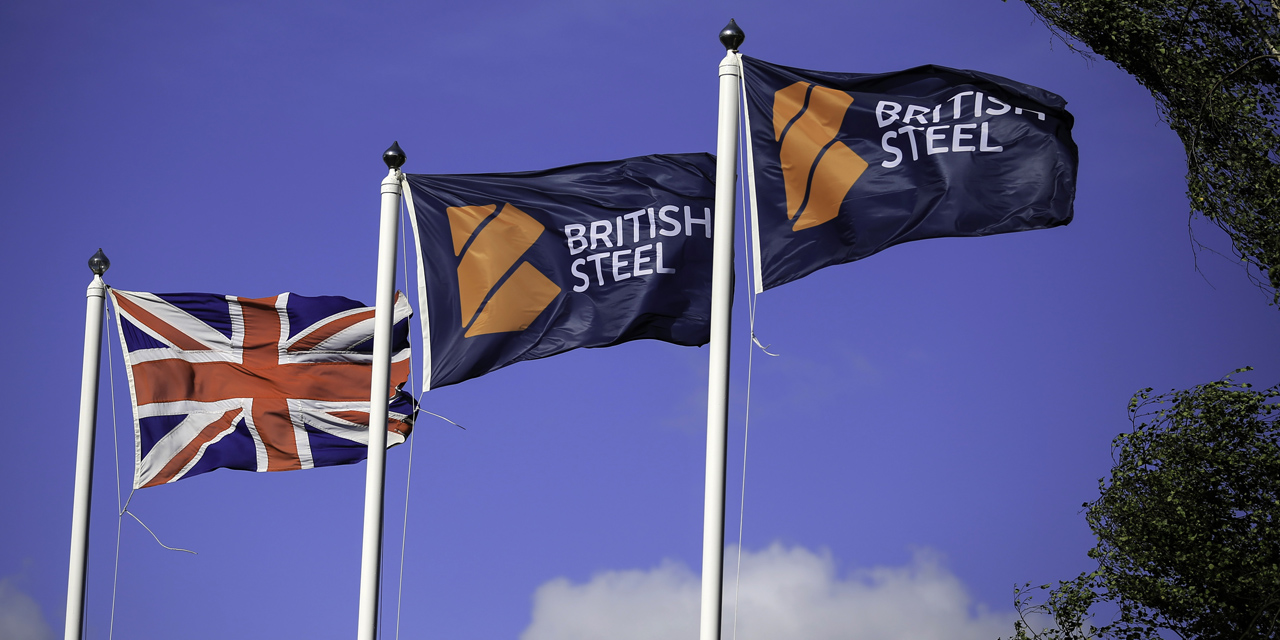
Alterations to the UK’s provisional steel import quota measures are highly likely ahead of the policy’s implementation on July 1, 2026, British steel association UK Steel said this week.
In March, the UK government unveiled a sweeping support package for its steel sector, combining a long-term industrial strategy intended to increase domestic output and safeguard local supply chains with a stricter import quota system.
Under the import measures from July, overall quota levels for steel imports will be reduced by 60% compared with current arrangements and steel coming into the UK above these levels will be subject to a 50% tariff, the UK government said on March 19.
The tariff applies “to imported steel products where they can be made in the UK,” it said.
Downstream pushback
But the proposed regulation has attracted significant opposition from the UK’s downstream steel industry, including stockholders, processors and traders, who argue that the policy would imperil their businesses, as reported by Fastmarkets in early April.
The UK has domestic capability to produce a number of commodity-grade steels. These include: rail and wire rod from a basic oxygen furnace (BOF) process in Scunthorpe, northeastern England; rebar from a scrap-fed electric-arc furnace (EAF) in Cardiff, Wales; and hot-rolled coil produced by rolling semi-finished materials in Port Talbot, Wales.
But it does not currently produce a range of special steel grades due to a lack of local capacity and the mothballing of Liberty Speciality Steel UK (SSUK) in Yorkshire.
Following industry pressure, the government on June 2 introduced a transitional exemption within the UK’s new steel trade measures, whereby relevant goods under contract before March 14, 2026, will be fully exempt from the 50% out-of-quota duty between July 1 and September 30, 2026.
But the tweak did little to quell opposition to the stricter quotas and market participants ramped up their objections further this week following a fire on June 3 that damaged a major processing line at Tata Port Talbot, which is expected to hamper local flat steel supply.
Acceptance from UK Steel, which represents upstream UK steel producers that stand to benefit from greater import protection, that the quota system could be reshaped entirely is the latest twist to the policy’s fate.
“The steel quota numbers published on March 14 by the UK government were provisional and while officials noted that there was a high bar to change, we have fully accepted that there will be alterations before the measure is introduced on July 1,” UK Steel said on Wednesday June 10.
“UK Steel has made comprehensive proposals to the Department for Business and Trade to remove certain commodity codes, make amendments to quota sizes and utilize authorized use schemes that will allow certain sectors specific access to the steel they require,” the group said.
Panic buying
Delays in confirming the quotas are hurting industrial confidence and raising steel prices in the UK even before any rule changes have taken effect, according to market participants.
The UK’s Construction Leadership Council (CLC) steel tariffs working group has said that uncertainty around quota availability has triggered “panic buying” behavior for steel in the UK ahead of July, increasing short-term demand and extending procurement lead times, according to a report by trade media Construction News on June 9.
“There are now just 21 days until the new steel quota arrangements are due to come into force on July 1 and, as far as I can tell, we still do not have the final details,” Nigel Roberts, managing director of Megasteel Prestressing Wire & Strand, based in Malmesbury, southwestern England, said via social media on Thursday June 11.
“At this stage, the delay probably tells us something. My suspicion is that the volume of feedback from manufacturers, importers, distributors and steel users has caused those involved to take another look at what was originally proposed,” Roberts said.
But even if major changes are made to the quota rules, “uncertainty comes at a cost,” he said.
“The irony is that delay now risks creating two groups of losers,” he said. “If the government presses ahead with the original proposals, industry has endured weeks of uncertainty while waiting for confirmation.”
“If the government changes its mind, what about all the businesses that have spent time, money and effort putting mitigation plans in place based on the original announcement? What about the companies that have accelerated purchases, increased stock levels or adjusted supply arrangements in anticipation of what was coming?” he added.
“Misguided quota reductions, compounded by the inevitable imposition of tariffs, have left metal stockists and manufacturers facing increasing commercial pressures, tighter margins and the prospect of job cuts across the supply chain,” Stephen Morley, president of the Confederation of British Metalforming (CBM), said on May 18.
Special grades
Although the quotas are designed to protect markets for UK-based steelmakers, several downstream companies across the UK have said that the tariffs encompass grades and sizes of steel not currently manufactured within the UK.
Derbyshire-based engineering firm West Special Fasteners Ltd, via social media on June 9, called for the quotas to be “amended, delayed or canceled at the earliest opportunity. It’s vital to the whole of the UK manufacturing industry and only 22 days until they start.”
The company produces a variety of specialist products such as hex nuts, hex bolts and slotted fasteners using high grades such as corrosion-resistant stainless steel and high-strength alloys, which it says cannot currently be procured from the UK.
Yorkshire-based stockholder Cleveland Steel & Tubes, a major importer of steel grades, would be facing a spike in costs and reduced competitiveness due to the quotas, according to Roy Fishwick, the firm’s managing director.
“For one specific size of steel that we supply, the entire 2026 quota has been swallowed by a single infrastructure project on Merseyside,” Fishwick said in an interview with local newspaper The Northern Echo on May 29.
The UK imported 7.15 million tonnes of iron and steel products in 2025, according to UK customs data cited by Global Trade Tracker. This was an increase of 10.9% year on year from 6.45 million tonnes the previous year, partly driven by Tata’s switch to importing semi-finished materials for HRC production after it closed its BOFs in late 2024.
Support for local mills
On the other hand, domestic crude steel production in the UK has been on a downtrend in recent years, partly driven by plant closures.
UK steel output fell to 2.50 million tonnes per year in 2025, down by 38% year on year, according to the World Steel Association.
But despite the significant downstream opposition to the quota system, UK Steel argues that the policy is already helping the upstream British steel sector.
“The announcement of this measure has already led to a number of UK steelmakers ramping up capacity, creating jobs and reshoring supply chains in this critical industry. We expect more announcements of mothballed capacity returning to production in the near future,” Gareth Stace, UK Steel director, said on Wednesday.
The bill to grant the UK government powers to nationalize steel companies such as British Steel continues to progress through parliament, with the government running the firm’s BOF complex in Scunthorpe.
Meanwhile, Cardiff-based steelmaker 7 Steel UK in late May announced plans to invest almost £100 million ($134 million) in its British operations, targeting plant upgrades and technology improvements.
And Norwegian steel startup company Blastr was understood to be the preferred bidder for the previously Liberty-owned SSUK’s EAF complex in Yorkshire, Fastmarkets heard in April.


