


Irepas: Global long steel market weakens further on subdued demand, oversupply
The overall business environment in the global long steel products market has worsened further, as demand remained subdued while high supply continues to put pressure on prices and margins, the International Rebar Producers & Exporters Association, or Irepas, said in its latest short-term outlook issued July 8.
“However, in addition to the positive development represented by the easing of tensions in the Middle East, some producers are heard to have begun lowering production in response to market conditions, which should help improve the supply-and-demand balance over time,” the association said.
Noting that demand was hit by low confidence, Irepas said more supply of Iranian and Russian billets could depress rebar prices.
Platts, part of S&P Global Energy, assessed CIS export billet at $462/metric ton FOB Black Sea July 7, unchanged from the previous day. Platts’ assessment for Turkish import billet was at $490/mt CFR Turkey July 7, unchanged from the previous day, while tradable values were reported between $480-$490/mt CFR Turkey, or $452-$462/mt FOB Black Sea, considering $28/mt freight.
“As far as costs are concerned, with energy demand increasing amid the seasonally high temperatures, the higher price of power will also work against producers’ interests,” Irepas said.
“Despite the announcement of the quota reduction by almost 50%, EU mills had been able to raise their prices for a while, but now their prices are falling back to where they were before, as demand is weak all over the EU,” the association added.
Looking at Asia, Irepas said there was “nothing positive” in the region apart from a gradual decrease in production in China. However, it added that this would not change anything in the short term, noting that Chinese steel exports continue to increase.
In the Middle East, it said that greater stability could support a gradual recovery in economic activity and steel demand, particularly in the Gulf markets.
“This suggests that reconstruction needs and investment could provide support for the market once geopolitical conditions normalize. These developments give reason for cautious optimism about the medium-term outlook,” it said.
Author: Cenk Can

Salzgitter AG takes over full ownership of HKM


Import quotas pushed up prices in Serbia, while demand slowed after May

European parliament supports extending CBAM to downstream steel products

Romanian longs prices rise further, but liquidity issues and slow demand weigh on mood
The Romanian longs market has continued to move upward this week, with sellers keeping a firmer stance after the recent EU quota changes and ongoing CBAM-related uncertainty. However, demand remains slow and liquidity is still a problem, so both buyers and sellers are approaching the recent price increases cautiously. Compared to last week, buying activity has improved slightly, as some buyers have preferred to secure material before prices move up further, while sellers have also concluded some sales by offering discounts for prompt or advance payments and larger tonnages. Still, sources say the main question is whether the recent increases can be fully sustained under current market conditions, as traders testing the higher end of workable levels have not seen much interest so far.
“CBAM remains one of the main concerns for the local market. If the EU does not ease these measures or reduce the additional costs on non-EU material, many companies may struggle, as these costs cannot be fully reflected in final sales prices under the current demand conditions,” a Romanian trader told SteelOrbis.
In the local rebar spot market, prices have increased to around €640-650/mt ex-warehouse, compared to €620-640/mt ex-warehouse last week. However, lower levels of around €630-635/mt ex-warehouse are still heard for larger tonnages and advance payment terms, according to sources.
Domestic producer Beltrame Group has remained quiet this week, with its rebar offers still heard at around €635-640/mt ex-works, unchanged from last week. Market sources say business activity remains very limited, while material availability is also reported to be low.
In the wire rod segment, domestic prices have also increased to around €695-705/mt ex-warehouse, compared to €685-695/mt ex-warehouse last week. However, the increase has remained more limited compared to rebar, as buying interest for wire rod is still slower.
On the import side, no fresh deals have been heard so far this week, while offer levels have continued to move in different directions depending on the origin. In the EU segment, prices have remained firmer due to the recent cost-related concerns, while Romanian buyers are still cautious about new bookings as they already have stocks and demand remains slow. According to sources, Italian rebar offers are currently heard at around €665-670/mt CPT Romania. However, a previous large-tonnage deal from Italy had been heard at around €600/mt delivered to Romania a few weeks ago. Hungarian rebar offers are heard at around €660/mt delivered to Romania, while Hungarian rebar in coil offers have decreased to around €680-685/mt delivered, compared to €695/mt delivered last week. Meanwhile, Bulgarian rebar offers have increased to around €660-675/mt CPT Romania, compared to €650-660/mt CPT Romania last week.
On the non-EU import side, prices have moved down despite the firmer mood in the EU segment. Egyptian rebar offers are currently heard at around €535-550/mt CFR Romania, compared to €535-555/mt CFR Romania last week, while Egyptian wire rod offers have decreased to around €545-560/mt CFR Romania, down from €555-575/mt CFR Romania last week. Turkish rebar offers are also lower this week at around €515-530/mt CFR Romania, compared to €525-540/mt CFR Romania last week, based on an exchange rate of €1 = $1.14.
Author: SteelOrbis Editorial Team


Bulgarian longs prices rise, but buyers remain selective amid weak sales, competitive offers
Bulgarian sellers have managed to raise their longs quotations over the past week, but the increase has landed in a market where sales are still slow and cash flow remains tight. The higher price trend has encouraged some medium and larger buyers to step in for limited tonnages, mainly to avoid paying more later if the upward movement continues. However, this buying is not seen as a sign of a real demand recovery. Sources say the market is still fragile, as buyers are questioning how much of the new price level can be absorbed while local consumption remains weak. At the same time, competitive offers from both EU and non-EU suppliers are preventing the domestic market from gaining stronger confidence.
In the domestic market, rebar prices in Bulgaria have increased to around €640-650/mt CPT, compared to €625-635/mt CPT last week. Wire rod prices have also moved up, to around €680-700/mt CPT, compared to €670-690/mt CPT in the previous week. According to sources, medium and larger buyers were more active this week than smaller buyers, but purchases were still mostly need-based. Liquidity problems continue to limit trade, while sufficient stocks are also keeping many buyers away from fresh bookings.
In the import segment, no fresh bookings have been reported this week, as local demand remains slow and buyers are still mostly covered. Market players say aggressive suppliers may put pressure on Bulgaria in the coming months if they continue offering at low levels, especially while domestic sales remain weak. Turkish rebar export offers have decreased to around $565-575/mt FOB, compared to $570-580/mt FOB last week, bringing the corresponding CFR Bulgaria level down to approximately €515-525/mt. In addition, a Turkish rebar-in-coil offer has been heard at around $625/mt CFR at Burgas port for September shipment, according to sources. As for Egyptian material, rebar offers are currently heard at around $580-590/mt FOB, compared to $580-600/mt FOB last week, with CFR Bulgaria levels estimated at around €535-550/mt. Egyptian wire rod offers are at around $590-600/mt FOB, compared to $600-620/mt FOB last week, corresponding to approximately €545-560/mt CFR Bulgaria.
For EU origin material, Italian rebar offers have been heard at around €670/mt delivered Bulgaria this week, according to sources. However, lower offers from Italy are expected in the coming days, as Italian suppliers are reported to have high stocks and a more aggressive sales approach. Sources say this may become a pressure point for Bulgarian domestic prices if buyers continue to resist higher levels.
Salzgitter finalises acquisition of Duisburg steelworks HKM
Hüttenwerke Krupp Mannesmann (HKM) will become a wholly owned subsidiary of Salzgitter after the conclusion of “intensive and meticulous negotiations” with the other co-shareholders, thyssenkrupp Steel Europe and Vallourec. The three parties signed contracts on 8 July, Kallanish learns.
Tk Steel and Vallourec had long announced their intention to divest their stakes, while Salzgitter from the outset expressed continued interest in the slab mill in the south of Duisburg. The transaction, and in fact the survival of the mill, is being accompanied by a profound downsizing and job cuts.
Salzgitter plans to invest in an electric arc furnace at HKM to transform the site, make it future-proof, and reduce CO2 emissions from steel production by 90% over the long term. This transition will be accompanied by a significant reduction in the number of employees. The plan is to cut back from the current approximately 3,000 to about 1,000 jobs in the long term. Without these painful job cuts, Salzgitter would not have been able to complete the acquisition on its own, it states.
“We took the time needed to negotiate with the co-shareholders to date regarding the continuation of HKM under our sole responsibility. Given the complexity of these discussions and the great significance of the outcome for the employees in Duisburg, exacting thoroughness clearly took precedence over speed in this process,” says Salzgitter chief executive Gunnar Groebler.
HKM’s existing supply contract with thyssenkrupp Steel will expire at the end of 2028, rather than at the end of 2032 as previously planned. The new arrangement will also mean a shift in slab sales to third parties, which has already been part of HKM’s business since the closure of Vallourec’s German plants.
HKM’s slabs are considered particularly suitable for the production of tubes. Salzgitter executive Andreas Betzler, managing director of Salzgitter’s tubes subsidiaries Mannesmann Precision Tubes, Mannesmann Grossrohr and Mannesmann Line Pipe, will therefore join the management team at HKM.
Author: Christian Koehl Germany


German sections prices seen remaining stable
Prices for sections from German mills have remained relatively sturdy, or softened only to a lesser extent than other steel products. Values are expected to remain at current levels for the remainder of July.
The level of around €820/tonne ($938) delivered, for sections category 1, S235, has largely prevailed, with no significant movement foreseen. In fact, domestic prices have received indirect support from the disappearance of some import offers. In June, offers from Polish and Spanish mills were seen at as low as €800 delivered to Germany. Spanish mills have since lifted their prices, one buyer tells Kallanish.
He notes that northwestern European mills are enjoying relatively strong capacity utilisation, given they have regular customers, in the UK and overseas. “[Sales are taking place] even to Canada and the USA. It’s hard to believe, but they [US buyers] cannot get all they need from local mills,” he says.
In this scenario, mills have little need to attract demand by lowering offers, especially since mills in Germany and the Benelux are taking turns with summer closures, and Italian mills are seen closed for all of August.
Another manager points out that domestic demand is still far from what sellers would like it to be. But, for the moment, the summer effect is providing a stability, and new offers, higher or lower, are not expected before September.

Spanish steel sector enters summer lull, prices mixed
The Spanish steel industry is entering its seasonal slowdown in activity, Kallanish notes.
The summer lull, combined with weak market conditions and the entry into force of the new EU import regulation, is expected to define the trend in July, when most producers plan to bring forward their maintenance programmes.
The Spanish scrap market began July with a new downward price movement. Domestic prices have fallen by nearly €10-15/tonne ($11.43-17.15/t), mainly reflecting recent movement seen in international raw materials markets.
“Most mills are trying to take advantage of current market conditions and growing their stock ahead of the summer stoppage of activities,” one seller comments.
According to another source, domestic scrap market collection activity remains relatively stable. “While sellers are aligning purchases with current demand, they are increasing inventory levels in the expectation that prices will rebound once steelmakers restart operations following the summer shutdowns,” he comments.
The Spanish scrap market will end the week with both new E8 grade scrap and shredded E40 grade generally offered at €325/t. Other qualities, E3 and E1, are respectively at €300-295/t and €280/t delivered.
Suppliers generally expect prices to decline further through the month, as international scrap values do not yet appear to have reached a floor.
Demand in the rebar market remains weak. According to distributors, the introduction of the new EU import tariffs has heightened uncertainty, prompting construction companies to delay purchasing decisions. Relatively high prices are also limiting buying interest.
“We are keeping inventories low. The market remains cautious, with trading activity largely restricted to small volumes required for existing projects,” one distributor comments. Most sellers report the domestic steel industry has marginally reduced production in July and anticipates weaker market conditions during the summer.
Offers for 16mm rebar in Spain are at €508-518/t base. Including €262/t size extras and loading expenses, transaction values are at €770-780/t ex-works. Most suppliers are already selling material at €790-800/t.
Meanwhile, hot-rolled coil sales remain stable. Mills are trying to raise prices, something customers are finding hard to accept, as demand in most consumer sectors remains muted, except for automotive where it is reasonable. “Producers say they have healthy stock levels, whilst the distribution sector is reluctant to build inventory given the uncertain demand outlook,” a market participant observes.
Spanish HRC prices stand at €740-750/t ex-works. Distributors’ levels have surpassed €780/t delivered.
ArcelorMittal pushes up Europe coil prices: sources
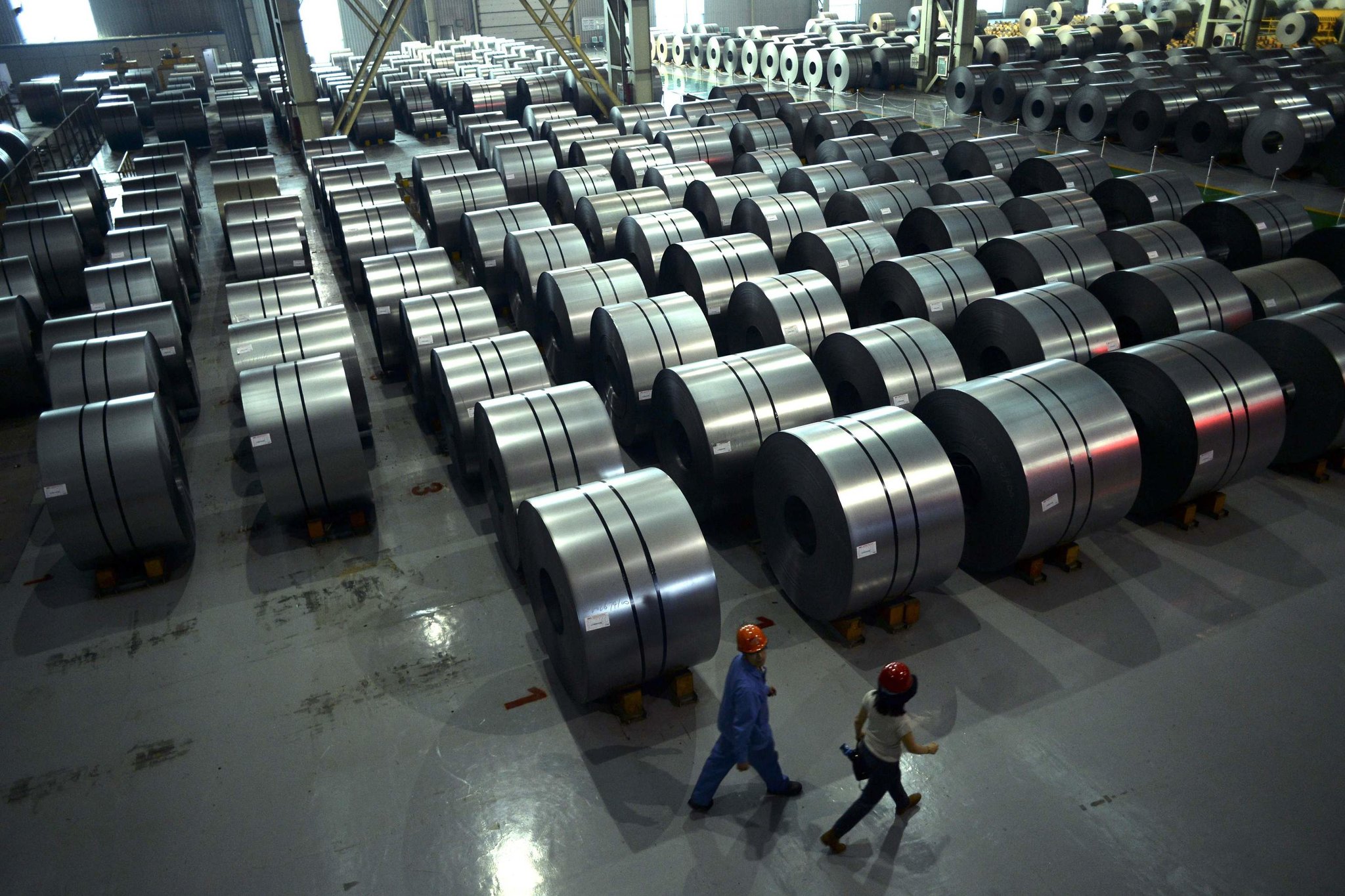
ArcelorMittal is implementing a coil price increase across Europe by €50/tonne ($57.1/t), according to multiple market sources.
The revised base price for hot rolled coil is said to be at €770/t base delivered, versus the previous €720/t, Kallanish notes. Cold rolled coil and hot-dip galvanised coil prices in new contracts are also being increased by €50/t to €880/t.
According to sources, the steelmaker has filled September order books and the new values are for October lead time. ArcelorMittal was not available for comment.
HRC transactions are taking place in the EU market at €700-720/t base delivered on average, amid slow market activity. However, a mill source in southern Europe says that since the new steel trade regime country quota allocations were published, order intake has increased.
The new regime is considered by coil buyers to be harsher than expected, with several million tonnes of duty-free imported coils erased. European buyers of flat steel products will be able to import a combined 9,607,775 tonnes of HRC, cold rolled coil and coated sheet annually.
HRC (categories 1A and 1B) accounts for the largest share at just over 5.2 million t/year, followed by metallic coated sheets at approximately 2.86mt across categories 4A and 4B, and cold rolled coil at 1.54mt. A buyer notes the new system cuts HRC imports by almost 80% (see Kallanish passim).