

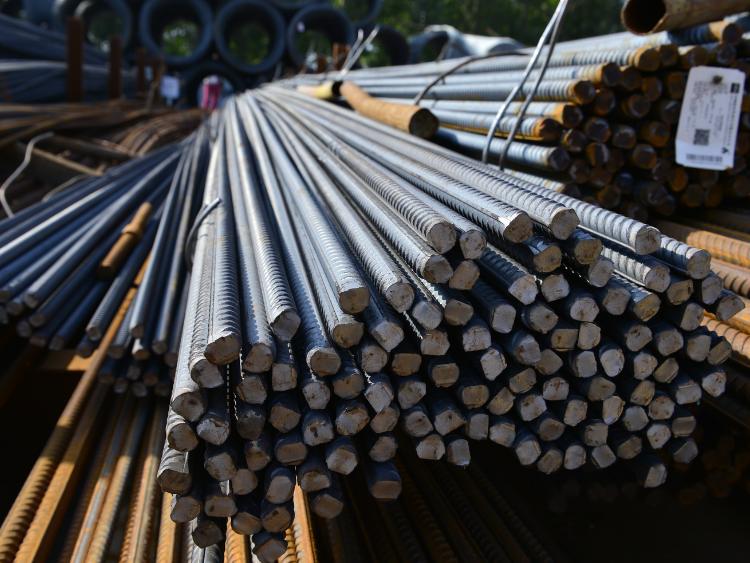
European domestic rebar prices flat amid weak demand and cautious buying
European domestic rebar prices remained stable in the week to Wednesday July 8, amid unseasonably weak demand. Market participants reported bearish sentiment, limited trading activity and a prevailing wait-and-see approach.
“Customers believe prices could move lower, so no one is buying large volumes,” a trader told Fastmarkets.
In Italy, tradable rebar prices were reported at €710-770 ($811-880) per tonne ex-works, depending on the region, though no significant tonnages were heard at the upper end of the range.
In northern Italy, tradable levels were reported at €710-730 per tonne ex-works, while in southern Italy tradable prices were reported at €750-770 per tonne ex-works.
Fastmarkets’ weekly price assessment for steel reinforcing bar (rebar), domestic, ex-works Italy was €710-750 per tonne on Wednesday, unchanged week on week.
Fastmarkets’ assessment for steel reinforcing bar (rebar), domestic, delivered Spain remained at €750 per tonne.
Meanwhile, domestic rebar prices in Germany were also steady, with tradable levels reported at €710-730 per tonne delivered and little variation across the market.
Fastmarkets’ weekly price assessment for steel reinforcing bar (rebar), domestic, delivered Northern Europe was €710-730 per tonne in the week to Wednesday, unchanged from the previous week.
Wire rod prices followed the broader European long steel trend of weak demand and subdued trading activity.
In Northern Europe, tradable prices were reported at €705-715 per tonne delivered.
Fastmarkets’ weekly price assessment for steel wire rod (mesh quality), domestic, Northern Europe was €705-715 per tonne delivered on Wednesday, narrowing downward from €705-720 per tonne a week earlier.
Fastmarkets’ weekly price assessment for steel wire rod (mesh quality), domestic, delivered Southern Europe was €690-720 per tonne on Wednesday, unchanged week on week.


EU trade regime opens with ample CRC availability
The first allocation data for Category 2 – cold rolled flat steel – point to a relatively subdued start under the EU’s new steel import regime, Kallanish notes. As of 6 July, ample volumes remained available.
South Korea showed the highest utilisation among major country-specific allocations, with 23,511 tonnes awaiting allocation against a third-quarter quota of 63,653t, leaving 40,142t, or 63%, still available.
Türkiye followed, with 17,956t awaiting allocation against a 60,153t quota, leaving 42,197t, or 70%, available.
Taiwan, the UK and Japan remained almost fully available, while India retained 97% of its quota and Ukraine 94%.
The additional FTA Quota-CSQ has the full 33,671t still available. This mechanism only becomes relevant after eligible FTA partners exhaust their country-specific quotas. Since no country-specific CR sheet quota had been exhausted, importers had not yet moved into this second-layer FTA pool.
The “other countries” quota had 1,878t awaiting allocation against 24,934t, leaving 92% available.
The FTA Quota – Other countries pool was virtually untouched, with 21,258t of 21,284t still available.
| Origin | TRQ volume |
Balance | Awaiting allocation |
Avaliable TRQ tonnes |
Available TRQ % |
| Taiwan | 33,587 | 33,587 | 20 | 33,567 | 100 |
| India | 67,494 | 67,494 | 2,176 | 65,317 | 97 |
| Korea | 63,653 | 63,653 | 23,511 | 40,142 | 63 |
| Türkiye | 60,153 | 60,153 | 17,956 | 42,197 | 70 |
| United Kingdom | 19,835 | 19,835 | 23 | 19,812 | 100 |
| Japan | 29,458 | 29,458 | 62 | 29,396 | 100 |
| Ukraine | 26,549 | 26,549 | 1,711 | 24,838 | 94 |
| FTA Quota – CSQ (India, Korea, Türkiye, Ukraine, UK) |
33,671 | 33,671 | – | 33,671 | 100 |
| Other countries | 24,934 | 24,934 | 1,878 | 23,056 | 92 |
| FTA Quota – Other countries | 21,284 | 21,284 | 26 | 21,258 | 100 |
| Egypt | 1,295 | 1,295 | 344 | 951 | 73 |
| Switzerland | 746 | 746 | 1 | 744 | 100 |
| Brazil | 3,534 | 3,534 | – | 3,534 | 100 |
Source: EU TARIC, as of 6 July. Complied by Kallanish


German car production drops 3% in first half
German automakers produced 2.1 million passenger cars from January through June this year, down by 3% versus the first half of 2025, Kallanish learns from automotive association VDA.
June saw a 6% year-on-year increase against the same month one year previous, with 377,700 passenger cars rolling off German assembly lines. However, VDA cautions that this micro-trend must be viewed primarily against the backdrop of two additional working days compared to June 2025.
After six months, production remains 15% below the pre-Covid levels of 2019 and earlier. Germany remains under pressure from challenging conditions like high non-wage labour costs and taxes, high energy and bureaucratic costs, VDSA bemoans.
The federation has reason for its warnings. In the last two weeks, reports of plant closure plans at German carmaker brands have unsettled industries and the economy. Large-scale layoffs could occur at Volkswagen, and, to a lesser extent, at Porsche.
In terms of exports, at 287,700 units, exports in June exceeded the figure for the same month last year by 7%. Since January 1.605 million passenger cars have been exported, a drop of 3% vs the first half 2025.
Despite growing trade barriers with key partner countries, more than three out of four passenger cars from German assembly lines were exported over the course of the year, VDA says.
The federation underlines a relatively strong share increase for electric vehicles. In June, new registrations of electric vehicles rose by 60% y-o-y to a volume of 116,300 units. The EV share of total registrations reached 39%. VDA here gives only the number of registrations, not of production, so the figure will include imports.
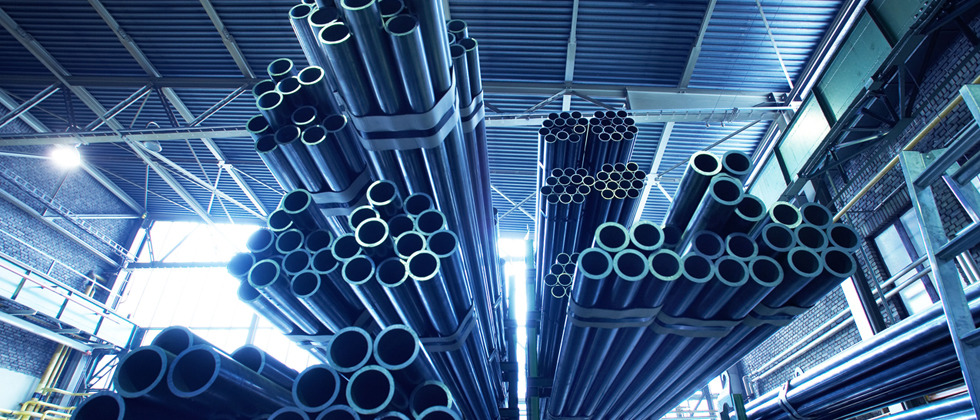
Noksel España to expand pipe production capacity
Turkey’s Noksel Celik Boru Sanayi (Noksel) plans to invest €60 million ($68.5m) in expanding its pipe production capacity in Spain, Kallanish learns from the company’s Iberian subsidiary.
“Our project consists of the construction of a new tube production plant, similar to the one we already operate at the Saprelorca industrial hub, as well as a metalworking and coating workshop,” Noksel España chief executive Gürkan Akkoyunlu said during a meeting with Murcia regional government enterprise minister Luis Alberto Marín, and the mayor of Lorca, Fulgencio Gil.
The company is awaiting final approval for the project and expects construction to begin later this year. The new pipe mill is scheduled to become operational in 2028.
Noksel España (NE) has been supplying welded steel pipe to the Iberian and international markets since 2011. Its production facility in Lorca, Murcia, has an annual capacity of 150,000 tonnes of spiral welded pipe for water, oil and gas transmission pipelines, as well as piling applications.
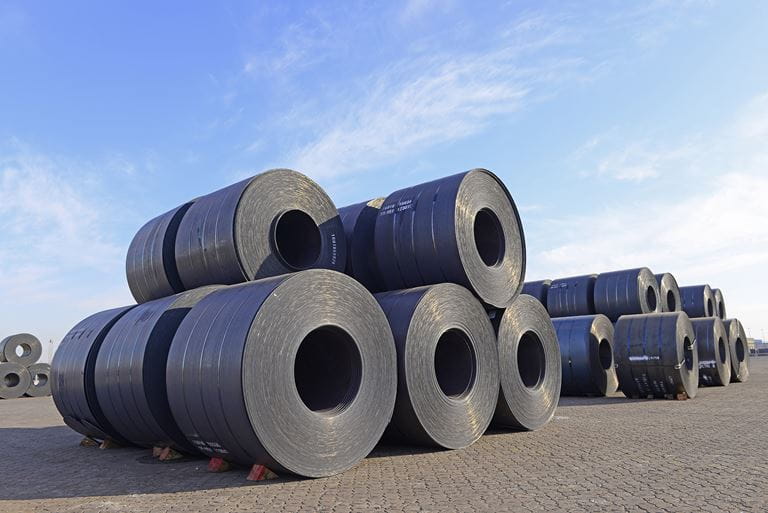
Türkiye’s EU HRC quota utilisation outpaces other origins
Allocation data as of 6 July provide the first indication of how the EU’s new quota architecture functions in practice for hot-rolled sheets and strips (category 1A), Kallanish analyses.
Access is distributed across four quotas: country-specific quotas (CSQ), an additional FTA Quota-CSQ available after eligible FTA partners exhaust their allocations, a residual “other countries” quota for suppliers without country-specific allocations, and an FTA Quota-Other countries reserved for FTA partners without country-specific quotas.
The largest country-specific allocation was granted to Türkiye at 160,574 tonnes. However, by 6 July, HRC volumes awaiting allocation had already reached 374,409t, exceeding the quarterly quota by 213,836t, or 133%. This makes Türkiye the only supplier to have fully exhausted its country-specific allocation within the first week of the new regime.
Most other major suppliers still had most of their quotas available, with only India using 68% of its allocation.
The new FTA Quota-CSQ serves as a second layer of access for FTA partners once their national country-specific quotas have been exhausted. Although Türkiye had already exhausted its own allocation, this shared FTA reserve of 120,921t remained unused as of 6 July.
Outside the main country-specific quotas, utilisation remained mixed. Indonesia had used just over half of its allocation, while Brazil, the United Kingdom, Australia, Saudi Arabia, Switzerland and Kazakhstan had made little or no use of their quotas during the first week.
Among the residual quotas, the “other countries” pool was also heavily oversubscribed. Applications totalled 11,175t against a quota of 5,564t, exceeding the available volume by 5,611t, or 101%.
By contrast, the FTA Quota – Other countries, reserved for FTA partners without country-specific allocations, remained around half available, with 2,100t still unallocated.
EU TRQ allocation (tonnes) for HR sheet, strip (category 1.A) for Q3
| Origin | TRQ volume |
Balance | Awaiting allocation |
Avaliable TRQ tonnes |
Available TRQ % |
| Türkiye | 160,574 | 160,574 | 374,409 | -213,836 | -133 |
| Japan | 137,885 | 137,885 | 1 | 137,884 | 100 |
| India | 149,319 | 149,319 | 101,925 | 47,394 | 32 |
| Taiwan | 69,731 | 69,731 | 1,957 | 67,773 | 97 |
| Ukraine | 120,882 | 120,882 | 13,455 | 107,428 | 89 |
| South Korea | 115,458 | 115,458 | 15,919 | 99,539 | 86 |
| Vietnam | 103,743 | 103,743 | 20,220 | 83,523 | 81 |
| Egypt | 101,232 | 101,232 | 1,828 | 99,404 | 98 |
| Serbia | 64,524 | 64,524 | 1,089 | 63,435 | 98 |
| FTA Quota – CSQ (Egypt, EU, India, Korea, Türkiye, Ukraine) |
120,921 | 120,921 | – | 120,921 | 100 |
| Brazil | 42,513 | 42,513 | 47 | 42,466 | 100 |
| United Kingdom | 38,481 | 38,481 | 226 | 38,255 | 99 |
| Indonesia | 31,834 | 31,834 | 16,319 | 15,516 | 49 |
| Australia | 11,830 | 11,830 | – | 11,830 | 100 |
| Saudi Arabia | 9,545 | 9,545 | – | 9,545 | 100 |
| Switzerland | 5,473 | 5,473 | 6 | 5,466 | 100 |
| Kazakhstan | 2,378 | 2,378 | – | 2,378 | 100 |
| North Macedonia | 3,532 | 3,532 | 178 | 3,354 | 95 |
| Other countries | 5,564 | 5,564 | 11,175 | -5,611 | -101 |
| FTA Quota – Other countries | 4,272 | 4,272 | 2,172 | 2,100 | 49 |
Source: EU TARIC, as of 6 July. Complied by Kallanish