

Spain’s scrap consumption slips despite steel production growth
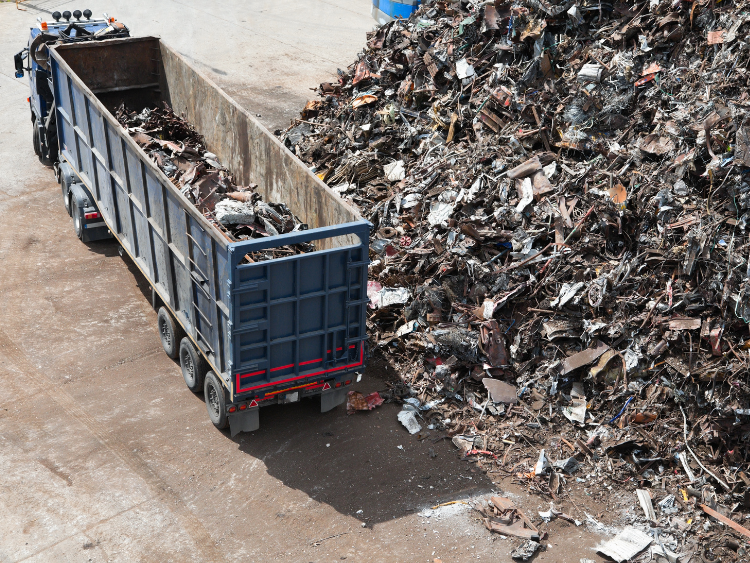
Spanish steel industry scrap consumption decreased sequentially in May, despite crude steel output growing. Both indicators were weaker year-on-year, Kallanish learns.
Scrap consumption fell by 24,000 tonnes month-on-month in May to 823,000t. Compared with a year earlier, consumption dropped by 12%, according to Spanish steelmakers’ association Unesid. Five-month scrap consumption reached 4 million tonnes, compared to 4.25mt a year earlier, representing 87.3% of total crude steel production in January-May.
The local steel industry produced around 1.04mt of crude steel in May alone, 97,000t higher than April but 8% less on-year. Cumulative output reached 4.58mt, a fall from 5.54mt in January-May 2025, Unesid data show.


ArcelorMittal, Moeve sign Spain’s largest energy-saving certificates agreement
ArcelorMittal and Spanish multinational energy company Moeve – formerly Cepsa – have signed an agreement for the purchase of Energy Saving Certificates (CAE) covering an annual volume of 2.1 terawatt-hours (TWh ), Kallanish learns from the steelmaker.
The CAE certifies an energy savings equivalent to 1 kilowatt-hour, thanks to implemented efficiency measures. It makes it possible to quantify the energy saved over a year using high technical methodologies and, based on this, receive financial compensation that helps recover part of the investment.
The deal is the largest of its kind in Spain to date. According to ArcelorMittal, it reinforces the role of the CAE mechanism as an effective tool to support industrial decarbonisation. It also marks a significant step forward in the transition towards more sustainable steel production.
“The emphasis on energy savings has been a key factor in enabling the implementation of our decarbonisation plan for the longs production unit in Gijón, through investment in a new electric arc furnace, which is currently in the final stages of construction,” ArcelorMittal says.
The agreement is expected to reduce the company’s annual energy consumption by up to 2.1 TWh, equivalent to more than 5% of the Principality of Asturias’ total energy use. Once the transition is complete, it will cut an estimated 1 million tonnes/year of CO₂ emissions from the region’s steel industry.

Muted market activity ahead of summer break weighs on Northern European HRC prices
Northern European and Italian domestic HRC markets remained largely quiet on Wednesday July 22, with limited activity ahead of the summer holiday period. Prices edged down in Northern Europe despite higher buyer indications being included due to thin liquidity, while Italian prices were unchanged amid a lack of fresh transactions.
In Northern Europe, a buyer reported latest deals at €710 ($810) per tonne ex-works on Wednesday, for September delivery and an order of a couple of thousand tonnes. The same source said offers were at €740 per tonne ex-works, adding those were “not accepted” in the market yet, so they were discarded from July 22’s index.
A second buyer reported an indication of achievable levels at €720 per tonne ex-works, while a third buyer provided an indication at €720-730 per tonne ex-works on the same day. Although these levels were above the latest deals, they were included in the index calculation because of limited market activity.
Some market participants were off on Wednesday, and the market remained quiet throughout the day. No significant new moves were announced by suppliers ahead of the summer holiday period.
Fastmarkets’ daily steel hot-rolled coil index domestic, exw Northern Europe was calculated at €711.14 per tonne on July 22, down by €1.15 per tonne from €712.29 per tonne on July 21.
The index was up by €1.14 per tonne week on week and by €29.89 per tonne month on month.
In Italy, a supplier reported deals for HRC at €740-750 per tonne delivered (€725-735 per tonne ex-works), saying that they “see transaction price for decent quality at €740 base [per tonne] delivered minimum.”
However, the same source could not name any specific supplier selling material at this price, and it was discarded in Wednesday’s index due to low confidence and a lack of corroboration from other market participants.
No other price points were received on July 22, as the market was mostly quiet ahead of the summer holidays.
The latest deals in the market were reported in the range of €700-710 per tonne ex-works on Monday and Tuesday.
Fastmarkets’ daily steel HRC index domestic, exw Italy was €702.50 per tonne on Wednesday, unchanged day on day.
The index was up by €1.50 per tonne week on week and by €28.12 per tonne month on month.
Latest HRC import activity into Southern Europe was reported on July 22, including a deal at €605-610 per tonne CFR from Egypt, while India offered material at €552-556 per tonne CFR, but market participants could not confirm this lower level.
The corresponding Fastmarkets weekly assessment for steel hot-rolled coil import, cfr main port Southern Europe was €570-615 per tonne on July 22, narrowing downward by €30 per tonne from €570-645 per tonne a week earlier.

European long steel round-up: Northwest European rebar prices down on lower slab costs, limited demand
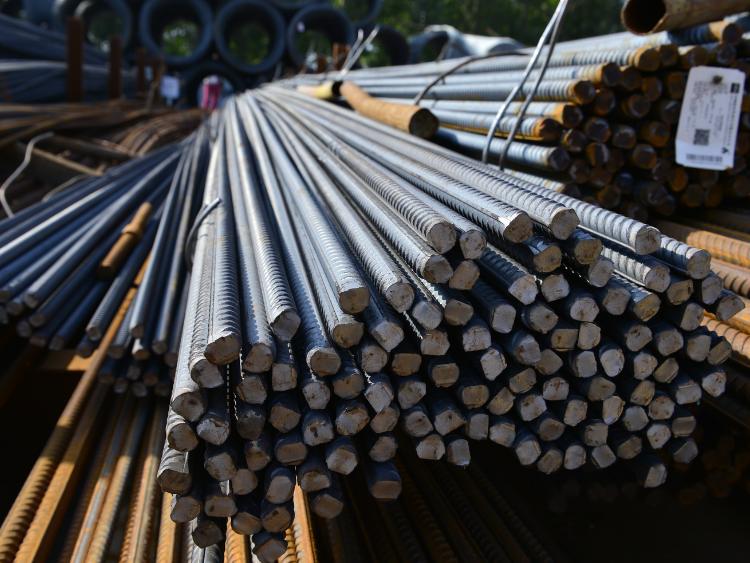
Northwest European rebar prices softened in the week to 22 July, due to low trading activity and a decline in ferrous scrap prices.
Lack of trading activity offset the impact of ArcelorMittal’s announcement of a EUR25/t price increase for long steel products. Sources stressed that the increase mainly concerns sections and wire rod, as the steelmaker is less involved in the rebar segment.
Offers and the few deals for rebar in the region have been heard at EUR670-690/t delivered, with the majority of sources reporting prices in the EUR670-680/t delivered range.
Further contributing to the negative short-term sentiment, sources reported transactions at EUR650/t delivered. The details of these trades, including their origin, terms and repeatability, could not be confirmed. While this is likely to be a special deal and such prices are not available to a broader group of buyers, the rumours are not improving market sentiment.
“Scrap is slightly down and this is used to explain the decrease in price. The problem is the low EU demand,” a distributor said.
European steelmakers have reduced their July ferrous scrap purchase prices by around EUR20-25/t compared with June.
Market participants expect both demand and prices to recover in September, when buyers return from the summer holidays, mills resume normal operations following seasonal maintenance, and steel consumption typically recovers.
| Weekly European long steel markers | |||
| EUR/t | Term | 22-Jul-26 | Change |
| Northwest Europe DEL rebar | DEL | 675.00 | -5.00 |
| Northwest Europe CFR rebar | CFR | 570.00 | 0.00 |
Author: Maria Tanatar
