


Low Rhine levels put pressure on the German steel logistics as thyssenkrupp adjusts hot metal output
Low water levels on the Rhine River are beginning to affect German steelmaking logistics after a summer heatwave and scarce rainfall reduced navigable depths, forcing barges to sail partially loaded and prompting some steel supply-chain participants to switch freight to road.
The Rhine is one of Europe’s most important industrial transport arteries, linking North Sea ports with Germany’s inland manufacturing regions. At Kaub, the critical Middle Rhine chokepoint for inland shipping, navigable water depth recently dropped to around 55 centimeters on July 17 and at 70 cm at the current level on July 22.
For Germany’s steel industry, the immediate pressure point is not finished steel demand but the movement of bulk raw materials into integrated production sites, especially those connected to the Rhine system.
“The persistent and worsening low-water situation on the Rhine is now affecting the supply of raw materials to thyssenkrupp Steel’s Duisburg site,” a thyssenkrupp Steel spokesperson said to S&P Energy on July 21. “Our own push-barge fleet has been taken out of service due to the low water levels.”
The company said it was using externally chartered vessels that had been secured as a precaution and could continue operating because of their lower draft. “In addition, thyssenkrupp Steel has implemented a range of measures to limit the impact on production as far as possible. Nevertheless, the current development is leading to constraints in our raw material supply. We have therefore already adjusted our hot metal production accordingly,” the spokesperson said.
“Customer supply is currently not at risk. The further development of the situation and its impact on supply and production are being continuously assessed by our dedicated low-water task force,” thyssenkrupp Steel added.
The Duisburg site is one of Europe’s largest steelmaking hubs and is heavily reliant on stable inbound logistics for raw materials such as iron ore, coal and other bulk inputs.
Downstream steel distributors and processors said the impact so far was manageable, though freight costs were rising in some regions.
“Rhine water levels have some impact of course. But it happens every year,” one German service center source said. “We supply to the north through ships and barges, but now we have to use trucks, which affects costs a bit.”
The German steel distributors’ association BDS said the issue was more acute for steel producers than for its member companies.
“This is certainly an issue for steel producers in terms of supply of raw materials,” a BDS spokesperson said. “So far we haven’t heard of major problems for our member companies. The vast majority of them are supplied by truck — and sometimes train.”
Market sources said the current disruption has not yet translated into broad shortages of flat steel, but it has added another layer of uncertainty to a market already balancing regulatory changes, restrained import interest and summer-season demand softness.
The reduced Rhine levels and potential supply-chain effects have come during a period of relative price stability following earlier regulatory upheaval and supply-driven bullishness. Platts assessed European hot-rolled coil at Eur710/mt ex-works Ruhr, up Eur30/mt since June 1, as the market also contended with the European Commission’s new safeguard regime and limited appetite for imports following changes implemented July 1.
Steel buyers said the low-water issue alone was unlikely to drive a broad price rally unless production cuts deepened or persisted. However, the situation could support mills’ resistance to lower bids if raw material movements remain constrained and logistics premiums increase.
Author: Annalisa Villa

German steel distribution sales rise 7.9% in June on higher demand
German steel distribution sales strengthened in June, with total shipments rising 7.9% month over month to 848,015 metric tons, according to data from the German steel stockholders’ association BDS released July 22, pointing to a firmer end to the second quarter after a softer May.
June sales were 8.3% higher year over year, marking the strongest monthly sales since March 2026, when volumes reached 943,927 mt, BDS data showed.
Despite the June rebound, the second-quarter average of 818,333 mt/month was down 4.8% from the first-quarter average of 859,802 mt/month, reflecting the particularly strong March figure. However, Q2 sales were still 4.3% higher year over year and broadly in line with Q2 2024, suggesting German distribution demand has improved compared with last year but remains below the stronger levels seen in the mid-to-late 2010s.
Long and flat steel products registered an increase in June. Long steel sales increased 8.4% month over month and 9% year over year to 292,906 mt, and flat steel sales rose 10.1% month over month and 8.1% year over year to 481,528 tonnes.
Sales of other steel products fell 5.9% month over month to 73,581 mt in June, although they remained 7.4% higher year over year, BDS data showed.
Total German steel distribution stocks rose modestly in June to 1.892 million mt, up 0.9% from May and 2% from June 2025. The increase was driven mainly by flat products and other steel categories, while long steel inventories continued to decline, according to the data.
Long product stocks fell to 601,814 mt in June, down 1.6% month over month and 8.8% year over year. Flat steel stocks rose 1.9% month over month and 8% year over year to 1.249 million mt in June.
The data points to a German distribution market recovering from weaker demand in 2025 but still operating below historical norms. June’s stronger sales provided a positive close to Q2, particularly for long products, while stock levels remain broadly controlled.
Platts, part of S&P Global Energy, assessed domestic hot-rolled coil in Northern Europe at Eur710/mt ex-works Ruhr on July 22, stable on the day.
EU new car registrations rise in H1 2026 as electric shift reshapes steel demand
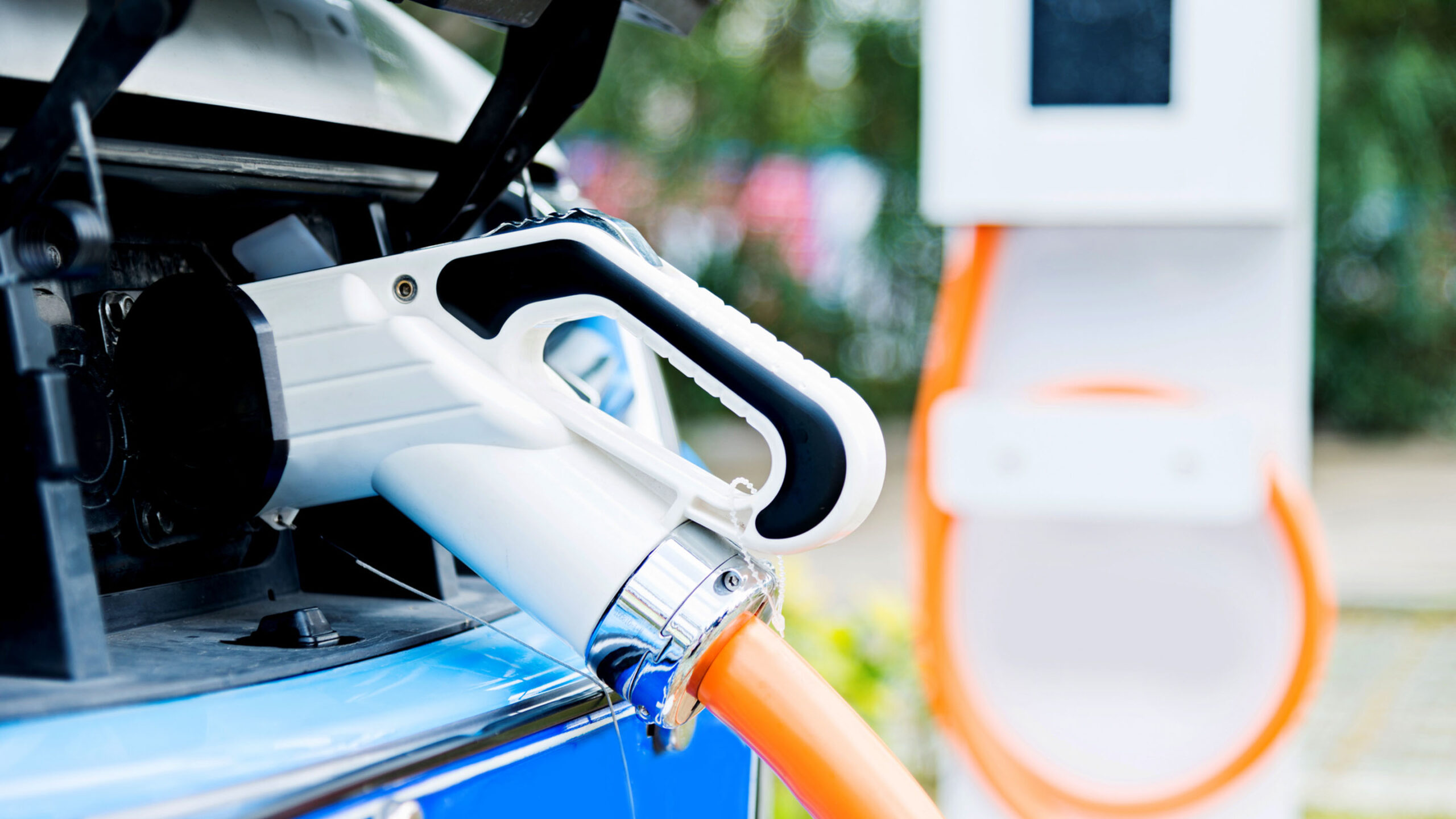
New car registrations across the EU rose 5.7% in the first half of 2026 to 5,896,683 units, driven by surging demand for battery-electric and hybrid vehicles, which could reshape steel consumption patterns across the bloc’s struggling automotive supply chain, according to data from the European Automobile Manufacturers’ Association released on July 23.
Battery-electric cars accounted for 20.7% of the EU market through June, up from 15.6% a year earlier, with 1,220,890 units registered, according to ACEA. The shift toward electrified powertrains comes as the European steel industry grapples with six consecutive quarters of declines in automotive sector output, according to Eurofer, the European Steel Association. The divergence highlights how evolving vehicle technologies are reshaping material requirements even as overall manufacturing activity remains subdued.
“The market continued to benefit from robust consumer demand for a range of electrified technologies, driven primarily by market support measures,” ACEA said in its statement. Hybrid-electric vehicles lead as the most popular powertrain choice among buyers, while plug-in hybrids captured 9.8% of the EU market.
The transition to electric vehicles typically requires different steel grades and quantities than traditional internal combustion engine cars. A mid-size car contains approximately 900 to 1,400 kilograms of steel, according to Eurofer data, used in the body, powertrain, suspension, and other components. Battery-electric vehicles often require advanced high-strength steels for structural components to offset battery weight while maintaining safety standards.
Steel sector headwinds
The automotive sector remains the weakest major steel-using industry in Europe, with output declining for six consecutive quarters and remaining well below pre-pandemic levels, Eurofer said in its June economic report. After a small rebound of 0.8% in the third quarter of 2025, output contracted again in the fourth quarter by 1.3% due to multiple uncertainty factors, including overall manufacturing sector weakness and slower-than-expected EV uptake.
Eurofer now forecasts a further moderate decline of 0.2% in 2026, down from a previous forecast of 0.9% growth, reflecting ongoing trade and geopolitical tensions and energy price increases. The sector is expected to return to growth only in 2027, with a projected increase of 2.9%.
France led battery-electric car registration growth in the January-June period, surging 62.9%, followed by Germany at 48% and Denmark at 41.2%. These three markets, along with Belgium, accounted for 63% of all battery-electric car registrations in the EU. Belgium posted a more moderate increase of 8.2%, compared with the larger markets.
Hybrid-electric vehicles remained the most popular powertrain choice, with 2,198,148 units registered, accounting for 37.3% of the EU market. Plug-in hybrid registrations totaled 577,735 units, representing 9.8% of EU registrations, up from 8.5% in the same period of 2025.
The combined market share of gasoline and diesel cars fell to 29.7% from 37.8% a year earlier. In the first six months of the year, gasoline car registrations declined 17.2% to 1,309,153, and the market share for gasoline fell to 22.2% from 28.4% in the first half of 2025.
Diesel car registrations declined by 16.5%, accounting for 7.5% of new car registrations, down from 9.4%.
As a highly export-oriented industry, the EU automotive supply chain remains particularly exposed to energy and trade shocks, Eurofer said. The steel association noted that persistent geopolitical headwinds continue to weigh on the outlook for both the automotive and steel sectors.
The shift toward electrified vehicles could eventually support steel demand recovery if production volumes rise, though the timeline remains uncertain amid ongoing macroeconomic pressures and trade tensions affecting European manufacturing.
Platts, part of S&P Global Energy, assessed imported HRC in Northern Europe at Eur585/mt CIF Antwerp July 22, up Eur5/mt, and in Southern Europe at Eur580/mt CIF Southern Europe, stable day over day.
Author: Annalisa Villa

GravitHy files permits for hydrogen-based low carbon steel plant in France
Hydrogen-based, direct-reduced iron project developer GravitHy has filed building permit and environmental authorization applications for its planned low-carbon iron project at Fos-sur-Mer, France, marking a key regulatory step for one of Europe’s emerging hydrogen-based steel decarbonization projects.
The French industrial company is targeting an annual production of 2 million metric tons of hot briquetted iron at the Fos-sur-Mer location, a strategic location due to the area’s port and logistics infrastructure, access to industrial water, available land and proximity to steel value-chain participants, such as Marcegaglia Fos-sur-Mer and ArcelorMittal.
The material is intended for use in electric arc furnaces, offering European steelmakers a lower-carbon feedstock as the sector seeks to reduce reliance on coal-based blast furnace routes.
GravitHy’s process is based on the direct reduction of iron ore using low-carbon hydrogen produced on-site through water electrolysis. The company says the project could help steelmakers cut emissions by about 90% compared with conventional processes, while the plant could avoid up to 4 million mt/year of CO2 emissions at full capacity.
The company said the permit filing is a decisive step ahead of a final investment decision, underscoring the commercial and policy momentum behind hydrogen-based iron production in Europe.
Platts, part of S&P Global Energy, assessed Northwest European hot-rolled coil carbon-accounted at Eur775/mt ex-works Ruhr July 22, stable day over day.
Author: Annalisa Villa
Spain’s Acerinox flags positive H2 on trade measures, CBAM support
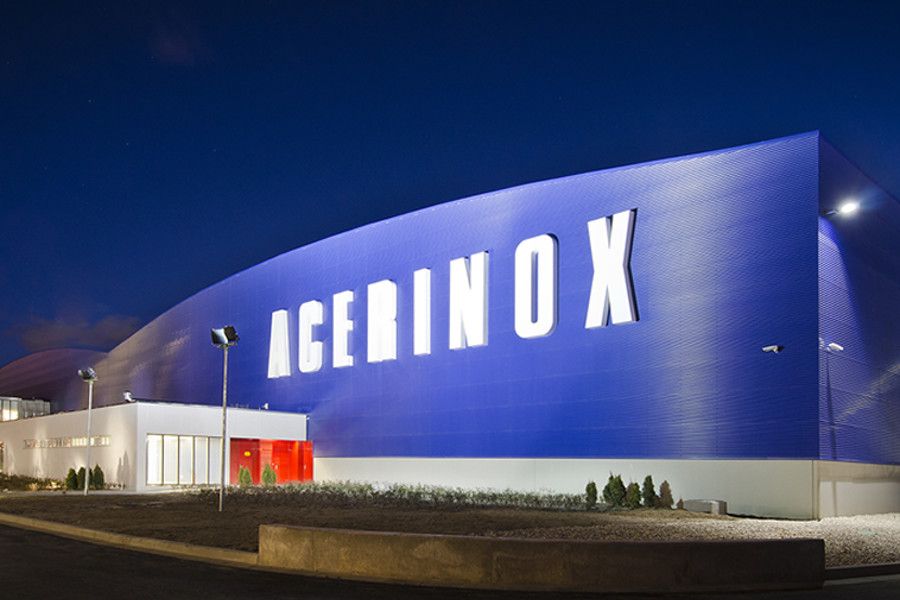
New trade measures applied since July 1 are seen as “a game-changer” in the European steel market, Spanish stainless producer Acerinox said July 24, with the company forecasting a turnaround in profitability for its domestic operations.
“The measures are fundamental to mitigate production surpluses exported from countries with overcapacity and to restore competitiveness to the European industry,” CEO Bernardo Velzaquez said.
Coupled with the Carbon Border Adjustment Mechanism (CBAM), which was introduced in January, imports into the bloc have given local producers a supply gap to fill, and with this backdrop, the company’s 1 million metric tons/year Acerinox Europa plant in Spain is expecting to return a positive EBITDA from the third quarter, he said.
As a result of the CBAM, imports are down from 24% of the market to a 16% market share, and with the new measures, this may drop to 12% or 13%, Velzaquez told analysts on a call.
The overall impact has been a 31% drop in imports to Europe in the first half of the year, he said. This has seen “customers seeking local suppliers” to the point that Acerinox’s Spanish unit reported a positive EBITDA in June and is forecasting a turn to a positive figure for the third quarter following a difficult first half in which the plant had to recover from a fire in the fourth quarter of 2025.
The damaged hot material pickling line was back at full operation by April, allowing it to boost output 20%, the company said, without providing volume figures.
However, European demand remains subdued “due to geopolitical uncertainties,” the company said.
The market is “waiting for investment projects” particularly in the oil and gas sector, Acerinox said. The unit in Spain will go offline for two weeks in August for the usual summer shutdown, management said.
Production uptick
The company’s worldwide melt shop steel production in the second quarter amounted to 540,000 mt, up 10% quarter over quarter, boosted by the restart of the Acerinox Europa line.
Cold rolling output was 318,000 mt, down 1% year over year and long product output 42 million mt, up 6% year over year.
Acerinox operates steel production sites in Spain, Germany, the US and South Africa, with a nameplate melting shop capacity of about 3.5 million mt/year, according to the company.
In the US, the company said demand from the aerospace and industrial gas turbine sectors had been strong, and it had seen “consistent order entry improvement.”
It reported that a $244 million expansion project at North American Stainless had been completed, with a new cold-rolling mill fully operational from June as well as planned upgrades to its annealing and pickling line.
The expansion will increase production capacity at the largest integrated stainless steel factory in the US by 20% to 1.2 million mt/year.
Author: Gianluca Baratti

World crude steel output up 1.7 percent in June 2026
Global crude steel production in June this year increased by 1.7 percent year on year to 155.7 million mt, according to the World Steel Association (worldsteel).
In the January-June period this year, global crude steel production decreased by 0.7 percent year on year to 931.5 million mt.
In June, crude steel output in Asia and Oceania amounted to 115.2 million mt, up 1.5 percent year on year, with China’s output at 83.7 million mt, up 0.4 percent, Japan’s output at 6.8 million mt, increasing by 1.3 percent, India’s output at 14.1 million mt, rising by 4.5 percent, and South Korea’s output at 5.3 million mt, moving down by 0.9 percent, with all comparisons on a year-on-year basis.
EU-27 countries produced 10.8 million mt of crude steel in June, up by 4.6 percent year on year. In the given month, Turkey’s output amounted to 3.3 million mt, up 14.7 percent year on year. Germany produced 2.9 million mt of crude steel in June, indicating a 9.5 percent increase compared to the same month in the previous year.
The CIS registered crude steel output of 6.8 million mt, falling by 2.2 percent on a year-on-year basis, with Russia’s estimated output at 5.6 million mt, down 3.4 percent year on year.
In North America, crude steel output totaled 9.5 million mt in June, up by five percent year on year, with the US producing 7.2 million mt, rising by 3.5 percent year on year. Crude steel output in South America in June amounted to 3.5 million mt, decreasing by 0.3 percent compared to the same month in the previous year, with Brazil’s output totaling 2.8 million mt, increasing by 0.1 percent year on year.
In the given month, Africa produced 2.2 million mt of crude steel, up by 20.0 percent year on year. In the Middle East, crude steel output totaled 4.0 million mt, moving down by 13.4 percent.
Shares in global crude steel production June 2026

Author: SteelOrbis Editorial Team

New car registrations in EU up 5.7 percent in H1 2026
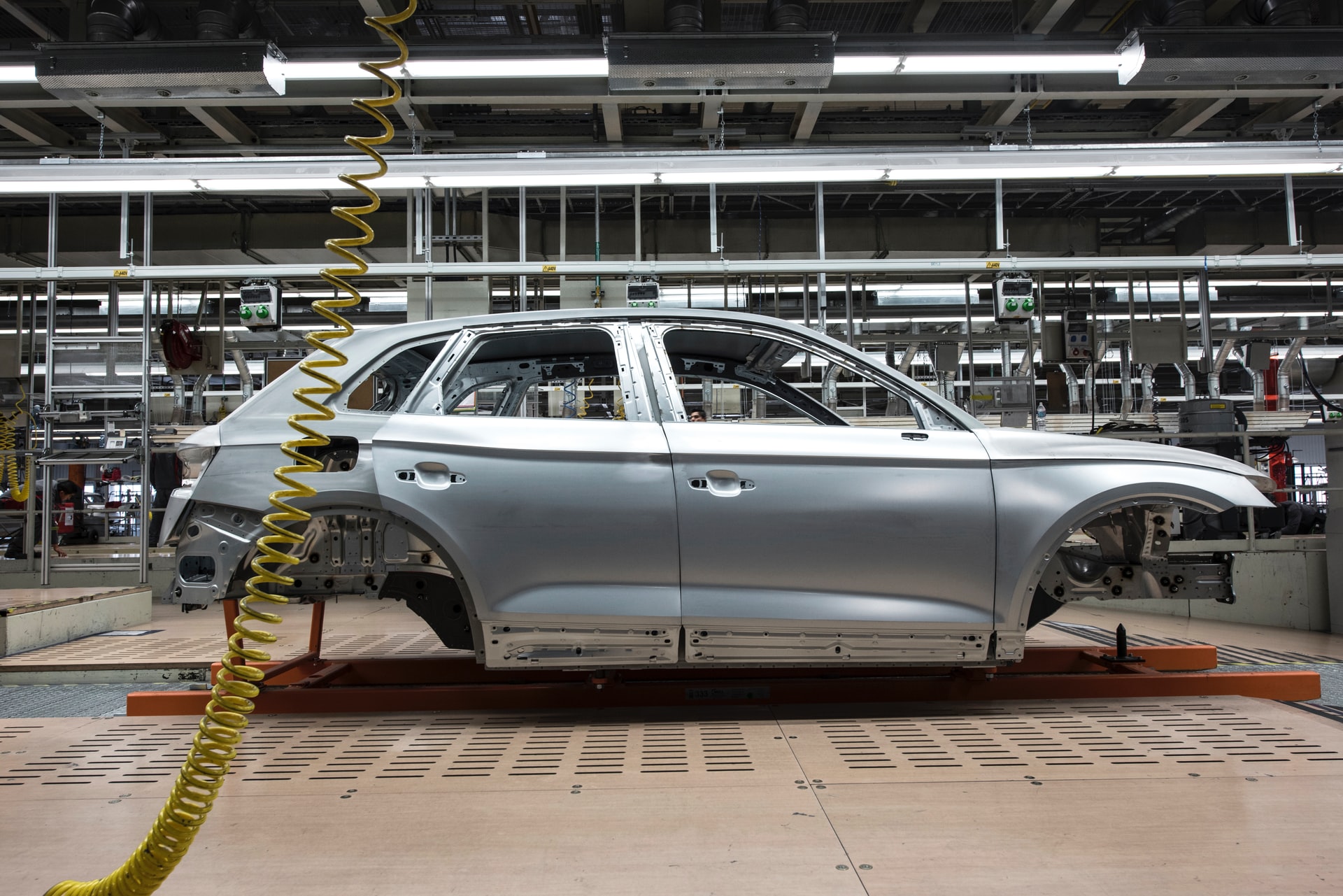
In June this year, new passenger car registrations in the EU increased by 13.6 percent year on year to 1.15 million units, according to the European association of car manufacturers ACEA.
In the given month, Germany (+15.7%), France (+11.4%), Italy (+10.6%) and Spain (+7.8%) reported positive results.
In the first half of this year, new car registrations in the EU rose by 5.7 percent year on year to 5.90 million units. Italy (+9.5%), Spain (+6.2%), Germany (+5.8%) and France (+1.8%) posted increases.
Author: SteelOrbis Editorial Team
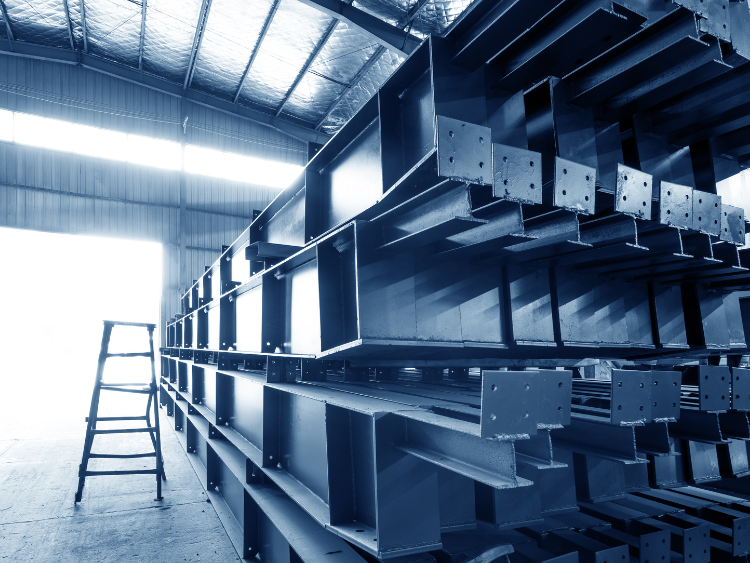
European longs market stabilizes in Italy, downtrend persists elsewhere
The European longs market has shown overall more stable sentiments this week compared to previous weeks. Following the decreases recorded in June and July, most market players believe that the downward trend in prices is losing momentum.
In the rebar segment, some Italian producers have brought their price back to around €440/mt ex-works base (€700/mt ex-works including regular extras), stating that previous offers in the range of €410-420/mt ex-works base (€670-680/mt ex-works including regular extras) will remain valid only until the end of the month. Market sources have underlined, however, that “attempts to increase prices are not translating into purchases”, while demand continues to be very slow. According to several players, the market has reached a stabilization phase, with producers determined to defend current levels ahead of the autumn recovery.
In the wire rod segment, the picture also appears relatively stable. According to sources active in the Italian market, prices between June and July have remained mostly unchanged, with slight downward adjustments linked to the conclusion of specific orders. The situation is different in other European markets, where orders booked in July were reportedly concluded on average at lower levels than in June, with reductions of around €5-8/mt. A further possible decrease of around €10/mt is expected in August, though much will depend on the extent to which logistics costs affect customers’ willingness to buy.
The differences between the Italian market and the wider European market remain clear. While Italy is seeing an attempt to consolidate prices, several sources have reported further downward pressure in some continental European countries. In Germany, for instance, market players have reported reductions of €20-30/mt, while in Poland rebar prices are said to have come to around €610/mt DAP for delivery by truck, in a context influenced by unfavorable exchange rate movements (€1 = PLN 4.33 on July 23, versus €1 = PLN 4.28 on June 23).
On the cost side, energy and transport costs have started to rise again. However, the combined effect of weak demand and the summer stoppages is making it difficult to pass these increases on to the market.
Another issue concerns the safeguard quota system and, in particular, the position of imports from Turkey. Several sources have reported that a recent customs interpretation has allowed excess volumes from Turkey’s country-specific quota to be automatically transferred to the available additional quota, thereby avoiding the immediate application of duties which many importers had considered likely.
According to market players, this interpretation has come as a positive surprise to the market. Some customers were in fact preparing to bear significant customs charges on Turkish supplies, while the latest indications have significantly changed expectations. However, uncertainties remain over the future application of the mechanism, and several market players have stressed that the situation will depend on the remaining availability of the additional quota.
Finally, in the import market, prices from Turkey have increased slightly compared to last week due to exchange rate movements. Rebar offers have been reported at €540-550/mt CFR, up slightly by €5/mt, while wire rod offers have been reported at €550-555/mt CFR, also up slightly by €5/mt on the lower end of the range. Meanwhile, the remaining import quota allocated to Egypt stands at 24,778 mt for rebar and 2,213 mt for wire rod.
€1 = $1.1408
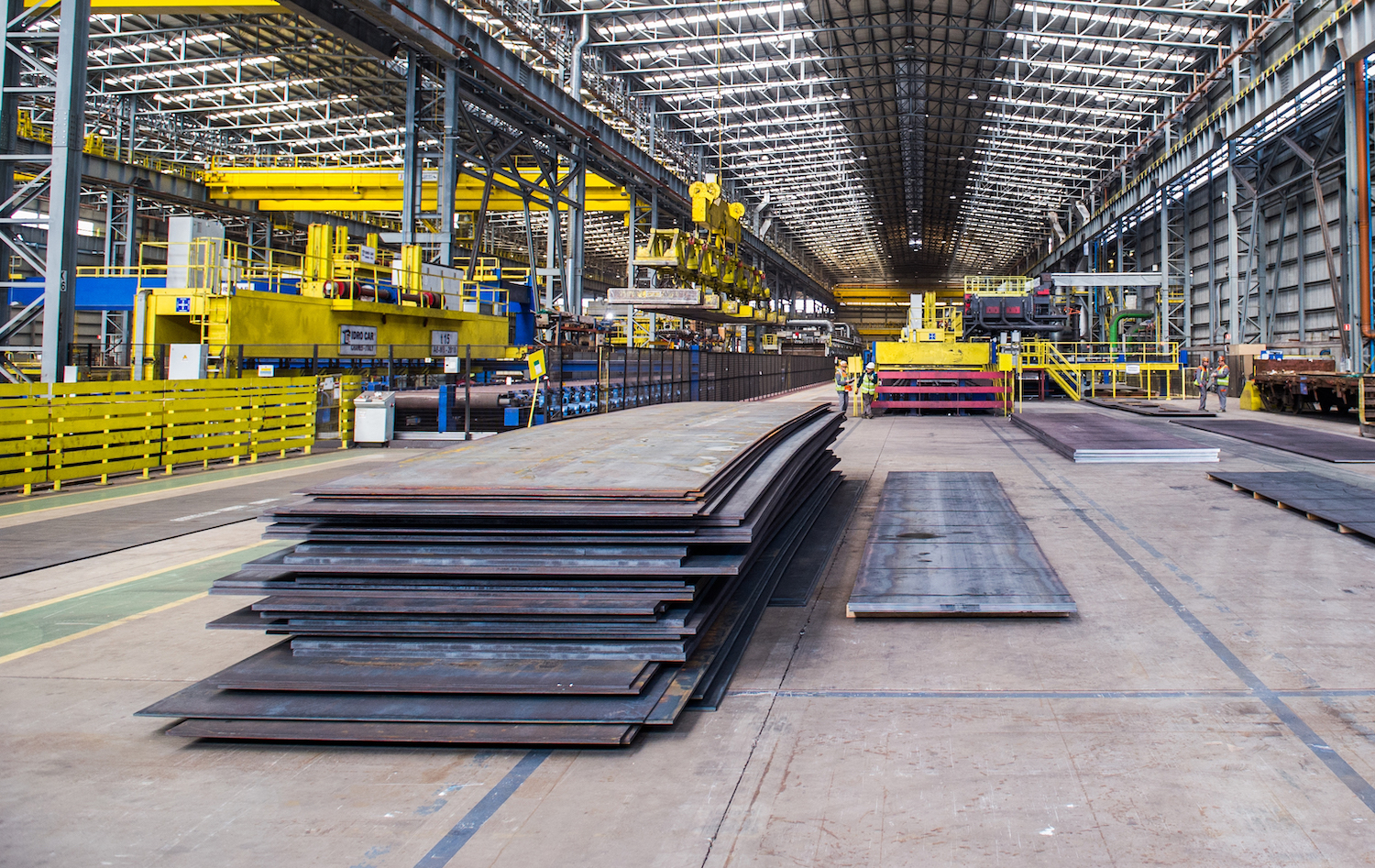
Local steel heavy plate prices increase in Northern Europe on tighter spot availability, remain stable in Italy on limited trading
Northern European domestic steel heavy plate prices rose in the week to July 23 as German mills remained well booked with project-related orders and offered little spot tonnage, sources told Fastmarkets on Thursday. In Italy, prices were stable, with no significant fresh transactions reported during the week.
Italy
Market participants indicated base-grade plate prices in Italy at €700-750 ($796-853) per tonne ex-works on Thursday July 23, with the upper end linked to offer levels.
A trade source said Italian mills were offering plate at €690-700 per tonne ex-works, although these levels were not supported by other market sources.
“For the time being, re-rollers may benefit from competitive slab prices and sufficient tonnages from imports and domestic markets,” the same source said.
A second trader said that Italian mills were selling plate at €710-730 per tonne ex-works into Germany for mid-end September delivery.
The latest transactions for steel plate in Italy were heard at €700-730 per tonne ex-works on July 16, with the lowest price at €700 per tonne ex-works linked to larger-volume orders.
Plate prices in the market have been under pressure in July due to increased competition among producers seeking to secure orders ahead of the August holiday season. Falling slab import prices have also weighed on sentiment.
As a result, Fastmarkets’ weekly price assessment for steel domestic plate 8-40mm, exw Southern Europe was €700-730 per tonne on Thursday, unchanged week on week.
Meanwhile, Fastmarkets’ weekly price assessment for steel slab, import, cif Italy, was $560-570 per tonne on July 23, down from $570-590 per tonne a week earlier.
Northern Europe
In Northern Europe, German mills were heard to be very well booked with project-related orders, leaving limited volumes available for the spot market, sources told Fastmarkets on Thursday.
A trader said spot offers were not available below €820 per tonne ex-works, with the upper end reaching €850-860 per tonne ex-works.
“German mills have booked nice projects and a sizable volume of linepipe orders. Therefore, commodity offers are few; lead time, meanwhile, is end of October, so I see no prices below €820 [per tonne ex-works],” the same source said.
These offers were included in the assessment despite delivery times exceeding Fastmarkets’ methodology window of “up to 6 weeks” because no material was heard available for earlier delivery.
Meanwhile, a second trader reported offers at €765-793 per tonne ex-works, but these levels were not supported by other market participants.
A supplier source said their mills were fully booked for the next two to three months, with prices around €890-900 per tonne ex-works, but mainly including grades for projects rather than commodity plate.
As a result, Fastmarkets’ weekly price assessment for steel domestic plate 8-40mm, exw Northern Europe, was €820-850 per tonne on Thursday, up from €800-830 per tonne a week earlier.

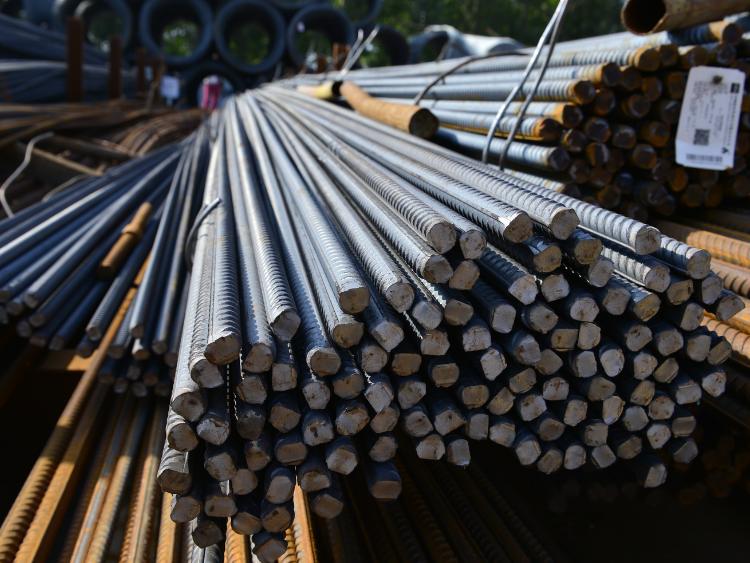
Italian rebar prices move lower amid weak demand, market uncertainty
European domestic long steel prices remained largely stable in the week to Wednesday July 22 amid weak demand and limited buying interest, though Italian domestic rebar prices moved lower.
“The situation remains very uncertain at the moment, and I believe prices are equally uncertain as a result,” a buyer source told Fastmarkets.
Market participants reported limited purchasing activity across the region, while elevated fuel and electricity costs continued to weigh on market sentiment.
In Italy, tradable levels were reported at €690-760 ($787-867) per tonne ex-works.
In northern Italy, indications were heard at €690-710 per tonne ex-works, with offers and deals reported at those levels. In the south, offers and deals were heard at €710-730 per tonne ex-works. Higher indications and offers of €760 per tonne ex-works were also reported in the region, although those levels were not supported by transactions.
Fastmarkets’ weekly price assessment for steel reinforcing bar (rebar), domestic, exw Italy, narrowed downward to €690-730 per tonne on Wednesday July 22, from €690-750 per tonne a week earlier.
Fastmarkets’ weekly price assessment for steel reinforcing bar (rebar), domestic, delivered Spain, remained unchanged at €750 per tonne.
Meanwhile, German domestic rebar prices remained stable at €710-730 per tonne, which was reflected in Fastmarkets’ weekly price assessment for steel reinforcing bar (rebar), domestic, delivered Northern Europe.
Wire rod prices showed mixed trends across Europe during the assessment week.
In Southern Europe, tradable levels for wire rod (mesh quality) were reported at €660-680 per tonne delivered.
Fastmarkets’ weekly price assessment for steel wire rod (mesh quality), domestic, delivered Southern Europe, fell to €660-680 per tonne on July 22, from €670-720 per tonne the previous week.
Fastmarkets’ weekly price assessment for steel wire rod (mesh quality), domestic, delivered Northern Europe, remained unchanged at €705-715 per tonne on July 22.