


German steel output slips as weak demand interrupts recovery
German crude steel production fell year on year for the first time in 2026 during July as persistently weak demand interrupted the sector’s recovery, steel industry association Wirtschaftsvereinigung Stahl said Sept. 9.
Crude steel output totaled 2.68 million metric tons in July, down 1.8% from the same month of 2025. The decline was driven by the blast furnace-basic oxygen furnace route, where production dropped 4% year over year to 1.83 million mt. By contrast, electric-arc furnace steel output increased 3.3% to 849,000 mt.
Pig iron production also weakened in July, falling 4.5% from a year earlier to 1.66 million mt. Hot-rolled steel production was more resilient, rising 1.4% to 2.54 million mt.
Despite the July slowdown, German steel production remained substantially above 2025 levels over the first seven months of the year. Crude steel output reached 21.31 million mt in January-July, an increase of 6.8% from the corresponding period of 2025.
Annualizing the January-July production rate would result in output of about 36.5 million mt for 2026, compared with approximately 34 million mt produced in 2025, according to the association.
The year-to-date figures showed a marked divergence between Germany’s two main steelmaking routes. Basic oxygen furnace production increased 8.5% year over year to 14.59 million mt in January-July, while electric-arc furnace output rose by a more modest 3.4% to 6.72 million mt.
Pig iron production totaled 13.29 million mt over the seven-month period, up 7.3% year over year. Production of hot-rolled steel products increased 4.2% to 18.65 million mt.
The July contraction indicates that weak demand continued to constrain Germany’s steel sector, despite the stronger cumulative production performance recorded so far in 2026.
On Sept. 8, Platts, part of S&P Global Energy, assessed domestic hot-rolled coil in Northern Europe at €730/mt ($850/mt) ex-works Ruhr, and in Southern Europe at €720/mt ex-works Italy, both stable day over day.
Author: Annalisa Villa
EUROMETAL SSC Working Group meets in Maastricht
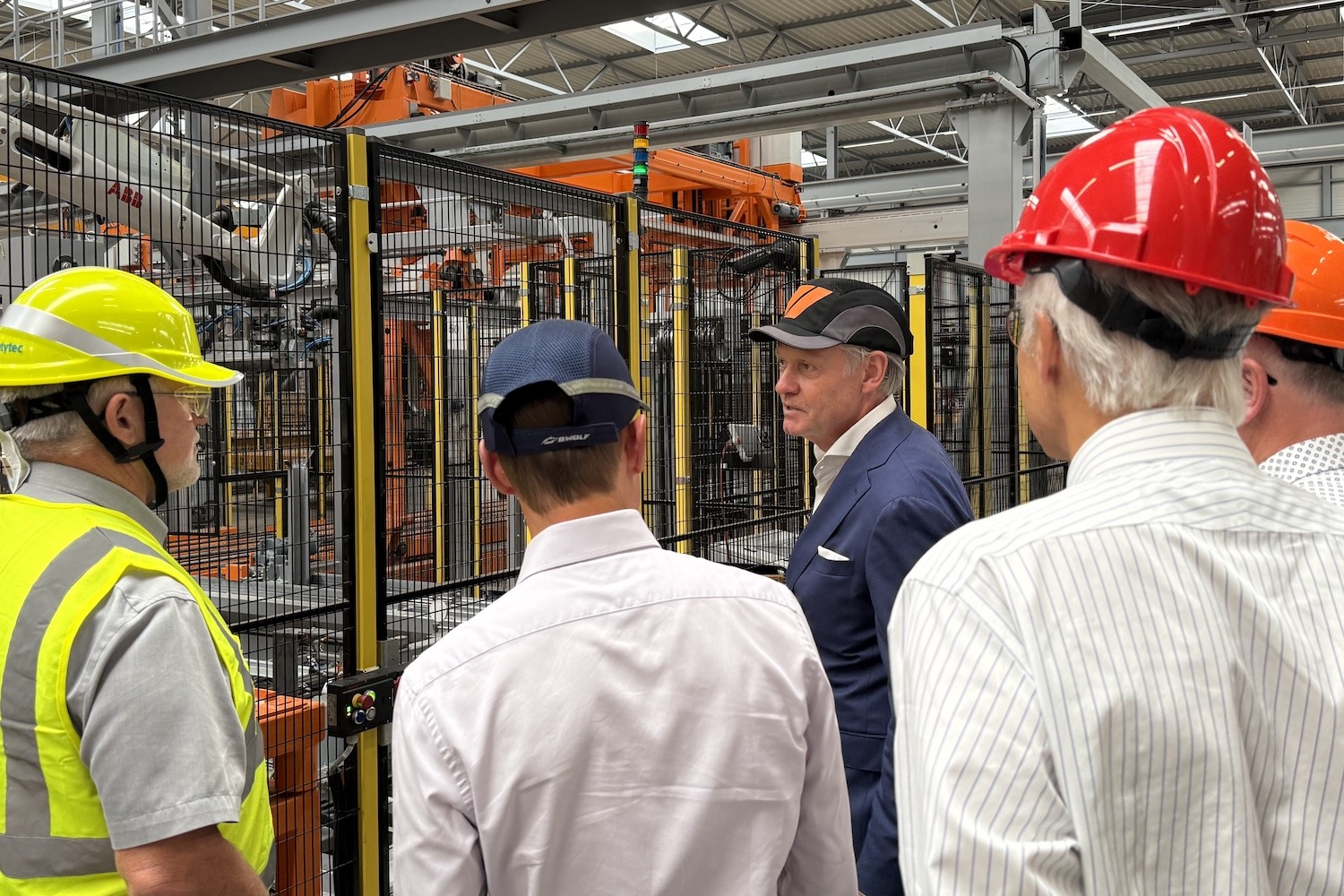
Twenty-nine participants representing 19 companies gathered in Maastricht on 10 September for the EUROMETAL Steel Service Centres (SSC) Working Group meeting for Germany, Austria, Switzerland, Belgium and the Netherlands.
Hosted by Vogten Staal BV at Buitenplaats Vaeshartelt, the meeting was opened by Thomas Niederhofer of Knauf Interfer Stahl Service Center, Chairman of the Working Group and Vice-President of EUROMETAL, together with Jack Papen, Managing Director of Vogten Staal.
Participants discussed the growing regulatory and operational challenges facing steel service centres, including CBAM, customs requirements, quota administration, logistics, packaging rules and load securing.
EUROMETAL President Alexander M. Julius presented the federation’s current political priorities and reported on the European Convoy for Industrial Competitiveness held in Brussels on 7 September. He reiterated the need for a level playing field across the entire steel value chain, ensuring that steel-intensive manufactured products entering the European market are subject to equivalent carbon, customs and trade obligations.
Konrad Rainer of Cargo Safetytec delivered a presentation entitled “Load Securing and Transport Safety— Initial Solutions”, addressing key responsibilities and practical considerations for the safe transportation of steel products.
The meeting also highlighted the new melt-and-pour documentation requirement taking effect on 1 October 2026. Members were encouraged to obtain the necessary evidence from their suppliers without delay.
Given the complexity of the new EU Packaging Regulation, the Working Group will organise a dedicated online session to help companies develop a shared understanding of the forthcoming obligations.
The day concluded with visits to two Vogten Staal sites in Maastricht, giving participants an opportunity to gain first-hand insight into the company’s operations.
EUROMETAL thanks Vogten Staal BV for hosting the meeting and site visits, as well as all participants and speakers for their valuable contributions.

FEDIL’s René Winkin: Brussels convoy underlines the urgency of European industrial action
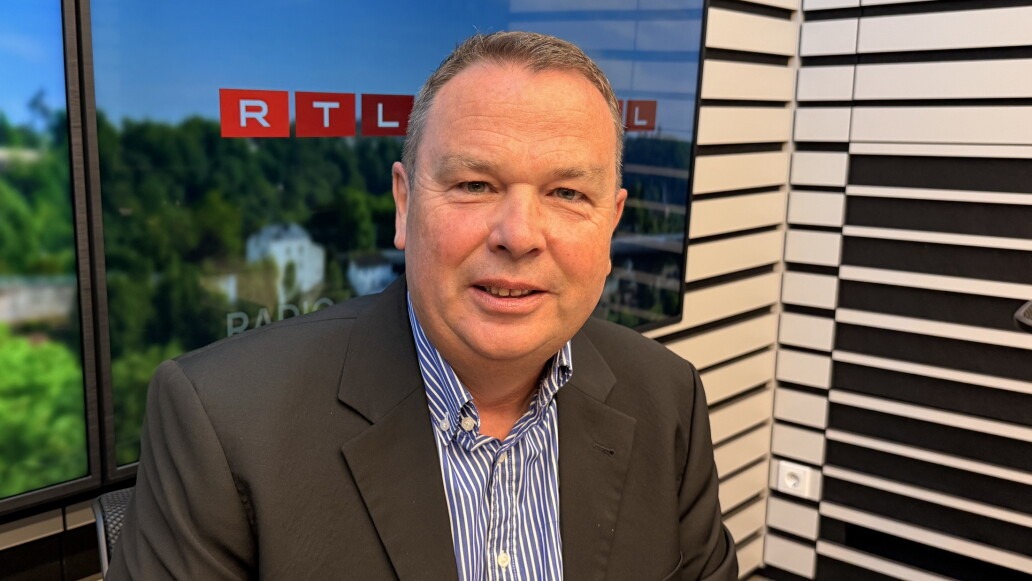
René Winkin, General Manager of FEDIL, highlighted the European Convoy for Industrial Competitiveness during an interview with RTL Radio Luxembourg on 10 September.
Speaking ahead of the FEDIL Industry Day, Winkin discussed the need to strengthen the strategic autonomy and competitiveness of Luxembourg and Europe. He pointed to the demonstration held in Brussels on 7 September as a clear illustration of the urgency facing European industry. During the interview, the RTL journalist noted that the Brussels demonstration had brought industry representatives and workers together in the streets.
Winkin described this joint mobilisation as both significant and exceptional:
“If we fall behind, factories here will close—first perhaps in traditional industrial sectors, but eventually in technology sectors as well. This affects people. It is truly remarkable that industry associations are taking to the streets alongside trade unions. That is something rather exceptional.”
He stressed that Europe’s industrial competitiveness and strategic sovereignty are closely connected. In his view, European industrial policy must move beyond statements of intent and deliver concrete results at a much faster pace.
“For these two reasons, we in Europe need to pay much more attention to industrial policy again—not simply by announcing intentions, but by demonstrating that we can deliver at the necessary speed.”
From policy ambitions to concrete action
Strategic autonomy was the central theme of the 2026 FEDIL Industry Day, held under the title “Strategic autonomy: From policy ambition to competitive industry.”
During his RTL interview, Winkin identified investment, faster permitting procedures, digital capacity and access to suitable industrial sites as essential priorities. He warned that Europe’s growing dependence on external providers in strategic sectors could become dangerous unless action is taken quickly.
At the same time, he emphasised that greater European resilience should not result in blanket protectionism. Instead, Europe must create the conditions that enable its industry to invest, innovate and compete successfully on international markets.
The full interview is available on RTL Luxembourg.
ArcelorMittal and Moeve launch partnership for low-emissions steel technologies
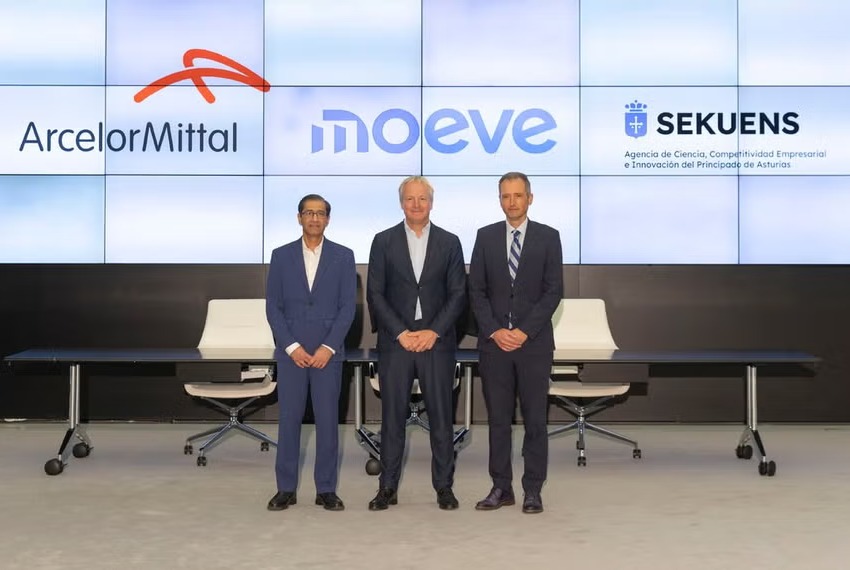
Global steelmaker ArcelorMittal and Spanish energy company Moeve have announced a partnership to establish a new platform aimed at developing technologies that use green molecules to support low-emissions steel production and industrial decarbonization.
The Green Molecules to Green Steel (G2G) platform will be established as a 50-50 partnership, subject to the necessary regulatory approvals, and will combine the companies’ expertise in innovation, energy solutions and industrial operations. The platform will be financed through the companies’ own resources and public support.
The Asturian Agency for Science, Business Competitiveness and Innovation (Sekuens) will support the initiative through existing and future innovation programs in Asturias. The participation of other regional and national public agencies and private entities may also be considered, provided they are aligned with the platform’s objectives and governance structure.
G2G to develop green molecule technologies for steel production
The partnership will focus on developing industrial demonstrators that can subsequently be scaled up at production facilities. Technologies under consideration will include green molecules such as biomethane and biogas, renewable hydrogen and its derivatives and second-generation biofuels, as well as other decarbonization solutions such as more efficient catalysts.
The platform, which will be supported by Moeve and ArcelorMittal’s innovation centers, will also explore carbon capture technologies, biotechnology for improving production processes and artificial intelligence for developing new materials. Startups, universities and technology centers will be able to participate in the collaborative innovation ecosystem.
Author: SteelOrbis Editorial Team


EU steel import quotas utilization reaches 99 percent for some products
According to European Commission data, several steel import quotas allocated to various countries have been exhausted in the final month of the EU quota period from July 1 to September 30. Quota utilization rates for some product quotas have exceeded 80 percent, while some have reached even 99 percent.
Among the exhausted quotas, Australia has used up its quota of 11,830 mt hot rolled coil (1A), while India has exhausted its quotas of 54,334 mt for organic coated sheets and 6,158 mt for other welded pipes. As regards quarto plate quotas, South Korea, Macedonia, the UK and Turkey have exhausted their quotas of 79,917 mt, 20,671 mt, 8,284 mt and 7,007 mt, respectively. In addition, Turkey has used up its quotas of 1,280 mt for railway material and 24,235 mt for non-alloy wire. China has exhausted its quota of 39,484 mt for merchant bars and light sections quota, while Algeria has used up its quota of 15,940 mt for rebar. Meanwhile, Ukraine’s quotas of 6,640 mt for hollow sections and 20,167 mt for other seamless pipes have been exhausted.
Under the “Other Countries” category, quotas of 24,933 mt for cold rolled sheets, 33,338 mt for metallic coated sheets (4A), 6,968 mt for organic coated sheets, 6,446 mt for tin mill products, 18,829 mt for quarto plate and 7,072 mt for non-alloy wire have been used up.
Under the “FTA-Other Countries” category, quotas of 12,761 mt for metallic coated sheets (4A), 22,585 mt for metallic coated sheets (4B) and 5,149 mt for hollow sections have been used up, while the 22,682 mt quarto plate quota under the “FTA-Country-Specific” category has also been exhausted.
The quotas with utilization rates above 80 percent can be seen in the table below.
| Product | Country | Quota volume (mt) | Usage (%) |
|
HRC (1A) |
Hindistan | 149,318 | 98.0 |
| South Korea | 115,457 | 85.38 | |
| Vietnam | 103,743 | 95.51 | |
| CRC | South Korea | 63,652 | 86.35 |
| Ukraine | 26,549 | 98.25 | |
| Electrical sheets (3B) | Taiwan | 5,166 | 95.68 |
| Metallic coated sheets (4A) | Taiwan | 33,783 | 94.12 |
| South Korea | 26,119 | 91.59 | |
| Stainless cold rolled sheets and strips | Taiwan | 13,246 | 90.96 |
| Other countries | 8,442 | 99.48 | |
| Merchant bars and light sections | Macedonia | 13,617 | 80.55 |
| Other countries | 11,809 | 98.2 | |
| Rebar | Egypt | 36,091 | 99.82 |
|
Wire rod |
Ukraine | 47,286 | 92.31 |
| Switzerland | 40,548 | 99.63 | |
| Egypt | 21,678 | 99.98 | |
| Angles and sections | Turkey | 13,455 | 99.55 |
| Other seamless pipes | Other countries | 9,824 | 95.71 |
| Cold finished bars | Turkey | 7,045 | 98.4 |
| Switzerland | 6,054 | 89.69 | |
| Non-alloy wire | Ukraine | 20,689 | 86.76 |
Author: SteelOrbis Editorial Team

EU slowly digests new local flats price levels, import activity remains sporadic
No significant price change has been seen in the flats market in the EU over the past week, but, while supply of CRC is considered to be a bit tight, based on the recently announced import limitation, in the HRC segment with the official offers being stable the mills’ targets have not been met fully by buyers, at least not yet.
In Italy, while the targeted levels have been voiced since last week at €750/mt ex-works, the reality is that deals are scarce and for now most deals are not exceeding €720-730/mt, with rare deals barely touching €740/mt ex-works. In Spain, with ArcelorMittal aiming at €790/mt and closing at €750-760/mt delivered maximum, other mills are offering at €750/mt ex-works, with deals being done at €735-740/mt delivered, SteelOrbis understands. In the northern countries of the EU, while the targets are up to €760-770/mt ex-works, the reality is closer to €735-740/mt FCA/delivered still. However, few have doubts regarding the uptrend in the EU. “Once the inventories from old prices are finished, they [domestic buyers] will not have much choice but to accept local prices, since imports are quite limited at the moment,” a market source commented to SteelOrbis.
In the import HRC segment, few offers are heard on CFR basis since buyers are cautious and would like to avoid risks as much as possible. According to sources, following deals from India for sizeable volumes at $680-690/mt CFR, some new offers have been voiced at $720/mt CFR, which is considered too high under the current market conditions. Turkey has been offering at around €550/mt CFR (with no AD duty included) while on US dollar basis offers have been reported at $630-650/mt CFR depending on the buyer, in line with last week’s levels. In the DDP segment, ex-Taiwan offers have been reported at €730/mt DDP Bilbao, while Turkey is offering at €710-720/mt DDP and Japan has been standing at €740/mt DDP, sources reported.
In the CRC and coated steel segments, the market situation has been roughly unchanged over the week in the domestic market, with CRC being priced at €850-880/mt and up to €890-920/mt ex-works across the EU. While the workable levels are at the lower end of the range, some sources report the supply of CRC in the market is somewhat tight. In the HDG segment, local prices have been maintained at €850-870/mt and up to €880/mt ex-works in some cases.
In the import segment, CRC from South Korea has been on offer at €880/mt DDP, while India has been voicing $810-820/mt CFR. Offers from Vietnam for 0.5 mm Z100 material have been at $860/mt CFR, while on DDP basis the same origin has been on offer at €920/mt, SteelOrbis has heard.
Author: SteelOrbis Editorial Team
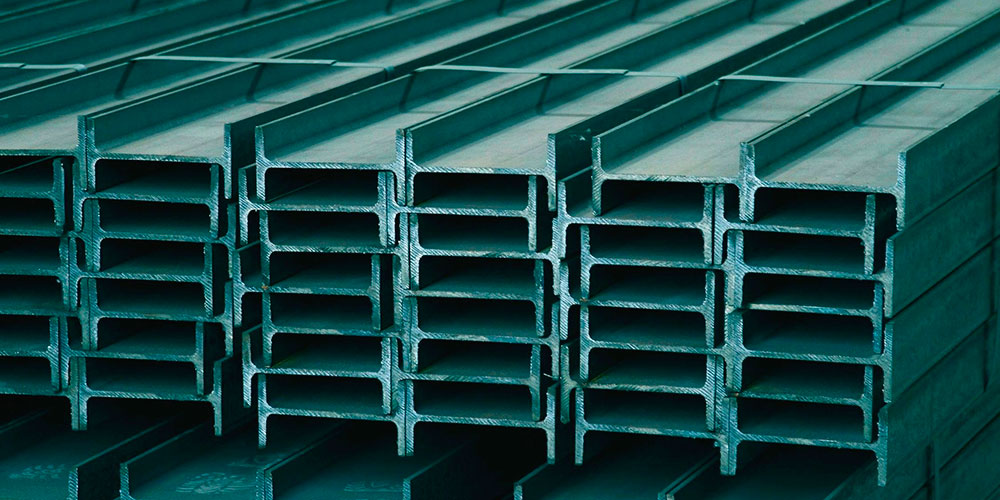
Upward pressure persists on most European longs prices, mood fails to improve
Overall, the European longs market is showing mainly nominal upward price pressure: the increases sought by steel producers are supported by costs, while orders, buying interest and actual deal prices do not yet indicate a widespread recovery in demand.
According to market participants and as anticipated by SteelOrbis last week, German steel producers are aligned in seeking increases of around €20/mt, citing higher operating costs. However, these increases have not yet been reflected in transactions: “In fact, orders have been concluded at August prices, namely €640/mt delivered for rebar,” one market participant stated, adding, “The increase requests are mainly a signal to the market that prices will not decrease.”
In terms of demand, the situation in Germany appears slightly better than in Italy, mainly due to the launch of some infrastructure projects and defense investments, while the residential construction sector remains weak. Meanwhile, the German steel industry is determined to keep the government’s attention focused on securing reliable funding for industrial competitiveness and the green transformation as it prepares to submit its draft federal budget for 2027 to the Bundestag.
As for the Polish market, no major movements have been reported, and the overall sentiment remains cautious amid import pressure.
Sentiment in Spain is also rather weak. According to one market participant, “There could be a price rebound of around €10-15/mt, but it will mainly be due to higher costs and support from the export market outside the European Union,” he stated. “The wire rod segment is flooded with imports,” he also noted. According to one source, current drawing quality wire rod prices in the Spanish market are standing at €675-690/mt delivered, while mesh quality wire rod prices are at €660-670/mt delivered. Overall, the same source reported limited buying interest in the domestic market. As for exports, the rebar price to Irish and UK ports has been reported at €630/mt FOB, down by €40/mt compared to the latest indications.
In the import market, offer prices from Turkey continue to increase, although they are attracting limited interest in the European Union. According to reports, both rebar and wire rod for September-October shipment have increased by €5/mt week on week, standing at €565-570/mt CFR and €570-580/mt CFR on average, respectively. Offer attempts above the upper end of the range have also been reported for both products, but such levels do not seem workable under current market conditions.
€1 = $1.16
Author: SteelOrbis Editorial Team