

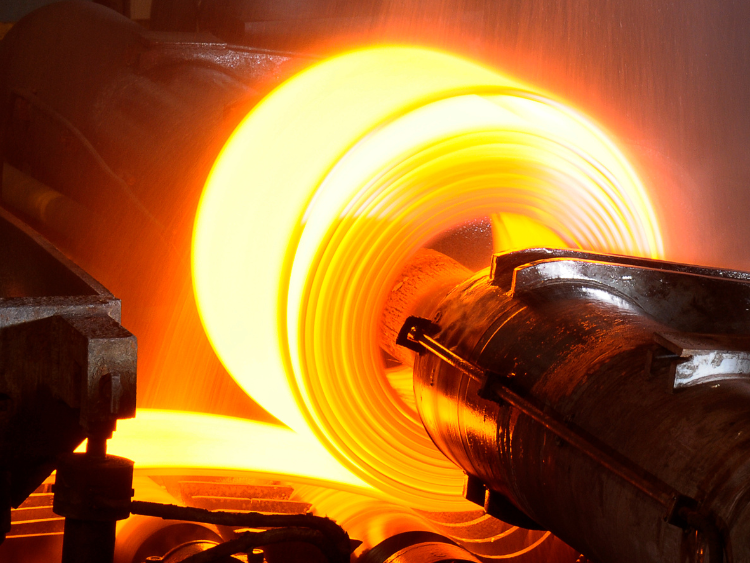
Buyers resist price hikes for local HRC in Europe, import deals rare
The market leader was said to be targeting €800 ($930.76) per tonne delivered in Northern Europe, which is netting back to €780 per tonne ex-works.
This was considered high by customers with most recent deals in the region varying within the range of €740-760 per tonne ex-works.
Sources said that the level of €750 per tonne ex-works was most common in recent transactions; however, if a supplier was selling material that may include significant extras, discounts could be applied.
Fastmarkets’ daily steel hot-rolled coil index domestic, exw Northern Europe was calculated at €745 per tonne on September 10, down by €5 per tonne from €750 per tonne on September 9.
The index was down by €3.75 per tonne week on week but up by €27.5 per tonne month on month.
The Italian market remained quiet. While allocation of the material remains limited as Metinvest has not resumed offers since the restart of the Valsider mill, which is reporting a significant backlog, buyers were in no hurry to book volumes available in the market within the range of €730-740 per tonne ex-works.
Fastmarkets’ daily steel hot-rolled coil index domestic, exw Italy was calculated at €732.50 per tonne on September 10, unchanged day on day.
The index was up by €10.83 per tonne week on week and €21.87 per tonne month on month.
The effect of the reduced availability of the material was also seen in Central Europe, where suppliers also raised prices due to the absence of offers from Ukraine.
Ukraine’s sole flat steel supplier Metinvest came under a Russian attack on its Zaporizhstal Iron & Steel Works in mid-August and therefore halted its exports of flat steel.
Offers in the region varied within the wide range of €740-770 per tonne CPT during the week to Wednesday, September 10, which is netting back to €720-750 per tonne ex-works, with the upper end considered unworkable by buyers.
Fastmarkets’ weekly price assessment for steel hot-rolled coil domestic, exw Central Europe was €720-730 per tonne on Wednesday, September 9, up from €715-720 per tonne on September 2.
Later on Wednesday, after the assessment was filed, tradeable levels were estimated within the range of €730-755 per tonne CPT or €710-735 per tonne ex-works.
On Thursday, reports emerged of mills selling at lower levels, reaching €750-760 per tonne delivered or €730-740 per tonne ex-works.
Import
The import market was largely quiet with rare deals heard as buyers have become extremely cautious when it comes to purchasing import material, considering reduced quotas and higher penalties for exceeding them, as well as uncertainties over the final Carbon Border Adjustment Mechanism (CBAM) costs.
A 20,000-25,000 tonne Vietnamese cargo was heard booked at $670 (€576) per tonne CFR in Southern Europe.
Indian HRC was reported traded within the range of $665-680 (€572-585) per tonne CFR, depending on the tonnage.
Following the recent sales, Indian suppliers were said to have withdrawn from the market, with new offers indicated at no less than $700 (€602) per tonne CFR.
An Indian source reported offers as high as $715-725 (€615-623) per tonne CFR.
Turkish material was available within the range of $630-650 (€541-560) per tonne CFR.
Reports of Egyptian HRC offers came at $690-700 (€593-602) per tonne CFR; however, they could not be confirmed by an Egyptian supplier, with one source saying that a new round of offers had not yet begun.
Fastmarkets’ weekly price assessment for steel hot-rolled coil import, cfr main port Southern Europe was €540-585 per tonne on September 9, widened upward from €540-565 per tonne on September 2.
On a DDP basis, Turkish material was heard offered in Italy and Greece at €710 per tonne.
Asian material was available within the range of €740-750 per tonne DDP.
Fastmarkets’ weekly price assessment for steel hot-rolled coil import, ddp Southern Europe was €710-740 per tonne on September 9, widened downward from €720-740 per tonne on September 2.
Author: Vlada Novokreshchenova


Polish rebar and wire rod prices steady amid limited trading activity
“Producers are trying to push prices higher due to increased energy and gas costs. However, the market remains flat, and buyers are currently waiting to see how the situation develops,” a distributor source told Fastmarkets.
Market participants described demand as subdued, with buyers maintaining a wait-and-see approach despite producers’ attempts to increase prices in response to higher production costs.
In the wire rod segment, indications were heard at 2,900-3,100 zloty ($780-834) per tonne delivered.
Fastmarkets’ weekly price assessment for steel wire rod (drawing quality), domestic, delivered Poland, remained unchanged at 2,900-3,100 zloty per tonne on Friday.
In the rebar segment, limited indications and offers were heard, although no transactional activity was reported to support those levels.
Fastmarkets’ weekly price assessment for steel reinforcing bar (rebar), domestic, CPT Poland, was 2,650-2,680 zloty per tonne on Friday, unchanged week on week.
Author: Nia Radenkova

Arvedi bids for Italian auto steel distributor AMCLN after ArcelorMittal withdrawal
Arvedi is seeking full ownership of the business, rather than only the 51% stake that ArcelorMittal had agreed to purchase from the Italian components maker under a broader bank-debt restructuring agreement.
ArcelorMittal withdrew from the transaction after Rome intervened under its “golden power” rules. The conditions imposed by the Italian state included maintaining existing operations for at least five years and requiring state approval for any workforce or operational restructuring, according to sources familiar with the matter cited by Bloomberg.
The collapse of the buyout paved the way for Arvedi, which had shown interest earlier in the process, to return with an offer for the entire company and plans to increase throughput across its facilities.
AMCLN is currently operating well below capacity, with processed flat steel volumes estimated at 500,000-600,000 tonnes per year compared with a nominal capacity of close to 1 million tonnes per year, an Italy-based distributor told Fastmarkets on Thursday September 10.
“The acquisition would allow Arvedi to streamline downstream distribution and move closer to end-users, bypassing intermediate supply chains,” the distributor said.
The transaction could have a significant long-term impact on the Italian flat steel distribution market, particularly by intensifying competition for independent steel service centres (SSCs), a second Italy-based distributor said.
ArcelorMittal and CLN established AMCLN in 2015 to process and distribute flat carbon steel, with ArcelorMittal initially holding a 49% stake. AMCLN employs about 400 people and recorded revenue of €801 million ($931 million) in 2022. The European Commission had cleared the group’s planned full takeover in late April 2026 before Rome intervened.
The withdrawal comes against the backdrop of long-standing friction between ArcelorMittal and Rome over the former Ilva steelworks (Acciaierie d’Italia), involving disputes over production levels, environmental commitments and governance.
ArcelorMittal declined to comment when contacted by Fastmarkets, while Acciaieria Arvedi and CLN had not responded to requests for comment by the time of publication.
Author: Hristo Rimpopov
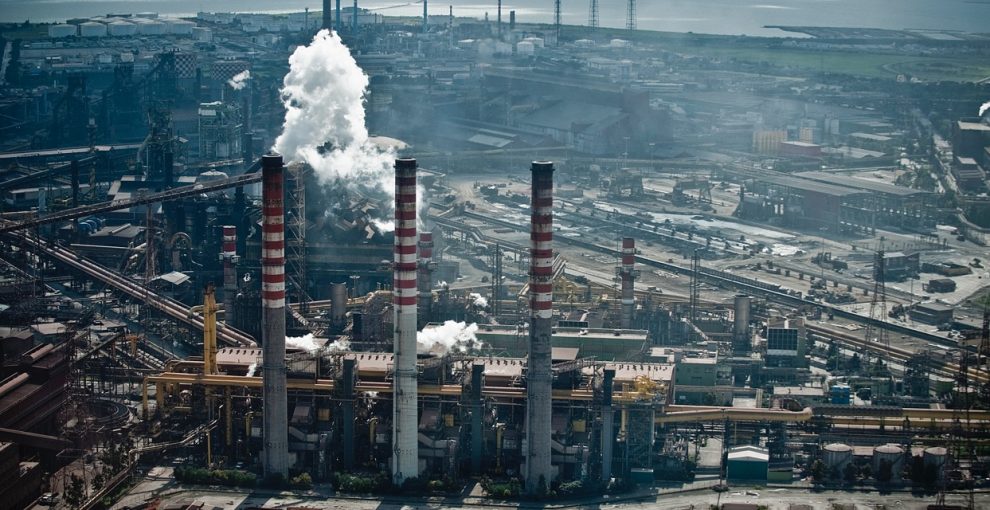
Italy risks being left with one primary HRC producer after court upholds Ilva shutdown
The Milan Court of Appeal on Friday upheld an order requiring the shutdown of blast furnaces at the former Ilva steelworks in Taranto, dealing a major blow to operator Acciaierie d’Italia (ADI).
In their ruling, the judges wrote that balancing competing interests “can only favor the health protection reasons for which the suspension of production in the hot area was ordered.” Citing recent Constitutional Court rulings and Article 41 of the Italian Constitution, the court stressed that private economic initiative cannot be conducted in a manner that causes harm to health or the environment.
The decision rejected ADI’s appeal against a July 27 ruling by the same court, which had instructed the company to cease all hot-end operations within 90 days. Under that order, operations may resume only after all asbestos has been removed from the site and measures are implemented to bring dust emissions within statutory limits, after judges highlighted that asbestos is linked to mesothelioma, a cancer diagnosed in Taranto and nearby Statte at four times the expected national rate.
The site employs around 8,000 direct workers and supports a wide contractor network in a city of under 200,000 people. Following the ruling, Italian metalworkers’ unions Fim, Fiom, and Uilm called on the government to immediately convene a meeting at the prime minister’s office, demanding a freeze on layoffs and warning of a potential “social explosion” if the plant’s future is reduced to job cuts and state-subsidized furloughs.
In response, Prime Minister Giorgia Meloni announced that the government would reconvene the standing working group on the steelworks immediately. Meloni said that Rome is “working with decisions that are beyond our control” to find a solution, underscoring that the Taranto dossier remains one of the files the government is dedicating the most time to.
ADI had warned that shutting the facilities risks jeopardizing future production, noting that blast-furnace cooling procedures could make restarting operations impossible without extensive and costly repairs. A permanent shutdown of Taranto’s hot end would leave Acciaieria Arvedi as Italy’s sole primary domestic hot-rolled coil (HRC) producer. While other domestic players roll coil, they operate strictly as re-rollers reliant on external slab feed rather than primary steelmaking.
Currently, the Italian domestic flat steel market is quiet, with low downstream demand leading to minimal negotiated volumes and no fresh trading activity reported. Supply tightness persists, as Metinvest’s Ferriera Valsider mill has resumed HRC rolling following an engine-related force majeure declared in late August, but continues to withhold spot offers due to an extensive order backlog.
With no new bids, offers or transactions heard on Thursday September 10, the market was still anchored to indications heard on Wednesday September 9. On that day, a supplier indicated workable levels for October delivery at €750 ($872) per tonne delivered (netting back to €730 per tonne ex-works), while two buyers reported mill offers at €730-740 per tonne ex-works with no deals concluded. Buyer-reported minimum levels of €710-720 per tonne ex-works were widely dismissed by sellers and other market sources as too low and no longer available.
Fastmarkets’ daily steel hot-rolled coil index domestic, exw Italy was calculated at €732.50 per tonne on September 10, unchanged day on day.
Author: Hristo Rimpopov

German EPP pushes narrower ‘Made in Europe’ rules
German delegation in the Parliament’s centre-right EPP group is taking a cautious stance on the Industrial Accelerator Act (IAA), arguing that ‘Made in Europe’ criteria should be “targeted”.
The IAA aims to favour European-made goods in public support schemes and public procurement. In an internal note published by Contexte, a dozen EPP delegations set out their positions as work on the parliamentary report begins.
The German delegation, the group’s largest, also said it wants equivalent status to remain available to third countries with trade agreements with the EU, provided they offer reciprocal access to public aid and procurement markets.
“Where steel and aluminium are already covered through CO₂-related requirements, no additional overlapping origin thresholds should apply,” they wrote. The delegation also rejects any binding reindustrialisation target, while the Commission has proposed raising the EU industry’s share of GDP to 20% by 2035.
The EPP therefore appears divided on several issues, including the 20% target and which third countries should qualify for ‘Made in Europe’ status.
