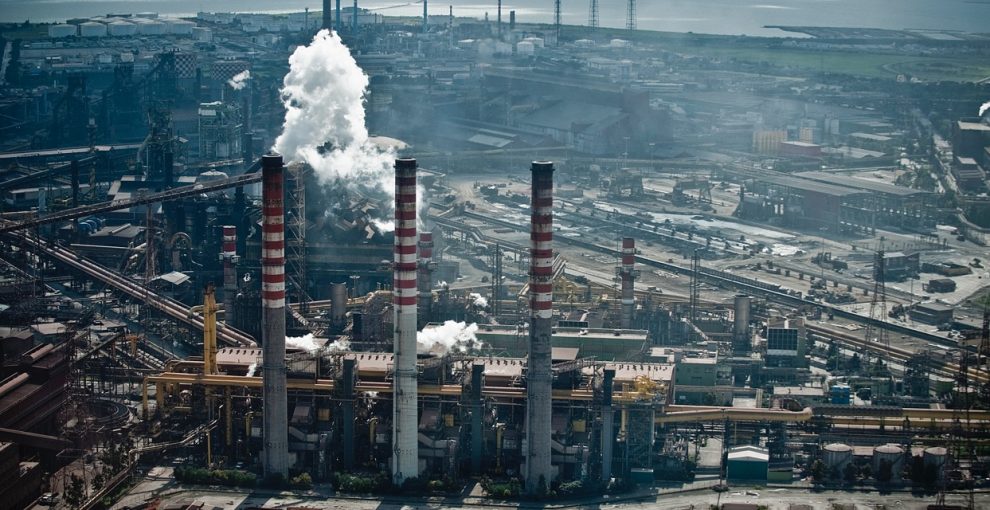
The Milan Court of Appeal on Friday upheld an order requiring the shutdown of blast furnaces at the former Ilva steelworks in Taranto, dealing a major blow to operator Acciaierie d’Italia (ADI).
In their ruling, the judges wrote that balancing competing interests “can only favor the health protection reasons for which the suspension of production in the hot area was ordered.” Citing recent Constitutional Court rulings and Article 41 of the Italian Constitution, the court stressed that private economic initiative cannot be conducted in a manner that causes harm to health or the environment.
The decision rejected ADI’s appeal against a July 27 ruling by the same court, which had instructed the company to cease all hot-end operations within 90 days. Under that order, operations may resume only after all asbestos has been removed from the site and measures are implemented to bring dust emissions within statutory limits, after judges highlighted that asbestos is linked to mesothelioma, a cancer diagnosed in Taranto and nearby Statte at four times the expected national rate.
The site employs around 8,000 direct workers and supports a wide contractor network in a city of under 200,000 people. Following the ruling, Italian metalworkers’ unions Fim, Fiom, and Uilm called on the government to immediately convene a meeting at the prime minister’s office, demanding a freeze on layoffs and warning of a potential “social explosion” if the plant’s future is reduced to job cuts and state-subsidized furloughs.
In response, Prime Minister Giorgia Meloni announced that the government would reconvene the standing working group on the steelworks immediately. Meloni said that Rome is “working with decisions that are beyond our control” to find a solution, underscoring that the Taranto dossier remains one of the files the government is dedicating the most time to.
ADI had warned that shutting the facilities risks jeopardizing future production, noting that blast-furnace cooling procedures could make restarting operations impossible without extensive and costly repairs. A permanent shutdown of Taranto’s hot end would leave Acciaieria Arvedi as Italy’s sole primary domestic hot-rolled coil (HRC) producer. While other domestic players roll coil, they operate strictly as re-rollers reliant on external slab feed rather than primary steelmaking.
Currently, the Italian domestic flat steel market is quiet, with low downstream demand leading to minimal negotiated volumes and no fresh trading activity reported. Supply tightness persists, as Metinvest’s Ferriera Valsider mill has resumed HRC rolling following an engine-related force majeure declared in late August, but continues to withhold spot offers due to an extensive order backlog.
With no new bids, offers or transactions heard on Thursday September 10, the market was still anchored to indications heard on Wednesday September 9. On that day, a supplier indicated workable levels for October delivery at €750 ($872) per tonne delivered (netting back to €730 per tonne ex-works), while two buyers reported mill offers at €730-740 per tonne ex-works with no deals concluded. Buyer-reported minimum levels of €710-720 per tonne ex-works were widely dismissed by sellers and other market sources as too low and no longer available.
Fastmarkets’ daily steel hot-rolled coil index domestic, exw Italy was calculated at €732.50 per tonne on September 10, unchanged day on day.
Author: Hristo Rimpopov