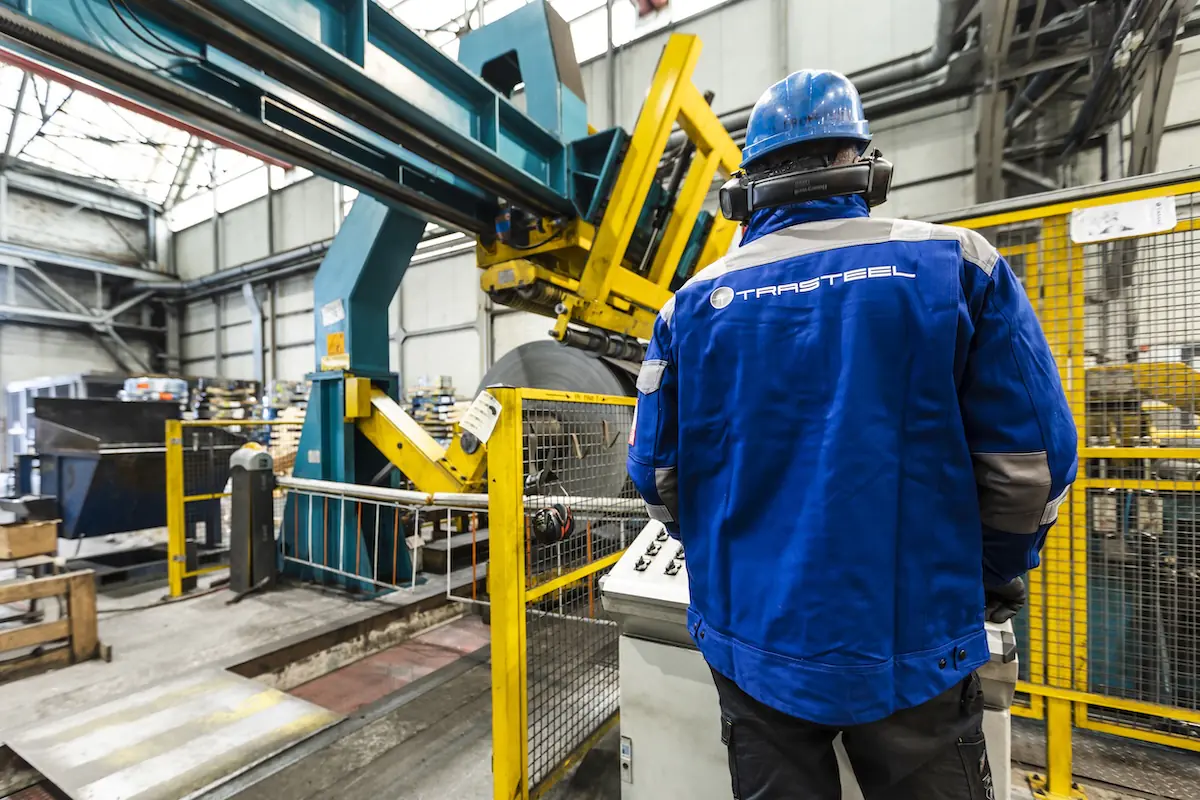
Trasteel acquires remaining 40% stake in BBC Alloys
Trasteel Holding announced on 7 October 2026 that its subsidiary, Trasteel International, had completed the acquisition of the remaining 40% stake in Italian ferroalloy company BBC Alloys from Metco. The transaction makes BBC Alloys a wholly owned subsidiary of the group.
The acquisition closed on 30 September 2026 for approximately €1.7 million. Trasteel had acquired a 60% controlling interest in BBC Alloys in June 2025.
Headquartered in Milan, BBC Alloys supplies steel mills and foundries in Italy and across Europe. Its activities include the trading, processing and distribution of standard and noble ferroalloys, as well as basic and minor metals. Its processing and logistics hub in Tortona provides crushing, screening, sizing, sieving and bagging services.
According to Trasteel, BBC Alloys has progressively joined the group’s procurement, logistics and financing platform since the initial acquisition.
BBC Alloys recorded revenue of €89 million in 2025, up 8.7% year on year, while trading volumes increased by 8.5%. Revenue reached €63.9 million in the first half of 2026, compared with €49.3 million a year earlier, based on unaudited management accounts.
BBC Alloys has been fully consolidated in Trasteel’s financial statements since June 2025. The latest transaction therefore eliminates the minority interest rather than adding these revenues to the group’s consolidated results for the first time.
Lorenzo Bagliano will continue as CEO of BBC Alloys and will also assume responsibility for the group’s ferroalloys activities. The company’s board will comprise Gianfranco Imperato as chairman, Bagliano as CEO and Federico Guiducci as director.

EU steel prices to rise as CBAM cost could reach €5B/y, says Trasteel CEO
The total cost of the EU’s Carbon Border Adjustment Mechanism for steel products could reach €5 billion/year and will be passed entirely on to consumers, Gianfranco Imperato, CEO of Trasteel, told Platts, part of S&P Global Energy, in an interview.
The burden on consumers is likely to be substantially higher because CBAM will inevitably trigger an increase in steel prices across the board, Imperato said. EU regulators appear encouraged by CBAM because they hope it will push companies to reduce emissions or move toward green steel.
“This may happen over time, but I do not expect it in the short term,” Imperato said. “For that investment to materialize, operators need to regain confidence in the future and a willingness to invest.”
Since the EU’s tighter safeguard measures and CBAM entered their latest phase, what changes have you seen in Trasteel’s sourcing mix?
Gianfranco Imperato: In the short term, the destination countries of our trading flows have not changed much, while the origins are being adapted to the available quotas. On the industrial side, our companies all have mainly regional businesses and are therefore largely doing what they did before, generally benefiting from a better pricing environment.
The only big difference compared to the past concerns the origin of our imported slabs. With Russian and Ukrainian supplies no longer available, we have increased our sourcing from the Far East.
How is China’s position in the European steel market changing, and what broader trade dynamics are you seeing?
Gianfranco Imperato: Europe remains our main destination market, and the key development of the last few years has been the sharp decrease in Chinese steel imports, replaced by imports of Chinese finished products — cars first of all — which shows the limits of the current measures for European industry and consumers.
In other regions — South America, the Gulf — the dynamics are somewhat different, but overall, we are seeing strong trade pressure, mainly against Chinese steel.
How are quota availability, CBAM exposure, and origin requirements affecting delivered prices for imported steel?
Gianfranco Imperato: In the short term, due to the extremely weak demand in Europe, prices have not yet been significantly affected, but I believe that soon, most of the impact of all these measures will be on prices, since the uncertain environment does not encourage companies and banks to invest in significant new production capacity.
Are Europe’s new trade measures causing genuine shortages, or are they primarily adding cost and uncertainty?
Gianfranco Imperato: The impact will be significant, especially in certain products — for instance, PPGI (pre-painted galvanized iron) — and the gap will be covered by increasing the current capacity utilization, but obviously not creating new capacity at least for a few years.
In this respect, our latest investment in “La Magona” is bringing back to the market an operator with around 500,000 metric tons/year of galvanized and PPGI capacity.
The main consequence will be an increase in prices, with an additional burden on the final consumers, while rebalancing investments into new capacity will require a much better outlook on consumption than today.
What will determine European buyers’ appetite for lower-carbon steel, and can producers pass the surcharge downstream?
Gianfranco Imperato: In a very noble but somehow “theoretical” way, European politics have been pushing very hard toward the green economy, but operators need to survive first, and therefore, the appetite for green steel will mainly depend on the possibility of operators imposing the relevant surcharge downstream.
I am personally critical of the heavy use of carbon taxes chosen by European regulators, rather than supporting companies with subsidies to change. Today, the approach seems to be penalizing rather than enabling.
Could lower-carbon producers in the Middle East and India become significant suppliers to Europe, particularly through DRI-based production?
Gianfranco Imperato: Everybody is now putting a lot of emphasis on DRI, without mentioning that the high-grade iron ore needed to produce it has been largely committed for years. DRI cannot be produced from just any type of iron ore. It is appealing to present it as an easy solution to steel industry emissions, but the reality is more complex.
Are tariffs, carbon costs, and origin controls turning steel into a permanently more regional market?
Gianfranco Imperato: Definitely. We are living, and not only in steel, in a post-globalization era — a world in which macro-regions face very different conditions. In this respect, there will be more regional players than global players in the downstream sector that we are in. At Trasteel, we decided a few years ago to be “multilocal” rather than “global” — to be deeply rooted in a selected number of countries rather than on the surface everywhere.
Trasteel is a global steel, energy, and metallurgical trading and industrial group supplying steel products, steelmaking raw materials, consumables, and related services.
This interview has been edited for length and clarity.
Author: Shivam Prakash

European steel market expects broadly unchanged fundamentals in October
Participants in the European steel market expect largely stable conditions in October, with modest price gains alongside broadly steady inventory and production levels, according to the latest Platts European Steel Sentiment Survey.
Price index
The overall price index for October was measured at 68.75 points, down from 87.50 points in September, indicating that participants expect prices to increase, but more slowly than they expected last month.
Trader, stockholder and service center sentiment on price was measured at 62.5 points, while producer sentiment stood at 75 points.
Despite support from European regulation and increased cost pressure, mills have struggled to consolidate higher price levels amid strong buyer resistance and weak underlying demand. Mills have remained firm on pricing, and prices have gradually increased, but persistent buyer resistance has dampened sentiment.
Platts, part of S&P Global Energy, last assessed domestic hot-rolled coil in Northern Europe on Oct. 6 at €745/metric ton, ex-works Ruhr, up €15/mt month over month.
Platts last assessed rebar in Northwest Europe on Sept. 30 at €665/mt, ex-works, unchanged month over month.
| Month | May 2026 | June 2026 | July 2026 | August 2026 | September 2026 | October 2026 |
| Index | 75 | 64.29 | 47.50 | 55 | 87.50 | 68.75 |
Source: S&P Global Energy
Production index
The overall production index was measured at 59.38 points, up from 52.50 points in September, indicating that surveyed participants expect production to increase slightly toward year-end.
Trader, stockholder and service center sentiment declined to 43.75 points, while producer sentiment increased to 75 points, suggesting that mills expect higher output even as downstream participants remain cautious.
| Month | May 2026 | June 2026 | July 2026 | August 2026 | September 2026 | October 2026 |
| Index | 47.50 | 57.14 | 50 | 15 | 52.50 | 59.38 |
Source: S&P Global Energy
Inventory index
The overall inventory index was measured at 40.63 points, up from 37.50 points in September, indicating that participants still expect inventories to decline, albeit at a slower rate.
This figure comprised readings of 56.25 points for traders, service centers and stockholders, and 25.00 points for producers.
The index suggests that participants expect stock levels to decline modestly as older imported material continues to be consumed by downstream buyers ahead of more recently purchased domestic material.
| Month | May 2026 | June 2026 | July 2026 | August 2026 | September 2026 | October 2026 |
| Index | 50.83 | 46.43 | 48.33 | 25 | 37.50 | 40.63 |
Source: S&P Global Energy
Author: Riley Waters

EU HRC prices remain stable, import buyers still cautious
Domestic hot rolled coil (HRC) prices in the EU have remained largely unchanged this week, with workable levels mainly at the lower end of mills’ offer ranges. Meanwhile, import activity has largely stalled amid uncertainty over quota availability and additional costs.
In northern Europe, domestic HRC prices have been reported at €740-760/mt ex-works, with some offers still reaching €770/mt ex-works, unchanged from last week. However, sources consider prices at the lower end of the range to be workable.
In Italy, offers have been heard at around €750/mt ex-works and above, while workable prices have remained within €740-750/mt ex-works, in line with previous transactions reported in the market. In Spain, workable HRC prices have been reported at €740-745/mt ex-works, unchanged from last week.
Meanwhile, import HRC offers have remained broadly unchanged or showing only a slight increase week on week at €635-670/mt CFR. The lower end corresponds to offers for ex-Turkey material at around $710/mt CFR, or approximately €635/mt CFR, duty paid, up by €10/mt week on week. Indicative offers for ex-Egypt HRC have been heard at $740-750/mt CFR, equivalent to around €660-670/mt CFR, the same as last week, while offers for ex-India coils have been reported at €650-670/mt CFR, according to sources. According to sources, although the most aggressive offers have disappeared from the market, market insiders do not consider the latest indicative offers to be workable. “Buyers’ price expectations remain closer to €600-620/mt CFR, with little fresh business reported,” a source said.
Import offers on DDP basis have been estimated at €760-780/mt. Offers for ex-Vietnam HRC have been heard at the lower end of this range, while material from Taiwan, South Korea and Japan has been offered at approximately €770-780/mt DDP. However, these remain offer indications, with little fresh import business reported. “There are no orders at the moment, but buyers may return if European mills raise their prices and imports become more attractive,” a market source told SteelOrbis.
“We expect some activity to resume next week following confirmation of FTA quota allocations, probably on October 13. For now, buyers remain cautious about committing to new bookings given uncertainty over the final cost of imported material,” a market insider told SteelOrbis.
According to sources, pressure on EU HRC import quotas for October-December 2026 remains high. In particular, according to the SteelOrbis EU quota tracking, Turkey’s country-specific HRC quota of 160,573 mt was exhausted on October 1. India’s quota has a remaining balance of 19,126 mt, against 23,628 mt awaiting allocation, meaning allocated volumes and pending requests together represent approximately 103 percent of its 149,318 mt quota. Meanwhile, pending requests under FTA-CSQ total 194,001 mt against an available volume of 120,920 mt, equivalent to around 160 percent of the quota, although allocation remains pending.
Looking ahead, some sources expect prices to move up from January amid concerns over quota availability for the first quarter of 2027. Substantial volumes from Turkey and India are reportedly to have been sold already for arrival in the first quarter, raising expectations that some importers will face out-of-quota duties.
$1 = €0.89
Author: SteelOrbis Editorial Team

European longs markets remain stable but pressure persists
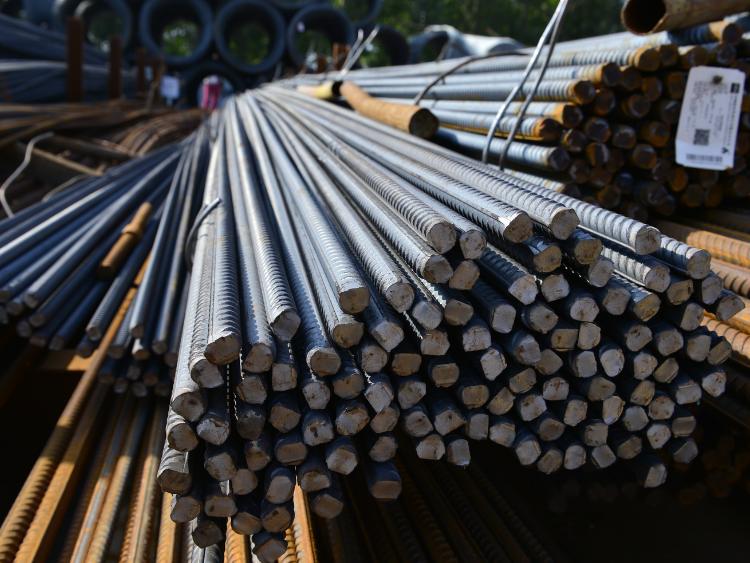
The European longs steel market has remained largely stable in terms of prices this week, although sources have reported greater buying interest from end-users.
In the Italian rebar segment, mills’ price requests have remained stable in a range of €470-490/mt ex-works base (around €735-755/mt ex-works including regular extras), and producers are confident that these levels will hold. “Fortunately, our Italian customers understand that the increases are driven by our need to offset production costs, also because this is a situation we are all facing. Logistics costs are also weighing on the market,” one source stated.
Accordingly, incoming orders for Italian rebar producers are reported to be improving. Although some producers are planning to reduce or have already reduced production rates in October, the overall sentiment remains moderately optimistic.
However, other sources on the buyers’ side have stated that the average level in actual deals still stands at €460-465/mt ex-works base (€725-730/mt ex-works including regular extras), only reaching the lower end of producers’ requested range on limited occasions.
In the export segment, a source at an Italian mill stated that it has “fairly positive expectations” for the coming period, particularly regarding eastern European destinations, as the region is currently experiencing a shortage of material due to the inactivity of major Ukrainian plants affected by Russian attacks. Italian offers to eastern Europe have therefore been reported at €610-620/mt FCA, although this information has not been confirmed by the time of publication.
In the rest of Europe, prices are standing at significantly lower levels than in Italy. In Poland, for instance, rebar prices have been reported at €620-635/mt CPT, while drawing-quality wire rod prices stand at €675-690/mt delivered and mesh-quality wire rod prices are at €645-660/mt delivered. In Italy, the same prices have been reported at €675-685/mt delivered and €665-670/mt delivered, respectively.
According to one market participant, “The price gap between the Italian and German rebar markets is widening, as German suppliers are more reluctant to accept the requested increases.” According to the latest information obtained by SteelOrbis, German domestic rebar prices stand at €660-680/mt ex-works, while wire rod prices are estimated at the same levels as in the Polish market.
As for imports, offers from Turkey have been reported at €595-600/mt CFR for rebar and €600-610/mt CFR for wire rod, respectively down by €5/mt on the lower end of the range and stable week on week. In this scenario, the variation in the euro-dollar exchange rate – from 1.14 to 1.12 within one week – should also be taken into account. It should also be noted that, as of today, October 8, the EU import quotas for Turkish steel products for the final quarter of 2026 have been filled and exceeded for both rebar and wire rod (59,919 mt and 61,147 mt, respectively).
Author: SteelOrbis Editorial Team
Steel heavy plate demand stays limited across Europe as Italian slab import prices move higher
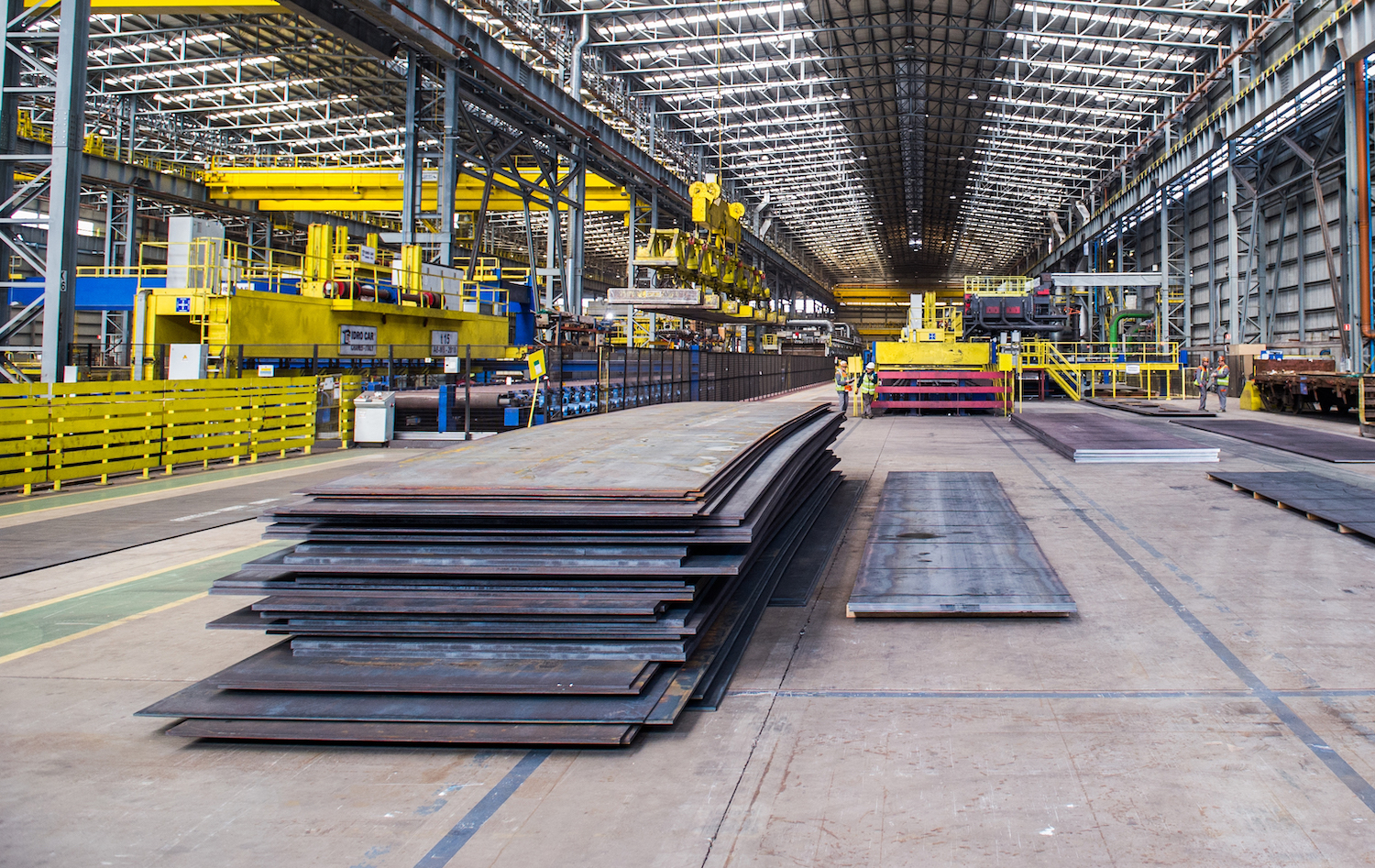
European steel heavy plate prices were largely unchanged this week, with Italian mills reporting steadier sales despite ongoing weak demand. Meanwhile, slab import prices into Italy increased on firmer Asian offers, lifting the market higher week on week, sources told Fastmarkets on Thursday October 8.
Italy
In Italy, a producer said it was selling more regular volumes of base-grade plate in the market during the last 10 days, closing deals at €750 ($840) per tonne ex-works even for bigger orders of 500-1,000 tonnes.
The same source also said they achieved some project-related deals for the rest of the year and early 2027 at €780-790 per tonne ex-works for base-grade plate, but these were discarded from Fastmarkets spot price assessment.
Meanwhile, a trader said that €740 per tonne ex-works was still possible to achieve in the market, while €750 per tonne ex-works was “the maximum deal price.”
A second trader said workable levels for plate were at €730-750 per tonne ex-works on Thursday, but the lower end of the range was not strongly corroborated among other market participants, therefore it was not included in the final assessment.
As a result, Fastmarkets’ weekly price assessment for steel domestic plate 8-40mm, exw Southern Europe was €740-750 per tonne on Thursday October 8, stable week on week.
Slab import prices into Italy increased week on week, with latest offers from China heard at $590-595 per tonne cost, insurance and freight (CIF). Indications of workable levels were reported in the same range, which was higher than those heard in the market at $580-590 per tonne CIF on October 1.
Chinese mills were slowly returning to the market after public holidays, which took place on October 1-7, so no active deals happened during this period, sources said.
“Unlike the period of active bookings some 2-3 weeks ago, today I can’t confirm that they [Chinese mills] still accept $580 [per tonne CIF] after negotiations,” a buyer said.
Meanwhile, Vietnamese mills were heard offering material to Italy at $530 per tonne free on board (FOB), which is equivalent to around $600 per tonne cost and freight (CFR) after adding freight of $70 per tonne, a trade source said, but no transactions were confirmed at these levels yet.
Fastmarkets’ weekly price assessment for steel slab import, cif Italy was $590-595 per tonne on Thursday, up from $580-590 per tonne a week earlier.
Northern Europe
In Germany, sources indicated workable levels for base-grade plate at €850-880 per tonne ex-works, unchanged from a week earlier. No major buying activity was reported during the week, as mills were offering longer delivery times, a trade source said.
A second trade source said levels for plate in the Benelux area were within €840-860 per tonne ex-works, saying the commodity market was “lousy”. The same source added that German mills were well booked, while Benelux mills were “hungry for commodity”.
Thus, Fastmarkets’ latest weekly price assessment for steel domestic plate 8-40mm, exw Northern Europe was €840-880 per tonne on October 8, widening downward by €10 per tonne from €850-880 per tonne on October 1.


Italian rebar producers maintain upward pressure on prices amid elevated costs, weak demand
Italian rebar prices narrowed upward on Wednesday, October 7, with producers continuing to push for higher price levels in response to elevated oil and energy costs, while demand remained subdued across the region.
Market participants noted that recent price increases have been driven primarily by production cost pressures rather than any meaningful improvement in consumption.
“Demand remains very weak, while energy and diesel costs show no signs of decreasing. This issue is becoming increasingly significant as we are also seeing a general contraction in national consumption,” a buyer source told Fastmarkets.
High living costs and elevated prices across multiple sectors were said to be affecting purchasing power.
The construction sector also remained under pressure despite ongoing infrastructure activity.
“Despite the presence of a significant number of ongoing public infrastructure projects, the high cost of raw materials and energy is making it difficult for construction activity to progress at a fast and consistent pace. At the same time, residential construction activity remains significantly down,” a market participant said.
In Italy, indications were heard across a wide range, depending on the region. In the North, workable levels were heard at €730-750 ($820-843) per tonne ex-works and €750-780 per tonne ex-works in Southern Italy.
Deals were heard at €740-760 per tonne ex-works, while offers were heard at €770 per tonne ex-works.
Fastmarkets’ weekly price assessment for steel reinforcing bar (rebar), domestic, exw Italy, narrowed upward to €730-780 per tonne on October 7 from €720-780 per tonne a week earlier.
Fastmarkets’ weekly price assessment for steel reinforcing bar (rebar), domestic, delivered Spain, remained unchanged at €750 per tonne on October 7.
Workable levels for Northern European rebar were heard at around €720 per tonne delivered.
Fastmarkets’ weekly price assessment for steel reinforcing bar (rebar), domestic, delivered Northern Europe, was €715-720 per tonne on October 7, narrowing downward from €715-730 per tonne the previous week.
Workable levels for Southern European wire rod were heard at €670-680 per tonne.
Fastmarkets’ weekly price assessment for steel wire rod (mesh quality), domestic, delivered Southern Europe, narrowed upward to €670-680 per tonne from €660-680 per tonne previously.
Meanwhile, Fastmarkets’ weekly price assessment for steel wire rod (mesh quality), domestic, delivered Northern Europe, was unchanged week on week at €705-715 per tonne on October 7.
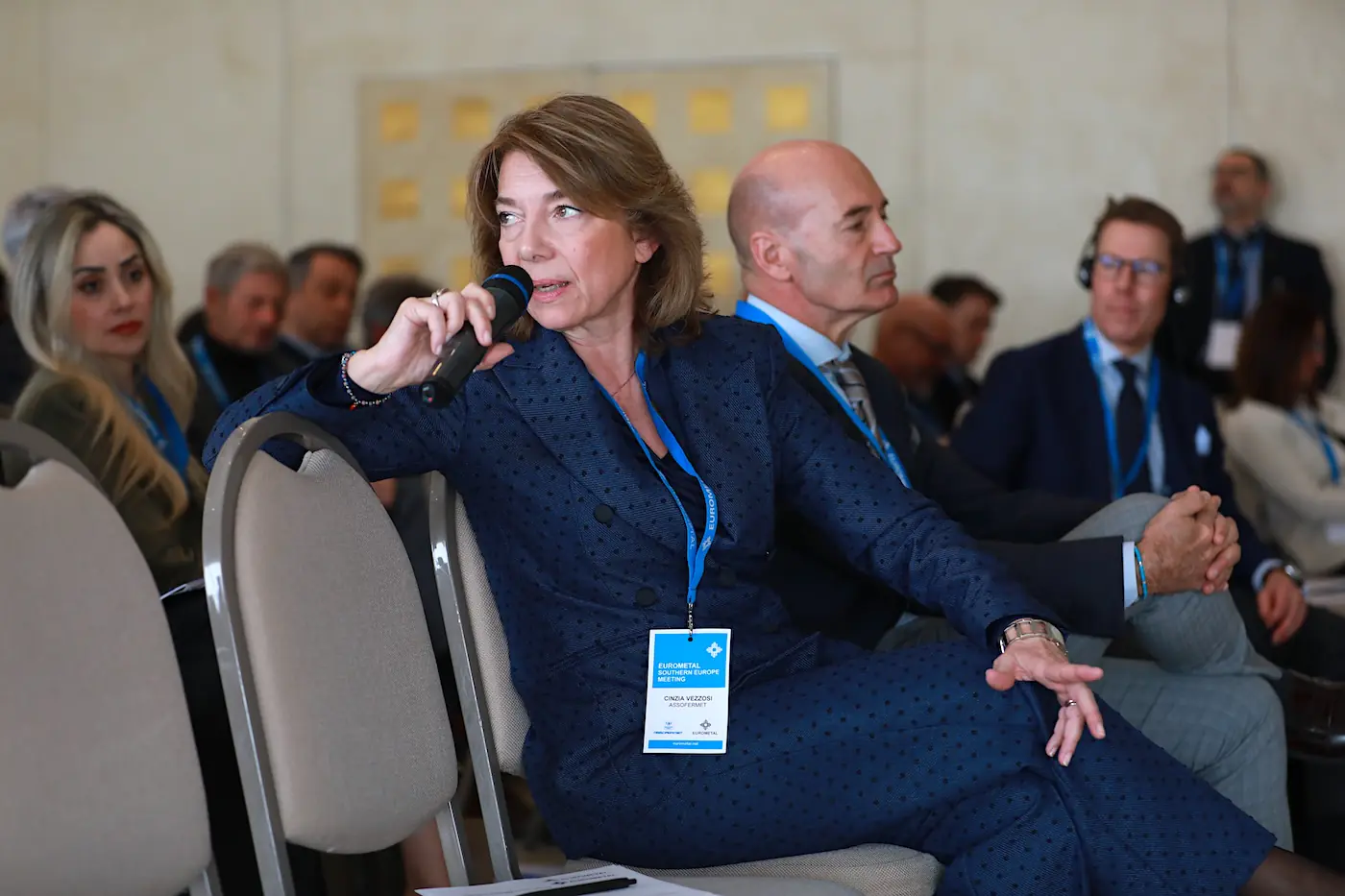
Cinzia Vezzosi: Companies have reached their limits, Europe now needs a competitiveness strategy
On the occasion of the autumn conference titled ‘Markets at risk and companies’ potential’ of Assofermet, the Italian association representing companies active in the steel, scrap and non-ferrous metals sectors, SteelOrbis interviewed the association’s president Cinzia Vezzosi about the main factors currently putting pressure on the Italian and European metals supply chain: from the risk of deindustrialization to new trade measures, from shrinking margins to the regionalization of supply chains, as well as the future of European scrap exports.
During the conference, Vezzosi identified the ability to react quickly as one of the key strengths of Italian SMEs, which are capable of adapting to change “in months, not years”. However, as emerged from the interview, companies’ ability to adapt may no longer be sufficient in an environment characterized by rising costs, increasingly stringent regulations and persistently weak demand.
In February, during EUROMETAL’s Southern Europe Meeting, you spoke of a “systemic” risk of deindustrialization and of the need to put competitiveness back at the heart of European policies. Several months later, do you see any signs of a reversal in this trend?
Unfortunately, no. In fact, I would say that the process of deindustrialization and relocation has now reached an even more advanced stage. The introduction of what we call, perhaps somewhat improperly, the “new safeguard measure”, with quotas being halved and the out-of-quota duty doubled, has further constrained companies’ ability to operate competitively.
This is making it increasingly difficult for companies to remain competitive in the domestic market and, consequently, in international markets as well. I therefore see no sign of a reversal in the trend; if anything, the situation is continuing to deteriorate.
Italian companies have shown a remarkable ability to adapt in recent years. However, with tariffs, geopolitical tensions, logistics, energy costs and new EU requirements, have we reached the point where this ability is no longer sufficient without structural measures to improve competitiveness?
Absolutely. Companies have essentially already done everything within their power. What is missing today is a broad-based strategy capable of genuinely restoring the competitiveness of the manufacturing sector and, above all, providing a sufficiently stable and predictable framework on which companies can base their planning and investment decisions.
Companies will certainly continue to respond and adapt, but there is one factor we can no longer ignore: margins have fallen to levels that are now materially limiting companies’ ability to invest. The willingness to invest may still be there, but, if the financial capacity to do so is no longer available, the issue becomes structural and ultimately jeopardizes the growth prospects of entire segments of the supply chain.
Another unusual feature of the current market is the disconnect between prices and demand: costs continue to rise while consumption remains weak. How much does this affect companies’ decision-making?
It is one of the most worrying aspects of the current situation. Traditionally, a market characterized by rising prices is also accompanied by stronger demand. Take, for example, metals traded on the London Metal Exchange: normally, higher prices also reflect stronger underlying demand.
Today, however, these two dynamics have become disconnected. Costs are rising while demand is weakening, and this is fundamentally changing companies’ expectations. When prices increase without being supported by consumption, it becomes much more difficult to pass higher costs downstream, protect margins and, above all, have sufficient confidence to plan new investments.
Supply diversification is often cited as one of the main responses to increasing geopolitical instability. However, given higher logistics costs, longer lead times and new regulatory constraints, to what extent is diversification really a solution?
We are entering a phase of increasing market regionalization, with supply chains increasingly tending to develop within specific geographical areas. However, the companies we represent had already made enormous efforts to diversify, building strong relationships over the years with suppliers and partners located far beyond the European market.
The issue today is not so much finding new sources of supply as making them economically sustainable. On the one hand, we ask companies to diversify; on the other, instruments such as CBAM and safeguard measures effectively restrict their ability to do so.
Companies are therefore faced with insufficient quotas, high costs, increasingly expensive logistics and longer lead times, all in a market where demand is already weak. Diversification can therefore increase resilience, but without adequate competitive conditions it risks becoming an additional cost burden.
Access to ferrous scrap has become a strategic issue for the decarbonization of the European steel industry. What is your view of the possibility of introducing further restrictions on exports to non-OECD countries? Could such measures increase raw material availability for European steelmakers?
In my view, no, because the material we currently export is not being taken away from European demand; it is material that the domestic market is unable to absorb. Europe collects almost 100 million mt of scrap, while ferrous scrap consumption amounts to approximately 78-79 million mt.
Restricting exports to non-OECD countries does not automatically create additional domestic demand. On the contrary, the risk is that it would reduce the value of the material and, consequently, the incentive to collect it. Some grades could become economically unviable to recover and process.
That would represent a very serious step backwards. Over the years, Europe has built an extremely efficient collection, sorting and recycling system, which is one of the most tangible examples of the circular economy. Restricting commercial outlets when there is insufficient domestic demand risks weakening the very system we have built over time.
And this is precisely the point: companies must continue to take responsibility for building their own future, but they must also be given the conditions needed to do so. If the mechanisms supporting collection, recycling and, more broadly, the competitiveness of the supply chain are weakened, it becomes increasingly difficult to translate that responsibility into investment and growth.
What is therefore needed is an economic and regulatory framework that provides companies with greater visibility and allows them to plan and invest with greater confidence.
Author: SteelOrbis Editorial Team
Norwegian Steel Association to hold course on steel and aluminium structures under extreme loads
The Norwegian Steel Association will offer an English-language course on “Behaviour of Steel and Aluminium Structures subjected to Extreme Loads” on 17 November 2026. Participants can attend at Thon Hotel Slottsparken in Oslo or join remotely via Microsoft Teams.
Developed by Magnus Langseth, Professor Emeritus at the Norwegian University of Science and Technology (NTNU), the continuing education course is offered in collaboration with the Norwegian Steel Association and DYMAT, the European research association focused on the dynamic behaviour of materials and its applications.
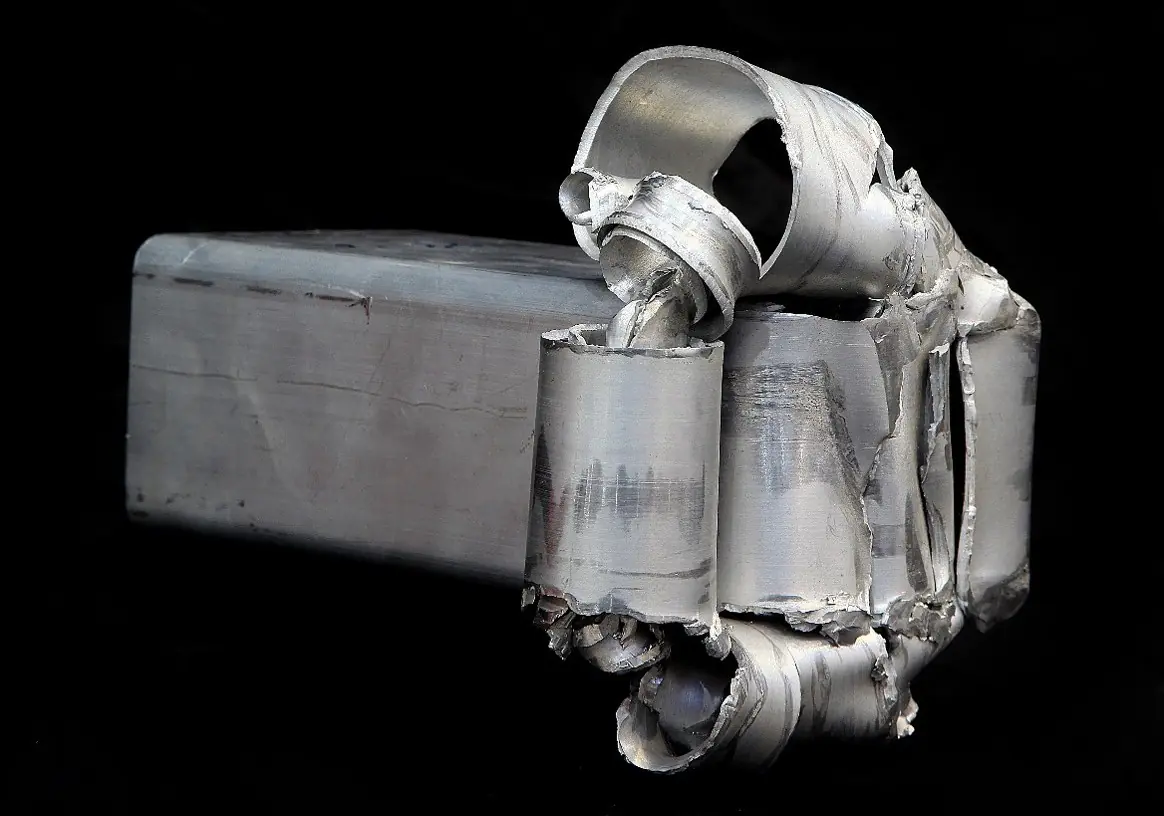
The course addresses structural response to extreme, short-duration loads associated with events such as industrial accidents, explosions, impacts and climate-related incidents. These loading conditions create particular challenges for engineers designing robust structures and protecting critical infrastructure.
Using basic examples, the course aims to explain how steel and aluminium structures respond to impact and blast loads. The knowledge is intended to support structural design, simplified calculations during early design stages and the assessment of numerical simulation results.
The course is aimed at professionals working in defence, protection, civil, mechanical, materials, naval, ocean and transportation engineering, as well as related disciplines dealing with impact, blast and high-rate loading. According to the organisers, participants with a mechanical or structural engineering background will benefit most from the specialised content.
Langseth’s research has focused on the impact behaviour and crashworthiness of steel and aluminium structures, alongside lightweight ballistic protection and structural response to blast loading. He previously directed the SIMLab and SFI CASA research centres at NTNU.
The course fee includes a digital technical compendium, the PLastic CApacity (PLCA) computer programme and copies of the presentations.
Registration closes on 12 November 2026 at 16:00.
Further details, the programme and registration are available on the Norwegian Steel Association’s course page.

7 Steel signs expanded rail transport deal
7 Steel has signed a new deal to increase the use of rail transport in its UK supply chain, Kallanish learns from the Wales-based steelmaker.
The steelmaker has signed an 11-year agreement with operator GB Railfreight to transport scrap steel into Cardiff and distribute finished products, including rebar and coiled steel, across the UK.
Vorn O’Hennessy, head of supply chain management, says: “Having a long-term logistics partner that understands our operation and can support the movement of both raw materials and finished products is important as we continue to plan for the future, and we look forward to continuing our partnership with GB Railfreight to deliver a reliable, efficient service for our customers across the UK.”
Purpose-built wagons and expanded rail operations will support a more efficient, resilient, and sustainable supply chain from October onwards, it adds.