German water levels remain critical in autumn
Germany’s waterways continue to suffer with low water volumes and levels. The bottlenecks for industrial transports on rivers, especially the Rhine, have not recovered by much, or only temporarily.
In fact, after record lows were seen in August for the Rhine, those values have been undercut at some locations along the river in September, according to the national water authority Bundesamt für Gewässerkunde. “An alleviation is not in sight in the first half of October,” it warns.
Rain has been forecast to fall in the coming days, “but too little and, too short to take sustainable effect on the levels of the national waterways.”
The raw materials supply and steel deliveries to and from the country’s largest steelmaker, thyssenkrupp Steel, on the junction of Rhine and Ruhr, remains problematic, the company tells Kallanish.
“Operation of our own barge fleet remains suspended. We keep chartering vessels from third parties with a lesser draught, which are able to go at low levels. On the basis of the measures we have taken, we can keep supplying customers. Our in-house low-water task force is continuously evaluating the impacts on deliveries and production,” the company says.
Other mills have transferred cargoes to freight trains. In order to maintain supply chains for coal and ore, private operator Captrain has provided additional transport capacities. Captrain was represented at the recent MBI Stahltag conference with a speaker on the overall potential of train operators for steel mills.
Since August, Captrain has been running three to four extra journeys per week between the port of Wilhelmshaven and the Ruhr, thus adding 4,000 tonnes of coal. It furthermore added four-to-five journeys for coke transport between Germany and France, with a total of 2,000t/week, the firm says in a statement.
Other local operators, too, have lifted their capacities for steel mills, according to information service Verkehrs-Rundschau. Rhein-Cargo, for example, is running additional trains for iron ore transports from Rotterdam to Hüttenwerke Krupp-Mannesmann (HKM) in Duisburg on the Ruhr.
Most scrap transport that needed to find alternatives will have been transferred to “trucks, trucks, trucks,” Sebastian Will of recyclers organisation BVSE told MBI Stahltag delegates.
The situation on the waterways has given the truck transport prices another push, in addition to the earlier increases during the year. Rates could inch towards €100/tonne ($111/t) for border-crossing steel routes like Italy-Ruhr, some market players say. According to a manager of a distribution company, the prices by August were still around €80/t. “I have not heard €100/t yet, but I would not be surprised,” he says.
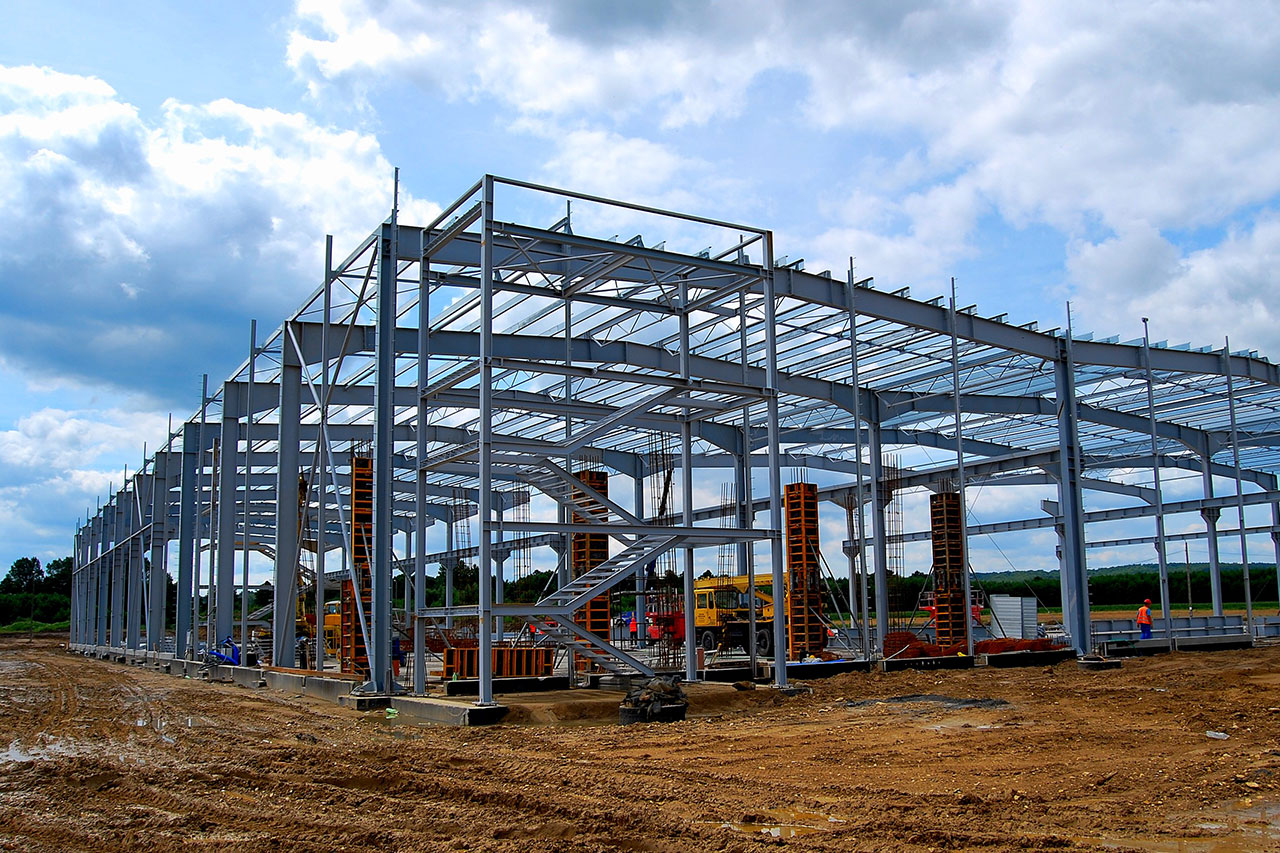
EU construction growth to strengthen in 2027
EU construction output is expected to grow 1.5% on-year in 2026 and accelerate to 2.9% in 2027, following 1.3% growth in 2025, according to the European Steel Association (Eurofer) outlook.
Construction, which accounts for 37% of EU apparent steel consumption, continues to provide the strongest support for steel demand. The sector contracted 1.6% in 2024, despite support from NextGenerationEU-related schemes and monetary easing, before returning to modest growth in 2025.
Output growth slowed to 0.4% year-on-year in the first quarter of 2026 from 3.1% in Q4 2025, most probably reflecting the usual seasonal slowdown in construction activity during the first quarter, Eurofer says.
Growth should accelerate later in 2026 despite higher interest rates, before picking up more speed in 2027, thanks to a recovery in housing demand and a pick-up in infrastructure spending, the association adds.
Overall, EU steel-using sector output, measured by the Steel Weighted Industrial Production (SWIP) index, is forecast to grow 1.5% in 2026, following a marginal 0.1% decline in 2025 and a 4.1% contraction in 2024. Growth is expected to accelerate to 2.5% in 2027, supported by construction, mechanical engineering and a recovery in automotive output, Kallanish notes.
| Sector | 2021 | 2022 | 2023 | 2024 | 2025 | 2026f | 2027f |
| Construction | 6.2 | 3.3 | 1.9 | -3.3 | 1.2 | 1.8 | 2.9 |
| Mechanical engineering | 12 | 4.7 | 1.6 | -5 | -0.7 | 1.9 | 1.8 |
| Automotive | 6.1 | 5.4 | 8.8 | -9.6 | -4.1 | -0.9 | 3.5 |
| Domestic appliances | 12.6 | -4.6 | -4.5 | -4.9 | 0.8 | 0.3 | 0.8 |
| Other transport | 3.8 | 7.3 | 10.3 | 5.7 | 2.4 | 7 | 2.3 |
| Tubes | 10.3 | -1.3 | -1.4 | -2.4 | 0.1 | 1.3 | 1.2 |
| Metalware | 12 | 1.2 | -3.9 | -3.3 | -0.3 | 2.1 | 2.1 |
| Others | 12.1 | 3.9 | 2.8 | -1.6 | 2.5 | 1.6 | 1.6 |
| SWIP | 8.2 | 2.8 | 2.3 | -4.1 | -0.1 | 1.5 | 2.5 |
Source: Eurofer outlook September 2026, f = forecast
Author: Elina Virchenko