


Energy prices and competitiveness top EU leaders’ agenda

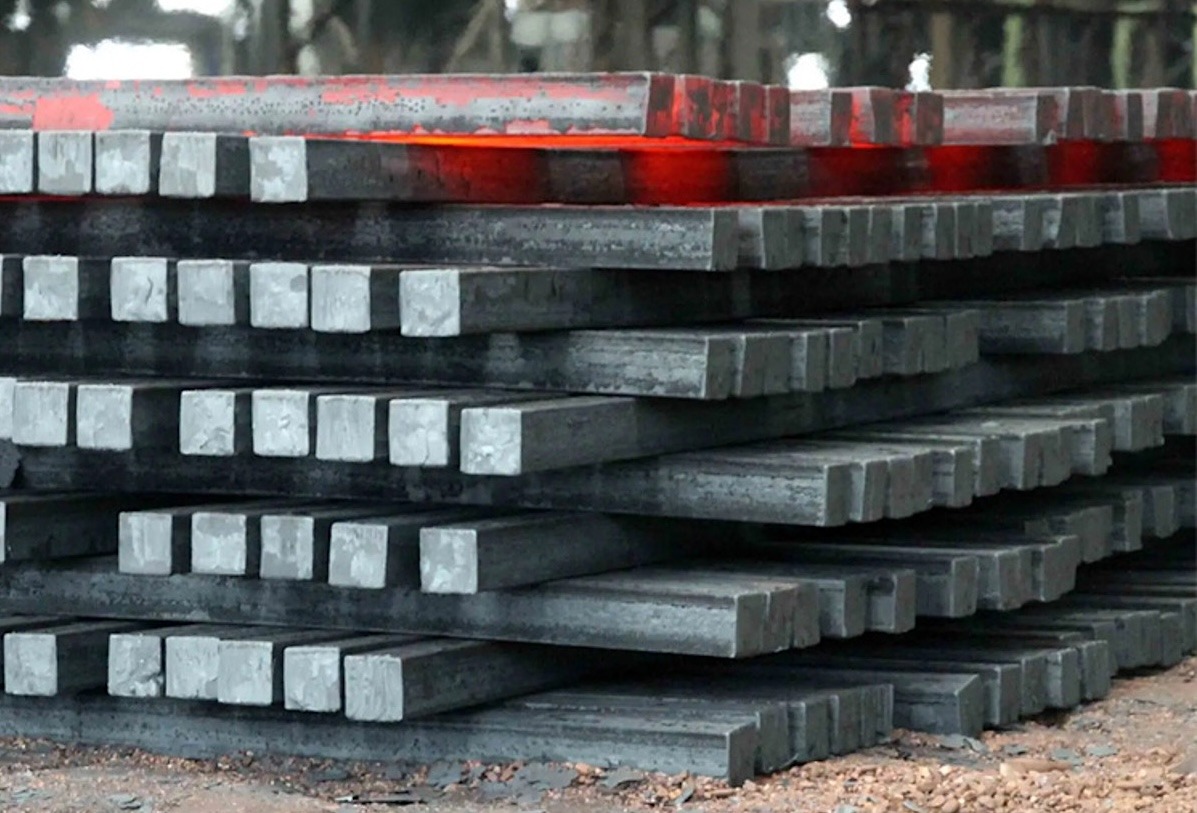
European steel industry brings 10 million tons of capacity back
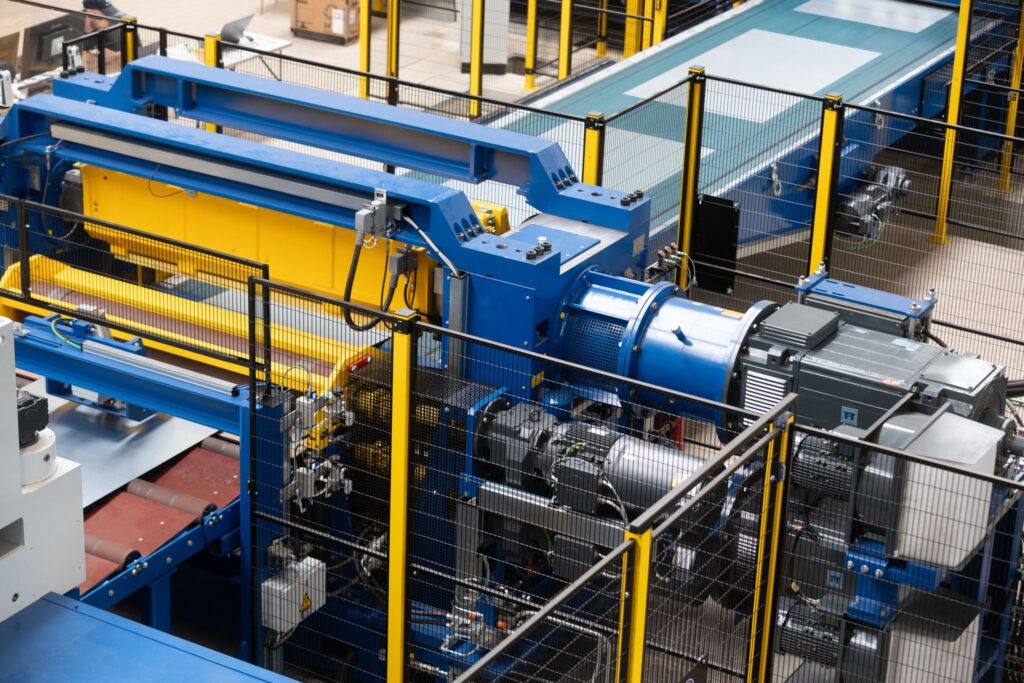
Knauf Interfer inaugurates Barsinghausen expansion and new cut-to-length line
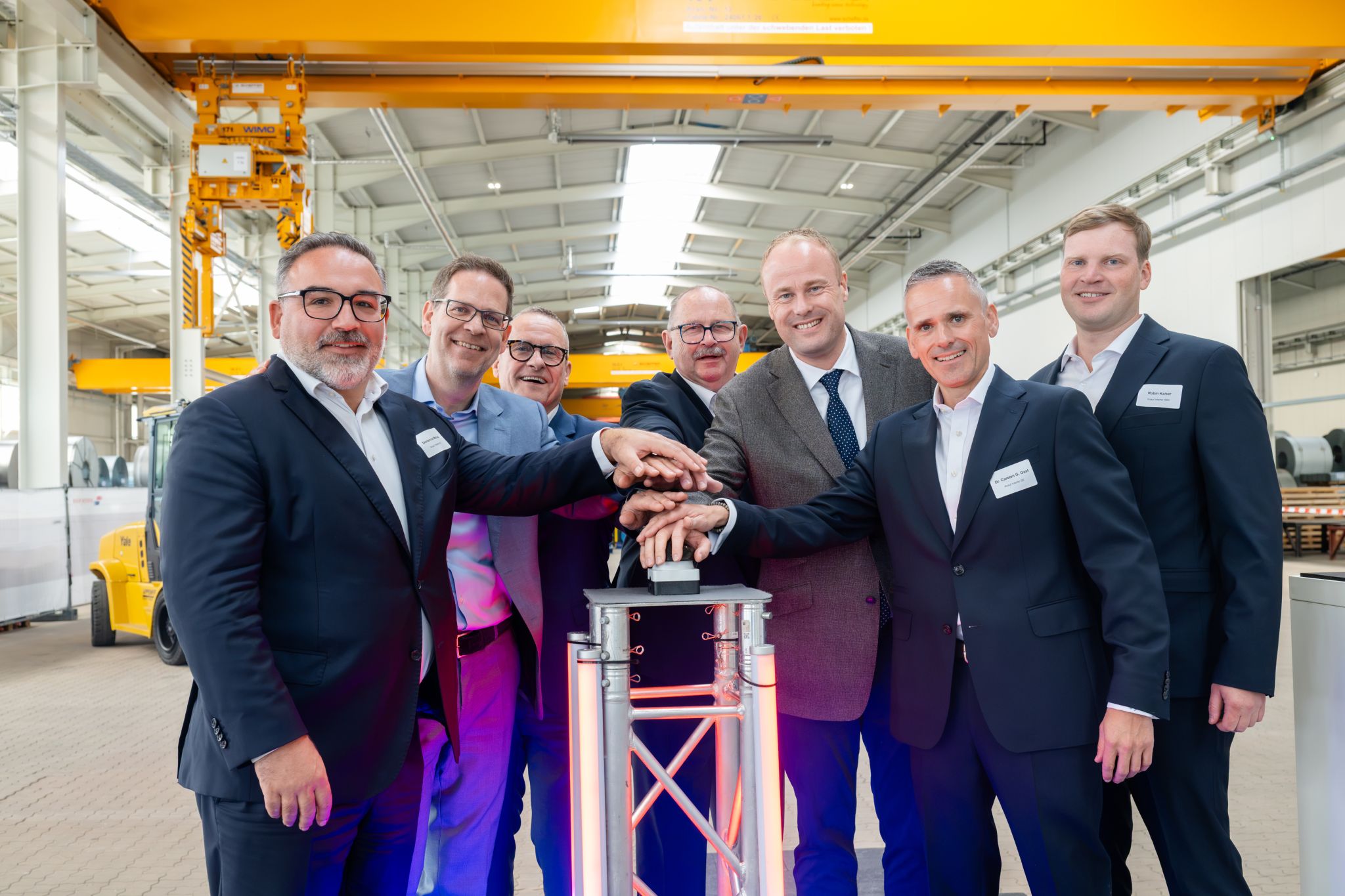
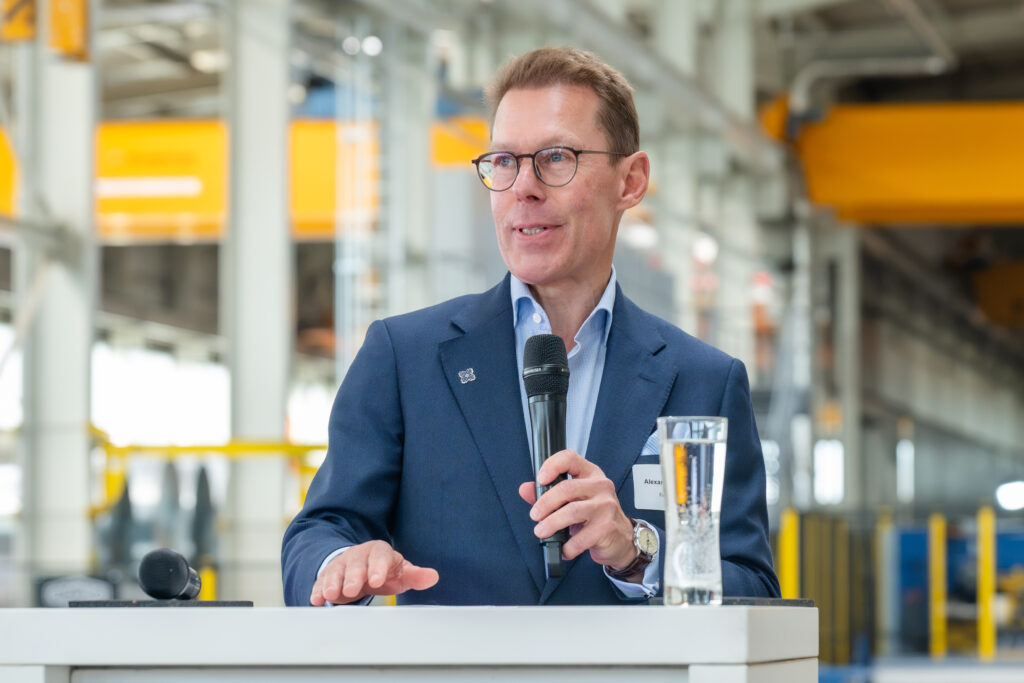
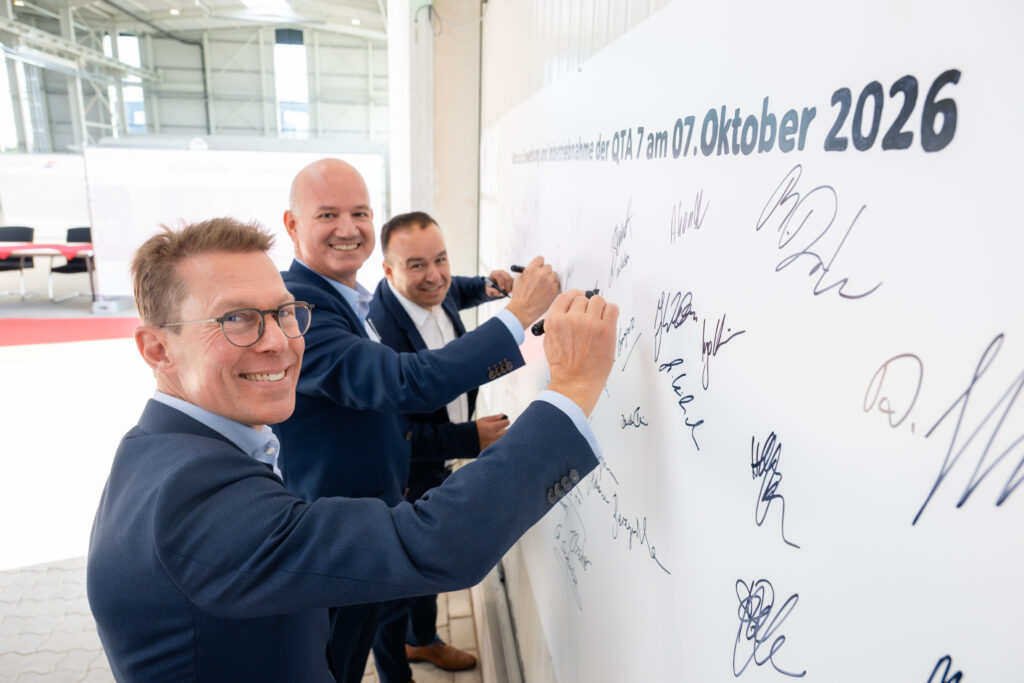
Knauf Interfer Stahl Service Center GmbH inaugurated two new hall sections and commissioned a highly automated cut-to-length line at its Barsinghausen site on 7 October 2026. EUROMETAL President Alexander Julius participated in the opening ceremony, addressing the current challenges in European steel distribution.
The investment strengthens Knauf Interfer’s steel service centre network, balancing economic and environmental objectives across production, storage and logistics. The project added 6,000 m² of hall space and installed the new QTA 7 line in approximately one year following the start of construction, while production continued.
Designed around actual customer requirements, the new line marks a significant milestone in the site’s development. Customers and guests attended the commissioning ceremony alongside representatives of the company’s Supervisory Board, management and project team, followed by factory tours and networking.
Domenico Marino, Group Chief Operating Officer at Knauf Interfer, highlighted the courage behind the investment, the commitment of employees and the trust of customers, thanking everyone involved in bringing the project to completion.
Knauf Interfer is a longstanding member of EUROMETAL and is represented on its Board by Thomas Niederhofer. EUROMETAL congratulates the company and all those involved on this milestone.
Photos © Knauf Interfer

Event Insights: Steel & Green Steel Day 2026
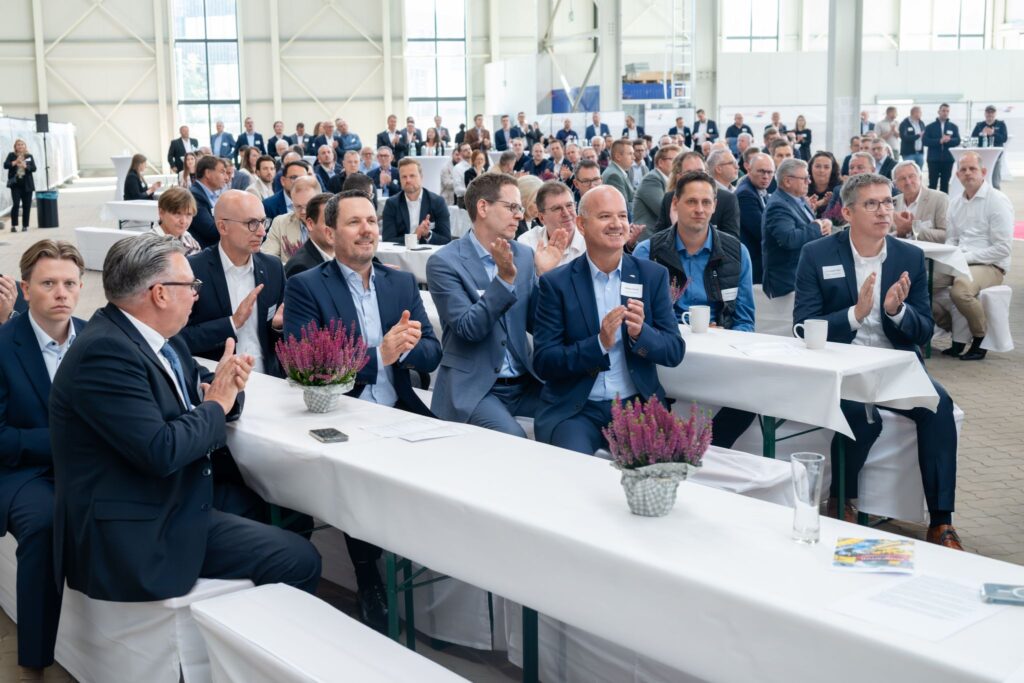
On 6 October, Dow Jones Energy hosted its second annual Steel & Green Steel networking event in Düsseldorf, Germany. Main themes running through the event were legislation, the green transition, and global trade, with a particular focus on the European steel market. In this article, we present a summary of the key topics discussed.
The turnaround year for European steel: Redefining pricing, supply chains and trade
The recovery of flat steel prices in Europe in 2026 has been mainly driven by the effects of the new tariff-rated quotas (TRQs) and the Carbon Border Adjustment Mechanism (CBAM). The regulations have restricted EU buyers’ access to imports, prompting them to switch to local steelmakers. This has granted domestic producers a larger market share, even as real demand has remained largely unchanged.
During the event, several distributors commented that imports of finished steel were becoming increasingly difficult and risky, with in-quota volumes largely taken up by big companies, with no material left for smaller ones. Some importers have switched to either steel-containing goods or semi-finished steel to substitute for missing volumes. These solutions, however, might be short-lived, since steel derivatives are already proposed to be added to the CBAM framework, and there have been discussions regarding a possible extension of quotas to these goods.
The EU is also likely to attempt to restrict semi-finished steel imports. This, however, would be challenged by both distributors and re-rollers. The majority of European heavy plate producers use imported slab as feedstock due to a lack of local steelmaking capacity in the segment and a largely non-existent domestic slab market. Several event participants drew comparisons with the attempted ban on Russian slab imports to replace the quotas in place under sanctions in 2025, which was met with resistance from re-rollers and plate consumers, and the quotas were extended until 2028.
The green steel market remains small in volume compared with the traditional steel segment. The size of the market is still hard to estimate, as deals represent a mix of sales from existing plants, off-take agreements with greenfield projects, and commitments from steelmakers based on new equipment that has not yet been installed. However, the number of buyers showing interest and making trial purchases has been gradually climbing. Premiums achieved in those trades were around €150-160/t, while spot deals for bigger lots have been settled with premiums of around €100/t.
Demand for low-CO2 steel is stronger in the Nordics, and it gradually decreases towards southern European markets. End consumers, notably those in the automotive and construction sectors, remain the largest buyers of green steel.
Making sense of new regulatory environment: CBAM, ETS, new trade measures
Dow Jones’ presentation focused on the increasingly prevalent traceability mechanisms featured across recent and upcoming policymaking relevant to Europe’s steel sector, including the EU’s steel overcapacity trade measures, and CBAM. It detailed how new tools to enhance Europe’s supply chain transparency, or ‘resilience’, are considered central to the European Commission’s pursuit of low-carbon reindustrialisation. These measures will likely intensify despite the compliance burden on market participants.
Subsequent discussions on the regulatory landscape covered issues such as the upcoming verification procedures for next year’s CBAM declarations. One large-scale consumer of in-scope steel CBAM goods that imports significant volumes from suppliers across Asia, expects fewer than 5% of its suppliers – perhaps 10 companies – to successfully verify their embedded emissions before the September deadline. The full use of actual emissions values, requiring physical on-site verification of all supplying producers across a product’s supply chain, is not expected for at least another 5 years, especially if CBAM is extended to complex downstream steel-containing goods, as indicated by EU lawmakers.
Market participants are still adapting to the EU’s recently intensified steel trade defences, such as tiered shared-access quotas for the EU’s Free Trade Agreement (FTA) and non-FTA partners – with various exclusions across product categories and origins – as well as quota blocking periods, customs drawbacks, pro-rata first-come-first-served duty dynamics, and, most recently from October, requirements to provide Mill Test Certificates (MTCs), or alternative evidence of an international steel’s origin of ‘melt and pour’ when clearing customs.
Generally, importers say they are able to navigate these new dynamics in isolation, but when combined, the uncertainties become a significant burden. An example discussed with a steel service centre executive was the additional risks presented by new administrative hurdles to clearing imported material into the new quota framework. For instance, any issues or delays in providing MTC ‘melt and pour’ evidence could result in missing the pro-rata division of initial out-of-quota volumes, triggering costly 50% duties on the entire lot.
Fragmentation of the global steel industry
One of the major trends for the steel industry over the past few years has been deglobalisation, as regional markets are increasingly shaped by local dynamics, leading to widening price differentials. This is particularly evident in the growing gap between US and other regional prices. Historically, the gap between US and European HRC prices ranged between $50–100/t; after Section 232 was introduced in 2018, it jumped to over $200/t and has averaged $328/t so far this year. CBAM and enhanced trade protection in the EU are starting to push European prices higher as well, a trend set to accelerate given the growing regulatory focus on the EU steel sector.
The main factor driving the divergence between regions is the rise in trade barriers. Based on data tracked in the monthly Global Trade Protection Measures Database, the number of steel trade protection cases has risen by over 20% since the database was launched in February 2025. Unsurprisingly, China is the primary target, accounting for almost a third of all trade cases. However, China has adapted to this environment by shifting from exports of flat steel, where trade actions are concentrated, to long and semi-finished steel products, allowing overall exports to continue rising.
Looking ahead, risk remains the overarching theme, driven by mounting trade barriers and the evolving impact of the conflict in the Middle East. Two main conflicting forces are at play here: rising costs pushing steel prices upward, counterbalanced by slowing growth momentum among key steel end-users.
Green steel: separating promise from probability
One of the central topics at the event was the ongoing global decarbonisation of the steel industry. In a best-case scenario, Europe alone is projected to add more new low-CO2 steel capacity than its entire current output from conventional blast furnace-basic-oxygen furnace (BF-BOF) production, effectively replacing this carbon-intensive route.
While the overarching trajectory is clear, the pace and chosen technologies vary considerably by region and depend heavily on individual corporate strategies, trade policies, state support and emerging innovations. This shifting landscape also means that some of the later phases of decarbonisation projects have not yet been finalised or fully configured, leaving the post-2030 outlook highly tentative.
However, a representative from a European greenfield project currently raising capital expressed optimism about the market for green steel, while noting that demand conditions remain fragmented across Europe.
Attendees also voiced concern over the lack of a standardised official taxonomy, which creates ambiguity around what genuinely qualifies as “green” steel, such as whether switching from BF-BOF to a direct-reduced iron (DRI)/scrap-electric-arc furnace (EAF) route alone meets the benchmark. One major European steel consumer speculated that China could emerge as the leading supplier of green steel despite CBAM regulations, driven by its rapid expansion of EAF-based production and decarbonisation technologies. For now, that prospect remains theoretical. Chinese producers predominantly offer standard BF-BOF steel, a trend clearly reflected in our Global Steel Product Carbon Intensity Database. However, trial sales of low-CO2 slab to Europe at price premiums of just around $20/t indicate that competition in the EU green steel market will only intensify.
Dow Jones Energy will continue to monitor this evolving market and track new emerging trends. Thank you to everyone who joined us in Düsseldorf—we look forward to seeing you at our next event.
Author: Benjamin Steven, Maria Tanatar, Marina Maliushkina, Sergey Babichenko


European Commission won’t renegotiate quotas with Ukraine
The European Commission has no plans to engage in fresh negotiations with Ukraine over its quotas following recent Russian airstrikes, which have stopped production at all major Ukrainian steel plants.
“There are no discussions planned with Ukrainian counterparts to renegotiate export quotas under the current EU’s Deep and Comprehensive Free Trade Area (DCFTA),” a European Commission’s spoke person tells Kallanish. “Trade data so far proves the fair and balanced nature of the revised amount covered by the TRQs as envisaged in the revised DCFTA.”
In July, the European Union cut annual tariff-free import quotas for Ukrainian steel by nearly half, reducing quotas to about 1 million tonnes, and introduced out-of-quota duties of 50%.
Metinvest’s chief executive Yuriy Ryzhenkov has previously urged for free access to the European market, as a key condition for the recovery of the Ukrainian industry after Russian strikes.
During August-September, Russia launched a series of targeted missile strikes on key Ukrainian steel plants, resulting in the suspension of operations by Zaporizhstal and Kametstal of the Metinvest Group, ArcelorMittal Kryvyi Rih (AMKR), and Interpipe.
ArcelorMittal has told the Ukrainian government it cannot safely and sustainably resume operations at AMKR. AM expects to record a non-cash impairment charge of approximately $1 billion, principally reflecting the impairment of its property, plant and equipment.
In 2027, Ukraine risks not producing a single tonne of steel and iron ore production could fall 37% year-on-year in 2026 and a further 55% in 2027.
Ukraine’s crude steel production has fallen sharply in September after the Russian attacks, according to national steel association Ukrmetallurgprom. Ukrainian metallurgical enterprises produced only 131,000 tonnes of steel during the month, a 52.7% decrease month-on-month and slumping 78.5% y-o-y.
Pig iron production amounted to 113,000t compared to 257,100t in the previous month, which was down 83.4% on-year while rolled production amounted to 137,000t compared to 269,500t in August, falling 76.7% on-year.


Dillinger France invests in Dunkirk plate mill
Dillinger France is investing in its Dunkirk heavy plate mill to process more advanced high-strength steel grades, Kallanish notes.
SMS group will upgrade the mill’s cold plate leveller and install the latest version of its X-Pact plate leveller control system. The project will be completed by December 2027. The new system allows higher over-stretching during levelling.
This improves plate flatness and the removal of residual stresses. A new process model calculates the optimal roll position, bending forces and torque distribution for a wide range of steel grades. An integrated 9/5-roll mode also extends the leveller’s operating range without roll changes.
“This modernisation will help us meet future quality requirements while maximising the value of our existing assets,” says Philippe Nawracala, Dillinger France site director in a joint note.
“By applying enhanced levelling strategies, the new process control system unlocks the full potential of the existing leveller while helping Dillinger France maintain the technological competitiveness of its heavy plate production,” adds Thomas Koch from SMS Automation & Digital Solutions.
The new process model will first run in “shadow mode”, tested against the current production process, to ensure a smooth start-up.
Dillinger France produces over 600,000 tonnes/year of heavy plate for the offshore wind sector, mechanical engineering, line pipe and boiler construction.

Italian coil buyers split over HRC import risks
The Italian coil market has been split into two camps: buyers of imported HRC, and those who stayed away because of uncertainty over the final cost of importing, including financing, CBAM, and the risk of incurring duties, Kallanish hears.
Market sources had expected Turkish hot rolled coil to oversubscribe its EU fourth-quarter tariff-rate quota (TRQ) on the opening day, 1 October.
Many Italian buyers kept importing until September. However, one source from the cautious camp believes import and CBAM costs have been underestimated. In his view, the idea that CBAM will cost only €30/tonne ($33.7/t) on material from the least polluting producers is unrealistic.
Other cautious buyers say they have not imported any material in recent months, apart from small ddp volumes. “The complexity of the system introduced by the European Commission leaves many questions unanswered,” one comments.
Two large buyers and service centre sources say they have imported very little HRC and are turning to European producers instead.
The “non-buyers” argue that only material loaded on vessels this year can be booked in 2026 accounts. Anything loaded in 2027 will go into next year’s accounts.
“At the end of the year when we actually know how much import will cost in total, we will be able to understand if it is worth it and I think there will be surprises. I do not think it is financially viable anymore,” one buyer says.
All sources had expected material from some origins to exceed set quotas. Some 90,000 tonnes of Turkish HRC will now either stay in storage at ports or pay the applicable duty.
Another source who has not imported material says that even at €570/t cfr, Turkish material ends up too expensive once all costs are included. It comes close to European prices, with far more hassle.
Financing and storage costs for keeping material at port for three to six months, until quotas reset, are heavy. CBAM costs are uncertain and depend on the producer, ranging from €30-40/t to around €100/t. And if quotas are exceeded, which sources see as certain, clearing material through customs could become extremely costly. A buyer notes that material left at port for months starts to rust.
Some buyers who kept importing had little choice. Their large requirements forced them to take the risk. Some European service centres who bought imports confirm they did so to diversify their supply.
Service centres and re-rollers remain squeezed between high prices upstream and unreliable demand downstream.
Sheet and tube prices are expected to rise again in November as HRC prices climb. For December, HRC is seen reaching €800/t base delivered, with cold rolled and hot dip galvanized coil at €900/t.
This time, producers are seen as reasonable in their increases. “They are gradually going up, not exaggerating,” a source says.
With HRC at €750/t base delivered on average and sheet at €820/t delivered, service centres are not making margins. They expect sales volumes to stay subdued, with no sign of a recovery in downstream demand. Late payments are now common in some countries, including Italy and France.
No HRC purchases have been made for 2027 yet, and producers are not quoting for next year.

UK considering reforms to its upcoming CBAM framework
The UK government is considering reforms to its upcoming Carbon Border Adjustment Mechanism (CBAM) to expand the instrument’s scope, and better align its rules to the EU’s own CBAM model, according to an official presentation seen by Dow Jones Energy.
Based on industry feedback, the government splits possible “future CBAM reform” into two groups: one focusing on scope expansion, and another on reforms to the existing UK CBAM methodology.
The UK’s CBAM framework takes effect from January 2027, charging carbon costs on the emissions embedded in UK steel imports, in-line with what domestic producers pay to the UK Emissions Trading System (ETS). The EU introduced its own CBAM at the start of 2026, with ‘payments’ – via CBAM certificate surrender – due in September 2027.
While the specific values for calculating UK CBAM liabilities are as yet unknown, the UK CBAM methodology – which adopts a single sector value for all CBAM default emissions value, and benchmark/rate metrics – suggests its costs will be significantly lower than the EU’s version.
One of CBAM’s primary mechanisms for increasing supply chain transparency to the EU’s desired level is its punitive default emissions values, which generate high carbon costs should importers fail to report and verify the emissions across their supply chains. For example, Indonesian-origin hot-rolled coil imported under the EU CBAM on default values results in carbon costs that can exceed the price of the base import itself.
Indeed, the EU’s default values for CBAM are generally high, even before “punitive” mark-ups between 10-30% are added. If the UK adopts a single global average value for its CBAM default rate, it risks giving advantageous treatment to the most polluting of origins, eliminating any incentive to report, verify, and improve their emissions portfolio where their ‘actual’ values are above the defined global average. This could see the UK become an attractive “dumping ground” for higher-carbon steel products as steel and wider climate protectionism expands globally, especially vis-a-vis the EU and its stricter CBAM protections.
Eligible CBAM deductions for carbon prices already paid are also deducted from the CBAM emissions volume under the EU system, but deduct directly from the price in the UK framework, generally facilitating lower UK CBAM costs due to the cheaper UK ETS price.
Negotiations between the UK and EU have been ongoing to link their respective ETS frameworks, with media reporting that a final agreement has been reached in advance of summit discussions announced for November. Policymakers have suggested that a UK-EU ETS merger could facilitate exemptions to each jurisdictions’ CBAMs – though it seems dubious that EU authorities would permit full CBAM exemptions for UK exports to the EU, if there were to be significant cost misalignments between the two systems.
Sources close to the matter state that cost-discrepancy issues have been raised multiple times with the UK’s CBAM policymakers, but that authorities have been slow to respond to highlighted issues.
While evidently at a very initial consideration stage, the government’s presentation shows that it is now considering aligning the UK CBAM to the EU version at a later date, citing a potential switch to the EU’s product-specific “benchmarking” approach to calculating CBAM rates (as opposed to the existing single sector rate based on sector free allocation coverage); a switch to country-specific default emissions values (replacing the global sector average); and the introduction of default values for carbon price relief deductions.
Importantly, these potential methodological changes were not expected any time soon, and certainly not for the initial year of the UK CBAM’s operation.
These changes would remedy many of the misalignments between the UK and EU systems, and could better facilitate merger-based exemptions between the UK and EU CBAM’s down the line. The government’s mention of scope expansions to CBAM – to new products, sectors, and indirect emissions values – would also align with EU efforts, as EU authorities actively legislate to extend CBAM protections to downstream manufacturing by 2028.
Some – like the International Institute for Sustainable Development (IISD) – have argued that the launch of Carbon Border Adjustment Mechanisms globally across like-minded jurisdictions could assist in the creation of low-carbon trading clubs to fight climate, and overcapacity-based pressures, via mutual exemptions between CBAM frameworks. If that is to be the case, then these systems will have to approximately align in both ambition and methodology, or risk becoming little more than an administrative afterthought.
Author: Benjamin Steven

EU CBAM could offer less protection to steelmakers than free ETS allowances
The EU’s Carbon Border Adjustment Mechanism (CBAM) could provide less protection to European energy-intensive industries than the existing system of free emissions allowances, particularly for export-oriented steel producers, according to a new report published by Swedish research organization SNS.
The report, prepared by economists Christoph Böhringer and Knut Einar Rosendahl, examines the economic and industrial effects of gradually replacing free allowances under the EU Emissions Trading System (ETS) with CBAM, which is scheduled to be fully phased in by 2034.
According to the researchers, free emissions allowances help offset carbon costs for European producers selling both domestically and internationally, while CBAM imposes carbon costs on imports without providing equivalent protection for EU exports. As a result, the transition could weaken the competitiveness of European heavy industry in markets outside the EU.
Swedish steel production could decline by 1.7 percent under CBAM
Sweden was identified as a particularly notable example, given its relatively low-carbon steel industry, which rely heavily on low-carbon electricity and export a significant share of their production. Based on the researchers’ simulations, the production loss for Swedish heavy industry would increase from 0.6 percent under free allowances to 1.3 percent under CBAM, compared with a scenario without climate policy.
The impact would be particularly pronounced in the iron and steel sector, where a slight production increase under free allowances would turn into a 1.7 percent decline under CBAM. A similar pattern is projected for the rest of Europe, where heavy industrial production would decline by 2.6 percent under CBAM, compared with a 1.3 percent reduction under free allowances.
However, the researchers indicated that CBAM could deliver greater benefits for the wider economy through improved terms of trade. In Sweden, the economic cost of climate policy would decline from approximately 0.05 percent of real income under free allowances to almost zero under CBAM. For the rest of Europe, the corresponding cost would decrease from 0.25 percent to 0.17 percent.
CBAM offers limited improvement in preventing carbon leakage
Regarding carbon leakage, the researchers found that replacing free allowances with CBAM would produce only a limited improvement. The share of European emissions reductions offset by increased emissions elsewhere would decline from 16.9 percent under free allocation to 16.0 percent under CBAM. Without either mechanism, the carbon leakage rate would reach 28.5 percent. The researchers emphasized that CBAM alone cannot eliminate carbon leakage, particularly through global energy markets, and that the mechanism currently targets less than two percent of global emissions.
They also examined potential changes to CBAM’s design. Including indirect emissions from electricity consumption, known as Scope 2 emissions, could improve the mechanism’s effectiveness and provide additional benefits to producers using low-carbon electricity. For Swedish heavy industry, this would reduce the estimated production loss under CBAM from 1.3 percent to one percent.
Export rebates could strengthen protection for European steelmakers
The researchers further suggested that introducing export rebates to compensate European producers for their carbon costs could restore much of the protection currently provided by free allowances. According to their simulations, combining CBAM with export rebates could reduce the carbon leakage rate to 10.6 percent, although such measures could raise legal concerns regarding export subsidies.
They also highlighted the regulatory challenges associated with extending CBAM further downstream, particularly for industries purchasing emissions-intensive materials and for imported finished goods containing embedded carbon emissions. According to the report, policymakers will need to balance the competitiveness of European heavy industry with broader economic benefits when determining the future design of CBAM, including the treatment of indirect emissions and potential measures to protect EU exports.


Norway to reuse steel from decommissioned ships to reduce construction emissions
Norwegian government agency Enova has announced that it will provide up to NOK 244 million ($25.54 million) in funding to Nordic Circles and Alsaker Stål for a project aimed at reusing steel from decommissioned ships in new buildings, potentially reducing greenhouse gas emissions associated with building construction by up to 25 percent.
The funding, conditional on the project proceeding, will support the establishment of a circular steel value chain in Norway, involving the recovery, cleaning, quality assurance and recertification of steel from decommissioned vessels for use in construction.
AI and automation to support commercially competitive steel reuse
The project builds on previous pilot initiatives supported by the Research Council of Norway, Siva and Innovation Norway, which demonstrated the feasibility of using recovered ship steel in construction. One example is an eight-story office building in Bergen.
According to Enova, the project will use artificial intelligence-based planning tools, automation and new steel cutting and cleaning technologies to improve efficiency and make reused ship steel commercially competitive with newly produced steel. The initiative also involves investment of up to NOK 520 million ($54.44 million) by Alsaker Stål, part of Tertnes Holding, in cooperation with Nordic Circles and Enova.
European ship steel reuse could cut carbon emissions by 17 million mt annually
Enova stated that steel production can account for up to 25 percent of greenhouse gas emissions associated with building construction. Reusing existing steel components could eliminate almost all emissions associated with producing the equivalent quantity of new steel. Approximately 10 million mt of steel from European ships is scrapped annually, with most vessels dismantled in Asia. Recovering and reusing this material in Europe could therefore create new industrial opportunities while reducing demand for newly produced steel.
Enova estimates that reusing all steel recovered from decommissioned European ships in new buildings could reduce emissions associated with European steel production by up to 17 million mt of carbon dioxide annually, equivalent to more than one-third of Norway’s annual greenhouse gas emissions. The project aims to establish a commercially viable model for ship steel reuse that could be expanded across Norway and other European markets.