


Romanian flats spot prices edge up as traders test higher levels despite weak demand
Romania’s flat steel spot market has started to show signs of modest price increases this week, as traders are increasingly testing higher quotations despite continued weakness in demand.
The gradual disappearance of some of the more competitively priced offers has created more room for upward adjustments, while higher operating and transportation costs and uncertainty surrounding import quotas have also supported sellers’ pricing efforts. However, purchasing activity remains limited, and persistent liquidity difficulties continue to restrict buyers’ willingness to accept higher levels. Meanwhile, uncertainty surrounding Liberty Galati persists, with no significant new developments regarding the proposed sale reported this week. The process remains unresolved, with further progress still dependent on creditor approval, leaving the future of the plant unclear.
In the domestic spot market, HRS prices have increased to around €780-790/mt ex-warehouse, compared with €765-770/mt last week, while CRS quotations have moved up to approximately €890-900/mt ex-warehouse, versus €870-880/mt previously. Nevertheless, some traders remain open to discounts, particularly for larger orders and prompt cash payments, as demand remains insufficient to fully support the higher quotations.
On the import side, activity has remained limited this week, with no significant fresh bookings reported despite some upward adjustments in foreign suppliers’ quotations. The Ukrainian supplier has increased its HRS offers to around €800/mt CPT Romania, compared with €780-800/mt CPT last week, while CRS quotations have reached approximately €890/mt CPT, versus €870-890/mt CPT previously. The supplier continues to face limited material availability due to the ongoing war and related operational difficulties, keeping its offers relatively high compared with some alternative sources. Meanwhile, Turkish HRC offers have risen to approximately $630-645/mt FOB, compared with $620-630/mt FOB last week. With freight to Romania estimated at $25-30/mt, the latest quotations correspond to around $655-675/mt CFR Romania, versus $645-660/mt CFR previously. However, limited buying interest, together with uncertainty regarding import quota availability and CBAM-related costs, continues to make Romanian buyers cautious about fresh bookings.

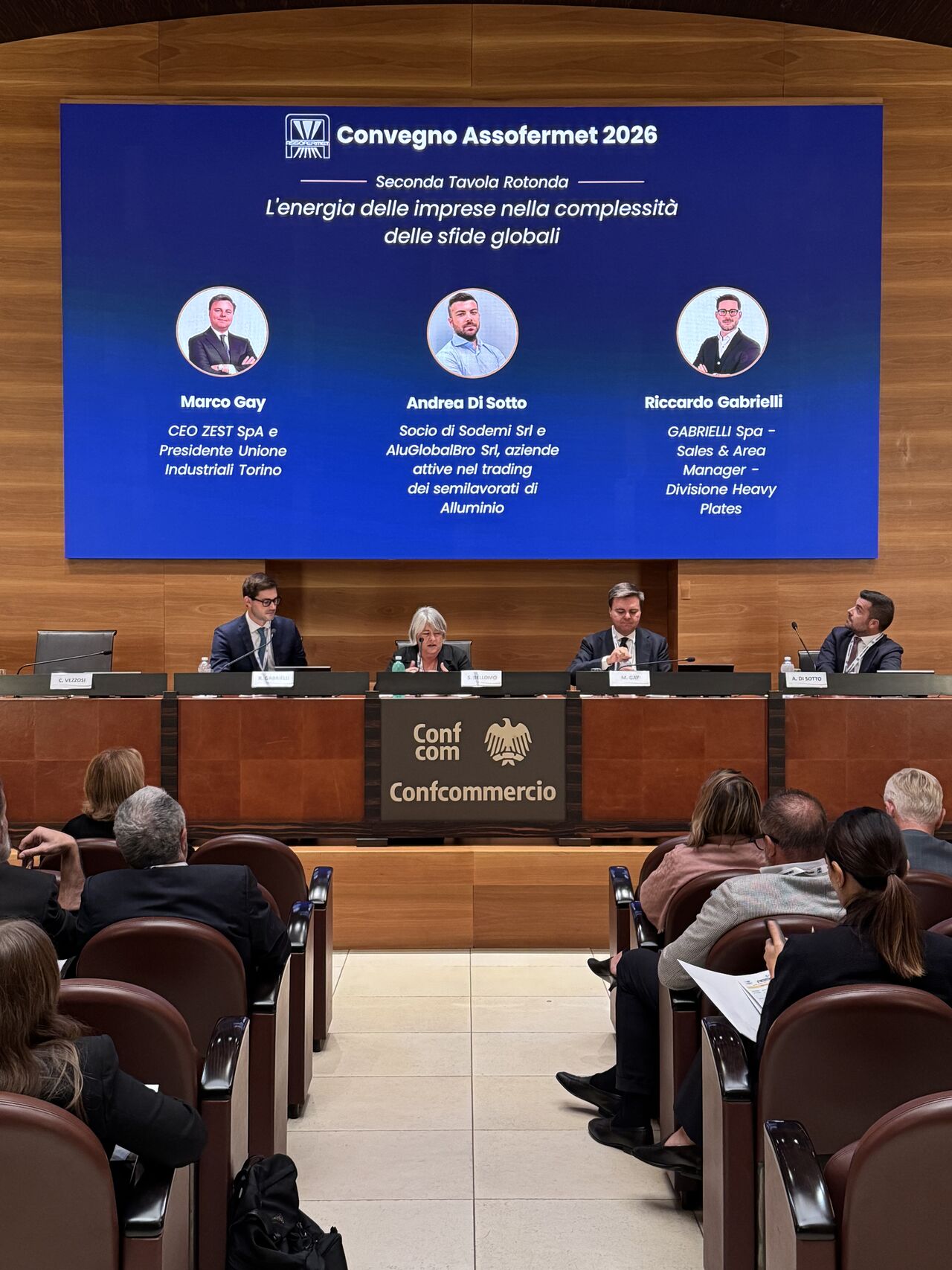
Riccardo Gabrielli: Distributors must absorb part of the complexity of the supply chain
On the occasion of the autumn conference organized by Assofermet, the Italian association representing companies operating in the trade and distribution of steel, non-ferrous metals, scrap and hardware, SteelOrbis interviewed Riccardo Gabrielli, Sales & Area Manager of the Heavy Plates Division at Gabrielli SpA, about how the CBAM, safeguard measures and cost volatility are reshaping the day-to-day operations of steel distributors. From inventory valuation and procurement strategies to relationships with customers and suppliers, distributors are facing increasingly complex challenges. In a market where determining the actual cost of materials in advance has become more difficult, the role of distributors is also evolving, requiring them to absorb a growing share of the complexity across the supply chain.
One of the less visible effects of the new European regulatory framework is the difficulty of determining the actual cost of imported materials. For a distributor, how challenging has it become to accurately value inventories?
One of the biggest challenges is assigning an accurate value to non-EU material held in our warehouses. Several months after the start of the definitive phase of the CBAM, uncertainties remain over which emissions values should actually be applied to imported material: whether the default values established for the country of origin or the actual emissions data declared and certified by the steel producer. For a distributor, this is not merely an administrative issue. It directly affects pricing, inventory valuation, financial management and the ability to reliably determine sales margins. If I cannot determine the final cost of the material with sufficient accuracy, establishing its appropriate market price today inevitably becomes more complicated.
Is this uncertainty also changing the way you decide what to purchase and which markets to source from?
In our case, heavy plates are currently less exposed than other products, as European production capacity is still able to meet a significant share of market demand. This allows us to rely predominantly on European suppliers.
However, in the current environment, minimizing risk as much as possible is essential. We have further strengthened our relationships with major European producers, with whom we already had established partnerships. As regards imports, wherever possible, we try to purchase material that has already cleared customs, allowing us to work with a defined cost and reduce exposure to subsequent uncertainties. At the same time, relationships with customers have become even more important. It is not simply a matter of trying to pass higher costs downstream, which is becoming increasingly difficult, but also of transparently explaining market complexities and the reasons behind certain pricing trends.
Planning horizons have also shortened, as it is now much harder to forecast market developments over the coming months with a sufficient degree of reliability.
Does this mean that distributors are no longer simply selling steel, but are increasingly expected to manage uncertainty on behalf of their customers?
Distributors must become increasingly flexible. Customers are working with more fragmented order volumes and demanding ever-shorter lead times. This is now an established trend in the sector, and we must be able to respond accordingly. The role of a distributor is therefore not simply to make material available, but to absorb part of the complexity of the supply chain. This means managing availability, delivery times, inventories and services to meet customer requirements while also helping them navigate a regulatory and commercial environment that, in many respects, remains unclear.
From the perspective of downstream operators, are the CBAM and safeguard measures genuinely rebalancing the market, or do they risk shifting some of the competitive pressure from steel production to downstream sectors?
A certain degree of rebalancing has undoubtedly taken place upstream. The CBAM was also designed to offset the costs European producers face under the EU Emissions Trading System (ETS), and from this perspective, its rationale is understandable. The main problem, however, emerges downstream. For companies operating in distribution, these measures translate into higher costs that cannot always be passed along the supply chain. The risk is therefore that measures intended to restore more balanced competitive conditions in primary steel production may ultimately undermine competitiveness in downstream segments and, eventually, among European steel users.
With reduced quotas and a 50 percent duty on imports exceeding those quotas, how has operators’ willingness to rely on imports changed in practical terms?
The most tangible effects are only now beginning to emerge. With the reopening of quotas at the beginning of October, we will be able to better assess how much purchasing activity has remained focused on imports and how much has instead shifted back to the European market. It will also be important to understand the level of risk operators are still willing to accept to keep certain supply channels open. The new rules are inevitably reshaping purchasing strategies, but it is still too early to fully assess their structural impact.
Have you seen a genuine recovery in steel consumption, or is the current activity mainly driven by quota management and procurement strategies?
What we have seen is primarily a certain recovery in apparent demand, partly linked to quota management, rather than a genuine structural rebound in consumption. Volumes remain broadly stable, while the prices sought by producers are still struggling to gain full acceptance in the downstream market. In our own case, volumes between 2025 and 2026 have remained virtually unchanged, with fluctuations of only a few percentage points.
We are still not seeing the kind of demand growth that would allow the market to absorb rising costs more easily.
With the balance between purchasing costs and selling prices becoming increasingly delicate, how much does logistics affect competitiveness, particularly in export markets?
Logistics has a significant impact, especially when trying to expand sales beyond national borders. Transport and fuel costs are becoming increasingly important and are eroding the competitive advantage of steel distributed from Italy. This is also evident in price differentials compared with other European markets. In the past, Italy could offer considerably greater price advantages for certain product categories. Today, these differentials have narrowed significantly. This also reflects the reduced availability of competitively priced imported material, making it more difficult for both us and our customers to export processed steel products.
Is this leading to a stronger focus on European sourcing, or do imports remain essential for certain product categories?
Our overall approach has not changed radically. Depending on market conditions, approximately 70-75 percent of the material we handle originates from Europe. Imports nevertheless remain an important component, particularly because European production capacity is limited for certain categories, such as cold rolled and galvanized products. The key question, therefore, is where to source specific products when some European plants reduce output or operate intermittently. If the alternative is importing material from outside the EU with a potential CBAM cost of €150, €200 or even €300 per metric ton, procurement decisions inevitably become much more complicated.
As a steel distributor, what is the main mistake Europe should avoid when redesigning the rules intended to protect its steel market?
There is considerable discussion about extending the CBAM to steel-intensive products, and this is certainly an important issue. Protecting upstream production achieves little if semi-finished and finished products manufactured under different cost conditions can still enter Europe from Asia or other non-EU countries. However, we cannot assume that Europe’s response should consist exclusively of regulation, protection and restrictions on trade flows. At the end of the supply chain, there must be someone capable of purchasing European products. If every stage of the supply chain is protected through additional costs, the risk is to generate further inflation and make European products increasingly less affordable for end users. What Europe needs above all is a long-term industrial strategy: investment in innovation, simplification for businesses and conditions that make investing and manufacturing within the European Union attractive again.
Regulation is necessary, but regulation alone does not create competitiveness. We must return to investing boldly in European industry. If we simply block and restrict trade flows without simultaneously creating the conditions for manufacturing to grow, sooner or later this model will become unsustainable.

Arvedi’s AMCLN takeover faces delay after EC withdrawal
Italian steelmaker Acciaieria Arvedi has withdrawn its notification to the European Commission for the takeover of service centre ArcelorMittal CLN Distribuzione Italia (AMCLN), according to an EC document seen by Kallanish.
Arvedi notified authorities of the deal in September, seeking sole control of AMCLN through a share purchase. The antitrust decision was expected in early October and could delay the sale. The document does not give a reason for the withdrawal.
According to union sources, another Italian company has lodged an appeal with the EU against the deal. A withdrawal usually allows the parties to refile the notification later. Arvedi may need to refile to address the complaint, allowing a longer review.
Arvedi had not commented by the time of publication.
The unions have repeatedly urged a quick decision, warning of the risk to jobs. AMCLN employs about 400 people across six sites in Italy.
“We hope the EU antitrust authority will rule quickly on the Arvedi group’s acquisition of AMCLN. We remain puzzled by the appeal lodged with the European institutions by an Italian business, which, in our view, has acted irresponsibly. Its appeal is unfounded compared with the only binding offer, and it puts jobs and industrial continuity at risk,” Uilm union national secretary Guglielmo Gambardella and Giovanni Galgano, Uilm Basilicata secretary say in a note.
AMCLN is a joint venture between ArcelorMittal and Italian group CLN. It processes and distributes flat steel, mainly for the automotive sector.
ArcelorMittal had planned to take full control, and the Commission cleared that deal in May. However, ArcelorMittal pulled out after the Italian government imposed conditions under its golden power rules.


Spanish rebar stable, scrap anticipated to fall
Spanish rebar prices remain unchanged, with most local mills still assessing production levels and demand amid a downturn in the market, Kallanish notes.
Local scrap values remained unchanged at the start of this week and continue to lag in reacting to the price declines observed in other major European markets.
“We are seeing a slowdown in the construction sector ahead of the early general election [in Spain] scheduled for 29 November,” one source comments. “Several major public infrastructure projects are under way, while others already planned will need to be delayed.”
According to a market participant, long steel distributors remain sceptical about sales returning to normal levels by year-end. This is despite a partial recovery in works activity observed at the beginning of the fourth quarter, he adds.
The monthly index for Spanish domestic rebar prices in September decreased slightly compared to the previous month, show data published by the Spanish Chamber of Commerce. The index stood at 243.56, or 0.46% less than in August. However, it was 22.17% higher year-on-year. The index is based on a value of 100 in 2014.
16mm rebar is currently offered in Spain at €488-498/tonne base ($545.5-556.7/t). An additional €262/t for size extras and loading expenses brings transaction values to €750-760/t ex-works.
In the case of scrap, local market prices are seen moving down by €10-20/t in the next few days for the new E8 quality.
“We have been waiting for price reductions in the last week, but everything remains unchanged,” a local merchant says. “We believe price cuts are imminent given the latest downturn in the Turkish market. Higher electricity costs and low demand for new steel are set to cause a sharp fall.”
The week started with new E8 grade scrap and shredded type E40 being offered in Spain at €330/t. Other qualities, E3 and E1, are respectively at €315/t and €280/t delivered.

Italian plate prices increase, lead times lengthen
Italian heavy plate prices are increasing in new contracts compared to the beginning of September, while lead times have lengthened, Kallanish hears.
Mill sources describe activity as average. Consumption is not strong, but import restrictions are pushing buyers towards domestic material, keeping supply and demand well balanced. “The new quotas system has wiped off 1 million tonnes of imports per year,” one source says.
Distributors and service centres paint a different picture. They report relatively sluggish downstream demand, with customers reluctant to commit to volumes.
Mill lead times now stretch to the end of November.
Mills are considering increasing prices of S275 to €800/tonne ($895/t) base ex-works. This is driven by rising energy and slab prices. Slab prices are stable on-month at $570-580/t cfr depending on quality and volumes.
Current plate prices for S275 plate are at €780/t base ex-works or delivered, depending on customer, while S355 is fetching a premium of about €20/t.
Meanwhile, Northwestern European plate prices have stabilised, and after a period of weakness in the summer months are now back to the relative highs reached earlier this year.
Polish plate S235 is offered at $780/t ex-works, Eastern German customers asking for S355 could then calculate this to delivered prices of around €830/t. For the longer distances to Ruhr-based customers, the price could reach to €850/t ddp, and still be accepted by buyers (see Kallanish 2 October).