


Steel claims 31% of European construction-stage H2 demand
Steel accounts for 31% of planned clean hydrogen end-use demand from electrolysis projects currently under construction in Europe, Kallanish finds from a new report by trade body Hydrogen Europe.
A total of 3.7 gigawatts of electrolytic capacity is now under construction, with refineries constituting 54% of the end-use demand, followed by clean steel, notes the Clean Hydrogen Monitor 2026 report. Of the total capacity under construction, 78% is concentrated in just five countries: Germany, Sweden, Spain, the Netherlands, and France.
Within steel, demand is largely driven by a single project, Stegra’s Boden green steel plant in Sweden, which accounts for around 20% of the total production under construction. The prospective steelmaker installed the final module of the 740-megawatt electrolyser in April. The plant is designed to produce up to 5 million tonnes/year of green steel by 2030. However, Stegra last month flagged additional capital requirements to complete the project, as estimated costs soared.
Hydrogen demand in industry is currently dedicated mostly to fertiliser and chemical products, the trade body points out. “Under the Industrial Accelerator Act, the European Commission has proposed the creation of lead markets for clean steel, cement, and aluminium, which could strengthen the business case of green products and support investment into hydrogen-based steelmaking,” it notes.
Last month, Hydrogen Council said that while clean hydrogen remains a key decarbonisation solution for steelmaking, near-term deployment is favouring alternative technologies. Its annual report found steel accounts for just 5% of binding clean hydrogen offtake agreements globally.

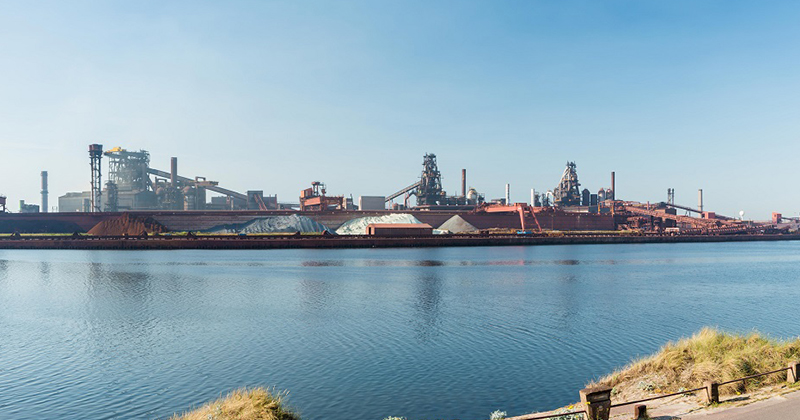
ArcelorMittal advances Dunkirk EAF, Mardyck electrical steel projects
ArcelorMittal has advanced two significant investments at its Dunkirk and Mardyck sites in northern France, a new electric arc furnace at Dunkirk and new electrical steel production line at Mardyck, the company says.
At Dunkirk, ArcelorMittal is building a 2 million tonnes/year EAF and a ladle furnace. Preparatory work has been under way for several months, and €300 million ($336m) has already been spent on preparing the site and securing equipment.
The public consultation held with France’s National Commission for Public Debate (CNDP) has been published, and permit applications have been filed. A further public consultation opened on 15 October, with a first public meeting scheduled for 16 October, the company details in a note obtained by Kallanish.
The EAF will produce steel emitting three times less CO2 than the blast furnace route, at 0.6t of CO2/t of steel. It will run on a mix of scrap, HBI or DRI, and pig iron.
At Mardyck, the first three lines of the new electrical steel unit started operating in March and now employ 200 people. Two more lines, an annealing and pickling line and a reversing mill, are under construction. Equipment installation is nearly complete, and first tests are expected in spring 2027. Once these lines start up, the unit will be fully integrated.
All of ArcelorMittal’s electrical steel in Europe is now produced in France, at Mardyck and Saint-Chély-d’Apcher. Electrical steel is a key material for electric motors and generators.
“In Mardyck, our teams are continuing to ramp up a new strategic production line to support the decarbonisation of our customers. In Dunkirk, the milestones already reached and the work now visible demonstrate the concrete progress of our low-CO₂ steel production project,” notes general director of ArcelorMittal France Bruno Ribo.
The Dunkirk and Mardyck projects represent investments of €1.3 billion and €500 million, respectively. They are ArcelorMittal’s largest in Europe in the past ten years (see Kallanish passim).

French processors caught between mills and weak demand
A tug of war is under way in France between mills and the downstream sector. Long and flat steel processors are caught between weak demand from their customers on one side, and mills pushing for increases on the other, Kallanish hears.
Mills are said to be putting pressure on customers to accept higher prices, particularly for flat products, but the wider picture keeps darkening. Credit insurance is tight for many companies, and processors must cut their own prices or lose sales, several sources say.
Long product prices are mostly stable on-month. For tube and sheet, however, there is a strong push for increases in line with rising coil prices. Service centres are struggling to keep pace with coil increases and are sometimes forced to decrease their prices to hold on to orders. “If these increases do not slow, customers will end up buying lower volumes because they cannot afford the high prices,” a purchasing group source says.
Customers are resisting longs price increases, while tight credit insurance availability also leaves them unable to buy large volumes.
Demand has been weak since the second half of June. July was subdued, August was seasonally dead, and September never really got going after the holidays. October is confirming the downward trend for both longs and flats.
“There is turbulence in France, the economy is seriously slowing and we will see the situation of orders worsening with the upcoming elections. Companies will buy for their immediate needs to await the result of the elections,” another source says.
Long product consumption remains limited as companies try to reduce their exposure. Domestic merchant bar is stable at €300-320/tonne ($335-358/t) base delivered, excluding size extras of around €410/t.
Despite several attempts to raise sections prices in recent months, first category material is holding at €810/t delivered on average, against producers’ asking prices of €830/t. Rebar is also flat on-month at €690-710/t delivered, amid an uncertain market and small order volumes, sources suggest.