

European HRC mills seek higher Q1 prices; spot activity remains slow
The European local steel hot-rolled coil (HRC) market was moving up slowly, as mills pushed for higher prices in negotiations for the first quarter of 2027, but spot market activity was slow due to limited availability of material for shipment in the remainder of 2026, sources told Fastmarkets on Wednesday November 4.
In Italy, spot market activity was limited as producers were mainly focused on securing annual contracts for the first quarter of 2027, sources said.
A source at a local mill said the mill had already closed its sales for the fourth quarter of 2026, with the latest deals done at around €740 ($828) per tonne ex-works.
The same source added that the mill was aiming to defend €750 per tonne ex-works as the minimum level for Q1 2027 deliveries.
“However, in terms of Q1, the focus today is on the closure of the annual contracts (mostly index-based), only afterwards we expect some spot activity,” the producer source said.
No other price points were received during the day. On Tuesday, a buyer reported an offer at €760 per tonne delivered, which is equivalent to €740-745 per tonne ex-works after deducting delivery costs of €15-20 per tonne.
The same source said they were hearing workable levels mainly in the range of €750-770 per tonne delivered, or around €730-755 per tonne ex-works.
As a result, Fastmarkets’ daily steel hot-rolled coil index domestic, exw Italy was calculated at €745.50 per tonne on Wednesday November 4, down by €0.50 per tonne from €746 per tonne on Tuesday November 3.
The index was up by €3.87 per tonne week on week and by €3 per tonne month on month.
In Northern Europe, sources said mills were targeting higher prices amid strong order books and limited imports. However, buyers were slow in accepting them due to relatively muted demand.
A buyer reported an indication of workable levels at €780 per tonne delivered on Wednesday, equivalent to €760-765 per tonne ex-works after deducting delivery costs of €15-20 per tonne.
The same source said offers were in the range of €780-800 per tonne delivered, or around €760-785 per tonne ex-works.
The buyer added that it had previously booked volumes at lower prices and now needed two to three weeks to assess how much more material it would need for the first quarter of 2027.
No other price points were received during the day, as market activity was slow. Mills were also focusing on long-term contracts in the region, aiming to achieve increases of €100-150 per tonne for the first half of 2027 compared to levels agreed for the second half of 2026, sources said previously.
On Tuesday, two buyers reported an indication within the range of €750-760 per tonne ex-works.
A third buyer reported an indication of tradeable level within the range of €770-780 per tonne ex-works and offers for January-March production within the range of €800-830 per tonne delivered, which is equivalent to €780-815 per tonne ex-works.
The offers were discarded from the index calculation, as levels at the upper end of the range were for February and March production, while material with earlier production time was available.
The active prices from Tuesday were carried over to Wednesday’s index due to the limited fresh input.
As a result, Fastmarkets’ daily steel hot-rolled coil index domestic, exw Northern Europe was calculated at €764 per tonne on Wednesday November 4, up by €2.33 per tonne from €761.67 per tonne on Tuesday November 3.
The index was up by €12.75 per tonne week on week and by €20.67 per tonne month on month.
Vlada Novokreshchenova in Dnipro, Ukraine, contributed to this article.

German union demands wage hike for steelworkers
German union IG Metall is seeking a wage increase of 5% as part of its bargaining round for 2027 with the employers of most German steel mills, for a workforce of some 60,000.
The union justifies its demand by pointing to the continued heavy burden on workers due to rising living costs, while also noting the first signs of an economic recovery.
“Following the massive [consumer] price increases, workers need a significant raise in their monthly wages,” says Jan Otto, head of IG Metall’s chapter Berlin-Brandenburg-Saxony.
He adds that the steel industry must “become more attractive to young people again”. It should “no longer lag behind the metal and electrical industries in terms of apprenticeship wages, Kallanish learns.
The proposal for the steelmaking industry is preceded by the wage claim for the much larger metal and electrical sector. That segment encompasses metals and steel using industries as well as electrical industries with large players like automotive, white goods, mechanical engineering, and also some steel processors, with 3.7 million employees.
For these workers, the union is also demanding at least a 5% increase. However, employers are said to be declining any wage hike in 2027 and are instead offering a one-off bonus payment in 2027 plus a wage increase of 1.3% for 2028.
On Tuesday, IG Metall called for the first nationwide token strikes on this matter.
On the steel side, the organisation of employers, AGV Stahl, has flatly dismissed the union’s claim as “out of time”. The employers point at the fact that North Rhine Westphalia alone is about to lose more than 14,000 of 41,000 jobs due to cutbacks.
It cites IG Metall’s chairwoman, Christiane Brenner, as saying that “the German steel industry is in the midst of the most profound structural crisis of its recent history,” which was reportedly said in a newspaper interview in October.
In view of these circumstances, the call for a more than 5% rise “sounds as though it has come from another union, or relates to a different industry,” AGV Stahl says.


Romania’s Otelinox focuses on decarbonisation with new line
Romanian stainless steel manufacturer Otelinox is advancing its decarbonisation efforts following the installation of a new electric-heating Bright Annealing Line (BA3) supplied by Japan’s Chugai Ro.
The line is designed to process stainless steel strips measuring 0.07-1.0 mm in thickness and 600-1,320 mm in width, Kallanish notes.
The contract was initially signed in January 2023 and following the completion of the design, manufacturing, installation and commissioning phases, production of the first coil began in December 2025.
According to the supplier, the new line utilises electrical heating, curbing CO2 emissions associated with combustion during metals processing and is expected to reduce such emissions during production and contribute to carbon neutrality. “Furthermore, this high-quality stainless steel is expected to be used in sectors with further growth is predicted, such as EV batteries and heat exchangers for data centres,” states a Chugai Ro press release.
“The delivery of this BA3 unit marks a significant milestone in Chugai RO’s expansion in the European market for heat treatment equipment, a key area of focus for the company,” it said. “Moving forward, the enterprise aims to further expand their business in global markets, including Europe, by providing equipment and technology that helps customers achieve CO2 reduction, higher product quality and improved productivity.”
Chugai RO and Otelinox have a long-standing relationship dating back to 1977, when the Japanese company supplied the steelmaker with continuous stainless steel annealing and pickling lines (APL) for intermediate and final annealing. The two companies have fostered a strong partnership over the past five decades, including the delivery of a continuous bright annealing line (BA1) for stainless steel in 2002. This extensive track record and relationship of trust led to the order of a new unit, the BA3.
Otelinox has a total production capacity exceeding 60,000 tonnes/year for stainless steel strips and sheets. The operation is in the city of Targovishte, Romania.
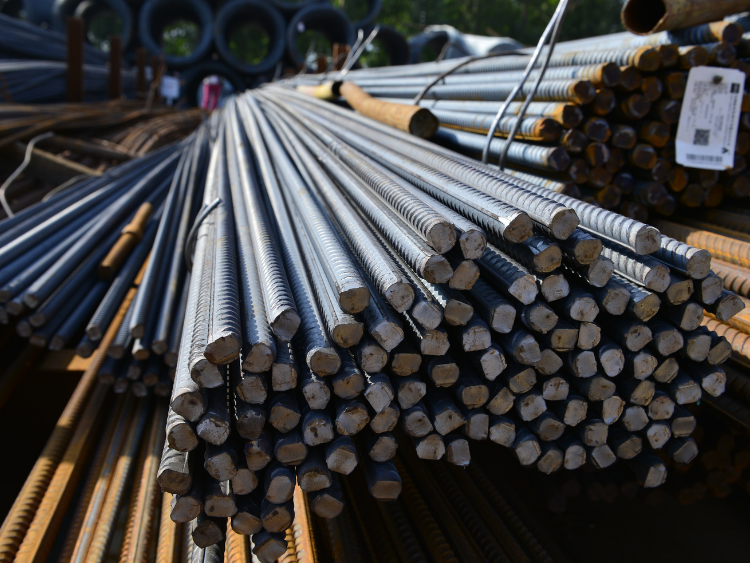
German rebar mills lift surcharges for wire mesh
Germany’s rebar mills have lifted the fixed surcharge for wire mesh by €25/tonne ($27) with immediate effect, Kallanish hears from market participants.
The surcharge is the equivalent of the size extra (“Dimensions-Aufpreis/DA”) for straight rebar and comes on top of the fluctuating base price. Its German term is “Sorten-Aufpreis (SAP)”. Depending on the mill’s terminology, this may also be called a conversion extra or processing extra.
According to one bender, Riva was the first company to introduce the new surcharge in late October, with other mills quickly following suit. Effective 1 November, the revised extras raise charges for the most common sizes to €230-€245/t.
This is the first hike in the surcharge in many years, and it is not extended to also cover the size extra for straight rebar. “I believe it has to do with the extra energy costs for the welding that you have with wire mesh, but not for rebar,” one manager says in finding a reason for the selective hike.
The surcharges appear limited to Germany and have so far seen little uptake in Austria. One Austrian manager attributes this to differing construction standards and certifications, as the new lists cover only B500 grade rebar, while Austrian builders typically use B550.

ENVI proposal could spur automotive clean steel demand: Eurofer
Eurofer says the European Parliament Environment Committee (ENVI)’s vote in favour of revised automotive CO2 emissions targets will help create demand for cleaner steel in Europe.
Adopted on Wednesday with 48 votes in favour, 30 against and two abstentions, the draft rules include proposed low-carbon steel credits. For passenger cars, Members of the European Parliament (MEPs) want to lower the 2035 fleet-wide CO2 emissions reduction target from 100% to 87.5%. Manufacturers would have to compensate for emissions capped at 7.5% – of the 2021 EU fleet-wide reference target – to reach a target of 95%, by using credits for low-carbon steel made in the EU.
For vans, MEPs propose a 35% reduction target by 2030, compared with 40% in the European Commission text and 50% under the existing rules. The 2035 target would decrease from 100% to 80% – in this case, low-carbon steel credits could be used, subject to a 7.5% cap.
From the entry into force of the rules and until the end of 2034, however, low-carbon steel credits may count for no more than 3% towards meeting specific targets for both cars and vans, Kallanish notes.
Welcoming the vote, Eurofer says: “The proposed low-carbon steel credit would reward carmakers for using qualifying low-carbon steel, helping create demand for cleaner steel.”
Director general Axel Eggert notes: “Low-carbon steel made in Europe should go into cars made in Europe. A dedicated steel credit can help turn Europe’s decarbonisation ambitions into real investment, production and quality jobs. This is how we strengthen two strategic European industries while cutting emissions.”
MEP and Rapporteur Massimiliano Salini says: “Registering combustion engine cars without compensation obligations would remain possible, protecting technological freedom and restoring prospects for the entire supply chain. Decarbonisation does not mean imposing one technology – we also recognise as zero-emission vehicles powered exclusively by renewable fuels that comply with the renewable energy directive, similar to electric ones. Low-carbon steel made in Europe could be used immediately, rewarding European production and strengthening the Union’s strategic autonomy”.
ENVI’s proposal is expected to be voted on during the European Parliament’s December plenary session.

Assofermet Acciai: Italian steel stockists’ sales volumes down over 25% despite rising prices
According to its latest monthly report released on November 3, 2026, Italian steel trade association Assofermet notes that the domestic steel market continues to show signs of weakness, with demand struggling to recover and prices supported mainly by European producers’ pricing policies.
Distributors are particularly affected, facing rising costs, high inventories and increasingly tight margins.
Carbon steel flats: Prices set to rise despite weak demand
In the carbon steel flats segment, October brought no significant improvement in consumption. Manufacturing activity continued to suffer from a shortage of orders, while intense competition among market participants limited their ability to pass higher procurement costs on to customers. No substantial change in demand is expected in November, although service centers may attempt modest increases in selling prices to recover part of their lost margins.
Meanwhile, European steelmakers have already raised their asking prices for deliveries in the final quarter of 2026 and appear determined to continue doing so in early 2027. Prices are being supported primarily by import restrictions, while industrial consumption remains too weak to justify a structural market recovery. The gap between producers’ expectations and actual downstream demand is therefore widening.
The uncertainty surrounding the future of the former Ilva steelworks also continues to weigh on the Italian market. As previously reported by SteelOrbis on October 30, Italy’s Supreme Court of Cassation rejected appeals against the ruling ordering the shutdown of hot-end operations at the Taranto plant, making the Milan Court of Appeal’s decision final. Assofermet warns of the potential consequences for the domestic steel supply chain, particularly regarding raw material availability. The permanent exit of Italy’s only integrated steel producer could further complicate procurement for service centers already affected by increasing import restrictions.
Stainless steel flats: No recovery expected before the end of Q1 2027
The stainless steel flats market also ended October without signs of recovery. Italian demand remains weak, while European producers continue to face high energy costs, with scrap prices broadly stable and nickel prices declining compared to mid-October. Distributors are struggling to pass on both raw material and operating costs, particularly transportation expenses, to customers. Abundant supply of certain widely traded grades, especially AISI 304, is adding further pressure. According to Assofermet, a recovery appears unlikely before the end of the first quarter of 2027, unless European producers reduce their production capacity.
In the steel stockholding segment, October figures point to a market supported more by higher prices than by any actual improvement in sales. Compared to the same month in 2025, the overall value of sales increased slightly, while distributed volumes declined by more than 25 percent. This divergence confirms persistent demand weakness, particularly in major steel-consuming sectors such as automotive, construction and household appliances.
Performance nevertheless varied across product categories. Long products were the hardest hit by declining volumes, despite a recovery in rebar prices supported by Italian producers. Flat products also recorded decreases in both volumes and total sales value, while hollow sections showed greater resilience, particularly cold-formed products. The stainless steel segment remained especially weak, with widespread declines across tubular, long and flat products.
Tinplate: Further price increases possible as European supply tightens
The European tinplate market, meanwhile, showed a clearer upward price trend. Despite still moderate consumption and substantial inventories, prices are benefiting from higher raw material costs and gradually declining European supply. Reduced spot availability, combined with greater production discipline among mills, could support further price increases in the coming months.
Looking ahead, Assofermet highlights that European safeguard measures, with 50 percent duties on volumes exceeding tariff-rate quotas, continue to influence procurement and support steel prices. However, weak industrial demand raises uncertainty over whether these increases can be sustained. For distributors, the main challenge remains protecting margins and keeping inventories under control while awaiting clearer signs of a recovery in consumption.
Author: SteelOrbis Editorial Team

German steel and industry associations urge government to maintain €6.5 billion electricity grid subsidy
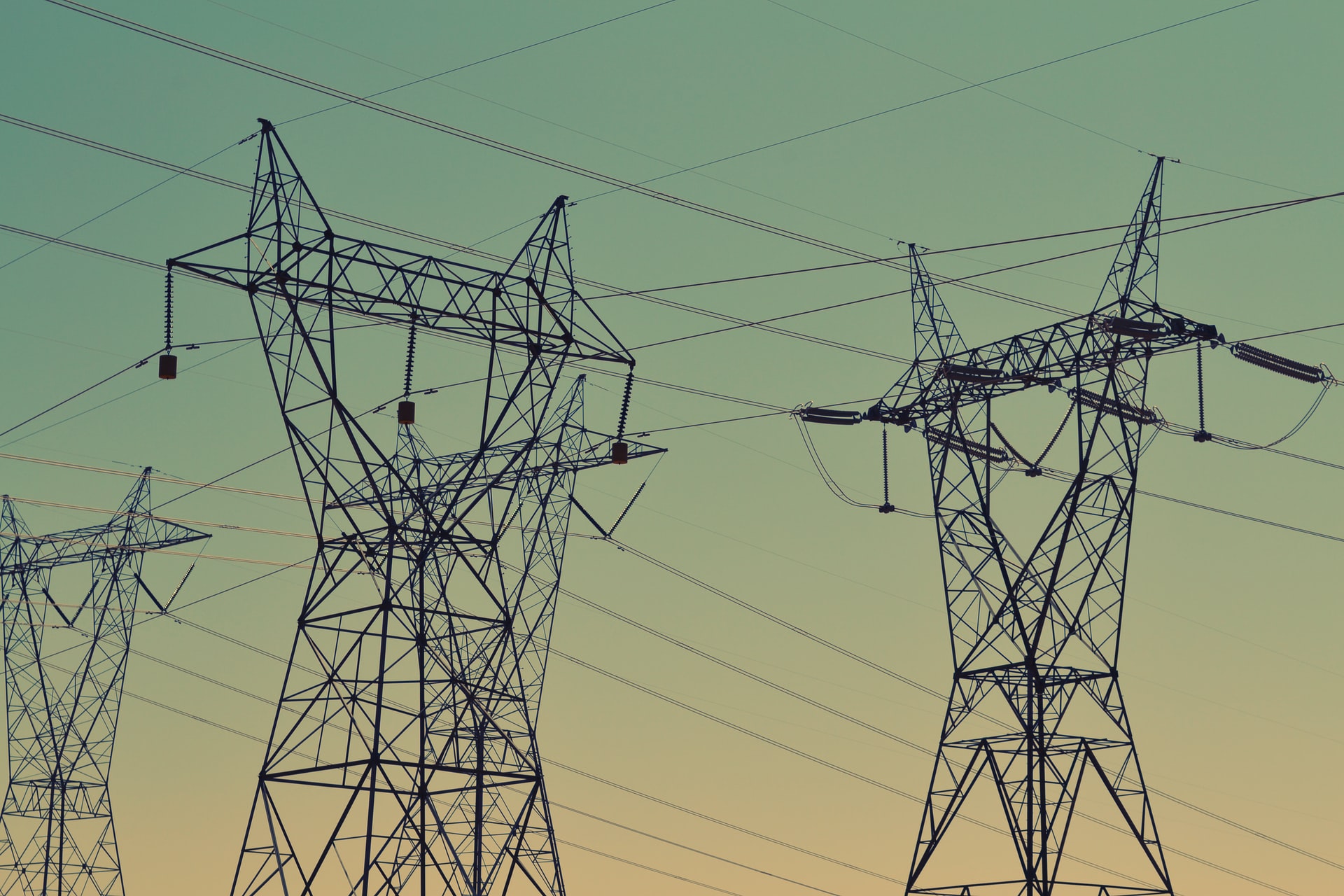
The German Steel Federation (WV Stahl), together with five other industry associations, has called on the German parliament (Bundestag) to maintain the government’s annual €6.5 billion subsidy for electricity transmission network charges, warning that a proposed €1 billion reduction would increase electricity costs for industrial consumers.
In a joint statement, WV Stahl, the Federal Association of Energy Consumers (VEA), the Association of Industrial Energy and Power Users (VIK), the Metal Trade Association (WV Metalle), the German Electro and Digital Industry Association (ZVEI) and the German Chamber of Commerce and Industry (DIHK) emphasized that electricity prices in Germany remain significantly higher than those in competing industrial economies such as the US and China, as well as in several other European countries. They also highlighted that ongoing instability in the Middle East has put additional pressure on energy markets, further driving up electricity costs and undermining the competitiveness of German manufacturers.
Electricity grid subsidy reduced network charges to 2023 levels
The €6.5 billion subsidy, introduced at the beginning of 2026, helped reduce electricity transmission network charges to their 2023 levels following substantial increases in previous years. However, the proposed €1 billion reduction in funding would partially reverse this relief, potentially increasing electricity costs for industrial and commercial consumers as well as households.
The associations emphasized that electricity transmission network costs are expected to remain high or increase further in the coming years, making continued financial support necessary to maintain competitive electricity prices. They also warned that reducing the subsidy could undermine investment planning and weaken incentives for the electrification of industrial processes.
Therefore, the six associations called on the Bundestag to reject the proposed €1 billion reduction and maintain the annual electricity grid subsidy at €6.5 billion in the coming years. According to the joint statement, maintaining the subsidy would be consistent with the federal government’s previously announced commitment and would help support more competitive electricity prices for German industry.
Author: SteelOrbis Editorial Team

Poland’s JSW loses another ceo
Jastrzebska Spolka Weglowa (JSW) chief executive Boguslaw Oleksy resigned effective 31 October, joining Polish thermal coal miner Polska Grupa Gornicza as finance director, Kallanish notes.
He had been in the ceo position permanently since May, having taken over as acting ceo in October 2025.
Polish state-owned JSW, mainly a coking coal miner, has been unable to hold a ceo down for longer than 2.5 years – the length of Tomasz Cudny’s tenure – since long-serving former ceo Jaroslaw Zagorowski resigned in 2015.
The miner will now begin the search for a new ceo to lead it through a challenging restructuring plan amid heavy losses and rising debt.
JSW posted external coking coal sales growth of 7% on-year in the third quarter to 1.77 million tonnes, but coke sales fell 8% to 720,000t. Despite increased sales, coking coal production dropped 3.5% to 2.77mt, while coke output slumped 17% to 740,000t.
The firm had to seal off longwall face C-2 (seam 505/1) at the Borynia-Zofiowka mine after detecting increased carbon monoxide concentration. It is taking measures – including at other mines – to offset the resulting production volume losses.

Coil buyers fear tighter supply as ADI shuts
Buyers of hot rolled coil are fearing a tightening in supply as Acciaierie d’Italia (ADI) moves to a full shutdown after the recent Italian Supreme Court ruling, Kallanish notes.
Last week Italy’s Supreme Court rejected the appeals by ADI’s commissioners against the suspension of production at the hot end of the Taranto steelworks, citing “serious and significant” health dangers.
The ruling obtained by Kallanish confirms a previous ruling issued by the Milan Court of Appeal in July.
ADI’s coil buyers are contracting the company to re-roll their slabs and this is working relatively smoothly, one buyer says. However, delivery delays, which coil buyers have long experienced with Taranto, are expected to continue as ADI cuts its workforce following last week’s supreme court ruling. Some senior managers have reportedly lost their jobs.
Sources close to the company doubt that the letter of interest submitted by a group of Italian steelmakers will turn into a binding bid for Taranto and the northern Italian plants. “It is formed by too many people, and long steelmakers who will never come up with a coherent plan converging the interest of all the parties involved,” a source comments.
The government is reportedly considering a minority stake in any new company that will oversee Taranto and remains in talks with Jindal over a new binding offer. None of the sources close to the case believe a solution for Taranto and its 10,000 workers is in sight.
ADI’s shutdown is a heavy blow for re-rollers and service centres, another large coil buyer says. CBAM and the new quota system are sharply reducing import opportunities, leaving buyers more dependent on European producers.
One large European coil maker “is very arrogant when it comes to supply and all EU producers are extremely rigid about increasing their prices,” the buyer says. Large companies are still sourcing material from imports, but smaller buyers expect supply to be tight in 2027.
The Supreme Court heard the case on 20 October and reserved judgement before rejecting the appeal by ADI. Blast furnace No. 2, the only one still running at Taranto, stopped producing pig iron in early October after ADI ran out of raw materials. An earlier ruling had authorised the commissioners to keep the hot-end plants warm until the supreme court ruling.
ADI’s special commissioners have asked the government to increase temporary layoffs to 8,622 workers from 4,450, almost the company’s entire workforce, until February. ADI employs around 10,000 people directly.

EU revises requirements for thyssenkrupp’s slower transition
The European Commission has revised the funding requirements for the conversion of thyssenkrupp Steel to produce DRI-based steel using hydrogen.
The revised funding requirements allow for a gradual and more flexible increase in the share of hydrogen. This means the company can run its new plant on natural gas for a longer transition period than originally intended, Kallanish understands.
The requirements had to be revised because the economic conditions have changed significantly since the original funding decision was made, tk Steel explains. In particular, the development of the hydrogen market has fallen short of the expectations that prevailed at that time. Generation capacity, transmission lines, and import pathways are not yet available to the extent required, the company notes. At the same time, green hydrogen is significantly more expensive than originally anticipated and is not yet available on competitive terms, tk Steel underlines.
The direct reduction plant is technically designed to run on natural gas, hydrogen, or a mixture of the two. Simply using natural gas already enables a significant CO2 reduction of over 50% compared to today’s coal-based blast furnace route, tk Steel notes.
The revision will be followed by a new hydrogen tender, which is scheduled to begin shortly, the steelmaker announces. The first process had already provided important insights into prices, available quantities, and supply chains, it notes. This experience will be incorporated into the new call for proposals.