


Producer prices in French industry up 1.7 percent in September 2026 from August
In September this year, producer prices in French industry were up by 1.7 percent month on month and up by 6.8 percent year on year, according to the statistics released by France’s National Institute of Statistics and Economic Studies (INSEE). Producer prices for manufactured products in France increased by 1.2 percent in September compared to August and increased by 5.8 percent year on year.
In the given month, prices for exported manufactured products rose by 0.8 and prices of exported transport equipment increased by 0.2 percent, both month on month. On year-on-year basis, in September prices of exported manufactured products went up by 6.3 percent, while prices of exported transport equipment saw a 3.9 percent increase.
Meanwhile, import prices for manufactured products in France in September rose by 1.1 percent month on month and up by 7.4 percent year on year.


European local HRC market diverges as Italy gains, North struggles with higher targets
Daily steel hot-rolled coil (HRC) prices edged down in Northern Europe as buyers were reluctant to accept mills’ higher targets, while Italian prices rose on the latest deals, sources told Fastmarkets on Monday November 2.
In Northern Europe, sources said producers were attempting to push through increases of €20-30 ($22-33) per tonne, supported by limited import competition, but customers were reluctant to accept higher levels.
A buyer source reported offers for January delivery at €760 ($848) per tonne delivered, which is equivalent to €740-745 per tonne ex-works after deducting delivery costs of €15-20 per tonne.
The same buyer reported higher offers at €800 per tonne delivered for the same period, which nets back to €780-785 per tonne ex-works, but said this level was considered unrealistic in the market. For this reason, the price point was discarded from the index calculation.
“Long lead times and limited import competition are supporting German mills in maintaining firm price levels,” the buyer said, adding that another factor was the producers’ ongoing negotiations with automotive customers regarding long-term contracts for the first quarter and the first half of 2027.
Mills were seeking increases of €100-150 per tonne from levels agreed for the second half of 2026, but were unlikely to secure more than half of the requested increase, sources told Fastmarkets on October 30.
A second buyer source reported spot market deals achieved in the range of €750-760 per tonne ex-works on Monday for December-January delivery.
As a result, Fastmarkets’ daily steel hot-rolled coil index domestic, exw Northern Europe was calculated at €748.75 per tonne on Monday November 2, down by €2 per tonne from €750.75 on Friday October 30.
The index was down by €5 per tonne week on week but up by €5.42 per tonne month on month.
In Italy, sources said mills were also trying to achieve higher levels in the market, pushing offers slowly up.
Latest deals were reported at €750-760 per tonne ex-works on Monday by a trade source, who also said offers were at €780 per tonne ex-works. The higher level was not accepted in the market yet, so it was discarded from the daily index calculation.
A buyer indicated workable HRC levels at €750 per tonne ex-works in Italy, while a second trade source reported a workable price range within €730-750 per tonne ex-works, linking the lower end to stock material and the higher end to prices from mills.
The second trade source added that they were not hearing fresh offers in the market due to limited availability of material to be delivered for the remainder of 2026.
As a result, Fastmarkets’ daily steel hot-rolled coil index domestic, exw Italy was calculated at €748.33 per tonne on Monday November 2, up by €3.02 per tonne from €745.31 on Friday October 30.
The index was up by €7.33 per tonne week on week and by €5.83 per tonne month on month.

Polish rebar prices rise despite subdued trading
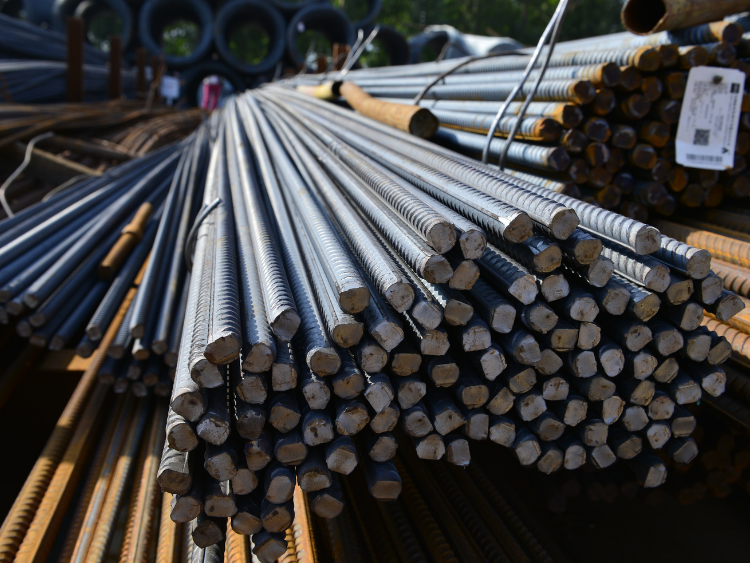
Polish rebar prices rose in the week to Friday October 30, while drawing-quality wire rod prices were unchanged, as trading activity slowed and producers benefited from favorable export conditions, sources told Fastmarkets.
“Trading in the market is slower right now. We will see what happens in November,” a distributor source told Fastmarkets.
In the wire rod market, offers for drawing-quality material were heard at 3,000-3,100 zloty ($761-787) per tonne, within the existing assessment range.
As a result, Fastmarkets’ weekly price assessment for steel wire rod (drawing quality), domestic, delivered Poland was unchanged at 2,900-3,150 zloty per tonne on Friday.
The domestic rebar market, meanwhile, moved higher during the assessment week.
Offers were heard at 2,850-2,950 zloty per tonne CPT, while workable levels were reported at 2,920-2,930 zloty per tonne. A deal was also heard at 2,950 zloty per tonne.
Market participants said Polish producers had exported initial volumes to the Ukrainian market, while the weaker zloty provided more favorable exchange-rate conditions for exports.
The increased exports to Ukraine followed Russian attacks on Ukrainian steel mills in August and September this year, which caused critical damage to infrastructure.
Fastmarkets’ weekly price assessment for steel reinforcing bar (rebar), domestic, CPT Poland rose to 2,850-2,950 zloty per tonne on Friday, from 2,780-2,840 zloty per tonne the previous week.

European plate, Italian slab prices stable amid subdued trading
European steel heavy plate prices remained stable in the week to Thursday October 29, while Italian import slab prices were also unchanged amid limited buying interest and subdued trading activity, sources told Fastmarkets.
Italy
Workable levels for Italian steel heavy plate were heard at €740-750 ($824-835) per tonne ex-works during the week.
A deal was heard at €750 per tonne ex-works and an offer was also reported at the same level.
Market participants reported higher offers for January delivery at €770-780 per tonne ex-works.
These higher indications were not included in the final assessment, as their delivery times exceeded Fastmarkets’ methodology window of up to six weeks.
As a result, Fastmarkets’ weekly price assessment for steel domestic plate, 8-40mm, exw Southern Europe was €740-750 per tonne on Thursday, unchanged week on week.
In the slab market, offers and workable levels for imported Asian material into Italy were heard at $580-590 per tonne CIF.
Market activity remained subdued, however, with buyers showing limited interest.
“Trading activity remains limited, as most buyers have already completed their purchasing requirements despite continued offers from Asian producers,” a buyer source told Fastmarkets.
As a result, Fastmarkets’ weekly price assessment for steel slab import, cif Italy was $580-590 per tonne on Thursday, unchanged week on week.
No new transactions regarding plate imports on a CFR basis were heard in the market during the assessment week.
Therefore, Fastmarkets’ weekly price assessment for steel plate (8-40mm), import, cfr main port Southern Europe was €710-750 per tonne on Thursday, stable week on week.
Northern Europe
In Northern Europe, workable levels for domestic plate were heard at €840-880 per tonne ex-works during the week.
As a result, Fastmarkets’ weekly price assessment for steel domestic plate, 8-40mm, exw Northern Europe was €840-880 per tonne on Thursday, stable week on week.
No fresh information was heard about plate imports into the region.
Fastmarkets’ weekly price assessment for steel plate (8-40mm), import, cfr main port Northern Europe, was €710-750 per tonne on Thursday, unchanged from the previous week.
European green flat steel demand remains subdued; construction provides pockets of interest
Demand for green steel in Europe remained muted in October, with the construction industry showing some selective interest while interest from the automotive industry softened, according to market participants.
A flat steel producer in Northern Europe said there was a lack of buying activity in the flat steel segment from carmakers, adding that “premiums are hard to sell.” The producer said activity may revive closer to mid-2027, when there will be more clarity on the Industrial Accelerator Act, an EU industrial decarbonization initiative.
The producer added that there is, however, some demand now from the construction industry in the Netherlands, especially from bridge reconstruction.
Fastmarkets’ weekly price assessment for green steel domestic, flat-rolled, differential to HRC index, exw Northern Europe, was €120-200 per tonne on October 30, widened downward from €170-200 per tonne on October 23.
Fastmarkets defines green steel as material with combined Scope 1, 2 and 3 carbon emissions not exceeding 0.8 tonnes of CO2 per tonne of steel produced. Scope 1 refers to direct emissions generated by an entity or its subsidiaries; Scope 2 refers to indirect emissions from energy used by an organization; and Scope 3 refers to indirect emissions beyond an organization’s control.
Meanwhile, Fastmarkets’ steel hot-rolled coil index domestic, exw Northern Europe, €/tonne averaged €746.38 per tonne in October to date, up by €2.17 from €744.21 per tonne in September.
An Austrian supplier that plans to start green steel production early next year voiced premium offers of €120-150 ($133.83-167.28) per tonne. A source at the company said there was some demand from original equipment manufacturers as well as the construction industry in Northern Europe.
A Swedish supplier that also plans to start production during 2027 was heard offering a premium of €200 per tonne.
A German supplier was said to offer a premium of €180-250 per tonne for its future output.
Suppliers that already have capacity to sell green flat steel offered premiums of €170-300 per tonne.
Some bookings were heard at €150-200 per tonne for testing and project applications, while spot sales were claimed to take place at even lower levels.
Green steel business is now mainly taking place directly between producers and final customers, while traders are avoiding taking positions because of the lack of demand for the product.
IREPAS Short Range Outlook : November 2026
Slight deterioration in global longs market, demand stable but weak, scrap impacts rebar prices
Overall, the situation in the global long steel products market has worsened slightly. There has been a so-called stability in the global long steel products market for the last couple months as far as demand is concerned, though demand remains weak. However, some volatility is seen in rebar prices due to changes in scrap prices. Higher scrap prices have been resulting in increased demand for steel billets from the Far East. Governments worldwide may push for increased investments in infrastructure amid AI data centre construction and resulting increases in electricity needs. In the US, of course, this is already happening, but it is also expected to be seen in other parts of the world soon.
Chinese give signals of wanting to keep supply in check, but doubts persist
Excess production capacity continues to be a major concern. In terms of supply, it seems the Chinese government wants to keep supply in check. Of course, it is not clear that this will actually happen. There is still no sign of any improvement in demand or of a slowing down of Chinese exports for the time being. Market players are crossing their fingers that next year the Chinese will take similar actions to what they did back in 2016.
Uncertainty is the main risk facing all parties
Uncertainty is the main risk facing all parties and appears likely to remain so for the foreseeable future. Increased interest rates in the West are another concern affecting future demand expectations.
European steel producers face rapidly increasing costs, while demand remains weak
The European steel market remains challenging, with weak demand and strong competition between domestic producers. The reduced safeguard quotas and CBAM have so far provided limited support to steel prices, as European mills continue competing aggressively for volumes rather than protecting their margins. However, the situation is changing rapidly due to skyrocketing energy costs. Natural gas prices in the EU have increased by approximately 150 percent over the past three months, with Dutch TTF futures now trading above €100/MWh compared to less than €40/MWh three months ago. Electricity prices have also increased sharply. The increase in electricity and natural gas prices since August has so far added more than €110/mt to direct steelmaking and rolling costs, and there is a risk of further increases.
At current finished steel prices, the economics of European steel production are becoming increasingly difficult. Mills are facing a choice between passing these additional costs on to customers, accepting further deterioration in margins or reducing production. Meanwhile, reduced import quotas and CBAM are limiting alternative sources of supply. Although demand remains weak, the combination of rising production costs and restricted imports could significantly change the supply-demand balance in Europe.
The recent price increases have been primarily cost-driven rather than demand-driven. Higher logistical costs, including those caused by exceptionally low water levels on European rivers, have added further pressure without substantially disrupting supply chains.
The German construction industry is still awaiting the implementation of state-funded infrastructure projects, while private investment remains subdued due to continuing uncertainty.
Looking ahead to the first quarter of 2027, further increases in European steel prices appear likely if energy costs remain at current levels or continue rising. Any reductions in production would add further upward pressure, even without an improvement in demand.
The present situation has become unsustainable. It demands immediate action.
Some slight improvement in supply-demand balance in general
Mills in the rest of the world do not have the extremely high costs of European production, which are mainly the result of the EU’s CO2 policies, but it still seems oversupply is not a very big issue. So, the balance of supply and demand in general is probably a little better than before.
Demand in US relatively stable, but growth focused on select areas
In the US, demand is relatively stable, but high import tariffs and trade restrictions have significantly reduced opportunities for international suppliers, while domestic mills enjoy a more protected market. Margins for international traders in the US remain under significant pressure. AI data centre construction, energy, and selected infrastructure projects remain among the few major growth areas. Residential and commercial construction activity remains weak, partly due to high financing costs. Steel demand growth is uneven across different steel products and sectors. Overall, the global supply-demand imbalance continues to be a serious concern. It may soon be a US problem as well for certain products like rebar.
EAF-based producers see production costs rise continuously, integrated mills benefit
One interesting factor is that the production costs for EAF-based material are increasing continuously due to electricity shortages and the lack of adequate transmission lines. This is probably to the advantage of integrated producers who use coal.
India and parts of Southeast Asia remain relatively strong markets
Internationally, India and parts of Southeast Asia remain relatively strong markets. We also see some potential for improvement in Southeast Asia during 2027, although any recovery is likely to be gradual and uneven. Another positive factor is that there is no bombing in the Middle East.
Competition in global market remains very tough and very regional
Competition in the global market is, as always, very tough and very regional. Excess global capacity, particularly in Asia, combined with trade barriers and limited access to major importing markets, is forcing exporters to compete aggressively for fewer available opportunities. The first quarter of 2027 is expected to see further price increases in Europe. The North American market is still stable at 80 percent capacity utilization, but in the next two to three years domestic competition may
pick up due to oversupply and uncertain consumption forecasts.
Current status of the market stable in Europe for the moment, unstable in other areas
Under these circumstances, the current status of the market is stable in Europe at least for a few more weeks, but unstable in other areas.
Market outlook for next quarter very challenging, scrap to be scarcer as US and EU export less
The outlook of the market for the next quarter is very challenging and weak. It seems there will be higher prices due to higher energy costs and also scarcity of scrap, since the US, one of the two big scrap exporting regions, requires more and more scrap domestically. In addition, Europe, is increasing its consumption of scrap and less will be available for the export market, also leading to higher scrap prices. The outlook for demand is stable but unsatisfactory.

Italy’s Supreme Court orders permanent closure of Acciaierie d’Italia (ADI)
Italy’s Supreme Court ordered the permanent shutdown of the hot area of Acciaierie d’Italia (ADI) following an appeal, according to a ruling published on 29 October.
Earlier in October, the steelmaker had temporarily idled its furnaces, pending the Supreme Court’s decision, which was seen as the last hope of saving operations at the Taranto plant. Following the ruling, operations in the hot area must be stopped.
The final ruling followed a lengthy legal battle as ADI attempted to appeal earlier rulings ordering the closure of its liquid steel production facilities. On 11 September, Milan’s Court of Appeal upheld an earlier order to shut down ADI’s hot area. This ruling rejected an appeal against the previous decision to close the hot section of the Taranto plant.
On 27 July, the Milan Court of Appeal ordered ADI to shut down its operations within the next 90 days – by 24 October. According to the ruling, ADI was required to completely remove all asbestos present at the site and implement measures to reduce dust emissions to the regulated limits. The Milan court originally ordered the suspension of production at the plant on health grounds in late February 2026.
Although ADI’s steel output was around 1 million tonnes and its presence in the spot market had been limited, the order to close production came at a time when the EU had significantly restricted access to its market for imports through new quotas introduced on 1 July 2026. Overseas material had also become more expensive due to Carbon Border Adjustment Mechanism (CBAM) duties. European buyers had started relying more heavily on domestic supply, and the removal of ADI’s additional production volumes further supports price increases and raises concerns about potential shortages.
Italian buyers have already started sourcing slabs from China, India and Turkey, as imports of semi-finished products are not subject to EU quotas or other trade measures. Buyers plan to use domestic rolling capacities, notably ADI’s rolling mills, to produce coil and replace the missing import volumes.
Author: Maria Tanatar


EU backs AD duties on CRC from five countries
EU member states voted in favour of definitive anti-dumping duties on cold-rolled flat steel imports from five countries – India, Japan, Turkey, Vietnam and Taiwan, China – on 29 October, market sources told McCloskey.
Fifteen member states voted in favour of the measures, nine abstained and three voted against.
The measures will come into effect once the implementing regulation is published in the Official Journal of the European Union.
Earlier in October, the European Commission revised the proposed anti-dumping duty rates for the material originating from Turkish, decreasing them to 3.0-7.8% from the originally suggested 5.6-9.7%.
The European Commission initiated the anti-dumping investigation following a complaint lodged by the European steel association Eurofer in September last year. The EU authorities decided against imposing provisional duties, making the retroactive application of measures impossible.
Dow Jones Energy tracks steel trade protection developments in its Global Steel Trade Measures Database, which is updated monthly.
Author: Benjamin Steven

UK construction upping sustainable sourcing on EPD ties
While the UK’s construction sector is increasingly incorporating sustainability criteria into its steel procurements, it is unlikely that consumers will engage with overly-sophisticated green steel standards, Dow Jones Energy heard at ACI’s Future of Green Steel event in London 28-29 October.
The conference had strong representation from the UK’s construction operators, giving their perspective on the UK’s emerging green steel market.
Overall, sentiments were positive: attendees reported increased consideration in public tenders for the sustainability of a project bid, with low-carbon steel presenting a relatively simple means of reducing carbon footprints due to the weight of emissions embedded in, for example, foundational steel structures.
Private sector interest is less evident, though London was repeatedly cited as an outlier, demonstrating increased preference for lower-carbon bids for new residential and commercial developments. Construction attendees expected this trend to expand beyond London and across the UK as local authorities are pushed to incorporate non-price criteria.
The trend is developing, but nascent, as engineering firms estimated that sustainability factors would only be workable below 2% cost premium. As soon as low-carbon sourcing pushes project costs beyond 2%, bids win on price, limiting what buyers will pay for green steel and creating a preference for established scrap-based electric arc furnace (EAF) producers. Construction firms stated that they were not aware of ever having lost a public tender on sustainability criteria.
Of course, this 2% margin is spread across the entire project bid, so whether firms pass on a green premium for using low-carbon steel is assessed on a case-by-case basis. A construction company said that on one recent bridge project bid currently under consideration, green EAF slab processed into low-carbon heavy plate on a tolling basis was incorporated at a 5-10% price premium, while previous bids did not attempt to charge additional costs for EAF-based steel.
For direct spot sourcing, distributors and consumers continue to see little interest in paying extra to hold green steel stocks, especially while markets lack a clear definition or standard for what actually constitutes lower carbon steel.
Sessions at the conference explored the difficulties in harmonizing a global – or even national – green steel standard in great detail, as global scrap supplies are insufficient to support an entire sector transition, and integrated blast furnace producers arguably need some access to premium low-carbon markets to ensure they can survive long enough to see their transformation projects to completion. Green standards like those of ResponsibleSteel, or LESS, thus grant cleaner classifications to steel products the lower the share of scrap in their production, to incentivise transformative low-carbon ironmaking developments such as green hydrogen-based direct-reduced-iron (H2-DRI).
This is particularly relevant to the construction sector – a frontrunner in creating real demand for lower-carbon steels – as construction operators are already subject to sustainability criteria via legislation like the EU’s Construction Products Regulation (CPR), project certification requirements, local authority permitting policies, and more. As an example, British Steel has criticised that Welsh procurement criteria restricts their steel from consumption in infrastructure projects, imposing a carbon footprint limit within the UK’s domestic market that British Steel’s output is currently unable to satisfy.
For construction attendees, how ‘green’ a steel is considered to be is entirely set by its EPD value, and there did not seem to be much appetite to widen that definition to accommodate the complexities of the steel sector’s transition. In the words of construction representatives, green steel procurement is “simply looking for the lowest number on the EPD” as that is what is required for the tender. While downstream operators were surprised by the degree of sophistication, and potential impacts, of defining green steel in different ways – for example with scrap content-based adjustments – there was evident sentiment that this was not really their problem to solve, especially when steelmakers themselves have such difficulty in reaching a compromise on standardisation.
For example, the EU steel lobby has only recently reached a form of compromise on its preferred green steel definition: scrap content-based adjustments to classification thresholds would be limited to carbon flat steels, and select carbon long steels, with most long steel, and stainless steel products assessed on a product carbon footprint approach without adjustments.
The EU’s green steel label was originally to be contained in the Commission’s Industrial Accelerator Act proposal, but was cut and postponed to delegated acts of the Ecodesign for Sustainable Products Regulation (ESPR), disagreements on scrap-content adjustments playing a primary role. This delegated act was due for publication before end of year, though sources now expect delivery in H1 2027.
As discussed across the conference sessions, much of the debate comes down to what extent a green steel definition should stimulate decarbonisation of the steel sector directly – requiring process emission reductions from blast furnace steel’s polluting ironmaking stages – versus individual company operations. Different interpretations of ‘decarbonisation’ entail different standards, but increasing scrap-EAF steelmaking alone arguably redistributes, as opposed to reducing, overall steel sector emissions.
Construction steel consumers may appreciate the need for green ironmaking, but “who pays” remains the main question, and if they already have low-carbon EAF steel available and compatible with their existing sustainability requirements, then they are unlikely to want to pay more, especially for higher carbon blast furnace material allowed into green classifications as a CAPEX incentive for integrated steelmakers. Construction companies also generally secure their steel supply via distributor intermediaries, and so while green steel premiums may often be negligible against the cost of an entire project, premiums seen in Europe of EUR100-300/t are certainly not offering distributors much of a margin, if at all.
Scrap-based adjustment standards could also force consumers to source higher priced DRI-EAF steel imports to meet requirements, and scrap-based EAF steels consumed independently of sustainability mandates could see prices follow higher. Changing the core role of EPD certifications in construction steel trade would also be a large administrative hurdle, and so decarbonisation incentives for primary ironmaking may be better placed directly in public procurement policies for e.g the automotive sector, which has a stronger consumption base for flat steels, predominantly produced via the BF-BOF route in Europe.
Author: Benjamin Steven
European heavy plate round-up: EU heavy plate sideways, re-rollers fear slab constraints
The European heavy plate markets traded sideways in the week to 30 October. Market participants report stable demand, though cyclical restocking spikes remain yet to be seen.
Northwest European prices are still holding stable, with German mills in particular holding very low spot availability following strong project-based orders in recent months.
Italian mills are reportedly advertising supplies to fill any gaps in Northwest Europe, especially where customers have more immediate material needs than local lead times can accommodate, and can absorb higher transportation costs.
Prices for commodity grade plate in the Italian market are sitting at around EUR750/t ex-works, and s355jr grade was heard offered to Germany on a wide range of EUR860-960/t delivered ex-Italy. Other suppliers in Northwest and Central Europe are offering s355jr plate to Germany at between EUR840-900/t delivered.
Looking forward, Italian re-rollers are fearing slab shortages – a necessary input for their production – and attribute a lack of supply to competing demand from coil consumers, especially now Italy’s last integrated steelmaker, Acciaierie d’Italia, has been ordered to permanently close production by Italy’s highest court. Reported issues with Russian slab supplies are also indirectly affecting availability through alternative semi-finished trade flows, but ultimately Italian re-rollers don’t expect the impact of the shortages to be too significant on their operations.
These slab supply issues are also pushing a Czech re-roller to focus their portfolio on thinner, higher-value plate products, able to secure better margins while consuming smaller slab tonnages.
| Weekly European heavy plate, slab and green steel | |||||
| Unit | Term | 30-Oct-26 | Change | ||
| Weekly heavy plate | |||||
| Northwest Europe ex-works heavy plate | EUR/t | EX-WORKS | 860.00 | 0.00 | |
| Germany delivered heavy plate (Northwest Europe) | EUR/t | DEL | 870.00 | 0.00 | |
| Italy ex-works heavy plate | EUR/t | EX-WORKS | 750.00 | 0.00 | |
| Weekly steel slab | |||||
| Italy CFR slab | $/t | CFR | 600.00 | 0.00 | |
| Weekly green steel | |||||
| Green heavy plate premium (scopes 1-3 CO2 under 1t) | EUR/t | 50.00 | 25.00 | ||
| Source: McCloskey by OPIS. | © 2026 Dow Jones Energy Limited. | ||||
Author: Benjamin Steven and Maria Tanatar