


ArcelorMittal selects Danieli for 2 million mt EAF project in Dunkirk
Italian plantmaker Danieli Technologies has announced that it has been selected by Luxembourg-based steelmaker ArcelorMittal to supply electric steelmaking equipment for its €1.3 billion decarbonization project at its Dunkirk steelworks in France, with commissioning scheduled for 2029.
The new steelmaking facility will feature a 300 mt Danieli Digimelter electric arc furnace (EAF), powered by Danieli’s Q-ONE digital power system, with an annual production capacity of two million mt. The order also covers a fume treatment plant, material handling systems and a complete electrical and automation package.
Using a combination of scrap, hot briquetted iron, direct reduced iron and hot metal, the new EAF is expected to generate 0.6 mt of carbon per metric ton of steel produced, around one-third of the emissions associated with the conventional blast furnace route.
The investment, officially announced on February 10, 2026, forms part of ArcelorMittal’s strategy to reduce its global carbon intensity by up to 10 percent by 2030 and achieve net-zero emissions by 2050.
Author: SteelOrbis Editorial Team


UK proposes CBAM exemption for EU, EEA, Swiss steel from 1 January 2027
The UK government has published draft legislation proposing to exempt steel and other carbon-intensive goods originating in the EU, European Economic Area (EEA) and Switzerland from its Carbon Border Adjustment Mechanism (CBAM) from 1 January 2027.
Under the proposal, no UK CBAM charge would apply to emissions embodied in eligible goods from these countries. Their value would also be excluded from the GBP 50,000 registration threshold, and importers would not need to include them in CBAM returns, according to draft legislation published by HM Revenue and Customs (HMRC) on 23 November.
The exemption follows an agreement between the UK and the EU to link their respective emissions trading systems (ETS), announced on 20 November. The two sides said the link would allow goods originating in the UK and EU to benefit from mutual exemptions from their respective carbon border mechanisms, Metal Expert learnt.
The proposed exemption would be determined by the origin of goods rather than the country from which they are shipped. Therefore, steel produced outside the EU, EEA and Switzerland would remain subject to UK CBAM even if exported to Britain through one of these markets.
The legislation is expected to receive Royal Assent after 1 January 2027, so the exemption would take effect retrospectively once enacted. Until then, importers must continue to meet current requirements, including keeping records and evidence of the origin of goods.
HMRC noted that the draft is subject to the parliamentary process and may change before it is enacted.
The UK CBAM takes effect on 1 January 2027 and covers iron and steel, aluminium, cement, fertilisers and hydrogen.

European HRC prices firm on limited demand
Prices for European hot-rolled coil (HRC) remained firm on Tuesday November 24 despite limited demand, industry sources told Fastmarkets.
In Northern Europe, mills were heard offering HRC at €830 ($908.52) per tonne delivered, equivalent to €810-815 per tonne ex-works after deducting delivery costs of €15-20 per tonne, Fastmarkets heard.
A distributor source based in Germany told Fastmarkets that some HRC deals with delivery in February-March 2027 were done at €800 per tonne delivered, which nets back to €780-785 per tonne ex-works.
The source added that buyers accepted this price level because there was no alternative in the market. However, demand from end customers remained weak, fueled by uncertainty about how prices would develop.
“End customers buy only what they need now. There is no restocking now,” the distributor source added.
Most industry sources saw the current workable market level for HRC in Northern Europe at €780-800 per tonne ex-works.
As a result, Fastmarkets’ daily steel hot-rolled coil index domestic, exw Northern Europe was calculated at €794.86 per tonne on Tuesday November 24, up by €0.48 per tonne from €794.38 per tonne the previous day.
The index was up by €23.51 per tonne week on week and by €41.11 per tonne month on month.
Meanwhile, Italian mills were heard offering HRC at €800 per tonne ex-works, but according to industry sources this price level was not yet sealed in deals.
“Mills in Italy would like to deal at this level, but nobody has accepted it so far,” a buyer source told Fastmarkets.
“I believe that the market is not ready for these prices. There is still too much material available in the ports. But those who do not have alternatives will have to pay this price,” a second buyer source told Fastmarkets.
Most industry sources reported a workable market level for HRC in Italy at €770-785 per tonne ex-works.
Fastmarkets’ daily steel hot-rolled coil index domestic, exw Italy was calculated at €785.50 per tonne on Tuesday November 24, up by €0.50 per tonne from €785.00 per tonne the previous day.
The index was up by €13.00 per tonne week on week and by €44.50 per tonne month on month.
In terms of imports, Turkish material was heard offered to Italy at €760-770 per tonne delivered duty paid (DDP).


Stronger carbon pricing, subsidies, demand signals put Germany ahead in lower-emissions steel projects, study says: COP31
Germany’s stronger carbon-pricing, public-funding and demand signals have helped it build a larger pipeline of lower-emissions primary steel projects than technologically comparable South Korea, according to research presented at the 31st Conference of the Parties (COP31) on Thursday November 19.
Soyoung Oh, a researcher at the Fletcher School at Tufts University and the university’s Climate Policy Lab, said her study found that the difference was driven less by access to steelmaking technology than by whether producers expected a credible future market for higher-cost lower-emissions steel.
The research was published in Energy Research & Social Science in 2026. It combines project-level and policy analysis with 33 interviews involving steel industry representatives, policymakers, researchers, non-governmental organizations and other stakeholders in Germany and South Korea.
“What they all tell me is that they have the technology for green steel; what they don’t have is a market,” Oh said during the COP31 session, attended by Fastmarkets.
The study compares two export-oriented manufacturing economies with strong steel industries and comparable technological capabilities, but significantly different progress in developing lower-emissions primary steel projects.
Oh said Germany ranked first by project count in the LeadIT green-steel tracker used in her analysis, while South Korea had only two projects.
Project counts, however, do not necessarily represent equivalent production capacity, investment maturity or commissioning progress. Announced projects can range from early-stage developments to more advanced investments.
The study argues that Germany’s larger project pipeline reflects a more credible combination of carbon pricing, government risk-sharing and expectations of future demand rather than a fundamental technology gap.
Carbon price and subsidies shape investment signals
Carbon pricing was one of the clearest differences identified in the research, according to Oh.
“EU Emissions Trading System (EU ETS) allowances were trading at approximately $100 per tonne of CO2 during COP31 week, compared with around $20 per tonne under South Korea’s emissions-trading system,” she said.
She linked the stronger European investment signal to reforms including the EU ETS Market Stability Reserve and the scheduled phase-down of free EU ETS allocations alongside the Carbon Border Adjustment Mechanism (CBAM).
According to Oh’s analysis, lower-emissions steel project activity in Germany accelerated after the EU’s Fit for 55 package was announced in 2021, strengthening expectations that carbon-intensive steel production would become progressively more expensive.
But the study does not argue that carbon pricing alone explains Germany’s larger project pipeline.
Oh said project-level analysis showed that government funding covered a larger share of German producers’ investments, reducing the first-mover risk borne by steelmakers.
“In South Korea, by contrast, POSCO has been expected to finance a larger share of transition investment itself, while full-scale development of its hydrogen-based HyREX route remains constrained in part by hydrogen availability,” Oh said.
Her broader finding was that carbon pricing and green industrial policy are most effective when they operate together, with public funding reducing investment risk while carbon pricing and demand-side policies strengthen expectations that a market will exist for the resulting product.
Export markets weaken demand signal for South Korea
Demand was another major difference identified by the research.
Oh said South Korean steelmakers remain heavily focused on export destinations including China, India and the United States, where carbon-border measures comparable with the EU CBAM are not currently in place. That market mix limits the reach of Europe’s carbon-price signal across the wider South Korean steel sector.
Interviewees in South Korea tended to view EU CBAM exposure as applying to a relatively limited share of their overall export market, Oh said.
As a result, South Korean steelmakers need clearer demand signals outside Europe before making large-scale investments on the assumption that customers will pay more for lower-emissions material.
The published study characterizes this as a “follower strategy” rather than evidence of weaker technological capability, with investment delayed until demand and policy conditions become sufficiently credible.
Germany, meanwhile, operates within a regional policy environment in which the EU ETS, CBAM, subsidies and emerging demand-side measures reinforce expectations of a future market for lower-emissions steel.
Fastmarkets has reported that high electricity costs, hydrogen availability, project financing and resistance to lower-emissions steel premiums continue to challenge European project economics.
Lower-emissions steel premium remains uncertain
Fastmarkets’ green steel, domestic, flat-rolled, differential to HRC index, ex-works Northern Europe was assessed at €120-200 ($132-$219) per tonne on November 19, with a midpoint of €160 per tonne, unchanged from November 12.
The Northern European assessment covers steel produced with combined Scope 1 (direct), Scope 2 (indirect, from purchased energy) and Scope 3 (value-chain) emissions of no more than 0.8 tonnes of CO2 per tonne of steel.
The assessment represents a market differential for qualifying lower-emissions flat steel against the conventional Northern European hot-rolled coil index. It should not be read as evidence that every producer is consistently achieving premiums within that range in transactions.
The differential illustrates the demand-side issue identified in Oh’s research: a market value for lower-emissions steel can be observed, but consistent premium realization remains uncertain.
At the same COP31 session, Hiroyuki Tezuka, a JFE Steel fellow speaking on behalf of the World Steel Association (worldsteel), said steelmakers needed sufficient premiums to recover incremental emissions-reduction costs and sustain further investment.
Oh’s research suggests that subsidies without sufficiently strong carbon pricing or credible market demand may not by themselves create the conditions for large-scale investment.
For South Korea, the next commercial signal will be whether domestic carbon prices, public support and buyer demand strengthen enough to move projects beyond demonstration scale, or whether stronger demand emerges in the country’s major export markets.
For Germany, the test will be whether the policy signals associated with its larger project pipeline translate into final investment decisions, production volumes, buyer contracts and sustained premiums for lower-emissions steel.

Trinecke Zelezarny postpones EAF project to 2030 at earliest
Czech steelmaker Trinecke Zelezarny, part of Moravia Steel group, has postponed the completion of its planned EAF project from 2028 to 2030 at the earliest, citing insufficient public support, uncertainty over EU policies and challenging steel market conditions.
The group announced in late January plans to invest around EUR 1 billion in decarbonising its steel production in line with the EU’s Fit for 55 requirements, Metal Expert learnt. Projects already started include a CZK 1 billion iron ore briquetting line, a combined-cycle unit at the Energetika Trinec power plant replacing a coal-fired source, and an ultra-high-voltage power line. These are expected to gradually cut CO2 emissions by 55% compared with 1990 levels.
The EAF and related infrastructure, the key change in the company’s steelmaking technology, have been delayed amid uncertainty over the future direction of the EU Green Deal and unclear rules on protecting the European market from imports from countries with no regulations and lower production costs. Until then, the company will continue talks with the Czech government and the EU to secure adequate support.
The company described decarbonisation as a forced investment that will bring no production or commercial added value and will cost tens of billions of crowns. It said state support for steel is growing in regions rapidly expanding capacity, such as China, MENA and ASEAN countries, with surplus steel exported at prices that do not reflect real production costs.
“There is also no clear European or national energy strategy, which is crucial for competitiveness,” said Roman Heide, CEO of Trinecke Zelezarny.
Moravia Steel chairman Petr Popelar said the group remains committed to decarbonisation but must adjust the timing and individual steps to external conditions. He added that further initiatives are needed to unlock higher investment, together with clear measures to make the transition economically viable and preserve steelmaking in the Czech Republic.
Trinecke Zelezarny, founded in 1839, is the only steelmaker in the Czech Republic, with annual production of around 2.5 million tonnes. Its main products include wire rod, sections, special bar steel, drawn steel, rails, wide flats and seamless tubes.
Author: Metal Expert Editorial Team

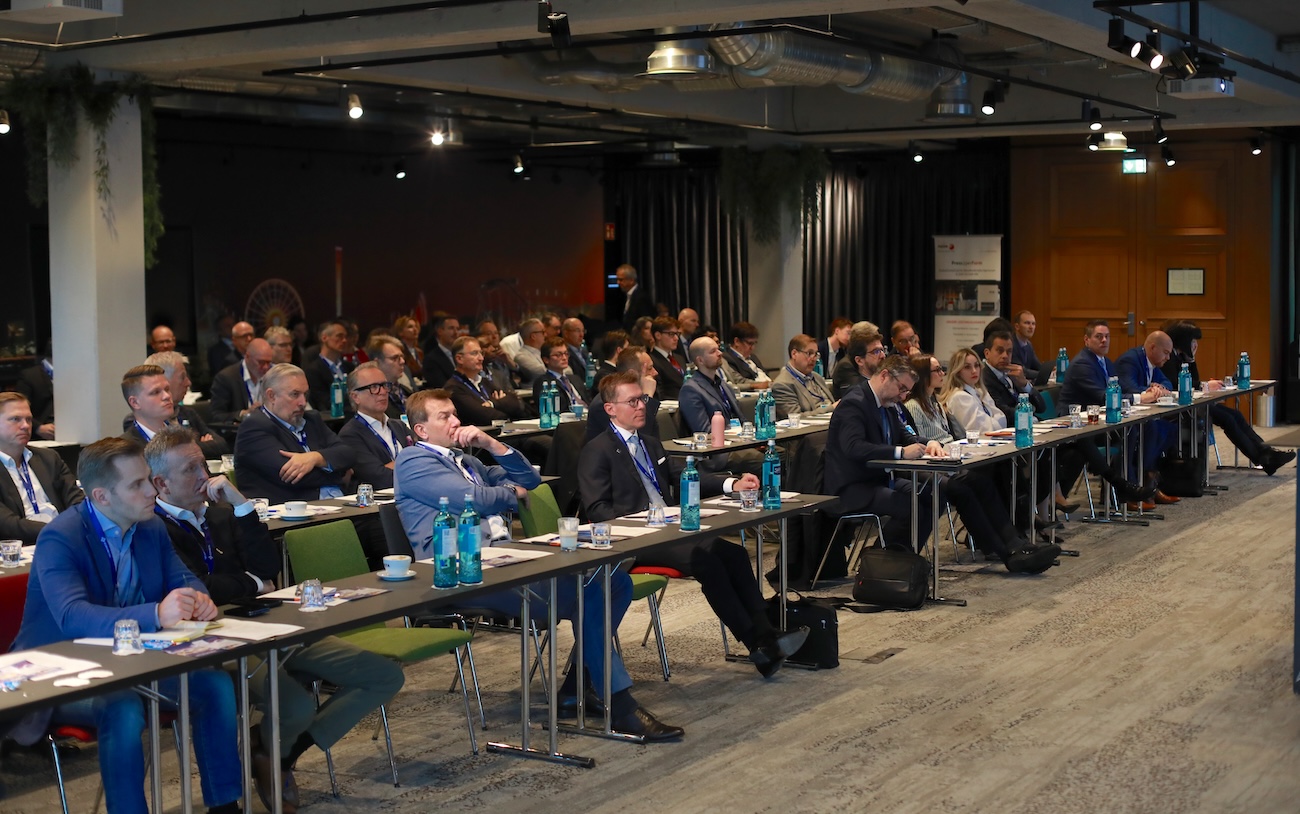
EUROMETAL Steel Trade Day 2026: Steel industry questions timing of EU ferrous scrap export curbs
The prospect of EU ferrous scrap export restrictions has raised questions over whether European steelmakers can absorb the volumes currently sold abroad. While securing sufficient feedstock for the green steel transition remains a strategic priority, premature restrictions could undermine the sustainability of the European recycling industry, Metal Expert learnt from market participants on the sidelines of EUROMETAL Steel Trade Day 2026, held on November 23-24 in Duesseldorf, Germany.
Insufficient domestic scrap consumption remains one of the key arguments against introducing export restrictions for Europe’s scrap sector at this stage. Regional recyclers remain heavily dependent on overseas markets, as European steelmakers are currently unable to absorb all the available material. Thus, maintaining access to international buyers is essential to keeping the European scrap market balanced, conference delegates noted. Moreover, regional scrap sellers have kept annual export volumes within 42-43 million t during 2020-2025, with an exceptional peak of around 48 million t in 2021, Eurostat data shows. In January-September 2026, ferrous scrap overseas sales reached 30.7 million t, down 2.6% year-on-year.
Uncertainty surrounding Europe’s transition from BF-based to EAF-based steelmaking further complicates the situation. Market participants pointed to major projects involving ArcelorMittal, Salzgitter, Thyssenkrupp, SSAB and others, noting that their anticipated impact on domestic scrap consumption has yet to materialise. “It is not possible to assume what exact volume they will require. Hence, the ban itself is not necessary now,” an industry source told Metal Expert on the event’s sidelines.
Power infrastructure represents another obstacle to the implementation of new EAF projects. The challenge is not necessarily insufficient electricity generation capacity but rather the readiness of transmission infrastructure. “The issue is whether the transmission grid can handle the load these furnaces require,” a delegate explained. Infrastructure limitations could delay project commissioning and consequently postpone the anticipated increase in domestic scrap consumption.
Restricting access to overseas markets before additional local demand materialises could create a scrap surplus, putting downward pressure on prices and squeezing collection and processing margins. Deteriorating profitability could discourage investment in recycling infrastructure and eventually compromise the industry’s ability to meet growing domestic feedstock requirements, market participants warned.
The UK faces a similar challenge in balancing future domestic scrap requirements against its established export trade. The country exported 7.5 million t of ferrous scrap in 2025, according to the OECD. Although the UK’s steel strategy envisages reviewing regulatory and recycling measures to secure domestic scrap supplies, an export ban remains outside its current commitments.
Meanwhile, the EU’s Waste Shipment Regulation could reshape international scrap flows ahead of any decision on broader export restrictions. From May 21, 2027, shipments of covered non-hazardous waste for recovery to non-OECD countries will be permitted only if the destination is authorised to receive the relevant waste stream. The draft list has raised considerable concerns in major importing markets, sources told Metal Expert. Unless the list is revised to authorise ferrous scrap shipments to India, Pakistan, Egypt and Morocco, steelmakers in these countries could lose access to EU material and face increased competition for alternative supplies.
Morocco illustrates how the new EU regulations could reinforce dependence on alternative suppliers, particularly the UK. The latter supplied around 1.1 million t of ferrous scrap to the Kingdom in 2025, accounting for 70.6% of the country’s imports, according to the Moroccan Steel Association (ASM). During January-September 2026, Morocco received around 995,000 t of bulk scrap through 83 cargoes, up 64% y-o-y. British suppliers increased deliveries by 56.1% to approximately 749,000 t, Metal Expert’s AIS-based Steel Scrap Markets data shows.
The potential impact of regulatory changes on international trade remains considerable, given Europe’s substantial scrap exports. While Turkiye, the bloc’s largest external buyer, falls outside the new authorisation requirement as an OECD member, several major Asian and North African importers face greater uncertainty over future supplies. However, such a move will have a double-edged effect on the European steel and scrap industry as well, considering the existing challenges with finished steel demand.
The key issue raised in Duesseldorf was therefore not necessarily the strategic objective of retaining more ferrous scrap within Europe, but the timing of such measures. “The timing of export restrictions should be aligned with the actual expansion of European scrap-consuming capacity rather than projected demand. It is still a very long way,” a market participant pointed out.
Market welcomes UK-EU ETS agreement, but queries remain
The market has broadly welcomed the UK and EU agreement on linking Emission Trading Systems (ETS), but outstanding queries remain over implementation and timeline, Kallanish observes.
Following the recent UK-EU summit, both parties agreed to link their ETS schemes, with the aim of this being operational by 1 January 2028. The linkage was proposed at an earlier summit in May 2025, a move then welcomed by the industry.
In a policy paper, the UK’s Department for Energy Security & Net Zero says it will lay the necessary legislation to fully implement the ETS linking agreement. It adds that the agreement will support UK economic growth, adding up to £3.8 billion ($4.97 billion) to the UK economy each year by 2040. It will also reduce costs for UK businesses by creating the conditions for an exemption from the EU CBAM for £6.5 billion worth of UK exports.
UK ETS participants will gain access to a larger, more stable and liquid carbon market, providing them with greater certainty around their ETS compliance obligations which helps to support their investment decisions, it adds.
“Creating the world’s largest linked carbon market sends a powerful signal that globally integrated carbon markets are achievable and demonstrates the UK’s commitment to carbon pricing as an efficient and cost-effective tool for emissions reduction,” the paper says.
The UK ETS and EU ETS will continue to operate as two separate but linked systems. Mutual exemptions from the respective CBAMs will be in place when the ETS link is fully operational. This is subject to EU legislative procedures, set to be launched quickly.
Pauline Miquel, policy & research lead at Cbamboo, highlights the “surprisingly quick” timeline for the UK side. “If things progress as announced, the UK will exempt EU-origin goods from its CBAM from the start in 2027. The EU, however, has no legal way to speed up the process,” she tells Kallanish. “As the EU CBAM regulation is written, a reciprocal exemption requires full and effective ETS linkage, which is promised by 1 January 2028. Contrary to some online rumours, the EU is not signalling any retrospective exemption.”
She warns that this means two years of EU CBAM compliance for UK exporters, which could deter small UK processors from investing in CBAM verification and alter trade flows during this transitional period. However, Miquel adds the move gives certainty to EU steelmakers exporting to the UK who were weighing up investment in verification for that market, which is now no longer required.
Cbamboo also expects origin rules to result in long-term complexity due to substantially lower UK CBAM charges versus those in the EU. There will also be potential challenges over differences in the two CBAM schemes, with only one requiring annually purchased certificates. Cbamboo is expecting further UK government guidance by 1 January 2027 to offer clarity.


Italian plate prices firm despite tepid demand
Italian heavy plate prices have risen in new contracts compared with October, while lead times have lengthened, Kallanish hears.
Demand is not particularly lively and continues to be for relatively small volumes. However, protectionism has wiped out half of annual imports, and buyers are turning to local producers. The end of infrastructure projects funded by the EU’s post-Covid recovery fund is being felt in the market, but mill sources are not worried.
“We sell more than we produce,” a mill source says. He confirms the mill is quoting January lead times. Buyers say Italian producers are uncompromising on prices.
Mills are considering a further increase by the end of the year. “Prices have increased, but with the energy costs and slab costs, we need to push up levels,” another source comments.
S275 currently sells at €800-820/tonne ($874-896/t) ex-works, with a €20-30/t premium for S355. Asking prices for S355 stand at €850/t. One buyer says he needed S355 plate and tried to pass the high price on to his client, who then decided not to buy. “Mills lose orders at these prices and we also lose orders, but they do not seem to care. They have filled order books,” the buyer comments.
Mills are also selling to other European countries, offsetting slow domestic demand. Slab prices are around $600/t cfr, depending on quality and volumes. CBAM costs come on top and remain uncertain.
Downstream, distributors say demand continues to be for small volumes. “You have to be well-stocked today. Customers want small volumes and a variety of grades and want to receive material quickly,” one distributor says.
Multiple distributors report continued slow downstream demand, a lack of competitive prices, and several payment delays and defaults. This remains an alarming sign for the overall health of the market.
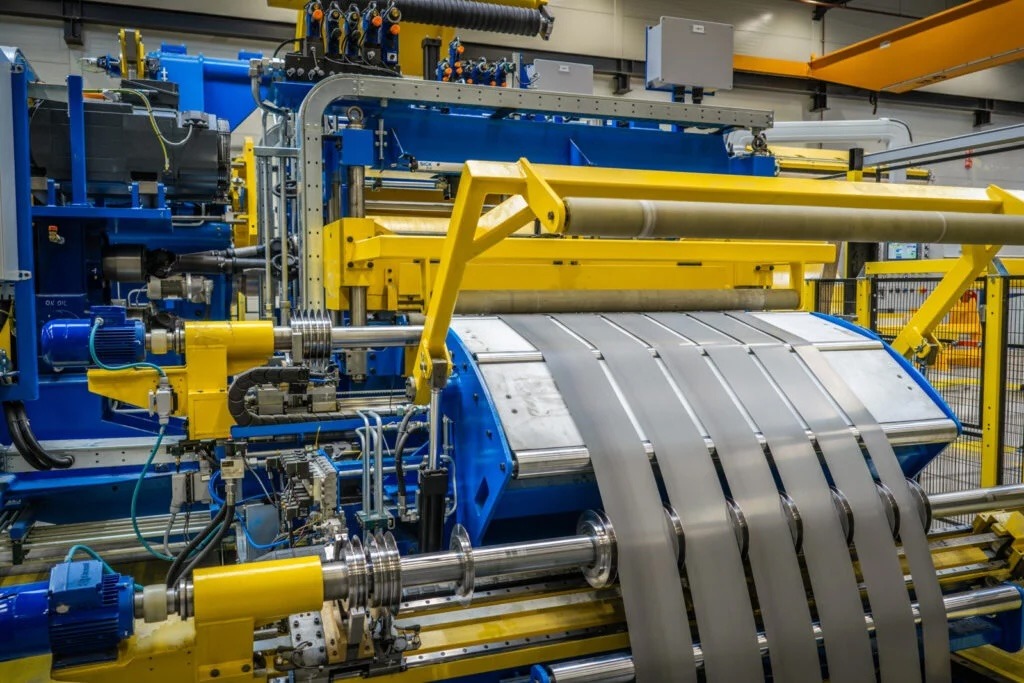
Euro-Mit Staal completes factory acceptance test for FIMIGroup electrical steel slitting line
Dutch steel processor Euro-Mit Staal has signed the Factory Acceptance Test (FAT) for a new electrical steel slitting line developed by Italian equipment manufacturer FIMIGroup, marking an important milestone in the project.
The installation has been specifically designed to process grain-oriented (GO) and non-grain-oriented (NGO) electrical steel, as well as prepainted steel, combining high-speed processing capabilities with the precision required for thin-gauge materials.
The new line can handle steel thicknesses ranging from 0.1 to 1.0 mm, incoming strip widths between 200 and 1,400 mm, and coils weighing up to 20 tonnes.
Depending on material thickness, the installation is designed to operate at speeds of up to 400 metres per minute for material up to 0.5 mm thick, and 200 metres per minute for thicknesses between 0.5 and 1.0 mm.
Electrical steel presents particular challenges for steel service centres, notably regarding cutting precision, material handling and the preservation of insulating coatings.
FIMIGroup’s new slitting line has been engineered to address these requirements throughout the processing stages, from coil handling and slitting to recoiling.
The project illustrates the continued development of specialised processing technologies for electrical steel, a material widely used in transformers, electric motors and other electrical equipment.
As European industries advance towards electrification and greater energy efficiency, specialised processing capabilities for electrical steel are becoming increasingly relevant.
Investments in advanced slitting technologies demonstrate the important role of steel service centres in supplying precisely processed materials to downstream manufacturing industries.
FIMIGroup has also released a video presenting the installation and its main equipment.