

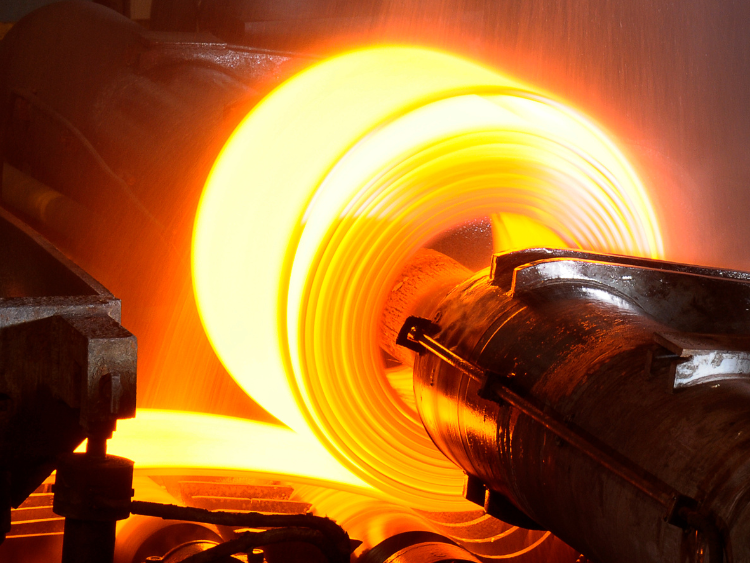
European CRC and HDG prices rise marginally, market still slow after holidays
European CRC and HDG prices have edged slightly higher since late December, with mills in both northern Europe and Italy still targeting elevated levels for February deliveries. Import trade has all but stalled, as most buyers prefer to avoid exposure to new bookings due to the CBAM regulations.
Specifically, in the domestic CRC market, most mills in Italy and northern Europe have continued to target €730-750/mt ex-works, the same as before the holidays. Meanwhile, the tradable prices have been estimated at €720-730/mt ex-works levels both in Italy and in northern Europe, which means prices have increased by around €10/mt over the past two weeks.
At the same time, market participants anticipate that mills will push prices higher in the near term, likely raising offers by about €10–20/mt in the next sales cycle. The expected increase is driven by tighter supply as CRC availability has been heavily dependent on imports, but more than half of the import volumes are now subject to antidumping (AD) investigations, affecting material from India, Japan, Taiwan, Turkey and Vietnam.
In the import segment, offers for CRC have settled at €620-660/mt CFR, depending on the supplier, compared to €600-620/mt CFR in late December. Offers for ex-Indonesia CRC have settled at around $750/mt CFR, which translates to around €640/mt CFR, up by €20/mt since late December. Besides, offers for ex-Thailand CRC have been voiced at €660/mt CFR southern Europe. Furthermore, more offers from traders have been reported on DDP basis, with indicative prices standing at €700-730/mt DDP this week.
In the HDG segment, domestic tradable prices both in Italy and in the north of Europe have settled at €730-735/mt ex-works, versus €710-735/mt ex-works two weeks ago, while mills have been targeting HDG offers for January delivery as high as €750/mt ex-works.
In the import segment, trade has remained limited, with offers for ex-Asia HDG Z100-120 voiced at €730-740/mt CFR, depending on the supplier, versus €700-730/mt CFR two weeks ago. Offers for ex-Vietnam 0.55 mm Z100 HDG have been voiced at €740/mt CFR.
$1 = €0.86


European longs market cautious at end of winter holidays, but talk about increases persists
The European longs market has remained mainly cautious after returning from the winter holidays this week, but several market players already believe that prices will increase in the coming days amid rumors about the scrap price trend and speculation related to CBAM.
In the local Italian rebar market, prices have remained stable compared to the pre-holiday levels, i.e., at around €290-300/mt ex-works base (€550-560/mt ex-works including regular extras). Italian producers already aim to increase this level as soon as the market returns to full capacity – some production facilities will remain idled for a few more days – but for the moment no official movement has been recorded. “Local [Italian steel] producers certainly aim to increase [finished steel] prices, also in the wake of international rising trends,” a source commented. Another Italian trader, however, stated, “It will be difficult to increase prices. Production restarts will lead to an increase in [rebar] supply, which is already higher than domestic demand.”
Still regarding Italy, wire rod prices in the local market in January have been reported in a range of €565-590/mt delivered for mesh quality and €585-620/mt delivered for drawing quality, although contracts at the lower ends are increasingly rare. Based on what some market sources have reported, in fact, €10-20/mt increases will materialize in the wake of CBAM speculations, the beginning of the new quota period in the EU and the upward trend in the international markets.
It is also worth mentioning that an important Italian producer let drop that it will not be in a hurry to conclude sales in January and so he can afford to further increase list prices higher than the average.
It is also significant that yesterday, January 8, ArcelorMittal announced some price increases of €40-50/mt due to the increase in costs related to CBAM, although this information has not been confirmed by the time of publication.
In the wire rod markets in central and eastern Europe, rising price hypotheses might be more modest, by around €10/mt, but even in this case this is not confirmed information, since, as mentioned, no concrete movements have been recorded this week.
In the export market, rebar prices from Spain to UK ports have been reported at around €580/mt FOB, up €10/mt from the last level recorded by SteelOrbis, whereas no price changes have been reported from Greece as many market players there are still inactive after the winter break.
Finally, in the import market, increases of about €10/mt have been recorded in rebar and wire rod prices from Turkey, which currently stand at about €520/mt CFR and €525/mt CFR, respectively. As for Egyptian material, rebar and wire rod prices have been reported at €495/mt CFR and €505/mt CFR respectively, whereas rebar from Algeria has been reported at around €490/mt CFR. To conclude. prices of Indonesian-origin wire rod to southern European ports have been reported at €465/mt this week.
ADI sale to Flacks to close by April
The closing of the sale of Acciaierie d’Italia (ADI) to US investment fund Flacks Group is expected to take place between late February and, at the latest, April, founder and chief executive Michael Flacks tells Kallanish.
The Italian government is set to hold a 40% stake, while crude steel output at the Taranto steelworks is expected to rise to around 4 million tonnes/year from the current 2mt within 12 months of completion, with a workforce of 8,500. A government announcement awarding the former Ilva site to Flacks Group is expected still this week.
Output at Taranto is then anticipated to reach 6mt within 18-24 months after the deal closing. Initially, the plant will operate with one blast furnace, with plans to restart a second.
“Italy has strong needs for steel and it’s only producing half of what it needs,” Flacks says, adding that in the first year the steelmaker is expected to achieve turnover of around €4 billion ($4.66 billion) as the company undergoes “significant change”. Flacks’ plan includes replacing the existing blast furnaces with three electric arc furnaces.
In December, Flacks Group emerged as the preferred bidder against rival Bedrock in the tender for the former Ilva and its assets. The steel producer will be renamed Ilva. The transaction involves a €5 billion ($5.89 billion) investment commitment.
Speaking to Kallanish last month, Flacks described the project as “most exciting”. He noted the large scale of the Taranto site, the large port, and the potential for the modernised facility to reach 12m t/y production within about 12 years. The Taranto site offers opportunities beyond steelmaking, including renewables and data-centre development.

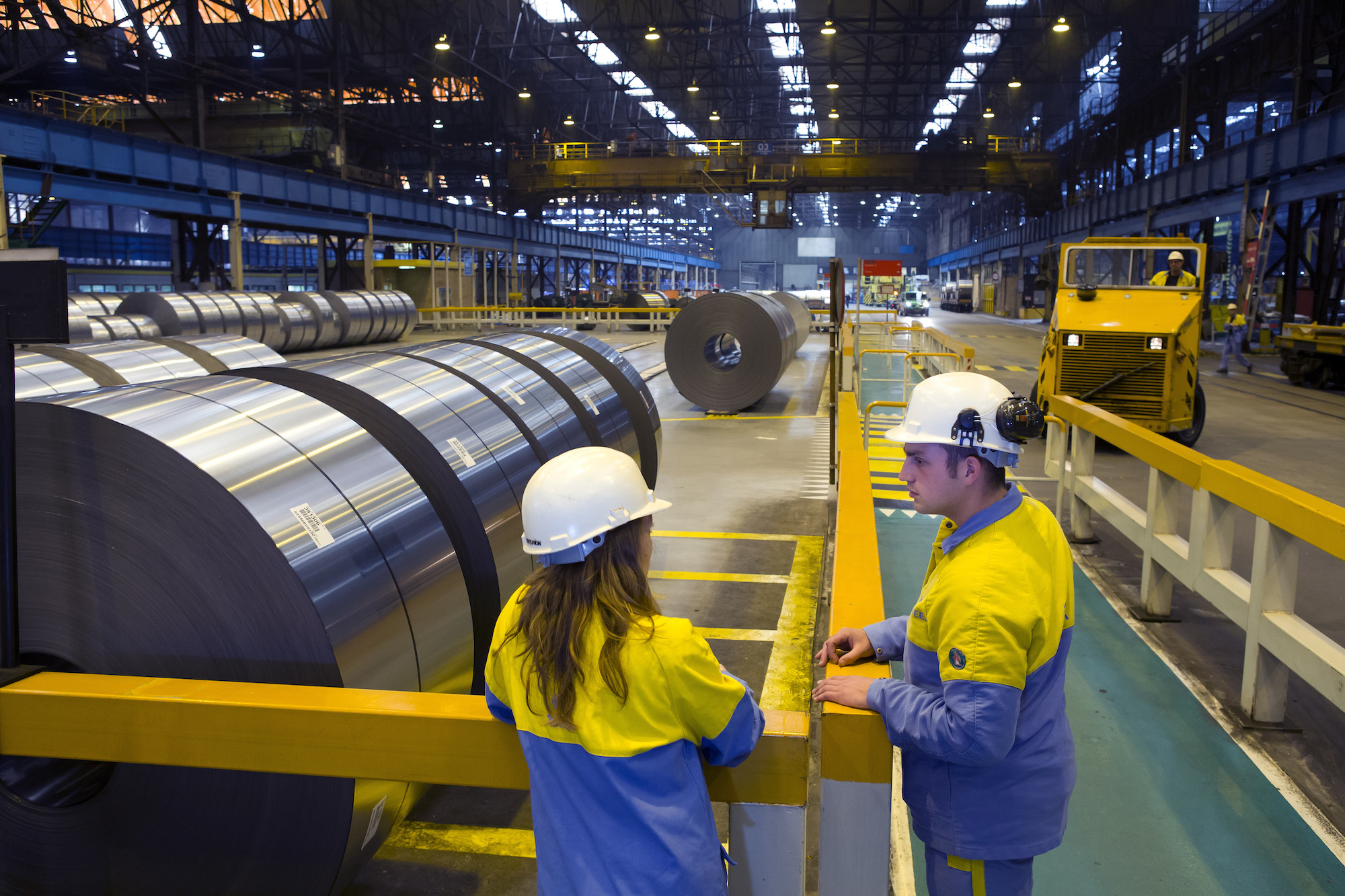
Tata Steel UK, Netherlands see lower quarterly volumes
Tata Steel’s UK and Netherlands operations have both reported lower volumes for the October-December quarter (Q3) of fiscal year 2026 (FY26), Kallanish learns from its recent provisional results.
For liquid steel production, Tata Steel Netherlands reported 1.68 million tonnes for the quarter, down from 1.76mt in Q3 2025, but little changed from 1.67mt in the previous quarter. On a nine-month basis, this stood at 5.05mt, down from 5.12mt during the same period in 2025.
The company says that “seasonal factors and subdued market dynamics led to lower deliveries” on a quarter-on-quarter basis.
Delivery volumes for the quarter were at 1.4mt, down year-on-year from 1.53mt, and q-o-q from 1.54mt. On a 9M basis, these volumes were at 4.44mt, down from 4.5mt for the same period of 2025.
In the UK, work continues on Tata’s new electric arc furnace following the end of ironmaking at the site in September 2024.
Tata says that “enabling works for the EAF project have advanced and the site landscape is being reshaped for the next phase of construction”.
As part of this, it is serving its customers via downstream processing of purchased substrate. UK deliveries in Q3 dipped to 0.52mt, from 0.57mt each in the previous quarter and Q3 2025. On a 9M basis, deliveries stood at 1.69mt, down from 1.88mt year-on-year.

EU metallic-coated sheet quotas draw down rapidly
EU safeguard tariff-rate-quota (TRQ) utilisation for metallic-coated sheet is filling up unevenly as of 7 January, with category 4.A approaching exhaustion for Türkiye and Vietnam overbooked, while category 4.B is already overbooked for China, Kallanish notes.
Category 4.A covers metallic-coated sheet imports not declared for automotive end-use, while category 4.B is for automotive-grade imports placed under the EU end-use procedure.
Category 4.A is nearing closure for Türkiye, with only 7% of the quota still available, as 108,828 tonnes are already awaiting allocation against a ceiling of 116,832t. Vietnam is overbooked, with 130,809t awaiting allocation, exceeding the quota by 13,977t.
South Korea retains 23,722t, or 64% availability, while Taiwan has 32,196t, equivalent to 28%, still open.
By contrast, India and the United Kingdom remain largely open, with 99% and 84% of their respective quotas still available.
Category 4.B for automotive-grade imports is fully closed for China, where 194,321t are awaiting allocation against a TRQ of 126,938t, leaving the category 53% overbooked. South Korea still has 98,029t, or 60%, available.
India and the UK remain almost entirely open, with 100% and 99% availability respectively.
| Product Number |
Origin | TRQ volume |
Balance | Awaiting allocation |
Avaliable TRQ |
Available TRQ % |
| 4.A | South Korea | 37,148 | 37,148 | 13,426 | 23,722 | 64 |
|---|---|---|---|---|---|---|
| India | 53,100 | 53,100 | 753 | 52,347 | 99 | |
| United Kingdom | 35,001 | 35,001 | 5,633 | 29,369 | 84 | |
| Other countries: | 467,329 | – | – | – | – | |
| – Türkiye | 116,832 | 116,832 | 108,828 | 8,004 | 7 | |
| – Vietnam | 116,832 | 116,832 | 130,809 | -13,977 | -12 | |
| – Taiwan | 116,832 | 116,832 | 84,636 | 32,196 | 28 | |
| 4.B | China | 126,938 | 126,938 | 194,321 | -67,383 | -53 |
| South Korea | 164,743 | 164,743 | 66,714 | 98,029 | 60 | |
| India | 75,817 | 75,817 | 370 | 75,446 | 100 | |
| United Kingdom | 35,001 | 35,001 | 330 | 34,672 | 99 | |
| Other countries: | 103,732 | – | – | – | – |
Source: EU TARIC, as of 7 January. Complied by Kallanish

Primetals upgrades pickling and tandem mill at voestalpine
Primetals Technologies is implementing a software upgrade across the process control systems at voestalpine Stahl’s BETA 2 pickling line and tandem cold mill (PLTCM) in Linz, Austria.
The upgrade will strengthen IT security, increase system availability, and ensure that the PLTCM meets the latest standards in automation, with commissioning scheduled for mid-2026, the technology supplier tells Kallanish.
The BETA 2 line produces high-strength and ultra-high-strength steels for the automotive, household appliance, and construction industries, as well as electrical steel. According to Primetals, the modernisation will improve operational reliability and ensure long-term compatibility with the latest hardware and software.
To maximise system availability and streamline software maintenance, all automation engineering systems will be integrated into voestalpine’s virtualisation environment. This approach will streamline operations and maintenance for staff working across multiple lines, the equipment supplier explains.
Primetals previously carried out a major upgrade of the BETA 3 cold rolling mill and a 2013 project involving new pickling tanks and a complete electrics and automation upgrade at BETA 2.

Electric vehicles increase German production share in 2025
Germany’s carmakers kept their production in 2025 largely at the previous-year level, but their association VDA expects a decline in 2026, due to overall economic weakness. The association points at the growing share of electric car production, which it says will continue this year.
Domestic passenger car production in 2025 was 2% above the year-earlier level, at 4.15 million units. This marks the third consecutive year that domestic passenger car production has remained at roughly the same level, Kallanish hears from VDA. However, it remains significantly below pre-crisis levels. The 2025 output was still 11% lower than in 2019, the last year before the pandemic.
In December, 263,500 passenger cars were produced in Germany, representing a strong year-on-year increase of 17%. To put this in perspective, however, December 2024 was extremely weak and saw the lowest December production figure since German reunification, VDA notes.
In terms of order activity, in 2025 total order intake was 2% lower than in the previous year. The trend was more pronounced in December, which was 8% below December 2024. For car production in 2026, VDA predicts a slight decline of 1% to 4.11m units.
The total number of electric cars produced in Germany in the first 11 months of 2025 came to almost 1.56m. This already represents over 200,000 units more than in the entire year of 2024, which was the previous record year for domestic e-car production.
“The German automotive industry is continuing to accelerate its efforts in e-mobility, and Germany is consolidating its position as the world’s second-largest production location for electric cars,” says VDA president Hildegard Müller. “It is now crucial that policymakers further improve the framework conditions for e-mobility.”

US export bureaucracy hurts German mechanical engineering
The export-driven German machinery manufacturing and mechanical engineering industry is suffering badly from US import restrictions, its association VDMA reports in its latest annual review.
The punitive US tariffs on steel and aluminium will likely affect around 56% of German machinery exports to the US in the near future, Kallanish hears from the federation. According to a new VDMA survey of nearly 400 member companies, 47% of companies report a decline in orders from the US since last April. Two-thirds of respondents expect a drop in sales due to the tariffs.
“What’s more, it’s not just about the absolute level of the tariffs, but also about the associated bureaucratic burden, such as correctly declaring the value of steel and aluminium,” says VDMA president Bertram Kawlath. “Only around a quarter of our companies believe they can meet the American requirements. The tariffs are absolutely counterproductive for both sides!”
In September 2025, German machinery exports amounted to €16.3 billion ($19 billion), marking a 3.4% decline compared to the previous year. Adjusted for price changes, this corresponds to a real decrease of 4.7%. To the USA, exports fell by 10.8% in September. The USA accounts for more than 12% of German exports, rendering it still the largest single foreign market for German mechanical engineering, followed by China with 8% and France with 6%.
As a gentle compensation for the trade issues with the USA, exports to other EU members turned out more favourable than previously assumed. These were still down by 2.2% y-o-y in the first three quarters but have recently gained momentum. To the eurozone, especially, the decline was only 1.1%, VDMA notes.

EU TRQs closing rapidly for Turkish flats, pipe
Turkish flat steel exports to the EU are approaching effective closure for the remainder of the first quarter, with most Q1 volumes already tied up in awaiting allocation.
Pipe product quotas were meanwhile effectively used up within the first working days of the year, Kallanish notes.
By contrast, long products and stainless steel still retain some trading opportunities, according to EU customs portal data.
More than 312,000 tonnes of hot-rolled sheet and strip are currently awaiting allocation, leaving just 81,127 tonnes available, equivalent to 21% of the 393,978t quarterly quota for Türkiye’s largest flat steel category.
Cold-rolled sheet and coated flat products are even tighter, with availability limited to 7% for CR sheet, 9% for metallic-coated sheet and 6% for organic-coated sheet.
Tin mill products are already heavily oversubscribed, with bookings exceeding the quarterly quota by nearly 4,000t.
A similar situation is evident for Turkish pipes and tubes, with gas pipes, hollow sections and large welded tubes all exceeding their quarterly allocations and showing negative availability.
By contrast, long products retain greater availability, with merchant bars and light sections showing 66% quota availability, angles and sections 59%, rebar 40% and wire rod 32%.
Stainless cold-rolled sheet and strip stand out as largely untouched, with 96% of the quarterly quota still available, while railway material remains almost fully open at 99%.
| Product | TRQ volume | Avaliable balance | Awaiting allocation | Avaliable TRQ tonnes | Available TRQ % |
| HR sheets, strips | 393,978 | 393,978 | 312,851 | 81,127 | 21 |
| CR sheets | 43,033 | 43,033 | 39,995 | 3,039 | 7 |
| Metallic coated sheets | 116,832 | 116,832 | 106,183 | 10,649 | 9 |
| Organic coated sheets | 15,559 | 15,559 | 14,669 | 890 | 6 |
| Tin mill products | 7,347 | 7,347 | 11,318 | -3,970 | -54 |
| Stainless CR sheets, strips | 20,620 | 20,620 | 722 | 19,898 | 96 |
| Merchant bars, light section | 104,916 | 104,916 | 35,841 | 69,075 | 66 |
| Rebars | 93,455 | 93,455 | 56,518 | 36,937 | 40 |
| Wire rod | 97,074 | 97,074 | 66,418 | 30,657 | 32 |
| Angles, shapes, sections | 22,395 | 22,395 | 9,251 | 13,143 | 59 |
| Railway material | 1,541 | 1,541 | 23 | 1,518 | 99 |
| Gas pipes | 48,939 | 48,939 | 54,716 | -5,778 | -12 |
| Hollow sections | 83,110 | 83,110 | 111,529 | -28,419 | -34 |
| Large welded tubes | 14,782 | 14,782 | 19,553 | -4,771 | -32 |
| Other welded Pipes | 37,698 | 37,698 | 21,916 | 15,782 | 42 |
Source: EU TARIC, as of 6 January. Complied by Kallanish
Author: Elina Virchenko

Damstahl sees 2026 price surge for Stainless Longs amid CBAM shift
European producers’ stainless steel long products prices could see a boost in 2026, given import restrictions and extra fees caused by the Carbon Border Adjustment Mechanism (CBAM), German distributor Damstahl believes.
The new trade regime projected to take effect from 1 July will see an increase in duty on Asian-origin imports above the quota from 25% to 50%. “This announcement has already caused European importers to turn more to domestic producers, which towards the end of 2025 reported higher order intake and longer lead times,” Damstahl writes in its latest market report.
Under pressure from Asian-origin imported material, European special bar qualities (SBQ) saw a long period of prices at a low level, with little change throughout 2025, Damstahl’s authors write. They expect European mills to push prices up in the second quarter at the latest, and note that some increase has already occurred. For imported material, the firm expects a price increase by 15-20%.
An additional factor possibly causing a shortage for certain bar products this year is that European mills need to ramp up production to meet the redirected demand. This will need a longer period, which Damstahl expects to take 6-8 months, following several years of reduced utilisation.
“The ramp up of the European mills has been assumed in this range since they have reduced their capacities throughout the last two years significantly,” the authors explain to Kallanish.