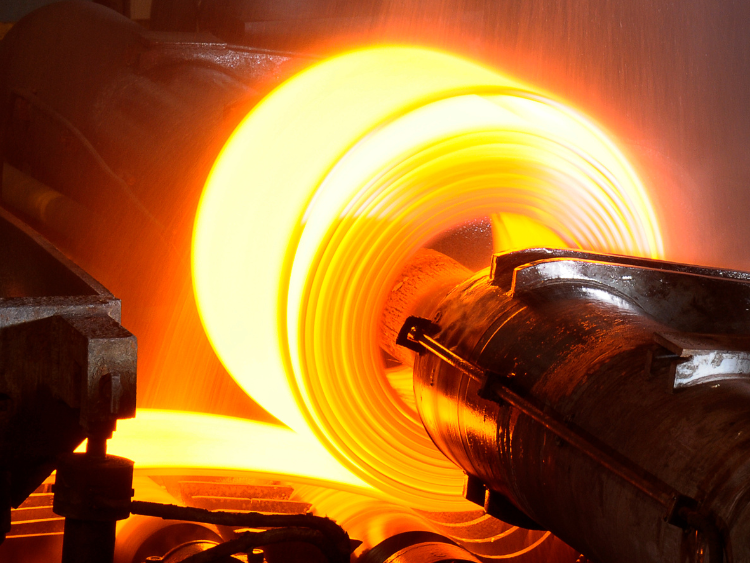
European domestic HRC market still sleepy after holidays; upbeat mood palpable
A few sources said there had not been any price changes announced since mid-December and estimated workable levels at €630 ($738.22) per tonne ex-works.
This compares with official offers from Northern European mills for February/March-delivery HRC heard at €630-670 per tonne ex-works or delivered before the holidays.
“Today people are telling me the same stories and numbers as mid-December. Some more deciding managers will return by mid or end of this week. Presently people are waiting for impulse, but prices are expected to increase,” one trader told Fastmarkets.
Implementation of the Carbon Border Adjustment Mechanism (CBAM), an environmental policy tool for fair pricing of carbon emissions embedded in steel goods imported to the EU from January 1, will increase the cost of imported steel products, particularly HRC, which will help domestic producers strengthen their positions.
Fastmarkets’ daily steel HRC index domestic, ex-works Northern Europe was €630 per tonne on Monday, up by €2.50 per tonne since January 2.
The index was up by €2.50 per tonne week on week and by €7.50 per tonne month on month.
The Italian market was quiet, with participants expected to return on January 7. No fresh input was received on January 5.
The latest buyer estimates of workable prices came in at €610-620 per tonne ex-works before Christmas.
Offers of February-delivery HRC were heard at €610-640 per tonne ex-works, depending on supplier.
Fastmarkets’ daily steel HRC index domestic, ex-works Italy was calculated at €623.12 per tonne on Monday, stable from January 2.
The index was stable week on week and up by €9.79 per tonne month on month.

Global green steel markets in 2026: regulation, costs and regional divergence
But 2026 is shaping up to be the first year when green steel ambitions meet a transformed policy environment and an unforgiving market reality. The introduction of the Carbon Border Adjustment Mechanism (CBAM) in January 2026 in the EU is expected to be a watershed moment – one that forces clearer definitions, shifts cost structures, and begins to separate early winners from laggards.
While Europe is pushed by regulation, Asia is driven by cost and technology pragmatism, and the Middle East positions itself as a strategic supplier of ultra-low-emissions steel and raw materials. The US, meanwhile, enters a period of uncertainty as the new administration signals a shift away from federal green-industry goals, creating a more fragmented landscape where state-level incentives and corporate demand – rather than national policy – will shape the trajectory of low-carbon steel. Together, these regions will define the competitive landscape for green steel over the next several years.
Fastmarkets has done a forward-looking preview of what to expect in 2026 for the green steel market globally, along with the key challenges and opportunities as some regions move from green steel storytelling to measurable decarbonization.
Europe: Definitions, Regulations and Cost Pressure
For Europe, the ambiguity around green steel will become increasingly difficult to sustain. The introduction of the CBAM will force producers and importers to quantify emissions with unprecedented precision.
With CBAM payments becoming financially material, the market can no longer operate on loosely defined green branding or mass-balance accounting. Instead, Europe will be pushed toward a more consistent emissions-intensity threshold, covering Scope 1, 2 and, increasingly, Scope 3. This will bring Europe closer to emerging frameworks abroad, including India’s 2024 star-rating system and the rules emerging in different regions for “clean” materials.
In this context, the need for a harmonized certification and “green steel” label that aims to bring transparency and credibility to the market becomes crucial. Without credible supply-side labeling and traceability, Europe risks undermining trust in green steel – which could discourage procurement and investment.
Initiatives for certification standards, like the one led by Low Emission Steel Standard (LESS) or Responsible Steel therefore become particularly relevant.
If LESS or a similar standard gains broad acceptance in Europe – including among producers, buyers, and regulators – 2026 could mark the birth of credible “lead markets” for low-emission steel. Large institutional buyers (automakers, construction firms etc.) will demand certified emissions data, not marketing claims. That could make low-emission steel the new baseline for “responsible sourcing.”
So far, European steelmakers have found it challenging to charge premiums for green steel owing to a lack of willingness to pay among buyers and a lack of consumer awareness of green steel.
The lack of common standards, even for the definition of “green steel”, slowed its uptake in the market, sources said.
“There is a lack of awareness [of green steel] from buyers in some regions,” a mill source said. “Sometimes we get ridiculous requests. It is clear they have no idea of what they need.”
Fastmarkets’ methodology defines European green flat steel as “steel produced with Scope 1, 2 or 3 emissions at a maximum of 0.8 tonnes of CO2 per tonne of steel.”
Fastmarkets’ weekly assessment of the green steel domestic, flat-rolled, differential to HRC index, exw Northern Europe, meanwhile, was set at €100-170 ($117-199) per tonne on January 2, unchanged from December 24.
In 2025, green steel premiums for flats have remained relatively stable, fluctuating within a narrow band of roughly €120-180 per tonne. The premium has been showing only modest week-to-week volatility. Despite movements in underlying base steel prices, the green premium itself has not shown major directional shifts and has instead held within the same range throughout the year. This suggests a broadly steady market perception of the green surcharge rather than strong upward or downward pressure in 2025.

Overall, the decarbonization shift in Europe remains quite “painful” for steelmakers, despite state funding.
“Even with strong policy backing and potentially rising demand due to regulatory changes, producing green steel is expensive and difficult to scale-up,” a mill source in Europe said.
Regulatory uncertainty and deteriorating economic conditions have led several European steelmakers to revise their decarbonization strategies, Fastmarkets reported – for example:
Salzgitter delayed implementation of its Salcos green project.
Thyssenkrupp has put a hydrogen tender for its green steel plant on hold due to elevated prices but said it remains committed to the Duisburg site’s green transformation.
SSAB postponed the start date for its Lule green project from the end of 2028 to the end of 2029 because of technical challenges – notably, delays in the modernization of the national power grid that will supply electricity to the facility.

Switching to electric-arc furnaces (EAFs) and EAFs/DRIs implies a steep increase in electricity requirements. SSAB estimated that electricity usage would rise significantly, demanding greater supply of fossil‐free power.
Electricity accounts for less than 4% of the costs in the BF-BOF production route. For EAF mills, electricity can be around 20% of the total, industry sources estimated.
The first wave of DRI/EAF projects has already faced increasing pressure relating to raw materials availability and energy pricing. DR-grade pellet, high-quality scrap, and reliable renewable electricity remain critical constraints for scaling low-carbon output. Europe’s energy transition delays – slow permitting for renewables, elevated electricity costs, and underdeveloped hydrogen infrastructure – will make 2026 a challenging year for many plants seeking full certification and compliance.
In such circumstances, decoupling energy-intensive ironmaking from steelmaking has become an omni-present discussion point.
Importing hot-briquetted iron (HBI) and DRI from origins such as the Middle East-North Africa region (MENA), where HBI/DRI production is more commercially viable, was one possible scenario in coming years.
Despite all the challenges, the opportunity remains real. CBAM phasing in, along with phasing out of free carbon permits under the EU Emissions Trading System (ETS), will give potentially compliant producers a structural price advantage over BF-BOF imports. Combined with a credible low-emission steel standard like LESS or Responsible steel, European producers who secure “clean” raw materials, renewable energy, and transparent emissions accounting could build a strong market position.
As a result, 2026 promises to be a moment of “sorting” for European steel: companies and projects that align early with emissions-based certification and clean energy strategies will gain first-mover advantages; others risk being left behind, exposed to both regulatory costs and eroding market trust.
MENA paradox
The Middle East-North Africa region holds the strongest position among all regions when it comes to low-carbon steel production.
The region’s steelmaking industry, being comparatively recent, is almost 100% represented by EAF-based mills, their CO2 emissions being below one tonne per one tonne of steel produced versus the global average of 1.9 tonnes of CO2 per tonne of steel produced.
On top of that, MENA has abundant gas reserves, and great potential for renewable energy – particularly solar, and the push for the potential of green hydrogen, which would allow cutting of CO2 emissions even further.
Additionally, the region enjoys a favorable geographical position thanks to relatively close access to Europe and Asia as well as reasonably developed port infrastructure.
But despite all these benefits, the region cannot fully enjoy them since the European region – the only one that currently shows interest in steel with a low carbon footprint – mainly needs flat products, whereas MENA is largely concentrated on production of long steel.
“If you go into the data of European imports, they import 38 million-42 million tonnes [per year] roughly and 90% or more of that is flat products. The MENA [region] produces mostly long products, but [Europe] does not need long products,” Rajesh Singh, general manager at United Iron and Steel said during Fastmarkets’ Middle East Iron and Steel Event (MEIS) held in Dubai in November.
And, in 2026, long steel imports into Europe are projected to shrink once the new trade regime cutting foreign steel supply by around 50% comes into force.
Under the new regime, only 844,526 tonnes of rebar and 1.56 million tonnes of wire rod will be able to enter the union free of a 50% duty.
“Thus, we cannot use this good positioning that we have in terms of low emissions,” said Ramy Saleh, chief business development & sustainability officer at El Marakby Steel.
According to Saleh, the MENA region could capitalize on steel sections and sheet piles as well as various downstream products.
Additionally, the region could potentially go downstream once European mills switch to EAF-based production since it is one of the largest DRI producers in the world.
In 2024 the region (excluding Iran) produced 28.55 million tonnes of DRI, according to Worldsteel, while overall steel output was 43.7 million tonnes.
Nevertheless, some of the region’s key producers repeatedly mentioned that it would be better to sell products with high added value rather than raw materials.
China ready to export green steel, but CBAM cost concerns persist
China is advancing its production and export of green steel, with many mills now able to reduce carbon emissions by 30-40% compared with the traditional BF-BOF process, which typically emits 1.8-2.2 tonnes of CO2 per tonne of crude steel.
Several steel producers are already manufacturing products that meet the CBAM carbon emission benchmarks.
For example, HBIS Group has utilized hydrogen metallurgy to produce green steel, exporting its first batch of green steel slabs to European buyers in 2025. Similarly, Baowu Steel supplied green rebar for a low-carbon construction project in Shanghai. Although volumes were modest, industry observers noted that this demonstrates the capability of Chinese mills to produce a range of green steel products in response to market demand.
China also benefits from a substantial supply of green electricity, which supports environmentally friendly steel production, particularly at electric-arc furnace (EAF) mills.
As of the end of 2024, the cumulative installed capacity of new energy power generation in China reached 1.41 billion kilowatts, a year-on-year increase of 33.9%, accounting for 42% of the total installed capacity in the country. In 2024, China’s new energy power generation reached 1.84 trillion kilowatt hours, a year-on-year increase of 25%, according to China’s National Energy Administration.
Furthermore, the Chinese government has finalized the carbon emission allowance allocation plan for the steel sector under the national ETS for 2024-2025, enabling producers to trade carbon credits. This mechanism is expected to promote green steel production by allowing mills to offset a portion of their costs through the sale of surplus carbon quotas.
Nevertheless, concerns persist regarding high CBAM-related expenses. The European Commission sets China’s default emissions value for hot-rolled coil (HRC) under CBAM at 3.187 tonnes of CO2 per tonne, leading to an estimated cost of €145.46 per tonne according to Fastmarkets’ data.
“This cost will undermine the competitiveness of Chinese green steel in the European market, hindering the mass production of the product,” an exporter based in China said.
“The carbon emission benchmarks for Chinese steel products are lower than we previously expected, which could be a challenge for most Chinese steelmakers for now,” a Chinese mill source said.
Higher costs caused by the launch of CBAM in Europe from 2026 will likely constrain trade flows of Chinese steel into the European market in the near term; in the longer-term, this, coupled with the Chinese government’s decarbonization push, is expected to help facilitate the green development of the Chinese steel industry, a second Chinese mill source said.
Fastmarkets’ fortnightly price assessment of flat steel reduced carbon emissions differential, exw China, which calculates the premium for flat-rolled reduced carbon emissions steel over products produced from the traditional blast furnace-based route, came in at 0-500 yuan ($0-71) per tonne on Monday January 5 2026, unchanged since June 20.
The corresponding assessment of flat steel reduced carbon emissions, daily inferred, exw China was 3,260-3,770 yuan per tonne on Monday January 5, with the range moving down by 10-30 yuan from 3,270.00-3,800.00 on December 31.
Decarbonization and the green steel movement lose steam in Trump’s America
When Donald Trump began his second term as President of the United States on January 20 2025, it was clear that his administration’s policies would veer sharply away from his predecessor Joe Biden’s.
Trump had run his campaign on the promise of putting ‘America First’, and the country’s turn away from making climate-conscious policies was a natural consequence of this, one that has put decarbonization and the green steel movement on the back foot.
For example, Trump’s One Big Beautiful Bill Act (OBBBA) made it harder for solar and wind energy projects to qualify for federal tax credits and repealed several Inflation Reduction Act (IRA) incentives such as those for electric vehicles (EVs) and residential energy products.
During his address to the United Nations General Assembly (UNGA) on September 23, Trump dismissed climate change as “the greatest con job ever perpetrated on the world” and a “hoax made up by people with evil intentions.” He also called green energy a “scam” and took aim at wind farms and environmentalists.
“You need strong borders and traditional energy sources if you’re going to be great again,” Trump said during his address. “I worry about Europe; I love the people of Europe. I hate to see it being devastated by energy and immigration,” he added.
It is unsurprising that, in the current political climate, green steel initiatives are not picking up steam.
US steel market participants have often expressed the opinion that steel made in the US is “cleaner” than production methods elsewhere, as more than 70% of production is through electric-arc furnaces (EAFs).
EAF steel production emits lower levels of carbon, while production via blast furnaces, which rely on coal, emits higher CO2 levels.
Fastmarkets’ weekly green steel domestic, differential to US HRC, fob mill was flat at $0 per short ton on Wednesday December 31, unchanged since the differential was launched on May 22, 2024.
Fastmarkets’ carbon threshold is 0.7 tCO2e per one tonne of steel produced. Renewable energy credits and mass balancing can be used for carbon calculation, but carbon-offset credits are explicitly disallowed.
Author: Julia Bolotova, Vlada Novokreshchenova, Jessica Zong, Zihuan Pan, Rijuta Dey


Perfect storm for EU steel: five things to watch in 2026
CBAM rollout to gradually shift trade flows
CBAM is prepared for a full rollout as of January 1, and its introduction is expected to reshape the trade patterns in the European steel market massively – the change was already visible in 2025.
The European Commission has now finalized the benchmark and default emissions values that will determine how much carbon cost importers must pay once CBAM becomes fully operational in January 2026.
These values, especially the default emissions assigned to each exporting country, vary widely and create major cost differences between origins.
Consequently, trade flows are expected to shift for a number of reasons.
Default values are extremely high for some major flat steel and semis suppliers, namely China, India and Indonesia, much higher than in the previously leaked draft from November 2025.
For example, China’s slab default value was raised to 3.167 tCO₂e/t compared with 1.75 tCO₂e/t in November drafts, which translates into roughly €144 per tonne in CBAM charges, making imports far less competitive.
Indian and Indonesian hot-rolled coil could face €200-600 ($234-703) per tonne in CBAM costs, erasing the advantage of low base prices.
Among other suppliers very few, including Brazil saw milder increases, making them “manageable” CBAM-compliant origins and therefore more or less attractive to EU buyers.
Annual mark-ups, specifically 10% in 2026, 20% in 2027 and 30% from 2028, make high-default-value countries even less viable over time unless they can provide verified actual emissions, which many cannot yet do.

Because CBAM cost exposure differs dramatically by origin, buyers will change sourcing strategies to avoid punitive default values and prioritize countries with lower default values and/or verified emissions, or greener production routes, for example scrap- electric-arc furnace (EAF).
So far, to manage unpredictable CBAM costs, European buyers were prioritising import bookings on DDP basis – which at least partially accounted for CBAM costs of imported goods.
For this reason, Fastmarkets launched its DDP price assessment for imported flat steel in November.
Growing protectionism: new trade regime to cut steel imports in 50%
Another groundbreaking change the European steel market will face in 2026 is new trade regime, set to replace existing safeguards measures.
In October 2025, The European Commission has proposed a deep overhaul of steel import safeguards, slashing tariff-free quotas by roughly 47% and imposing a 50% duty on any imports above the new limits, up from the current 25%. Only 18.3 million tonnes of steel would be allowed into the EU duty-free each year, versus much higher current import volumes.
The reform aims to shield EU steelmakers from global overcapacity, restore domestic utilization levels, and return import market shares to pre-crisis norms. It also tightens traceability with a mandatory “melt and pour” origin rule, blocking relabeling or transshipment.
Because actual EU steel demand remains weak while imports have surged by 26.36 million tonne in 2024, which represents 6.4% year-on-year growth, according to Eurofer data. For flat steel market, share of imports in total consumption was estimated by industry sources to have surged to 25%, the new quotas would represent severe cuts for many categories, Fastmarkets reported.

Meanwhile, actual imports was actually much higher than suggested quotas.


The regime is likely to replace current safeguards measures as of July 1 2026, several sources said.
“It’s unlikely that the Commission will do early introduction as of April 1, the regime is too complex, they will need more time,” a buyer in Italy said.
Such reductions are expected to create tightness in key flat steel grades, lift in-quota prices and push buyers toward greater reliance on EU mills, especially because CBAM also raises the cost of imports from high-emission origins, Fastmarkets understands.
Producers welcomed the proposal, while import-dependent industries warn of supply disruptions. The UK — with 80% of its steel exports going to the EU — calls the plan “existentially threatening,” while other third-country exporters anticipate diversion risks.
The proposal still requires approval by Parliament and Council but is expected to take effect mid-2026, when current safeguards expire, sources familiar with the matter told Fastmarkets.
On top of all this, in September, the European Commission imposed anti-dumping duties on imports of certain hot-rolled flat products originating in Egypt, Japan and Vietnam. replacing the provisional duties applied earlier in 2025. The measures targets nearly half of HRC imports into he bloc.
Also in September, The European Commission initiated an anti-dumping investigation targeting cold-rolled flat steel products (CRC) originating in India, Japan, Taiwan, Turkey and Vietnam. The investigation covers around 70% of all CRC imports into the EU.
Among the latest updates, on December 3, the European Commission presented a new registration process for CRC products from India, Japan, Taiwan, Turkey and Vietnam. Under the new rule, duties would be applied retroactively on imports from those jurisdictions that were found to have been dumped into the EU market between July 1 2024, and June 30 2025.
CBAM costs uncertainty, sweeping quota cuts under new regime, and a widening web of anti-dumping actions — have made steel imports into the EU “very challenging,” market participants said. By mid-2026, buyers will be navigating a radically altered landscape in which access to third-country steel is not only more expensive, but also more restricted, administratively complex and very cost-sensitive.
But while import restrictions efforts are aimed at helping local producers to increase their market share, the question arises as to whether they will be willing to increase capacity utilization rate from current 70% roughly given that this would entail higher carbon emissions for which they will have to pay.
Costs of EU carbon permits have been hovering at around €80-85 per tonne in December 2025, but it is expected to go above €100 per tonne in 2026, sources said
“[A European steelmaker from Central Europe] is now operating two blast furnaces out of three and they do not have more free CO2 allowances to make the third blast furnace operational. If they do so they will have to pay additional €160 per tonne,” a European flat steel buyer provided as an example.
Positive policy steps towards affordable energy in Europe, but data centre competition ahead
Lowering energy costs in Europe and supporting the region’s green energy transition will remain key objectives for the steel industry in 2026, with the European Commission expected to publish its official EU Electrification Action Plan (EAP) in the first quarter of 2026.
In a position paper released on December 8, the European Steel Association (Eurofer) called the EAP an important opportunity to restore affordable electricity, support decarbonization and strengthen international competitiveness. With European industrial sectors including steel facing much higher electricity costs and energy spending than international competitors, Eurofer welcomed the call to action and urged policies to improve access to long-term clean power contracts, maintain short-term support measures and boost flexibility and coordination across the grid.
According to Eurofer, the EU steel industry consumes around 75 terawatt hours (TWh) of electricity annually and its planned low-carbon projects will require roughly 165 TWh of fossil-free electricity and about 2.1 million tonnes of green hydrogen per year by 2030 to decarbonize production. Despite this, steel output has fallen significantly in recent years, with production dropping by around 34 million tonnes between 2018 and 2023 amid weak demand, global overcapacity and persistently high energy costs that have undermined competitiveness.
Europe has also introduced the European Grids Package, unveiled on 10 December 2025, to modernize and expand electricity grid infrastructure and better integrate renewable energy to support electrification and lower costs.
However, the European Commission also reported recently in November that data centers are an “energy-hungry challenge” — using an estimated 70 TWh in 2024 — which could add competition for limited clean power resources alongside energy-intensive sectors such as steel. The rapid expansion of data center construction in Europe however, will also support steel demand.
While Eurofer welcomed the energy policy developments, some industry participants have cautioned that improvements may take time to meaningfully ease the cost pressures facing European steel producers, with energy cost challenges described as long-standing and not quickly resolved.
Real demand challenges: no booming recovery expected in 2026
The outlook for European steel demand remains mixed despite some positive projections for apparent steel consumption in 2026, with the market bracing for major industry changes in the new year, including the arrival of highly anticipated trade regulations – CBAM and new trade regime, set to replace current safeguards system next year.
In early December, the European steel industry association Eurofer said in its fourth quarter market outlook that apparent steel consumption is projected to grow only modestly by 3% in 2026, leaving it well below the pre-pandemic levels Eurofer also confirmed its earlier projection for 2025 of a 0.2% drop in apparent steel consumption to 128 million tonnes.
However, despite expectations of modest growth in steel consumption, market participants remained uncertain about how real demand will develop in the new year, sources told Fastmarkets.
“There are no strong signals that would tell us there will be booming demand for steel in 2026. At least in the first half of the year,” a buyer in Germany said.
Sources pointed out that recent price increases achieved or announced in the European flat steel market are driven entirely by shifting trade regulations – notably CBAM and new trade regime, while real demand remained sluggish.
“[Flat steel] prices are moving slowly upward – however only due to fear of uncertain costs of CBAM and new safeguards and are not driven by demand,” a buyer source in Germany said.
An Italy-based buyer said, “there are very few companies who can manage CBAM financially – therefore, import activities almost stalled recently. Reliance on domestic steel next year will be much bigger, imports is becoming unmanageable. I see a wait-and-see approach from both sides of the market – stocks are higher than usual, but there is also low demand.”
The buyer added that there are no projections for long-term business.
In October, shifting regulatory frameworks, notably CBAM and the introduction of new steel safeguards, have given European flat steel prices a boost, despite limited real demand.
On December 17, the European Commission has published a package of CBAM documents on the web portal of its Directorate-General for Taxation and Customs Union (DG TAXUD), Fastmarkets reported.
Lower benchmarks and higher default emissions values for a number of origins were expected to push import prices sharply up, with some buyers already prioritizing booking flats domestic, claiming CBAM compliance costs are “unbearable.”
“Mills are trying to push for higher prices, but the market has to accept the prices”, a seller source in Northern Europe told Fastmarkets, adding that the import market remains subdued with the approach of CBAM.
However, according to a number of industry sources, the market is slowly warming up to the new levels, with a growing number of customers “accepting higher prices” as they prepare for the potential shift in market flows expected from 2026.
Fastmarkets’ daily steel hot-rolled coil index domestic, exw Northern Europe was €627.50 on January 2, unchanged since December 24 due to winter holidays trading lull.
The index was unchanged week on week, but was up by €9.17 per tonne month on month.
Decarbonization pains: steelmakers revise DRI plans
Regulatory uncertainty and deteriorating economic conditions have led several European steelmakers to revise their decarbonization strategies, with some companies cancelling on plans to build DRI towers.
Over the past few years, major European steelmakers have announced ambitious decarbonization strategies and developed their own green steel brands.
Most steelmakers use the same approach, aiming to replace Blast Furnace-Basic Oxygen Furnace (BF-BOF) capacity with electric-arc furnaces (EAF) and hydrogen-fuelled direct reduced iron (DRI) modules.
Green hydrogen – hydrogen that is produced using renewable energy – is a vital element required if the DRI-EAF route is to become a net-zero emitter.
But producing green hydrogen requires significant investment and massive increases in renewable energy generation.
Electricity in Europe is still far more expensive than in many other parts of the world. Industrial users often pay over €100 per megawatt hour (MWh), compared with just €30-€50 per MWh in countries like the US and China. This wide gap puts energy-intensive sectors, such as steel production, at a serious competitive disadvantage.
Sources in the European steel market familiar with the matter agreed that using hydrogen to feed DRI plants is currently too expensive to be competitive. Hydrogen prices in Europe are currently reported by industry sources at around €5-8 per kg.
Estimated hydrogen requirements to fuel a single 2 million tonne per year DRI module are around 140,000-150,000 tpy, which, with current hydrogen prices, will make iron production costs “astronomical,” a mill source in Europe said.
These headwinds have made European steelmakers rethink their decarbonization strategies over the past two years.
Leading European steelmaker ArcelorMittal recently scrapped plans to build DRI modules in Germany, despite also being provided with government funding. It is now only committed to build EAFs, it said, due to market fundamentals in Europe being unfavorable to green investments.
In March, Germany’s largest steelmaker, thyssenkrupp, put a tender for a hydrogen-based green steel plant on hold due to elevated prices.
In September 2025, Sazgitter announced a delaying of its final investment decision on the later stages of the SALCOS project.
In March, the European Commission presented its Steel and Metals Action Plan to support the struggling industry, but it remains to be seen how the plan will be implemented and what results it will bring.
So far, the European Commission has concentrated on tightening trade policy to shield the domestic market from unfairly priced imports as well as CBAM rollout.
The steel industry remains a cornerstone of Europe’s industrial economy. According to Commission data, the sector spans around 500 production sites across 22 member states, contributes roughly €80 billion to EU GDP, and supports more than 2.5 million jobs across the value chain.
Vlada Novokreshchenova in Dnipro contributed to this report

Lemvigh-Müller expands presence in Denmark with acquisition of steel wholesaler Brdr. Kier
Lemvigh-Müller, Denmark’s leading wholesaler of steel and industrial products, has announced the acquisition of the operational activities and employees of the regional wholesaler Brdr. Kier, further strengthening its position in Central and Eastern Jutland.
Founded over a century ago, Brdr. Kier has built a strong reputation as a local supplier of steel, plumbing, and VA solutions to contractors, installers, and industrial customers across the region. Lemvigh-Müller aims to build on this local legacy by enhancing product expertise, customer advice, and service offerings.
“With this acquisition, we will strengthen the close cooperation with our customers and partners and continue to offer expert advice in both the Industry and Installation segments,” said Christian Søgaard-Christensen, CEO of Lemvigh-Müller. “We complement each other well, especially in technical capabilities and customer relationships, and I am confident that our combined strengths will enhance our competitiveness.”
Through the acquisition, Lemvigh-Müller also expands its physical footprint, gaining retail locations in Aarhus North and Skanderborg and a steel warehouse in Hasselager. Customers of Brdr. Kier will now benefit from access to Lemvigh-Müller’s extensive catalogue of over 550,000 product references and a densified distribution network throughout Denmark.
The transaction is currently subject to approval by competition authorities and is expected to be completed in the coming months.
Source: lemu.dk

SMS completes acquisition of Metso’s Ferrous technologies
SMS says it has completed the acquisition of Metso’s Ferrous business, which includes the travelling grate pelletising and “Circored” direct reduction processes.
The deal was announced last summer, and the transaction was projected to be completed for an undisclosed sum in the first quarter of 2026.
SMS is taking over selected Metso business units and technologies located in Germany, India, China and Australia, The German-based group will strengthen its solutions in the field of “green iron”. This approach combines fluidised-bed reduction from Circored with SMS group’s established Open Bath Furnace technology, forming a two-stage reduction process, the buyer explains.
By integrating agglomeration technologies for travelling grate pelletising, sintering and CFB (Circulating Fluid Bed) calcination, SMS says it is broadening its upstream process in the direct reduction route.
Iron ore agglomeration is essential for producing the feedstock required by shaft furnace direct reduction processes as well as conventional ironmaking, SMS explains. It notes that customers will have a single source partner for end to end solutions – from raw material processing to finished product systems.


SGH-Steel Dynamics eye BlueScope takeover
Australia’s BlueScope Steel has confirmed receiving an unsolicited takeover approach, responding to recent media speculation around a potential bid for the Australian steelmaker, Kallanish notes from an ASX filing.
In the 5 January statement, BlueScope Steel says it received a non-binding and indicative proposal on 12 December 2025 from an Australian-US consortium to acquire all BlueScope shares via a scheme of arrangement at AUD 30 ($20) per share in cash.
The consortium comprises SGH Limited and US-based steel producer Steel Dynamics. Under the proposal, SGH would acquire BlueScope in full and subsequently divest BlueScope’s North American operations to Steel Dynamics.
BlueScope says the indicative proposal is subject to multiple conditions, including exclusivity, due diligence, no material adverse change, unanimous board recommendation, shareholder approval, regulatory clearances, and the absence of further share buybacks. The proposal also includes highly conditional debt funding arrangements.
The BlueScope board, together with management and advisers, is currently evaluating the proposal against the company’s fundamental value, the steelmaker notes.
Key considerations include BlueScope’s resilient earnings base and expectations of rising cash flow as major capital projects conclude. As well as the AUD 2.3 billion ($1.54 billion) investment programme targeting an additional AUD 500 million/year in earnings by 2030, and the latent value of its 1,200-hectare land portfolio, highlighted by the recent West Dapto transaction.
The company also disclosed that it had previously rejected three separate unsolicited approaches. In late 2024, a Steel Dynamics-led consortium made offers at AUD 27.5 and AUD 29 per share for all of BlueScope.
While in early 2025 Steel Dynamics proposed a complex transaction that would have separated BlueScope’s North American at AUD 24 per share and distributed the non-North American assets to BlueScope shareholders at least AUD 9 per share.
BlueScope says these approaches materially undervalued the group and carried significant execution and regulatory risks. It emphasises that shareholders are not required to take any action at this stage.
The company has appointed UBS as financial adviser and Herbert Smith Freehills Kramer as legal adviser. It says it will continue to update the market in line with its disclosure obligations.

CITIC to acquire Stemcor for overseas expansion
China’s CITIC Pacific Special Steel Group has announced to acquire 100% of London-based Stemcor Global Holdings, one of the world’s largest independent steel traders, through an indirect transaction completed by its wholly owned subsidiary, Kallanish notes.
The agreement was signed on 30 December following a meeting between the Guangzhou Airport Economic Zone Administrative Committee, Guangzhou Airport Industrial Investment Group, and senior executives of CITIC Pacific Special Steel.
Under the deal, Taifu Kechuang Special Steel (Shanghai), a wholly owned CITIC Pacific subsidiary, will acquire Prosperity Kingsfield Ltd at CNY 1.51 billion ($216 million) from Guangzhou Airport Industrial Investment Group, according to CITIC’s public release on Shenzhen Stock Exchange. Prosperity Kingsfield holds 100% of Stemcor Global Holdings.
The transaction will be settled entirely in cash, with 30% paid within five working days once the contract effective and the remaining 70% deposited into an escrow account at closing, to be released to the seller upon completion.
As of the announcement date, CITIC Pacific Special Steel’s main transactions with Prosperity Kingsfield and its subsidiaries in 2025 involved steel trading, totaling CNY 284.19m.
Once completed, the acquisition is expected to enhance CITIC Pacific Special Steel’s overseas market reach by leveraging Stemcor’s extensive global trading network and established local operations across Europe, the Americas, Asia-Pacific and the Middle East, the Chinese steelmaker says.
The company’s executives describe the transaction as a foundational step in building a fully integrated global operating model spanning resources, R&D, manufacturing, trading and downstream services. By integrating Stemcor’s mature trading and inventory management platform, CITIC Pacific aims to accelerate its overseas expansion while reducing reliance on traditional export channels, shifting from a product supplier to a global solutions provider in the steel industry.
According to Stemcor’s latest announcement, it sourced and delivered 2.8 million tonnes of steel and raw materials in 2024, bringing a total revenue of $1.8 billion with a gross profit of $78m in 2024.

Tata Steel completes Tata BlueScope acquisition
Tata Steel has completed the acquisition of BlueScope Steel Asia Holdings’ (BSAH) 50% holding in Tata BlueScope Steel Private Limited (TBSPL), taking its direct and indirect ownership to 99.99%, Kallanish notes.
The Indian steelmaker acquired 43.3 million equity shares of face value INR 10 ($0.1) each for a consideration of INR 1,099.97 crore ($122 million). The transaction was executed in line with a share purchase agreement signed on 12 November and closed on 31 December, as per the company’s latest exchange filing.
TBSPL was previously a 50:50 joint venture between Tata Steel, via its subsidiary Tata Steel Downstream Products, and Australia’s BlueScope Steel, through its Asia holdings arm BSAH. Following completion, TBSPL has become an indirect subsidiary of Tata Steel.
Tata BlueScope is active in coated steel and building solutions in India, serving infrastructure, industrial and construction markets. Full ownership is expected to give Tata Steel greater strategic and operational control over the downstream business, as it continues to expand its value-added steel portfolio.
Tata Steel chief executive and managing director TV Narendran highlighted the company’s downstream portfolio focus on 1 January. “While volume expansion is limited, we are focusing on facilities to add value to the products manufactured here,” he said at a recent event.

Russel completes acquisition of Kloeckner US service centres
Canada’s Russel Metals has closed on the acquisition of seven steel service centres from Kloeckner Metals for $102 million, Kallanish learns from a company press release.
Russel says the acquisition will expand the Toronto, Ontario-based company’s market share in the US.
“We look forward to expanding our US footprint in key geographic areas,” states Russel Metals president and chief executive John Reid. “We welcome the Kloeckner employees to the Russel family.”
The deal is subject to normal working capital adjustments. The US service centre locations include Dubuque, Charlotte, Suwanee, Houston, Austin, Jacksonville and Pompano Beach.
Russel expects to increase market share as the US manufacturing base rebounds and Canadian nation-building projects advance. Executives see benefit from infrastructure investment, including rising demand from data centres (see Kallanish 10 November).
Russel Metals is one of the largest metals distribution companies in North America, with business segments split between metals service centres, energy field stores and steel distributors.

Federacciai: 2026 could be turning point given right conditions
SteelOrbis talked to Antonio Gozzi, president of Federacciai, the Italian steel producers association, about the situation in the EU steel market and decarbonization efforts. According to Gozzi, the key is to reduce carbon emissions without compromising the competitiveness of European industry.
How would you describe the current demand trends in the EU steel market across major sectors (construction, automotive, machinery, etc.)?
Europe imported 28 million mt of steel in 2024, but the situation will change profoundly from next year. A cap on imports is expected – free trade will be blocked at 18 million mt and beyond this threshold a 50 percent duty will be introduced. On top of this, two fundamental measures are being implemented – Buy European, which obliges public tenders to buy at least 60 percent of steel produced by European companies, and CBAM, which will impose a cost equivalent to the price of CO2 paid in Europe on products from countries not adhering to the Kyoto Protocol. Together, these initiatives will mark a structural change in the European steel market, reducing import pressure and supporting domestic demand for EU producers.
How are high energy prices affecting output, investment and competitiveness?
High energy prices strongly penalize the competitiveness of the European steel industry, with Italy recording the highest industrial costs in the world. Businesses can survive thanks to their extraordinary efficiency, which somehow compensates for the crazy energy costs. The absence of a common energy policy and the ETS system further exacerbate costs. We need interventions to reduce the price of electricity and measures such as the Energy Release, and we also need the energy transition not to be ideological – biofuels, synthetic fuels, carbon capture, nuclear power must also be used to achieve a balanced decarbonization which is not devastating for industrial assets.
Do you envisage further consolidation or restructuring processes in the European steel industry?
I do not believe that the European steel industry should prepare for a season of restructuring or downsizing, but rather for a phase of profound renewal. Making our companies survive and prosper means continuing on the trajectory of innovation and investment that has always distinguished us. We must leverage our competitive advantages. We are among the most decarbonized manufacturers in the world and we must keep the passion for manufacturing alive, enhancing the work and the people who are part of it. This is the only way we can guarantee a future and pride for European steel.
What are the effects of geopolitical developments on trade routes?
The direct effects of Trump’s tariffs, now at 50 percent, have practically wiped out our exports to the US, but our greatest concern is about indirect effects, the so-called trade diversion. Countries that have been excluded from the American market, especially China with its huge production overcapacity, are pouring their flows into Europe, which remains the most open market in the world.
We are living in a new historical phase. Globalization as we know it no longer exists, and free trade, if not accompanied by fair rules, risks becoming wild trade. That is why we are calling for a redefinition of international trade rules and effective defence measures, and we support tools such as Buy European, which can help protect the European industry in the face of increasingly distorted and aggressive competition.
What are your expectations for steel demand and prices in the short to medium term?
I do not expect a significant increase in demand in the short and medium term, but rather a phase of adjustment linked to economic weakness and geopolitical uncertainties. However, the steel industry is undergoing a structural transformation. The share of steel produced by electric arc furnaces (EAFs) will grow worldwide and is expected to exceed 45 percent by 2030. As for prices, the main variable will be the cost of CO2: with the CBAM coming into force, and the progressive reduction of free allowances, the price of emissions could reach up to 200 dollars per metric ton, strongly affecting production costs and therefore steel prices.
Are you optimistic or cautious about the EU steel sector’s medium-term competitiveness?
I look at the future of the European steel industry with great pride but also with realism. Italy can be proud of its model – we are among the most decarbonized steel producers in the world and an example of circular economy thanks to the main use of electric furnaces and scrap. However, we are going through a particularly difficult phase. We are living in an era of uncertainty, marked by high energy costs, complex regulatory transitions and aggressive global competition. For this reason, while I remain confident in the strength and innovation skills of our companies, I am cautious about European competitiveness in the medium term. We need decisive political choices and a real European industrial and energy policy that accompanies the green transition without sacrificing production and employment.
How do you assess the EU’s latest announcement on safeguard policies?
We have warmly welcomed the European Union’s announcement on the revision of the safeguard measures for steel. It is a necessary and long-awaited step, because without adequate defense policies, the European industry risks being overwhelmed by unfair competition and production overcapacity from non-EU countries. I would like to thank the [executive] vice-president [for Prosperity and Industrial Strategy of the European Commission] Séjourné and [European] commissioner Šefčovič for their sensitivity to the European industrial crisis and for their willingness to change direction quickly. We hope that the new measures will be adopted as soon as possible, together with other instruments such as Buy European, to ensure a fair market and to protect the competitiveness of the European steel industry.
Are these trade measures effective in ensuring a level playing field or do they end up distorting competition?
We are strong supporters of free trade, but not of wild trade. Defensive measures should not be seen as distortion tools, but as guarantees to ensure a level playing field in an increasingly unbalanced global environment. Europe today is the most open market in the world, and it risks paying a very high price if it does not acquire adequate tools to protect its industry.
What do you think are the main challenges of CBAM and what effects do you foresee on trade flows?
CBAM is an important tool, created with the aim of protecting the European industry from forms of unfair competition linked to the different environmental rules between countries. However, its structure still presents serious contradictions and application difficulties that risk compromising its expected positive effects. With the official CBAM implementation on January 1, 2026, and free CO2 allowances being phased out, the cost of emissions could reach up to $200 per metric ton. In the absence of corrective measures, this will make production for European blast furnaces unsustainable, shifting steel flows to less regulated areas. This is why we are asking Europe to accompany the application of CBAM with a real industrial policy, which protects the competitiveness of our companies and guarantees a sustainable and non-destructive green transition for the European steel industry.
Do you think current EU funding mechanisms are sufficient to support the green transition in steel?
The current funding mechanisms and policies of the European Union are not enough. The Green Deal has had an overly ideological and not very pragmatic approach, which has penalized the competitiveness of European industry without creating real technological advantages. We have seen a 30 percent loss of production in hard-to-abate sectors and over a million job losses in the past five years. While Europe imposes increasingly strict rules on itself, we are simply exporting jobs and importing CO2 from countries with lower environmental standards. We need less ideology and more pragmatism. We need to review the ETS system, maintain free allowances for energy-intensive consumers and concretely promote all useful technologies for decarbonization, such as carbon capture, biofuels, nuclear power and synthetic fuels, with a view to true technological neutrality. Only in this way will we be able to decarbonize without destroying our industrial base.
How do you see the balance between environmental targets and global competitiveness?
The balance between environmental targets and global competitiveness is only possible if Europe abandons ideology and adopts a pragmatic approach. We need to understand that there is no single way to decarbonise. Biofuels, nuclear, carbon capture and synthetic fuels are all useful technologies and must be able to coexist. It doesn’t matter if the cat is black or white, the important thing is that it catches the mouse. What I mean is that what really matters is reducing CO2 emissions without compromising the competitiveness of European industry.
How was 2025 and what are your expectations for 2026?
2025 was a fairly complex year for the steel industry, marked by an uncertain macroeconomic environment, weak demand in some key sectors, and strong pressure on energy and regulatory costs. It was a year of transition, in which companies worked primarily to defend volumes, employment, and competitiveness, postponing more structural investment decisions in many cases. 2026 could be a turning point, provided that the right conditions are in place. We expect a gradual recovery in demand, linked to the resumption of industrial and infrastructure investment, and a greater impact of European policies to protect the sector, starting with CBAM, safeguard measures, and the containment of unfair competition. The challenge remains to reconcile decarbonization and competitiveness: if the transition process is accompanied by concrete industrial policies, sustainable energy costs, and rules applied fairly at the European level, 2026 could mark the beginning of a more stable and promising phase for the Italian steel sector.