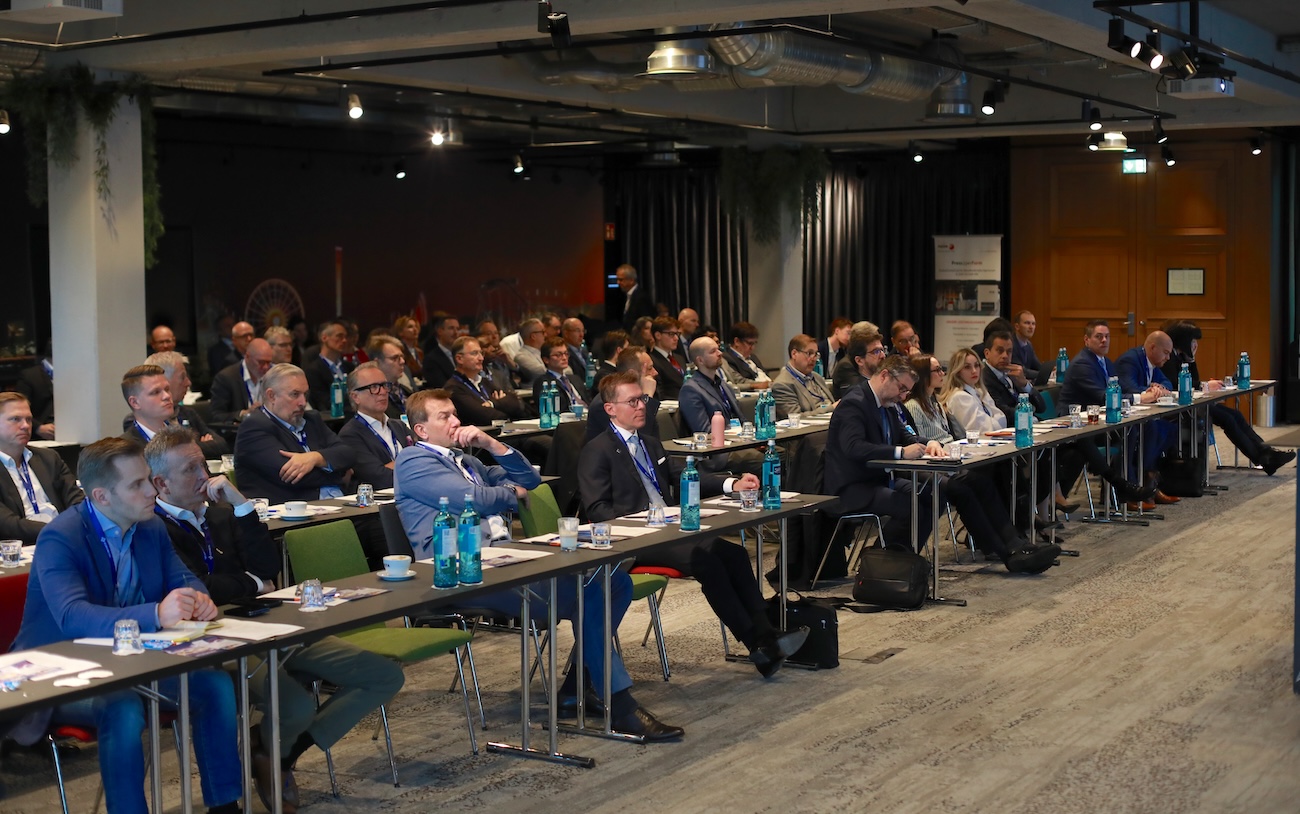
The prospect of EU ferrous scrap export restrictions has raised questions over whether European steelmakers can absorb the volumes currently sold abroad. While securing sufficient feedstock for the green steel transition remains a strategic priority, premature restrictions could undermine the sustainability of the European recycling industry, Metal Expert learnt from market participants on the sidelines of EUROMETAL Steel Trade Day 2026, held on November 23-24 in Duesseldorf, Germany.
Insufficient domestic scrap consumption remains one of the key arguments against introducing export restrictions for Europe’s scrap sector at this stage. Regional recyclers remain heavily dependent on overseas markets, as European steelmakers are currently unable to absorb all the available material. Thus, maintaining access to international buyers is essential to keeping the European scrap market balanced, conference delegates noted. Moreover, regional scrap sellers have kept annual export volumes within 42-43 million t during 2020-2025, with an exceptional peak of around 48 million t in 2021, Eurostat data shows. In January-September 2026, ferrous scrap overseas sales reached 30.7 million t, down 2.6% year-on-year.
Uncertainty surrounding Europe’s transition from BF-based to EAF-based steelmaking further complicates the situation. Market participants pointed to major projects involving ArcelorMittal, Salzgitter, Thyssenkrupp, SSAB and others, noting that their anticipated impact on domestic scrap consumption has yet to materialise. “It is not possible to assume what exact volume they will require. Hence, the ban itself is not necessary now,” an industry source told Metal Expert on the event’s sidelines.
Power infrastructure represents another obstacle to the implementation of new EAF projects. The challenge is not necessarily insufficient electricity generation capacity but rather the readiness of transmission infrastructure. “The issue is whether the transmission grid can handle the load these furnaces require,” a delegate explained. Infrastructure limitations could delay project commissioning and consequently postpone the anticipated increase in domestic scrap consumption.
Restricting access to overseas markets before additional local demand materialises could create a scrap surplus, putting downward pressure on prices and squeezing collection and processing margins. Deteriorating profitability could discourage investment in recycling infrastructure and eventually compromise the industry’s ability to meet growing domestic feedstock requirements, market participants warned.
The UK faces a similar challenge in balancing future domestic scrap requirements against its established export trade. The country exported 7.5 million t of ferrous scrap in 2025, according to the OECD. Although the UK’s steel strategy envisages reviewing regulatory and recycling measures to secure domestic scrap supplies, an export ban remains outside its current commitments.
Meanwhile, the EU’s Waste Shipment Regulation could reshape international scrap flows ahead of any decision on broader export restrictions. From May 21, 2027, shipments of covered non-hazardous waste for recovery to non-OECD countries will be permitted only if the destination is authorised to receive the relevant waste stream. The draft list has raised considerable concerns in major importing markets, sources told Metal Expert. Unless the list is revised to authorise ferrous scrap shipments to India, Pakistan, Egypt and Morocco, steelmakers in these countries could lose access to EU material and face increased competition for alternative supplies.
Morocco illustrates how the new EU regulations could reinforce dependence on alternative suppliers, particularly the UK. The latter supplied around 1.1 million t of ferrous scrap to the Kingdom in 2025, accounting for 70.6% of the country’s imports, according to the Moroccan Steel Association (ASM). During January-September 2026, Morocco received around 995,000 t of bulk scrap through 83 cargoes, up 64% y-o-y. British suppliers increased deliveries by 56.1% to approximately 749,000 t, Metal Expert’s AIS-based Steel Scrap Markets data shows.
The potential impact of regulatory changes on international trade remains considerable, given Europe’s substantial scrap exports. While Turkiye, the bloc’s largest external buyer, falls outside the new authorisation requirement as an OECD member, several major Asian and North African importers face greater uncertainty over future supplies. However, such a move will have a double-edged effect on the European steel and scrap industry as well, considering the existing challenges with finished steel demand.
The key issue raised in Duesseldorf was therefore not necessarily the strategic objective of retaining more ferrous scrap within Europe, but the timing of such measures. “The timing of export restrictions should be aligned with the actual expansion of European scrap-consuming capacity rather than projected demand. It is still a very long way,” a market participant pointed out.