Germany’s stronger carbon-pricing, public-funding and demand signals have helped it build a larger pipeline of lower-emissions primary steel projects than technologically comparable South Korea, according to research presented at the 31st Conference of the Parties (COP31) on Thursday November 19.
Soyoung Oh, a researcher at the Fletcher School at Tufts University and the university’s Climate Policy Lab, said her study found that the difference was driven less by access to steelmaking technology than by whether producers expected a credible future market for higher-cost lower-emissions steel.
The research was published in Energy Research & Social Science in 2026. It combines project-level and policy analysis with 33 interviews involving steel industry representatives, policymakers, researchers, non-governmental organizations and other stakeholders in Germany and South Korea.
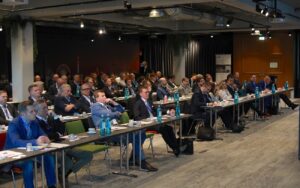
“What they all tell me is that they have the technology for green steel; what they don’t have is a market,” Oh said during the COP31 session, attended by Fastmarkets.
The study compares two export-oriented manufacturing economies with strong steel industries and comparable technological capabilities, but significantly different progress in developing lower-emissions primary steel projects.
Oh said Germany ranked first by project count in the LeadIT green-steel tracker used in her analysis, while South Korea had only two projects.
Project counts, however, do not necessarily represent equivalent production capacity, investment maturity or commissioning progress. Announced projects can range from early-stage developments to more advanced investments.
The study argues that Germany’s larger project pipeline reflects a more credible combination of carbon pricing, government risk-sharing and expectations of future demand rather than a fundamental technology gap.
Carbon price and subsidies shape investment signals
Carbon pricing was one of the clearest differences identified in the research, according to Oh.
“EU Emissions Trading System (EU ETS) allowances were trading at approximately $100 per tonne of CO2 during COP31 week, compared with around $20 per tonne under South Korea’s emissions-trading system,” she said.
She linked the stronger European investment signal to reforms including the EU ETS Market Stability Reserve and the scheduled phase-down of free EU ETS allocations alongside the Carbon Border Adjustment Mechanism (CBAM).
According to Oh’s analysis, lower-emissions steel project activity in Germany accelerated after the EU’s Fit for 55 package was announced in 2021, strengthening expectations that carbon-intensive steel production would become progressively more expensive.
But the study does not argue that carbon pricing alone explains Germany’s larger project pipeline.
Oh said project-level analysis showed that government funding covered a larger share of German producers’ investments, reducing the first-mover risk borne by steelmakers.
“In South Korea, by contrast, POSCO has been expected to finance a larger share of transition investment itself, while full-scale development of its hydrogen-based HyREX route remains constrained in part by hydrogen availability,” Oh said.
Her broader finding was that carbon pricing and green industrial policy are most effective when they operate together, with public funding reducing investment risk while carbon pricing and demand-side policies strengthen expectations that a market will exist for the resulting product.
Export markets weaken demand signal for South Korea
Demand was another major difference identified by the research.
Oh said South Korean steelmakers remain heavily focused on export destinations including China, India and the United States, where carbon-border measures comparable with the EU CBAM are not currently in place. That market mix limits the reach of Europe’s carbon-price signal across the wider South Korean steel sector.
Interviewees in South Korea tended to view EU CBAM exposure as applying to a relatively limited share of their overall export market, Oh said.
As a result, South Korean steelmakers need clearer demand signals outside Europe before making large-scale investments on the assumption that customers will pay more for lower-emissions material.
The published study characterizes this as a “follower strategy” rather than evidence of weaker technological capability, with investment delayed until demand and policy conditions become sufficiently credible.
Germany, meanwhile, operates within a regional policy environment in which the EU ETS, CBAM, subsidies and emerging demand-side measures reinforce expectations of a future market for lower-emissions steel.
Fastmarkets has reported that high electricity costs, hydrogen availability, project financing and resistance to lower-emissions steel premiums continue to challenge European project economics.
Lower-emissions steel premium remains uncertain
Fastmarkets’ green steel, domestic, flat-rolled, differential to HRC index, ex-works Northern Europe was assessed at €120-200 ($132-$219) per tonne on November 19, with a midpoint of €160 per tonne, unchanged from November 12.
The Northern European assessment covers steel produced with combined Scope 1 (direct), Scope 2 (indirect, from purchased energy) and Scope 3 (value-chain) emissions of no more than 0.8 tonnes of CO2 per tonne of steel.
The assessment represents a market differential for qualifying lower-emissions flat steel against the conventional Northern European hot-rolled coil index. It should not be read as evidence that every producer is consistently achieving premiums within that range in transactions.
The differential illustrates the demand-side issue identified in Oh’s research: a market value for lower-emissions steel can be observed, but consistent premium realization remains uncertain.
At the same COP31 session, Hiroyuki Tezuka, a JFE Steel fellow speaking on behalf of the World Steel Association (worldsteel), said steelmakers needed sufficient premiums to recover incremental emissions-reduction costs and sustain further investment.
Oh’s research suggests that subsidies without sufficiently strong carbon pricing or credible market demand may not by themselves create the conditions for large-scale investment.
For South Korea, the next commercial signal will be whether domestic carbon prices, public support and buyer demand strengthen enough to move projects beyond demonstration scale, or whether stronger demand emerges in the country’s major export markets.
For Germany, the test will be whether the policy signals associated with its larger project pipeline translate into final investment decisions, production volumes, buyer contracts and sustained premiums for lower-emissions steel.