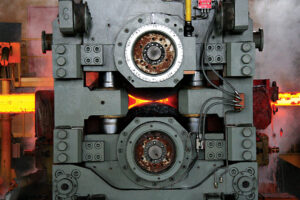
Acciaierie d’Italia (ADI) plans to double steel production to 4 million tonnes per year by April 2026, the extraordinary administration of ADI announced on 11 February.
Testing at blast furnace (BF) No. 2 has been completed and full-scale production will be restarted “in the coming days”, according to ADI.
In the meantime, scheduled maintenance on BF No. 4 will start on 28 February and will take around 60 days. Following the restart, the steelmaker will operate both BFs, McCloskey understands, with output reaching 4 mt/y.
ADI is also planning to recommission temporarily idled coking batteries No. 7, 8 and 12.
The administrators said that since February 2024, over EUR997m has been allocated to support production at ADI. Earlier this week, the European Commission approved a rescue loan of up to EUR390m to ADI under EU state aid rules.
“The funds were allocated to ensure that the steelmaker can cover operating costs until the new owner is selected in the ongoing tender,” the ADI release said.
ADI is currently in the process of being sold, with Flacks Group, a United States-based investment firm focused on the turnaround of distressed businesses, discussed in the market as a likely new owner. The tender is not yet finalised.
ADI’s new output target is in line with the plans disclosed by Flacks Group for 2026. In addition, as part of its decarbonisation initiative Flacks Group plans to replace existing blast furnaces (BFs) with two electric-arc furnaces (EAFs) and keep only one BF running.
To learn more about decarbonisation projects in Europe and globally – check Global Green Steel Profile.
Market participants believe that increased domestic production in Europe might slow down or put an end to the bullish trend settled in the market. Real demand has not recovered, and domestic price increases have been mainly driven by the impact of the Carbon Border Adjustment Mechanism (CBAM), launched earlier this year and the anticipated reduction of import quotas. The first policy has made imports riskier, increasing costs for imports arriving in the EU, with buyers switching from purchases on a CFR-basis to DDP in an attempt to protect themselves from additional risks. The anticipated reduction of quotas for steel imports by 47% in the second half of the year will further restrict access of imports to the EU market.
A combination of these factors has increased the market share of European steelmakers and also boosted prices. However, an increase in domestic output risks disrupting this dynamic, sources said.
At the end of last year, ArcelorMittal resumed production at its Fos-sur-Mer plant in southern France.
Author: Maria Tanatar