


Tata Steel and Google Cloud collaborate to deploy agentic AI to scale up autonomous capabilities
Indian steelmaker Tata Steel Limited has entered into a partnership with Google Cloud to scale up autonomous capabilities across its global operations, using agentic artificial intelligence (AI) technology, a joint statement of the two companies said on Wednesday, April 22.
Already more than 300 specialized AI agents have been deployed in just nine months, which is driving efficiency and precision in Tata Steel’s operations, the statement said.
“Working with Google Cloud has allowed us to turn AI from a technical experiment into a specialized partner for every employee,” said Tata Steel’s chief information officer (CIO) Jayanta Banerjee said in the statement.
This collaboration not only introduces new tools but also fosters an execution engine, empowering employees to act promptly on insights, he said.
The digital transformation is steered by two platforms: ‘Zen AI’, facilitating low-code AI agent development by non-expert employees, and the Tata Steel Digital Assistant (TDA), which centralizes diverse data streams.
“By creating a new blueprint for autonomous business processes at scale, Tata Steel has demonstrated that the synergy between a unified data cloud and generative AI is the key to turning industrial complexity into a distinct, data-driven competitive edge,” Sashi Sreedharan, managing director of Google Cloud India, said.
Author: SteelOrbis Editorial Team


Ukraine and Sweden to simplify CBAM verification procedures
Ukraine and Sweden have agreed on a framework to simplify accreditation procedures for emissions verifiers under the EU’s Carbon Border Adjustment Mechanism (CBAM).
The initiative is designed to support Ukrainian exporters in maintaining access to the EU market under tightening environmental regulations. Under the plan, the Swedish Board for Accreditation and Conformity Assessment will assist in accrediting Ukrainian verification bodies, drawing on the National Accreditation Agency of Ukraine’s technical expertise.
Enabling use of actual emissions data
The framework will allow Ukrainian exporters to verify greenhouse gas emissions using actual data rather than default values.
This is critical as default values are typically higher and can significantly increase carbon-related costs under CBAM.
Addressing operational constraints
According to Ukrainian Deputy Minister Oleksandr Krasnolutskyi, the initiative responds to logistical challenges caused by martial law, which has limited the ability of foreign experts to conduct on-site verification. The cooperation is expected to establish a precedent for international accreditation partnerships, accelerating compliance processes.
The move is particularly important for energy-intensive industries such as steel, which are highly exposed to CBAM requirements. By enabling efficient verification and reducing reliance on default emission values, the initiative aims to help Ukrainian exporters remain competitive in the EU market.
Author: SteelOrbis Editorial Team
German car production ticks up in March
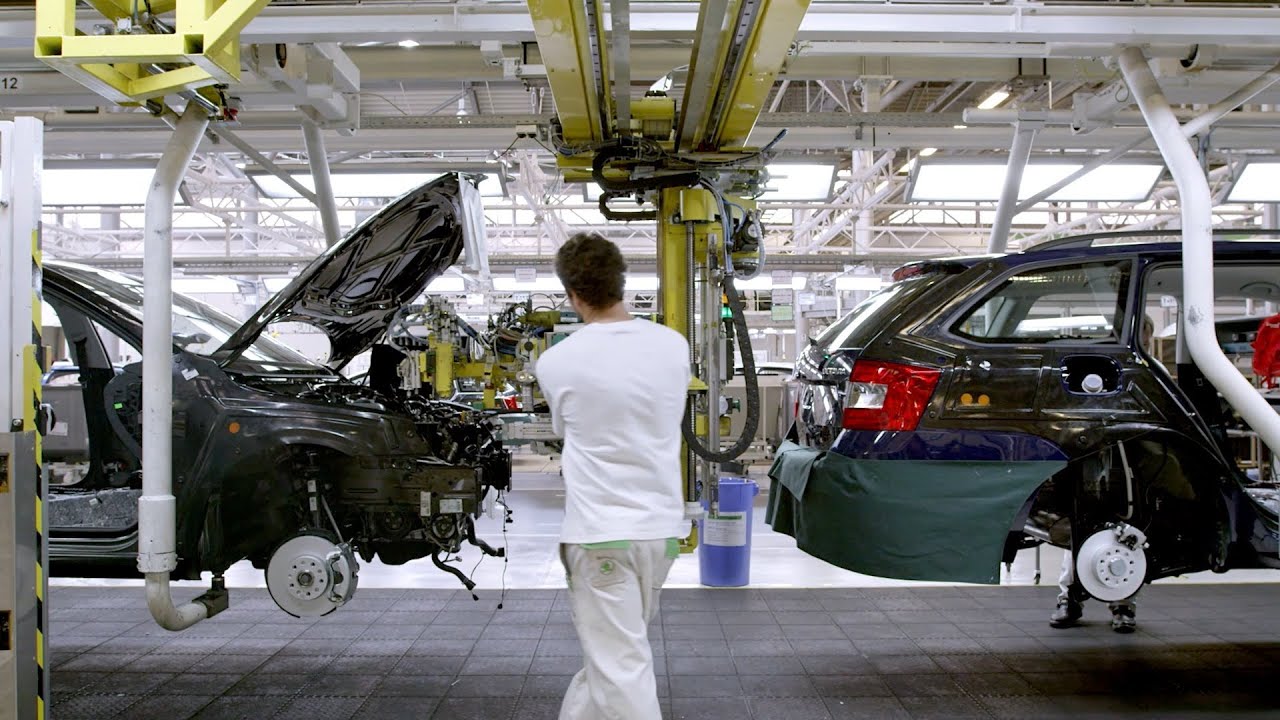
Domestic passenger car production in Germany reached 400,800 units in March, an increase of 3% year-on-year, Kallanish learns from automotive association VDA.
This figure is positively influenced by an additional working day during the month compared with last year, VDA cautions. In the first quarter, just under 1.1 million passenger cars were assembled on German lines, 2% less than in the corresponding period last year.
Production therefore remains significantly below pre-Covid levels. In the quarter, it was 16% below the first quarter of 2019.
Exports rose by 3% y-o-y in March, reaching 310,700 units. From January to March, 799,500 passenger cars were sold abroad, 2% less than the first quarter of 2019.
A clearer upward trend is reported for the registration of new cars. In March, the number of passenger car registrations rose by 16% y-o-y to 294,200 units. In the first quarter, 699,400 units were newly registered, 5% more than in the corresponding period of the previous year.
In the past month, new registrations of electric vehicles rose by 46% to a volume of 100,700 units. The share of electric vehicles in total registrations thus reached 34%, meaning that roughly one in three new registrations in the past month was an electric car.
According to VDA, the impact of tensions in the Middle East is not yet reflected in the current figures. Later this year, higher energy and fuel costs may provide further support for demand for electric vehicles, it notes.


Italian merchant bar producers push up prices
Italian merchant bar producers are pushing up prices by a further €30/tonne ($35.29/t) this week in an effort to cover elevated costs and high scrap prices. This is the latest in a series of successive increases between March and April, Kallanish hears.
The move is being met with resistance from buyers and agents. Several sources say they are “confused” by the pace of increases, arguing that hikes have come too quickly without giving the market time to absorb them or see whether they can be passed on downstream.
This is happening against a backdrop of weak economic conditions and subdued consumption, with buyers saying they can no longer afford to purchase the same volumes as in previous months at current price levels.
Sources describe a fractured market, with producers displaying an optimism increasingly disconnected from reality while the downstream sector grapples with low demand, financial issues, payment defaults and delays.
Domestic merchant bar prices have risen significantly against pre-conflict levels. Current contracts for merchant bar are heard at €330-355/t base ex-works, equivalent to €750-775/t including size extras. Mills are now asking €370-375/t base ex-works, the same levels as the large distributors.
“Officially prices are increasing but how long can producer continue to sell a few truckloads at higher prices? Downstream we cannot afford high prices; the market is not there to absorb this. Soon we will see the impact of this downstream,” a source argues.
One agent says he has been selling at increased prices sensibly for lower volumes, which is about a third of what he sold before prices started to climb at the beginning of March.
Section prices meanwhile are increasing gradually as the market leader implemented a hike of €30/t before the Tube and Wire trade show with new levels at €830/t. The first category of sections is now at €800-820/t delivered on average. However, some levels of below €800/t from stock are heard.
Rising transport costs are emerging as a further pressure point in the market. Multiple truck drivers are reportedly refusing to load and transport material at current fuel prices, which have risen sharply in the context of the Middle East conflict. Drivers say they are awaiting a government decree expected to provide relief on fuel costs.

EU HRC: Market sees dip as temporary
EU hot-rolled coil (HRC) prices decreased today, but the downtrend is probably temporary as structural undersupply is expected to guide prices in the second half of the year, market participants said.
The extent of the supply deficit will depend on how much idled EU capacity is brought back on line, as well as how restrictive and usable the bloc’s new steel import quotas are.
Buying activity has slowed but supply-side fundamentals are tight, market participants said. Mills have had to discount over the past weeks to account for persistently high inventories across the supply chain.
The Argus daily northwest Europe HRC index slipped by €0.25/t (30¢/t) to €695.75/t ex-works, while the Italian index decreased by the same amount to €692/t ex-works.
A northwest European service centre booked 5,000t of HRC at €705/t base delivered at the end of last week. Traders indicated €700/t ex-works was possible for remaining second-quarter supplies. A transaction was reported at €730/t delivered, but no further details were given.
Mills are currently indicating third-quarter deliveries, tabling offers at €740-760/t base delivered northwest Europe. There is still little to no interest in these prices at the moment, a trader said.
In Italy, €710/t base delivered is achievable, market participants said. Import stock sold at €695/t ddp Italy, a trader said. A different trader offered at €690-695/t ddp across Europe, while another said €670-680/t ddp Italy was possible for stocks. In northwest Europe, a trader offered stock material at €680/t fca, while clients counter-offered at €30-40/t below this level.
“It is difficult to see how steel prices won’t increase further, as imports are almost non-existent,” a trader said. The full impact of the Middle East conflict has not yet been felt in Europe, the trader added. “I think mills are positioning for a price rise,” another trader said. Other market participants echoed this sentiment .
An Indonesian supplier continued to offer at around $595-600/t fob but did not receive any bids. A major Indian mill was off-market for HRC and kept its cold-rolled coil (CRC) offer at €685/t cif Italy. A Turkish deal for HRC concluded at $620/t fob to Italy, which would equate to around €580-590/t cif with dumping included. Deals also concluded for smaller quantities from a Turkish supplier at a slight premium, with some offers coming in at $630-640/t fob for shipment at the end of the second quarter and into the third.
The Argus twice weekly cif Italy assessment held flat at €585/t. Both of Argus‘ CRC assessments fell today, with the daily northwest Europe marker down by €10/t to €800/t ex-works, and the weekly Italian marker decreasing by €7.50/t to €807.50/t ex-works.
Prices in the northwest European market were heard as low as €800-810/t base delivered, while prices in Italy were in a wide range over the past week. Some offers were still pegged at €830-840/t base delivered, but transactable levels stood lower at €820-830/t. A seller reported €790-800/t as attainable. A sale for Chinese CRC took place at just under €800/t ddp Italy, while a South Korean supplier continued to offer at a steep premium, attracting limited interest.

German manufacturers temper expectations at Hannover Messe
Germany’s main industrial organisations drew a picture of caution and insecurity for 2026 during Monday’s first day of the country’s biggest trade fair for manufacturing industries, the Hannover Messe.
The umbrella organisation of manufacturing industries, Bundesverband der Deutschen Industrie (BDI), had at the beginning of the year forecasted a gentle recovery for 2026. Now, given the Iran war and its repercussions, it anticipates stagnation year-on-year, its president, Peter Leibinger, said during a press conference at the beginning of the fair.
He noted that global industrial production went up last year, but Germany’s dropped by 1.5%. The utilisation of plants has remained under the long-term average for 11 quarters, the longest dry spell so far, Kallanish heard him say at the conference. “At least there is a bit of a silver lining, as order intake was slightly up in the fourth quarter 2025,” he added.
BDI shared the conference with the Association of the Electrical and Digital Industry, ZVEI, and the mechanical engineering association, VDMA. They unanimously complained about the burden of excess bureaucracy in Germany and Europe, which discourages companies from making investments in their home country, although they would want to.
“One US senator once told me that we Europeans make regulations for a technology before developing it; Americans develop first, then think about regulation,” said VDMA president Bertram Kawlath. He told of a recent visit to units of German companies located in Mexico, which are on stand-by to release investments at their sites. “So that revenue will be made in Mexico, not Germany,” he said.
He noted that Germany’s mechanical engineering industry has been short of €1 billion ($1.2 billion) per year in investments since Covid. “Any plant capacity without investment now will be missing in ten years from now, and this is a growing process,” he warned.

Assofermet sees negative trend downstream for April
April is a month of extreme caution, with Italian steel distributors and service centres waiting for clearer signals on the evolution of customs policies before committing to medium-term orders, Italian trade association Assofermet says in its recent market note obtained by Kallanish.
Distribution is operating in a context of “pure commercial survival, with orders cut to the bone and an overall decline in sales volumes. Fabricators and end-users will continue to purchase only the material strictly necessary for orders already secured,” it says.
“There will be no tendency towards restocking. Despite weak consumption, distribution prices could remain relatively high or stable due to upstream pressure from producers, potentially squeezing distributors’ margins as costs rise,” it adds.
The greatest concerns are now coming from outside the region.
The trade barriers and tariff policies introduced by the Trump administration are beginning to show their impact on the real economy. Contracting exports and fears of trade retaliation are pushing major industrial processing and automotive sectors to freeze budgets, scale back projects and slow raw material orders, with a strong impact on distribution.
From a production standpoint, there are attempts to consolidate increases. It will be critical to understand in the coming weeks whether weak downstream consumption will force producers to revise their price lists, or whether the supply chain will manage to absorb these new price levels.
March closed on a note of renewed deceleration due to widespread concerns and a climate of deep uncertainty. Looking at warehouse activity, the vast majority of segments are recording a reduction in volumes. In the flat products sector, distributed volumes are showing partial declines.
The significant sales volumes of black coil sheet have been unable to offset shortfalls recorded in other products such as galvanised sheet and plate.
The long products segment is suffering from the same weakness. There are, however, some exceptions bucking the negative trend such as beams and reinforcing bar, for which Assofermet sees increases in stocked volumes.

EU steel processors question sustainability of price hikes
The sharp rise in coil costs and the prospect of supply shortages in the coming months are expected to weigh heavily on the European manufacturing segment. Several sources warn that the loss of competitiveness flagged by industry associations to the European Commission is now close to materialising.
Coil derivative prices in Italy are rising but continue to lag behind European coil increases, prompting re-rollers to use the Tube and Wire fair last week to implement increases.
One Spanish coil seller tells Kallanish after the trade show that clients are reporting a stagnating market, with demand described as practically at a standstill and activity broadly sluggish this month.
Italian re-rollers and service centres describe an increasingly difficult market. Steelmakers are now clearly benefitting from CBAM and quotas on one side while the downstream sector is struggling to absorb input cost increases on the other.
One large service centre describes the prospect of extremely expensive hot rolled coil as a serious concern. In Dusseldorf, the general understanding among participants was that prices will increase in the coming weeks to around €770/tonne ($905.70/t) base delivered, although no increases were announced at the tradeshow itself.
With the new safeguard measures set to take effect this summer alongside CBAM, importing is expected to become increasingly challenging, leaving European supply as the only realistic alternative for most market participants. Several sources anticipate HRC asking prices to rise by around €100/t compared to current levels as July approaches.
The market is expected to find itself with depleted inventories by then, having used up import purchases made over recent months, with no cheaper alternative to pricey EU coils.
Despite the challenging geopolitical environment, the new safeguard measures will be implemented with its full force, slashing quotas significantly. “It will be a blow to all steel processing companies,” one large service centre source says.
He adds that companies currently importing must record default CBAM values in their financial reporting for the year as emissions certification for suppliers will not be available until September, meaning there will be no way to certify suppliers before the first quarter of 2027.
Large re-rollers continue to source from the import market, though at significant risk. They are also absorbing the majority of available quota allocations, as shown by Indian quotas for the second quarter already being exhausted and Turkish quotas depleting rapidly.
Sheet demand remains generally weak, with activity limited to temporary phases of restocking. Despite service centres’ attempts to push prices to €800/t ($940.99/t), hot rolled sheet contract prices are holding at €770/t base delivered, with some contracts being concluded at €20/t below this.
European steel HRC prices steady; weak demand, high stocks cap bullish sentiment
European steel hot-rolled coil prices were largely unchanged on Tuesday April 21. High stocks and slow demand kept trading muted, and buyers have so far refused to accept much higher July offer prices, Fastmarkets heard.
In Northern Europe, integrated steelmakers had very little availability of June-delivery coil remaining, with estimates of workable prices for such material reported by buyers at €700-710 ($823-835) per tonne.
Two German mills were said to have no second-quarter delivery coil available.
One German supplier, which previously indicated offers for July-delivery HRC at €750-760 per tonne base delivered (around €735-745 per tonne ex-works), was heard offering such material at €730 per tonne base delivered (€715 per tonne ex-works) to some customers in Germany.
“Offers [of July-delivery HRC] heard at €750 [per tonne delivered] and higher are unrealistic,” a steel-service center (SSC) in Germany said. “Stock level is high, new imports are still coming, [and] there is no shortage of material. The big change will start after July 1, but even so, we do not have a room for big [HRC] price jumps.”
An integrated mill in the Benelux area had technical problems and therefore no availability of second-quarter delivery coil.
Also, several sources told Fastmarkets that discounted June-delivery coil sales, reported done by one major European mill in mid-April, were no longer taking place and mills were trying to support trade levels above €700 per tonne ex-works.
Trading, however, was limited in the spot market.
Market sources were waiting for more clarity regarding the distribution of import steel quotas between countries starting on July 1, when a new trade regime will come into effect.
Fastmarkets’ daily steel hot-rolled coil index, domestic, exw Northern Europe, was €708.00 per tonne on Tuesday, up by €0.50 per tonne from €707.50 per tonne on April 20.
The index was down by €11.17 per tonne week on week and by €2.00 per tonne month on month.
In Southern Europe, meanwhile, Fastmarkets’ daily steel hot-rolled coil index, domestic, exw Italy, was calculated at €700.00 per tonne ex-works on April 21, stable day-on-day.
The index was up by €1.25 per tonne week on week and up by €4.37 per tonne month on month.
On Tuesday, market sources in Italy estimated achievable prices for HRC to be around €700 per tonne ex-works.
Local sellers maintained offers no lower than €700 per tonne ex-works for June delivery coil.
Trading was limited, with buyer sources reporting sufficient stock levels and no immediate need to purchase new coil.
In the secondary market for 4mm S235 grade hot-rolled (HR) sheet, prices of €800 per tonne CPT were achieved in deals in Italy, but also for limited volumes.
Steel imports into Europe remained limited, with market activity largely restricted due to the uncertainty around the new quotas.
On Tuesday, only offers for Algerian HRC were heard at €725 per tonne DDP, with Carbon Border Adjustment Mechanism (CBAM) costs included.


German SMEs demand immediate government action amid rising energy and transport costs
According to a press release by Federal Association for Secondary Raw Materials and Waste Management (BVSE), a coalition of German trade associations, led by the BVMW (the association for small and medium-sized enterprises) and supported by numerous entities from the metallurgical, logistics and waste management sectors, has issued a statement warning the German federal government that the energy and mobility cost crisis is spiraling out of control, directly threatening the future of industry in Germany.
While the associations acknowledge the government’s interventions, they state, “The temporary reduction in the energy tax on petrol and diesel is an important first step towards providing relief for small and medium-sized enterprises, but it is by no means sufficient. Further targeted relief measures must now be introduced swiftly.”
According to the statement, geopolitical tensions are fueling price volatility that affects the entire industrial and service-oriented value chains. Small and medium-sized enterprises (SMEs) are the more severely affected by this crisis. Unlike large companies, SMEs have fewer tools to protect themselves from price fluctuations and are often unable to pass on cost increases in full to customers.
“Costs are partly politically driven”
According to the associations, the current crisis is not an unavoidable natural disaster. A significant portion of energy and mobility costs are determined by taxes, government levies and regulatory frameworks. “Merely pointing to international market developments falls short,” the statement reads.
The result is a drastic tightening of margins and investment capacity, which risks causing a decline in competitiveness and investments, the relocation of production abroad, and the accelerated deindustrialization of the country.
Five-point action plan
To stabilize the situation, the associations propose five concrete steps:
Cutting state-imposed costs: Permanent reduction of energy, electricity and fuels taxes to the European minimum, a review of additional CO2-related costs and the provision of targeted aid to sectors dependent on affordable mobility.
Safeguard investments: Development of existing support measures for SMEs, implementation of mechanisms that effectively mitigate short-term price increases, creation of a reliable regulatory framework for investments, and reintroduction and extension of price adjustment clauses in public procurement to protect businesses from extreme raw material price volatility.
Securing supply: Strengthening domestic raw material extraction through accelerated approval procedures, use of strategic reserves and consolidating European cooperation on the supply of raw materials.
Implementing moratorium on new burdens and introducing relief measures: Avoiding the introduction of further cost multipliers and unilateral national measures that alter competitiveness.
Adopting a pragmatic approach to transition: Energy policy must be technologically neutral, and the ecological transformation must remain economically sustainable.
Ultimatum to the government
In conclusion, the signatories urge the federal government to act as soon as possible by implementing relief measures in the short term, eliminating competitive disadvantages, and ensuring supply and planning certainty for businesses.
In a context where competitiveness and value creation are at risk, the associations warn that there is no more room for tactics or delays. “The federal government must now take decisive action to safeguard the economic viability of small and medium-sized enterprises,” the associations state.