


Barrett completes acquisition of British Steel distribution units
Following the Jingye Steel acquisition of the main UK steelmaking and processing sites of British Steel last week, stockholder Barrett Steel has acquired British Steel’s distribution sites across the UK.
Barrett completed the acquisition early last week, the company says. It is now trading as Barrett Steel North East from Newcastle, Central Steel Services from Wolverhampton and Barrett Steel Dartford. The Scunthorpe, Edinburgh and Cheadle locations are being merged into existing depots. These depots will be integrated with Barrett Steel’s nationwide depot network, Kallanish notes.
This now means that the stockholder will now operate in 30 locations cross the UK. 75 employees will transfer across from British Steel to Barrett, the company confirms.
“This acquisition provides a great opportunity for the group. We are excited to welcome the British Steel teams to our business and we are positive about the future of the steel industry,’ says group managing director James Barrett.
Taranto workers strike on coronavirus issues
Workers at the former Ilva plant in Taranto have announced a strike until 22 March, a union source representing workers at the site tells Kallanish. The strike started on Friday last week, will last for 10 days and will only involve the Taranto steelworks.
According to the unions, new owner ArcelorMittal Italia has refused to reduce the workforce at the site, and is not taking drastic measures to fight the coronavirus outbreak. “Buses are being used to go to the site and there are only a few protection masks for over 8,000 workers. Changing rooms are being used, it is practically impossible to keep a metre distance when using facilities like the canteen. We believe the company is not applying the rules of the Italian Health ministry,” the source says.
Another Fiom union representative says that the union has written a letter to the authorities regarding the situation. He believes that instead of waiting for the first case of the virus at the plant, the company should reduce the workforce and take the necessary measures to prevent coronavirus spread. He adds that measures can be taken without necessarily stopping production.
A request for comment from ArcelorMittal Italia rmained unanswered before Kallanish publication deadline.
Feralpi halts longs’ production at Lonato
Italian longs’ producer Feralpi tells Kallanish that it is preparing to halt production at its main mill in Lonato del Gardo as from Monday 16 March. The company is headquartered in the Brescia area in Italy, in a region heavily affected by the coronavirus outbreak.
The company is the latest longs producer in northern Italy to announce a halt in production. The decision has been taken to join the fight to stop the spread of coronavirus in Italy, although not required by the existing legal measures in place.
The Lonato mill will be closed, with only a small number of workers to oversee the security of the site. Other plants of the group will not close immediately but the situation will be monitored.
The Lonato del Garda EAF-based mill is the biggest of the group in Italy. The company also operates EAF-based steelmaking and rolling lines in Germany and France.
With this latest announcement by Feralpi it is clear that Northern Italian longs supplier are taking the situation very seriously, halting production in most cases, particularly in the Brescia area. As demand for long products reduces in Italy due to the current lock-down in place, the slowdown in production could well support prices in the market during the coming months. This would be due to reduced output and lower product availability when the situation returns to normal, Kallanish notes.

Sentiment turns negative in European coils market as coronavirus spread intensifies
Negative sentiment across the European flat steel market has intensified further as European countries stepped up their measures against the spread of the coronavirus pandemic, sources told S&P Global Platts Friday.
The market in Italy remains quiet but production of flat steel would continue for now, unlike several mills of long steel products that have temporarily ceased production in the country, sources said.
“Customers are waiting and not buying and next week I feel that many will be closed,” said an Italian steel service center source. “Prices are stable. I have no info that there is weakening.”
The daily Platts TSI index for HRC Southern Europe increased by Eur2/mt to Eur455/mt EXW S.EU Friday.
More countries started to restrict public life Friday following Italy’s example, while the German government pledged it would support businesses financially if they would introduce short-time working due to the virus.
An Austrian service center source said the outlook on price developments in the coming week were still unclear and that they were not stockpiling material despite others in the market reported to be doing so.
“We are only seeing ex-works prices in Italy, no delivered prices are being offered,” the source said, adding the tradable value was Eur480-482.50/mt EXW Ruhr in Germany and that import material was heard at Eur465/mt CIF Antwerp.
The daily Platts TSI index for Northern Europe remained unchanged Friday at Eur483/mt EXW Ruhr.
Following the continued spread of the virus in Germany, some buyers started to look for material with short-notice deliveries, but some say this too would be risky and that looking at current lead times in May and June there is little material left that can be delivered quickly.
“We are not going to overreact and stockpile, I can understand if small steel shops do that to keep running,” said a German steel stockholder, adding that with current lead times, it would be a gamble to replenish heavily now.
Some buyers have started to look for material from other countries, as they fear that supply would be severely disrupted.
“I don’t know if not buying from Italy helps as lead times are in May, who knows if Italy will have improved then and its affecting production in other countries?” the stockholder said.
— Laura Varriale, Len Griffin
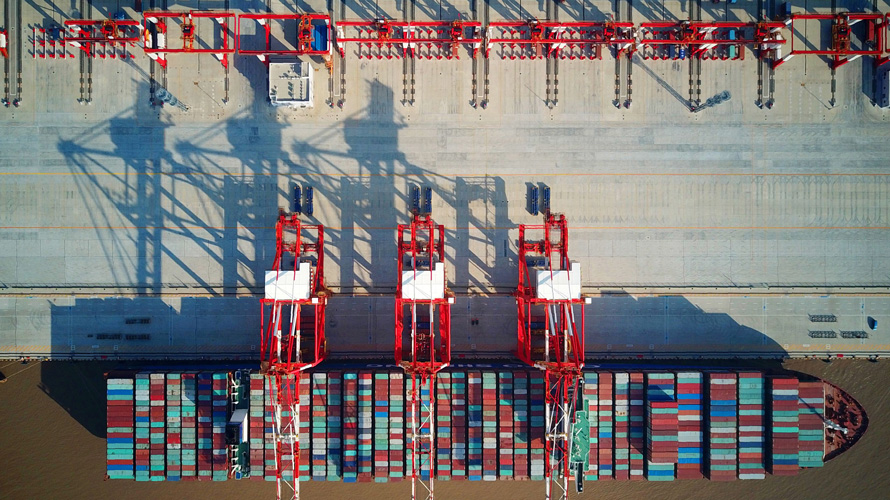
EU notice on the consequences of the COVID-19 outbreak on anti-dumping and anti-subsidy investigations
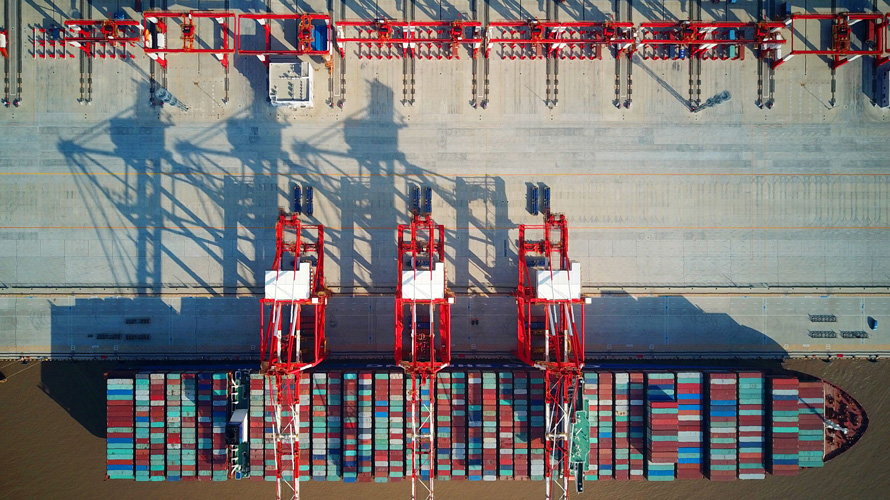
EU publishes a Notice on the consequences of the COVID-19 outbreak on anti-dumping and anti-subsidy investigations (impact the verifications, time-limits and decision-making).
So far, no guidance has been issued by the Commission with regard to the safeguard measures on steel imports and the impact of the outbreak on the on-going review investigation of these measures.
Tubos Reunidos sees lower sales, losses in 2019
Spanish special seamless tube supplier Tubos Reunidos (TR)’s performance deteriorated in 2019, as activity disappointed in main markets, Kallanish notes.
“The uncertainty and volatility of the market remains at the beginning of 2020,” TR says. “The evolution of the slowdown in the economy, the distortions in global value chains as a result of the imposition of tariffs, and the coronavirus outbreak reaffirm the need for Tubos Reunidos to reformulate its business plan.”
US OCTG demand continues its downward trend, with the main operators prioritising a return to investment and financial control versus increasing production. On the other hand, the upstream sector in the remaining regions is much more positive, with the possibility of TR closing larger agreements in the short term, the Spanish company comments.
The recovery in the downstream segment is sluggish due to a longer delay in the awarding of projects. Tubos Reunidos, however, maintains its positive prospects for the sector as well as for the midstream in 2020, the company adds.
TR shipments were at 171,707 tonnes in 2019, down -19% on-year. Of this total, shipments in the fourth quarter represented 42,869t, -10% down on-year. Group revenue amounted to €284.4 million ($320.7m), a decrease by -17% compared to €342.5m in 2018. Of this total, sales of tubes were €270.1m, or -14% less y-o-y.
Sales in North America and the Middle East/Africa decreased by -38% and -23% respectively last year to €94.4m and €17.3m. In Europe (without Spain), on the other hand, sales were €77.1m in the period, or 13% higher compared to 2018. Sales in the Spanish market fell by -3% to €28.5m.
TR’s Ebitda tumbled by -161.4% to negative €11.4m in 2019, while net loss widened to €41.4m from €34.4m in 2018.
ArcelorMittal asks EU to impose carbon border adjustment
ArcelorMittal has called for the EU to introduce a carbon border adjustment (CBA). The new system should be included in the €1 trillion ($1.11 trillion) “Green Deal,” aimed at making the bloc carbon neutral by 2050.
The company believes the CBA “…will help to create the market conditions and protections needed for companies to make investments and transition to carbon neutrality without disruption.”
A CBA would add to non-EU-origin steel imports into the bloc the cost that European producers pay under the Emissions Trading System (ETS). “This would equalise the cost of carbon for every producer to create a fair market and, crucially, encourage investment in lower-emissions steel production,” ArcelorMittal says in a note sent to Kallanish.
The company notes that a CBA could be imposed in different ways, “…as long as it neutralizes the disparities in carbon costs between domestic products and imports, and incentivizes the transition to low-carbon steel production.” The company believes, for example, that it should initially be applied to primary goods, rather than end products like household appliances and everyday tools.
Proceeds from the CBA would then be used by European authorities to invest further into new technologies reducing carbon footprint, further supporting the process, ArcelorMittal concludes.
“There are of course challenges that will need to be overcome,” the steelmaker continues. “For example, some have argued that there is the risk of contravening international trade rules. However, the establishment of a border adjustment is compatible with international trade rules, allowing members to adopt measures necessary for the protection of the environment or relating to the conservation of natural resources providing that such measures do not constitute arbitrary discrimination between countries where the same conditions prevail.”
This will, however, only work if the policies are well-designed and drafted in the right way, according to ArcelorMittal Europe – Flat Products chief executive and Eurofer head Geert Van Poelvoorde.
Eurofer wants incentives to keep scrap in Europe
Steelmakers association Eurofer has welcomed the latest action plan for the circular economy released by European authorities. It nevertheless calls for further incentives aimed at keeping scrap within Europe.
“Over 90% of steel scrap in the EU is collected and we recycle all of the scrap returned to our facilities,” says Eurofer head Axel Eggert. “While recycling is a very effective means for keeping materials in the loop, circularity must strike a balance between ‘recycled content’ and design for ‘end-of-life recyclability’.”
“Both parts need to be assessed per sector, otherwise true circularity will never be achieved,” he continues. “The EU exports millions of tonnes of steel scrap every year, so incentives should be developed to keep circular materials within the EU so as to meet our circular economy and climate objectives.”
The association notes that the carbon embedded in scrap means that using it as a raw material can help reduce emissions from steel production. In recent years numerous European steelmakers have said they will include in their plan to cut their carbon footprint the installation of new electric arc furnaces to partially replace blast furnace-based steelmaking, Kallanish notes.
“As producers of an essential, 100% recyclable and permanent material, steelmakers are eager to see circularity put at the heart of the EU’s policy focus,” Eggert concludes.
Turkey’s Akçelik acquires German bright bar shop
Turkish SBQ distributor Akçelik has acquired a bright bar producer in the Cologne area and established a German entity. Akçelik is the biggest distributor of steelmaker Asil Çelik, according to the company’s website.
The shop acquired is Blankstahlwerk Sindorf (BWS), located in the Sindorf commercial zone in Kerpen, west of Cologne, a region with otherwise little steel processing activity. According to Akçelik, BWS operates in the field of peeling rounds of 14-200mm and serves mainly the automotive and machinery manufacturing industries.
The company has existed for some 26 years and during that time has had several owners, Kallanish learns from a local manager. Originally owned by its founders, it temporarily belonged to Dortmunder Blankstahl, which itself is part of Ruhrstahlgruppe that has several SBQ activities.
Some eight years ago, it separated from Dortmunder Blankstahl in a management buy-out, and last year went into insolvency. The acquisition by Akçelik is effective 2 March. This is also the founding date of Akçelik Blankstahl und Service GmbH as given in the trade register, with an address in Düsseldorf. Akçelik’s first investment in Germany is a part of the company’s foreign growth strategy, it says.
Hayange futures relies on Ascoval: sources
Three offers have been submitted to the French government for the Hayange rail mill owned by British Steel, Kallanish learns from union sources.
According to rumours unsubstantiated by the companies, ArcelorMittal, Germany’s Saarstahl and Greybull Capital entity Olympus Steel are in the run to buy the French rail mill. Hayange produces rail for the local national railway system SNCF. According a union source, the future of the company is strictly connected to the EAF-based steelmaking plant of Ascoval that has a sizable contract to supply Hayange with approximately 140,000 tonnes/year of bloom. Olympus Steel acquired Ascoval last year (see Kallanish passim).
Most of British Steel’s assets have been sold to Chinese steelmaker Jingye. The sale to Jingye includes the steelworks at Scunthorpe, mills in Teesside and Skinningrove, shares of FN Steel BV in the Netherlands and the TSP Engineering business based in Cumbria. Hayange, however, was left out of the sale.