


Turkey’s inclusion in Made in EU draft to support automotive, steel markets
Turkey’s inclusion in the Made in EU draft is a positive step for its automotive, steel and other industries, Turkish Trade Minister Omer Bolat said in a statement March 5.
“We are pleased that the intense and constructive diplomacy traffic we have recently carried out with the European Union on economic and commercial issues on the basis of mutual understanding has yielded positive results,” the minister said, citing the EU’s recently published Industry Acceleration Act.
“The recognition of the existing Customs Union with Turkey within the framework of IAA, and the “Made in EU” policy, has been a positive and constructive decision in terms of the continuity of the investments and initiatives of both sides and the competitiveness of the European value chains,” he said.
As an integral and reliable part of European value chains across many critical product groups, especially in the automotive sector, Bolat said the development is expected to further deepen sectoral integration between Turkey and the EU and accelerate the green and digital transformation of value chains.
“In the coming period, we will continue to resolutely maintain our close contact with the EU in visionary areas such as mutual opening in public procurement markets, connectivity and green transformation based on the principle of reciprocity, and to deepen and further strengthen our economic partnership,” the minister said.
The IAA, presented by European Commission Vice President Stephane Sejourne March 4, introduces local content requirements for public procurement, new conditions on foreign investment and streamlined permitting for industrial projects.
The measures target sectors such as cement and aluminum, as well as net-zero technologies like batteries, solar, wind, heat pumps and nuclear.
For steel, the IAA proposes specific low-carbon preferences to stimulate demand.
Turkey’s steel exports declined 18.4% year over year to 911,800 metric tons in January due to low demand in key export destination, the EU, as well as uncertainties on CBAM, according to the latest Turkish Steel Producers’ Association data shared with Platts, part of S&P Global Energy.
Turkish steelmakers were expecting a recovery in EU demand in the coming months as existing uncertainties resolve, according to their latest statements.
The Platts weekly Turkish HRC assessment was at $590/metric ton ex-works Feb. 27, stable week over week.


Greek steelmaker Corinth acquires Liberty’s Hartlepool pipe plant
Greek based steel pipes producer, Corinth Pipeworks, has acquired Liberty Steel Hartlepool, the UK-based steel manufacturer of longitudinally submerged arc-welded (LSAW) linepipe, part of Liberty Steel that is in administration, the two companies announced in separate statements March 5.
The acquisition was signed March 4 between Corinth Pipeworks UK Ltd., a wholly owned subsidiary of Corinth Pipeworks S.A. (CPW) and the joint administrators appointed by the Business and Property Courts of England and Wales in London, acting as agents of Liberty Pipes Hartlepool Ltd. in Administration, for GBP 10 million ($8.61 million).
“The sale to Corinth, one of the world’s leading manufacturers of steel pipes for energy and construction, followed a competitive sales process to identify an investor that would position the business for new growth opportunities. The transaction has been structured to ensure continued production at Hartlepool, safeguard skilled employment, maximize asset value and enhance industrial activity in Teesside,” Liberty said.
Corinth Pipeworks, owned by Cenergy Holdings and headquartered in Marousi, Greece, said the acquisition marked a “milestone in the steel pipe segment’s long-term growth plan by increasing its capacity and strengthening its position as a key supplier to the global energy sector.”
Platts, part of S&P Global Energy, assessed steel hot rolled coil DDP West Midlands at GBP530/mt ($706/mt), up GBP5/mt week over week.

European steel CRC, HDG prices up on supply tightness, import constraints
European domestic flat steel prices increased in the week to Wednesday March 4, supported by tight supply and persistent import limitations, with new concerns about the effects of the conflict in the Middle East on trade flows adding to the picture, Fastmarkets heard.
During the assessment week, market participants became increasingly worried following recent shifts in geopolitical dynamics, which escalated after the US and Israel’s attacks on Iran, and has since led to higher energy prices across Europe.
Natural gas prices in Europe were hovering above €50 ($58) per MWh on March 5, compared with around €30-34 per MWh during the month of February, industry sources told Fastmarkets.
Energy price spikes could be particularly important for cold-rolled coil (CRC) production, Fastmarkets understands.
“Batch annealing [the heat treatment procedure for CRC production] is very energy-intensive; so CRC prices tend to be more responsive to energy cost movements,” a buyer in Italy said.
Most EU mills use the batch annealing process to make CRC, with only three suppliers able to make CRC via continuous annealing, which is more energy-efficient.
In the meantime, some major European mills were said to have withdrawn their flat steel offers from the market, following recent developments.
“Major mills have withdrawn offers and have gone out of the market because they say the situation is not really calculable,” a source in Northern Europe said, adding that producers remained wary of rising costs for raw materials and energy.
Apparent demand has picked up recently, with steel service centers and stockholders returning to the market to secure flat steel tonnages, anticipating further price spikes. At the same time, there was no real improvement in consumption, market sources said.
Domestic market
In Northern Europe, domestic CRC and HDG prices increased in the week to Wednesday. Several suppliers were already sold out for May lead times for both products, Fastmarkets heard.
Fastmarkets’ weekly price assessment for steel cold-rolled coil, domestic, exw Northern Europe, was €785-790 ($913-919) per tonne this week, rising from €770-780 per tonne on February 25.
Deals were reported at €785-790 per tonne ex-works in Germany, with estimates of tradable levels reported at the same prices.
Domestic HDG coil prices also increased in Northern Europe.
Fastmarkets’ weekly price assessment for steel hot-dipped galvanized coil, domestic, exw Northern Europe, was €795-800 per tonne on Wednesday, up from €770-780 per tonne the previous week.
Deals in the region were heard at €795-800 per tonne ex-works during the assessment week.
Italy-origin HDG was offered to Germany at €820-825 per tonne delivered, but suppliers could offer only limited tonnages for export, prioritizing domestic bookings.
One supplier source in the Benelux area said that it was sold out for June-delivery coil as well.
In Southern Europe, prices for CRC and HDG also increased amid persistent supply tightness.
Fastmarkets’ weekly price assessment for steel cold-rolled coil, domestic, exw Southern Europe, was €805-810 per tonne on Wednesday, up from €770-780 per tonne the previous week.
The corresponding weekly price assessment for steel hot-dipped galvanized coil, domestic, exw Southern Europe, was €785-790 per tonne, rising from €775-780 per tonne in the previous assessment.
Some HDG suppliers in Italy were reported to have revised the list of extras for HDG material and were providing discounts on base prices “to stimulate buying activity,” a source in Italy said.
Import market
Meanwhile, import activity remained subdued across Europe – primarily due to current limitations posed by the EU’s Carbon Border Adjustment Mechanism (CBAM) and trade measures such as safeguards and anti-dumping probes, market sources said.
Most second-quarter shipment volumes from Brazil and Asia were said to have already been secured by buyers, while new offers were scarce amid new trade regime concerns.
“We do not know country-specific quotas yet, so booking imports for July delivery is very risky – we simply cannot estimate the final cost,” a buyer in Italy said.
Besides, the continuing geopolitical tensions in the Middle East have forced many vessels shipping from Asia to Europe to reroute around the Cape of Good Hope, extending transit times by roughly two weeks and contributing to tighter prompt availability of imports, notably from Asia.
Therefore, market sources said that new import offers of CRC and HDG were extremely scarce, due to CBAM’s effects, the Middle East situation and the continuing anti-dumping probe against CRC originating in India, Japan, Taiwan, Turkey and Vietnam.
“I have no new offers of imports this week, neither CRC nor HDG,” a trader in Italy said.
Fastmarkets’ weekly price assessment for steel cold-rolled coil, import, ddp Northern Europe, was €730-770 per tonne on March 4, stable week on week.
And the weekly price assessment for steel cold-rolled coil, import, ddp Southern Europe, was €730-780 per tonne on Wednesday, also stable week on week.

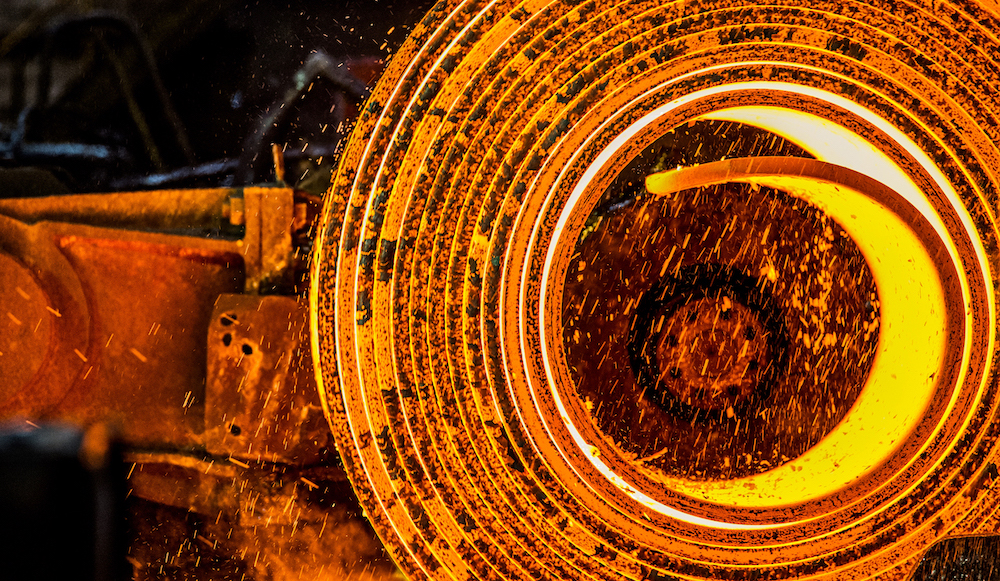
European HRC prices keep climbing due to tightening supply, imports constraints
European hot-rolled coil prices moved up further in recent transactions; limited imports and surging energy costs fueled upbeat sentiment, Fastmarkets heard on Thursday March 5.
In Northern Europe, offers for May delivery HRC were heard at €700-720 ($812-835) per tonne ex-works.
Transactions for limited tonnages of HRC in Germany and the Benelux region were heard at €700 per tone ex-works on Thursday for May delivery.
“We are getting first orders at €700 [per tone ex-works] for HRC, more inquiries are coming,” a steelmaker source told Fastmarkets.
“Order books are strong at European suppliers, and import options are getting increasingly scarce and difficult,” a buyer in Germany said.
As a result, Fastmarkets’ daily steel hot-rolled coil index domestic, exw Northern Europe was calculated at €700.63 per tonne on March 5, up by €5.06 per tonne from €695.57 on Wednesday March 4.
The index was up by €14.90 per tonne week on week and by €49.38 per tonne month on month.
Italy-origin coil was offered to Germany at €720-730 per tonne base delivered, the same as seven days prior. But several sources told Fastmarkets that an Italian supplier was likely to step back from the market to revise offers upward, considering surging energy costs.
“For electric-arc furnace (EAF) based steelmakers, this surge of energy prices is very sensitive cost-wise,” a second buyer in Germany told Fastmarkets.
Natural gas prices in Europe were hovering above €50 per megawatt hour on Thursday, compared with around €30-34 per MWh during the month of February.
Gas prices started spiking in Europe during the week commencing Monday March 2, following the new military crisis in the middle East, Fastmarkets reported.
It is worth noting, however, that the vast majority of flat steel products in Europe were produced via the conventional blast furnace-basic oxygen furnace (BF-BOF) route and were therefore far less exposed to energy cost shocks than EAF-based steelmakers.
Blast furnace gas — a by-product of ironmaking — together with coke oven and converter gases, is typically captured and burned to generate electricity, supplying a significant share of a steel plant’s energy needs and reducing reliance on external power.
Meanwhile in the secondary market, 4 mm HR sheet was heard changing hands at €750 per tonne CPT in Germany, compared with €730-740 per tonne CPT in the previous week. New offers, however, were heard at prices closer to €800 per tonne CPT, to reflect the higher feedstock costs.
“Stockists that had previously indicated they were sufficiently covered have returned to the market and are accepting some price increases,” a source in Italy said.
In Southern Europe, meanwhile, Fastmarkets’ daily steel hot-rolled coil index domestic, exw Italy was calculated at €680 per tonne ex-works on March 5, up by €3.75 per tonne from €676.25 per tonne on March 4.
The index was also up by €9.37 per tonne week on week and by €32.50 per tonne month on month.
Buying activity in the spot market has picked up over the past few days, as customers who had been delaying purchases in anticipation of lower prices moved quickly to secure material at previous levels. As a result, some mills temporarily suspended sales, Fastmarkets heard on March 5.
Producers were maintaining target offers for May delivery HRC around €700 per tonne ex-works earlier this week, although limited tonnages were heard to be booked at €670-680 per tonne ex-works. Market participants expect producers to reassess pricing levels next week.
In terms of imports, fresh offers remained scarce, market sources said, largely due to uncertainty surrounding the EU’s new safeguard regime and country-specific quota allocations. The lack of clarity regarding Carbon Border Adjustment Mechanism (CBAM) costs has also made buyers more cautious.
At the same time, extended lead times have added further complexity to the market. Ongoing geopolitical tensions in the Middle East have forced many vessels shipping from Asia to Europe to reroute around the Cape of Good Hope, extending transit times by roughly two weeks and contributing to tighter prompt availability.
Recent offers from Turkey, which was considered a more or less “safe” supplier with a faster lead time, were heard at €545-565 per tonne CFR to Southern and Northern European ports.

Italian steel plate prices up on higher slab offers, rising energy costs
Italy steel heavy plate prices widened upward during the week to Thursday March 5, while the Northern Europe market remained stable despite the conflict in the Middle East, rising energy prices and higher offer prices.
Italian heavy plate prices moved up with a spike in energy prices in Europe and higher slab feedstock prices adding to bullish offers because of the conflict between Israel, the US and Iran.
Fastmarkets’ weekly price assessment for steel domestic plate, 8-40mm, exw Southern Europe, was €700-730 ($811-846) per tonne on Thursday, widening upward by €10 per tonne week on week from €700-720 per tonne.
“As for plate, there is the slab effect and there is the gas effect – energy prices [jumping upward] since the start of the Iran [conflict],” one producer source said, who added that production costs have consequently risen.
Dutch TTF Natural Gas Futures rose considerably following the initial military strikes on Iran by Israel and the US on February 28, with gas prices rising to a peak of €54.29 per MWh on March 3 from €31.96 per MWh on Friday. Dutch TTF Natural Gas futures prices started to fall after Tuesday, to €48.77 per MWh on Wednesday.
Meanwhile, Italian plate offers were made at €750 per tonne ex-works for May production.
Slab feedstock offers also increased in the week due to higher freight costs, geopolitical uncertainty and disruption of Iranian supply to the global market.
Northern Europe
Steel plate prices in Northern Europe’s domestic market remained unchanged, despite higher energy costs.
Fastmarkets’ weekly price assessment for steel domestic plate, 8-40mm, exw Northern Europe, was €720-770 per tonne on Thursday, unchanged week on week.

States sue to block Trump’s 10% global tariff on US imports
A group of almost a dozen US states sued President Donald Trump’s administration to block the 10% global tariffs imposed in the aftermath of the Supreme Court tariffs decision.
Trump signed a proclamation implementing a 10% global tariff under Section 122 of the Trade Act of 1974 on Feb. 20, the same day the high court overturned his country-specific duties. The law authorizes a president to impose temporary tariffs of up to 15% for 150 days.
The coalition of states, led by New York Attorney General Letitia James, filed a lawsuit with the US Court of International Trade on March 5. The states are seeking an order that prevents the Section 122 tariffs from being implemented and would require the federal government to issue refunds to states for the tariffs costs they paid.
They argue that the tariffs do not meet the requirements of Section 122 and violate the Constitution’s protection of the separation of powers, pointing to how only Congress has the power to tax and impose tariffs, not the president. The Supreme Court referenced a similar argument in its decision, determining that the International Emergency Economic Powers Act of 1977, which Trump invoked to implement the country-specific duties, does not authorize a president to impose such executive action.
The coalition argues Trump’s order does not meet other requirements of Section 122, including that tariffs should be applied consistently without product exceptions, and does not meet the definition of a “balance of payments” deficit required by the law.
They say in the court filing that Trump’s changes in tariff policy create significant costs for states as agencies piece together policy from social media posts, executive orders, proclamation and other sources.
The Trump administration will “vigorously defend the president’s action in court,” Kush Desai, a White House spokesperson, said in a statement to Platts, a part of S&P Global Energy.
“The President is using his authority granted by Congress to address fundamental international payments problems and to deal with our country’s large and serious balance-of-payments deficits,” Desai said.
James is joined by attorneys general from 21 other states as well as Pennsylvania Governor Josh Shapiro and Kentucky Governor Andy Beshear. She led a similar lawsuit in April 2025 with 11 other attorneys generals to halt the IEEPA tariffs.
No president has imposed tariffs under Section 122. Trade attorneys have raised legal questions about the law’s implementation, but said they’d be surprised if the courts issued an injunction against a tariff that lasts only five months.
However, if Trump seeks to extend the 150-day time frame or issue a new proclamation to reset the clock, the administration will likely face additional litigation.
The Section 122 tariff exempts USMCA-compliant goods and does not stack on top of Section 232 sectoral tariffs, which include 50% rates on steel, aluminum and copper imports. While most metals are exempt from the Section 122 tariffs, some materials, like pig iron, will face the new rate. However, the 10% duty is lower for some countries than what was previously imposed under the per-country IEEPA duties.
Other materials, like aluminum scrap, are mostly exempt from Section 122, but only because they fall under the exemptions for USMCA-compliant goods from Canada and Mexico.

EUROMETAL participates in Cattwyk panel discussion on circularity in the steel sector
EUROMETAL President Alexander Julius participated as a panelist in the event “In the Loop with Cattwyk | Circularity in the Steel Sector”, held in Brussels on 5 March 2026. The event launched Cattwyk’s new series of discussions dedicated to the circular economy and its implications for European industry.
The panel brought together representatives from across the steel and manufacturing value chain, including Harriet Dalger (Damen), Adolfo Aiello (EUROFER), Hans Henning Hein (Jungheinrich), Dr. Carmen Ostwald (LESS) and Ulrich Adam (Orgalim).
Discussions focused on the strategic importance of steel and metals for Europe’s industrial future, as well as the challenges the sector faces in terms of competitiveness, decarbonisation investments, energy costs and international competition. Particular attention was given to the implications of the EU Steel and Metals Action Plan (SMAP), the Carbon Border Adjustment Mechanism (CBAM) and upcoming initiatives such as the Circular Economy Act.
During the debate, Alexander Julius emphasised the importance of maintaining a level playing field for the entire European steel value chain, stressing that EU legislation should not only focus on primary production but also take into account the role of steel distribution, service centres and downstream manufacturing industries.
He also highlighted the need for greater transparency and objectivity in assessing decarbonisation progress, including closer monitoring of imports of semi-finished products such as slabs, which continue to increase.
Another key point raised during the discussion was the complex design and hasty implementation of CBAM, which, continues to create uncertainty and risks undermining the competitiveness of European industry if not properly calibrated.
The event formed part of a broader dialogue on how circularity policies and climate legislation can support a competitive and sustainable European steel ecosystem, while ensuring that the entire industrial value chain remains viable.
EUROMETAL will continue to actively contribute to these discussions, advocating for balanced policies that support decarbonisation while safeguarding the competitiveness of Europe’s steel supply chain.
‘Short-sighted’ low-carbon specifications excluding UK-made steel: panel
UK domestically-produced steel is being excluded from public and private infrastructure procurement due to “short-sighted” low-emission specifications, at a time when the industry is transitioning, Kallanish heard from a panel at this week’s Make UK conference in London.
Gareth Stace, director general, UK Steel, highlighted the Welsh government as an example of policymakers excluding British Steel-made construction steel for being produced via the blast furnace route, despite the firm’s intention to move to electric arc furnace steelmaking.
“Many short-sighted projects say ‘we need so-called green steel’, [but] there’s no agreed global definition of green steel, so they see green steel as steel from the electric arc furnace route,” he said.
Therefore, buying EAF-produced steel from abroad allows buyers to tick boxes for purchasing low-carbon steel. Whereas buying domestically means “ensuring that that company has the money to invest to actually transition,” he added.
Alasdair McDiarmid, assistant general secretary, Community Union, highlighted other UK infrastructure projects such as Net Zero Teesside and Lower Thames Crossing where foreign steel has been used on the basis of “environmental carbon requirements”.
“There are two almost conflicting arguments, the drive to go green and there’s what we want to do which is support UK industry and UK jobs,” he said.
Meanwhile, Peter Quinn, director of sustainability and environment, Tata Steel UK, highlighted the lack of “nuance” in specifications that define low-CO2 steel.
“There’s a battleground out there; there’s a lot of people with lots of vested interests representing steel companies and governments across the whole world who’ve all got their view about [how] low CO2 should be defined,” he said.
He also highlighted contracts that now cannot be fulfilled by domestic steelmakers due to stricter customer requirements. “We can’t supply to a dodgy specification that someone else has written in a boardroom somewhere on the other side of the world,” he observed.
Quinn noted the plan to decarbonise the UK’s electricity grid by 2035. “We’ll be making steel from scrap, which has arisen in the UK, melting with electricity which is net zero … it takes a little bit of time to get there.”
He saw it as “ridiculous” for customers to not buy from Tata Steel now even though it is “demonstrably” on a journey to decarbonise.
Meanwhile, changes to frameworks could also help domestic producers supply more steel into upcoming infrastructure projects. Carles Rovira, chief executive at 7 Steel, said: “When you see the energy transition, SMRs, offshore, the infrastructure the UK needs to build, if we have the right conditions that can supply us with some growth for steel, because that’s going to be future construction, or building overall the UK infrastructure, and that is coming in the next 10-15 years. If we have the right framework now, we will be able to supply more of those growth opportunities.”


Thysenkrupp mulls Material Services division spin-off
Germany’s thyssenkrupp group has confirmed to Kallanish that its strategy is to spin off its divisions, “once they are fit for the capital market.”
The group notes that tk Materials Services in on the right track for such a move and is optimistic that the company will prevail on the capital market. It did not give a timeline for its intention.
The Materials Services division is one of Europe’s largest steel distribution and trading companies, with major activities in North America, which it intends to expand. In the fiscal year through September 2025, it achieved an order intake of €11.4 billion ($13.3 billion).
This comes following media reports that the steelmaker could sell off, list, or divest the division this year. The group is considering changing the business’s legal form to keep control in case of a majority sale, Reuters is reported as suggesting.
A spin-off of tk Materials would come in the wake of the group’s ongoing efforts of separating from its steelmaking unit tk Steel. It is currently in negotiations with Jindal. Thyssenkrupp’s strategy for some time now has been the relative independence for all its divisions, and has achieved this so far for its elevators and defence activities.

Steelmakers, plant builders disagree over IAA content requirements
The Industrial Accelerator Act (IAA) presented by the European Commission on Wednesday has been received with mixed sentiment by steelmakers and significant steel users.
Outokumpu has welcomed the proposal to increase demand for clean products. “The Industrial Accelerator Act signals a decisive shift toward an industrial strategy that integrates climate policy with industrial competitiveness,” it says in a statement.
However, the stainless steelmaker is calling for a clear “Made-in-EU” requirement to also include steel, and to introduce an EU low-carbon steel label.
Meanwhile, Germany’s steel federation WV Stahl, criticises the 25% low-emission steel quota for public procurement for not requiring domestic European-made steel.
“The IAA does create demand for low-emission steel, but does not facilitate structural demand for domestic steel production in the EU,” the federation notes.
For others, the IAA’s local content requirements, which impact concrete and aluminium, though not steel, are too high.
The association of mechanical engineering and machinery builders, VDMA, says the local content element is overweighed in the draft, and will not help the market’s structural weakness or the image loss of technological leadership.
“A ‘Buy European’ approach is justified only if security issues are concerned,” Kallanish learns from VDMA’s statement.
The association does welcome that the mandatory quota of green steel in public projects remains limited in the policy.
VDMA points at the contradiction that compulsory green steel usage means a burden for suppliers of technology, which itself is indispensable to achieving Europe’s climate targets.