

ArcelorMittal France to start Mardyck lines
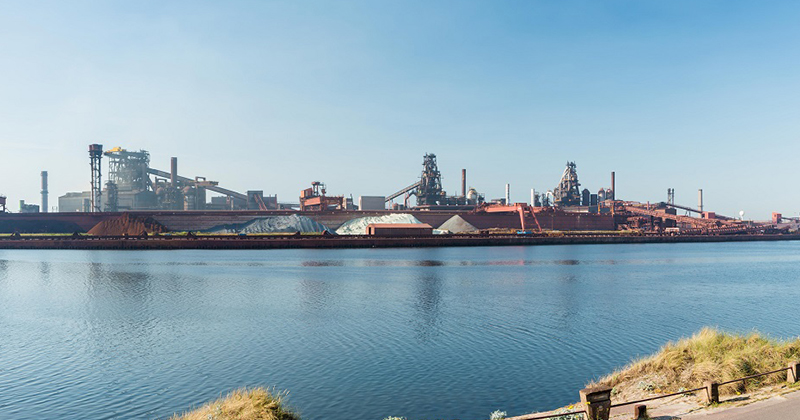
The first three production lines at ArcelorMittal France’s new electrical steel unit in Mardyck, near Dunkirk, are scheduled to become operational by the end of 2025, Kallanish reports.
The three lines which are part of phase 1 of the project include a preparation line, the annealing coating line, and the slitting line.
The investment, supported by €25 million ($29.06m) from the French state under the France 2030 programme, is aimed at meeting increasing demand for high-performance electrical steels used in electric motors for automotive, industrial and energy applications.
By 2027, the site will have five new production lines in operation. Civil engineering work is underway for phase 2 of the project, which includes an annealing pickling line and a reversible rolling mill.
Once fully operational, the unit will significantly increase ArcelorMittal’s production of ultra-thin electrical steels, complementing output from its Saint-Chély-d’Apcher site.
“I will feel great emotion when the first of the 155,000 tonnes of electrical steel we will ultimately deliver each year comes off the lines,” ceo of ArcelorMittal France Bruno Ribo says in a note seen by Kallanish.
“With this new production unit… ArcelorMittal’s electrical steel production capacity in Europe will reach 295,000 tonnes per year. All of ArcelorMittal’s electrical steels in Europe will be produced in France, strengthening the French ecosystem around electromobility and the energy transition,” he adds.
The company says the project strengthens its ability to supply materials critical to Europe’s electrification push, particularly in electric vehicles and renewable-energy systems, while reinforcing its industrial base in the Hauts-de-France region.
This $500m investment is ArcelorMittal’s largest in Europe in the past ten years, the company notes.
Natalia Capra France


European steel market weighs new trade regime amid fragile demand, CBAM uncertainty
Market participants at EUROMETAL’s Steel Trade Day in Düsseldorf warned that Europe’s steel supply chain is entering a period of heightened uncertainty, as weak demand coincides with the rollout of a new trade regime and lingering ambiguity around the Carbon Border Adjustment Mechanism.
From service centers to international traders, the tone at the event on Dec. 4 reflected a cautious reassessment of Europe’s competitive position, with many noting that the region risks tighter supply, higher volatility and reduced visibility heading into 2026.
New TRQ system seen as structurally tighter
A large portion of the discussion at the event focused on the EU’s forthcoming trade defense architecture. A permanent TRQ system featuring a 50% out-of-quota duty, double the current safeguard rate. According to multiple speakers, the structure could reduce available import volumes by more than 40% compared with 2024 flows for flat products.
“The numbers are brutal,” one trade-policy consultant said. “Quotas will be tight, frontloaded and likely exhausted almost immediately. Smaller importers will struggle to survive.”
Participants noted several operational challenges, including, uncertainty around country allocation, with China, India and Indonesia unlikely to receive specific quotas initially and possible exemptions for Ukraine on security grounds.
Many expect firms to stock-build into mid-2026, anticipating higher landed costs once the new regime takes effect.
Supply chain warns of unquantifiable risk
Across panels and bilateral meetings, participants stressed that they cannot accurately calculate risk under simultaneous CBAM and TRQ reforms.
“Right now, no one can forecast exposure for 2026, not even for next quarter,” a Germany-based distributor said. “Financing is harder, customers want fixed prices, and nobody wants to take the CBAM liability.”
A Turkey-based mill source said uncertainty was causing exporters to reassess the EU as a core market.
“We are 70% export-focused and theoretically CBAM-favourable because we are mostly EAF,” the source said. “But we cannot compete with China, which is more than $200/mt cheaper. Until we have clarity, we are looking more at the US and North Africa.”
Importers also highlighted the cash-flow burden of CBAM compliance.
“Even if you pass the cost on, the importer is the one financing the payment upfront,” a source said.
Demand remains stagnant
Market sentiment pointed to demand that is stabilizing at low levels but has not yet recovered meaningfully. Several participants described a “wait-and-see” approach from both buyers and service centers.
“Demand hasn’t bottomed yet, OEMs are still weak,” the trader said. “Everyone is operating in a ‘do nothing until next year’ mode.”
Service centers said order intake remained modest, while rising price-risk exposure has led to shorter contract cycles and reduced stockholding across the distribution sector.
Platts assessed Northwest European hot-rolled coil at Eur610/mt ex-works Ruhr on Dec. 4, stable day over day.
Calls for realistic policy as volatility grows
Speakers at the event urged policymakers to align decarbonization and trade strategies with market realities, warning that fragmented regulation risks further weakening the region’s industrial base.
“Asia is not staying dirty; they are building green steel faster than Europe thinks,” a policy expert said. “If we want green transformation, we need incentives like green public procurement and clear benchmarks.”
Others warned that the combined pressures of rising costs, higher bureaucracy and reduced competitiveness were pushing European companies toward specialization or consolidation.
“The EU is still an attractive import destination, but our own industry is in structural decline,” one distributor said. “Without clearer rules, this volatility becomes permanent.”
Imports remain competitive despite policy headwinds
Several market participants told Platts, part of S&P Global Energy, that imports continue to set the price floor in Europe, even as CBAM reporting obligations expand and new permanent tariff-rate quotas move closer to implementation.
A service center source, sourcing 80%-85% of its volumes from imports, said Turkish and Asian material remains comparable to the Northwest European domestic supply.
“Even with CBAM, imports are still competitive. Safeguards are the real problem, though,” the source said, noting Northwest European HRC at around Eur600/mt ex-works, compared with Asian-origin HRC at Eur560-580/mt DDP including CBAM.
Some buyers echoed this view, pointing to Eur760-780/mt domestic CRC offers in Spain and warning that shrinking domestic order books were intensifying competition among service centers.
“The environment is very hard to operate in. Everyone is fighting for the same limited volume,” a trader said.
A Germany-based trader added that CRC availability from overseas has tightened considerably. “There are no import CRC offers right now,” the source said. “It’s a very tight market.”

CBAM uncertainty suppresses Asian steel flows to Europe; long-term prospects remain positive
Asian steel shipments to Europe have slowed sharply in recent months as uncertainty surrounding the EU’s Carbon Border Adjustment Mechanism (CBAM) deters buying interest, mill sources, traders, and other market participants told Platts, part of S&P Global Energy, in the week to Dec. 8.
European buyers have largely avoided sourcing steel from Asia while they await clarity on CBAM-related compliance requirements, several mill and trading sources said.
“It’s not that mills don’t want to offer. It’s that European buyers are reluctant to book from Asia right now because of the longer lead time,” an Indian mill source said. The source added that although some mills attempted to ease buyers’ concerns by offering December-shipment cargoes, overall demand has stayed muted.
According to S&P Global Energy’s Global Trade Analytics Suite, Indian steel exports to the EU fell 33.4% to around 2.4 million mt in the first nine months of the year, compared to the same period in 2024.
China remained the top exporter, raising outflows by 29.15% in the first nine months of the year to around 3.2 million mt.
Indonesia’s steel exports to the EU rose 145.6% to 1.7 million mt over the same period, according to GTAS.
A source from a major Indonesian mill said they had already submitted CBAM-related data to authorities, adding that most information circulating in the market remains unofficial or leaked.
Because of the uncertainty, the mill is holding back lower-margin offers to Europe — similar to producers in India, Vietnam, and Malaysia, the source said.

Engagement with EU continues
Despite the slowdown, Asian mills have continued to engage with EU buyers, given Europe’s status as a key export market, particularly for hot-rolled coil (HRC), mill sources said.
The Indian mill source said mills are still offering into Europe despite weak offtake and margin pressure, as returns remain better than in other regions. The source reported the mill’s latest deal to Southern Europe at $575/mt CFR in late November, with freight at $50-$60/mt.
By comparison, Indian offers to Vietnam around the same period were reported at $485/mt CFR, while offers to the Middle East were heard at $510/mt CFR, Platts data showed.
Platts assessed imported HRC in Northern Europe at Eur500/mt CIF Antwerp Dec. 3, stable day over day, and in Southern Europe at Eur495/mt CIF South Europe, down Eur5/mt over the same period.
The Indian source stressed the need for greater clarity on CBAM pricing before mills can develop a comprehensive strategy. “For now, we only have some leaked numbers, not official figures. We will wait until the actual numbers are released before coming up with our strategy,” the source said.
Despite cautious sentiment, a trading house purchased in November three HRC shipments of approximately 100,000 mt of Indonesian coils to be sold to Europe for mid-February shipment, a China-based trader said.
Commenting on this deal, a Singapore-based trader said the sellers could face losses given the high default value indicated in a leaked CBAM document.
An Eastern China-based trader echoed this sentiment, saying that many buyers are unwilling to take on such risks and are instead turning to shorter lead-time cargoes from within the EU or nearby suppliers, such as Turkey.
A Vietnam-based mill source, however, said that this trend has also been seen throughout the year, rather than just in the last few months, adding that a seasonal slowdown in demand and depleted quotas were also major drivers.
Some market participants expect delivered pricing to become more common for EU-bound cargoes from January 2026. A Japan-based source said that buying indications for February shipment rose by $10/mt compared with December shipment, showing some willingness among buyers to absorb CBAM-related costs.
Navigating CBAM a bonus
With flows to Europe constrained, several Asian mills are targeting alternative destinations in the Middle East and South America, especially amid the year-end slowdown, according to several Asia-based traders. Competitive pricing is emerging in these markets, with many mills offering to offload excess supply at aggressively low prices, the traders added.
Still, sentiment is broadly optimistic that Asian steel exports to Europe will rebound once CBAM requirements become clearer.
Market participants said that clarification could create upside potential for mills that are able to supply compliant or higher-margin products.
A second Singapore-based trader said that a post-CBAM rebound in EU demand could also boost ASEAN markets through improved pricing.
Mills that successfully adjust to the new CBAM regime could gain a long-term competitive advantage as more countries begin considering similar carbon pricing mechanisms, a third Singapore-based trader said.
“Building trading experience under CBAM will be strategically valuable, especially as many stakeholders see Europe’s mechanism as a benchmark for their own carbon adjustment strategies,” the trader added.

EU registers CR flat steel imports from five countries including Turkey
The European Commission has announced that it has introduced mandatory registration for imports of certain cold rolled flat steel products from India, Japan, Taiwan, Turkey and Vietnam.
This measure will allow the EU to impose retroactive antidumping duties if the ongoing investigation confirms that these imports are entering the EU market at unfairly low prices.
A pre-emptive step toward potential retroactive duties
The Commission stated that sufficient evidence suggests imports from the five countries have increased significantly and may be entering the European Union at dumped prices, undermining EU manufacturers. By triggering registration, the EU ensures that any future antidumping duty can legally be applied to goods imported up to 90 days before provisional measures are imposed.
The investigation, which covers the period between July 1, 2024, and June 30, 2025, was launched on September 18 upon the complaint made by EUROFER, alleging that imports of the given products originating in India, Japan, Taiwan, Turkey and Vietnam are being dumped, as SteelOrbis previously reported.
The allegations in the complaint requesting the initiation of an antidumping investigation estimate dumping margins between 3.2 percent and 31.3 percent.
What happens next?
Following registration:
- The antidumping investigation continues, examining injury, dumping margins and market impact.
- The Commission may impose provisional antidumping duties within months if evidence supports action.
- Depending on final findings, definitive duties may follow, potentially retroactive to the date of registration.
The products subject to antidumping duty investigation currently fall under Customs Tariff Statistics Position Numbers ex 7209 15 00, 7209 16 90, 7209 17 90, 7209 18 91, ex 7209 18 99, ex 7209 25 00, 7209 26 90, 7209 27 90, 7209 28 90, 7211 23 30, ex 7211 23 80, ex 7211 29 00, 7225 50 80, and 7226 92 00.


Romanian flats spot market stable, Liberty Galati still shut and in trouble
Following last week’s decline driven by high inventories and weak demand, Romanian flat steel spot prices have stabilized, with levels unchanged week on week. However, market sentiment remains fragile.
Demand is still sluggish, liquidity issues continue to restrict purchasing capacity, and, with the holiday season approaching, market participants see little chance of a near-term recovery. As domestic demand stays muted, the import market has also remained quiet, with Romanian buyers showing very limited interest in new bookings.
At present, spot market quotations for hot rolled sheet (HRS) stand unchanged at €710-735/mt ex-warehouse, while cold rolled sheet (CRS) continues to be offered at €825-845/mt ex-warehouse, also stable week on week.
On the other hand, Liberty Galati, the country’s sole flat steel producer, has remained silent with no updates regarding production or future operations. The outlook for the plant continues to appear bleak, as legal and financial pressures persist. Local media report that the courts are still attempting to address the company’s ongoing difficulties, and, given the scale of unresolved issues and outstanding complaints, industry sources believe that a resolution will likely take time. For now, uncertainty around Liberty Galati’s future remains a significant concern for the Romanian steel sector.
In the import market, activity has likewise remained muted, as Romania’s weak domestic demand continues to limit buyers’ interest in securing new volumes. Most Romanian customers are purchasing only occasional medium-sized lots from nearby suppliers, mainly to replenish minimum stock levels. The Ukrainian mill has kept its prices unchanged from last week, offering HRS at €650-660/mt CPT and CRS at €740-750/mt CPT. A Slovakian supplier has also maintained stable pricing, continuing to quote HRS at €660-670/mt CPT.
In contrast, Turkish mills have lifted their HRC offers, supported by firmer sentiment in the scrap market. Offers for January shipment have now settled at €475-495/mt CFR, compared with last week’s €475-485/mt CFR, including estimated freight costs of €15-20/mt. These import levels remain duty-free depending on the origin, although Turkish material continues to be subject to EU antidumping duties.

Serbia introduces dual carbon taxes for industry and imports starting 2026
The Serbian government has announced that it has enacted two interconnected climate taxation laws that will come into force on January 1, 2026, establishing a carbon price for major industrial emitters and a border levy on carbon-intensive imported goods. Together, the laws create a unified framework aimed at reducing greenhouse gas (GHG) emissions, driving industrial decarbonisation and aligning Serbia more closely with emerging EU carbon pricing policies.
Domestic emissions tax targets major industrial sectors
The first law introduces a greenhouse gas (GHG) emissions tax for operators that hold emissions permits under Serbia’s environmental regulatory regime. The measure applies to fertilizer, cement, primary iron and steel, aluminum and electricity producers, requiring companies to pay a levy based on verified annual emissions of carbon dioxide, nitrous oxide and perfluorocarbons.
The tax is assessed after deducting a reference emission level, representing emissions considered unavoidable when operating with best available technology. The rate is set at €4 per mt of CO₂-equivalent, converted into Serbian dinars at the official exchange rate at the end of the tax period.
Taxpayers must file an annual return by May 31, supported by verified emissions data. Electricity generators whose revenue is primarily from power production may claim a 20 percent tax credit for eligible decarbonisation investments, capped at 80 percent of their total tax liability. The law also provides scope for additional state incentives to support renewable energy, low-carbon technologies, energy-efficiency upgrades and just transition initiatives.
Border carbon tax mirrors EU CBAM product scope
The second law establishes a carbon tax on imported carbon-intensive products, closely mirroring the EU CBAM product list. It covers a wide range of iron and steel products, cement, fertilizers and aluminum, with an exemption for importers whose annual volumes fall below five mt of covered goods.
The tax base is calculated from the embedded emissions associated with manufacturing the imported goods. Importers may report independently verified actual emissions, or default values provided in the legislation. Verification must be performed by bodies accredited under the International Accreditation Forum (IAF) system.
Like the domestic tax, the rate is €4 per mt CO₂-equivalent. To prevent double taxation, importers can claim a carbon price credit for any carbon payments made in the country of origin, provided documentation includes proof of payment, the applied emissions methodology and the emission quantities. Credits cannot exceed the tax that would have been due if the goods were produced in Serbia.
Annual tax returns must be submitted electronically by May 31, with customs authorities required to share import and product data with the tax administration to support enforcement.

France’s steel product import value down 10,7% in Jan-Sept 2025
According to the statistics released by the French Ministry of Economy, Finance and Industry, in the January-September period this year France’s basic steel product and ferroalloy imports amounted to a value of €6.66 billion, decreasing by 10.7 percent year on year.
In the given period, France imported €1.49 billion of steel pipes and tubes – down 1.7 percent, €379.3 million of cold rolled steel bars – up by six percent, €494.38 million of cold rolled steel strip – dropping by 6.8 percent, €356.41 million of cold drawn wire – falling by 3.8 percent, and €1.88 billion of metal structures and parts – decreasing by 7.5 percent, all compared to the same period of 2024.
In the given period, France’s basic steel product and ferroalloy exports amounted to a value of €7.15 billion, decreasing by 3.5 percent year on year.
France exported €960.58 million of steel pipes and tubes – down 1.7 percent, €327.88 million of cold rolled steel bars – down by 0.1 percent, €482.36 million of cold rolled steel strip – down 12.8 percent, €217.45 million of cold drawn wire – decreasing by 14.9 percent, and €680.62 million of metal structures and parts – rising by one percent, all compared to the same period of 2024.

EU import measures could eliminate smaller importers
The EU’s incoming measures impacting steel imports will create a significant additional burden that could put some smaller importers out of business, said speakers at the EUROMETAL Steel Trade Day in Düsseldorf.
The Carbon Border Adjustment Measures (CBAM) as well as the steel safeguard replacement regime will be big challenges many companies are not prepared to take, noted Gabriel Rozenberg of consultancy Cbamboo. There are many trading companies that import at least 100,000 tonnes/year using a small team, which however may be insufficient to deal with the complexity of CBAM, he said.
A similar idea was touched by Yuriy Rudyuk of law firm Van Bael & Bellis. “It will be more difficult for smaller companies to continue in this environment,” Kallanish heard him say at the conference. During the panel discussion concluding the event, meanwhile, Robert Kay of Ferona predicted that “the market may become bigger for a smaller number of players”.
Apart from the financial risk, it is the extra paper work that might require additional manpower to cope with. Rozenberg noted that only a minority of traders have so far even applied for the certification they need to keep importing under CBAM, a step that needs to be taken before April next year.
In the discussion following Rozenberg’s presentation, EUROMETAL’s former director general, George Kirps, pondered how a company can account for unknown CBAM charges, and make these acceptable for an auditor. Rozenberg replied that “you need to make a provision against your future CBAM charge; I don’t know if that is acceptable for an auditor”.
2026, especially, “will be a mess”, as there will be no verified emissions data available yet, Rozenberg noted. “For 12 months you will be in a kind of Lalaland,” he added.
Christian Koehl Germany

EU trade measure unlikely before July, says Rudyuk
The European Commission’s proposed trade measure to replace steel safeguards is an unprecedented change in approach to imports, involving the renegotiation of access to the EU market with all supplying countries, says Van Bael & Bellis trade lawyer Yuriy Rudyuk. This complexity means it is unlikely to be implemented until July 2026.
It may also cause tensions with EU industries other than steel if they are consequently forced to make concessions.
Article four in the proposed legislation sets conditions for establishing country-specific quotas, which raises the big question of how quota allocations will be negotiated with the EU’s multitude of free trade agreement partners. This is likely to be a highly complex procedure since FTAs, signed for example with major steel suppliers such as Korea, Vietnam, Japan, Turkey and the UK, protect preferential trade with the EU and will be very difficult to change.
These partners could therefore have strong legal cases against the EU if the bloc imposes new restrictions on them, Rudyuk told delegates at the EUROMETAL Steel Trade Day in Düsseldorf attended by Kallanish.
The proposed legislation has been reviewed by the European Parliament, with one suggested amendment being to bring forward the first review of whether the scope of the measure needs to be extended. This will be important for many steel market players in order to protect downstream steel users, Rudyuk noted. The EU member states’ Trade Policy Committee weekly meetings are also likely to be discussing the new regime, although these talks are not made public.
The new trade regime includes no exemptions for developing countries. Trade partners will be able to request compensation for restricted EU steel market access by demanding improved access to other sectors, such as chemicals or medical equipment. These EU industries may consequently ask for protection measures of their own. If trade partners are not satisfied, they could retaliate with their own measures.
“Negotiations with FTA members, internal process and the World Trade Organisation consultations … it’s like a Swiss knife. The European Commission today has to … be really in all these points and deal with all these challenging elements. And it may, again, upset a number of industries in the EU,” Rudyuk noted.
Rather than confronting trade partners, therefore, the EU is more likely to aim for a multilateral agreement – or coalition – with like-minded countries, to unite against overcapacity.
“You will have to position your trading elements very well and know when to bring the product, when not to bring the product. But there will be lower availability of the product from abroad, probably because of the 50% duty; that’s very high,” Rudyuk said of the new measure.
The regime is formed of the basic regulation plus numerous implementing acts to follow, dealing with numerous points, and is likely to remain a work in progress for quite some time, meaning it will be very complex. This complexity means it is unlikely the new measure will be implemented until July.
The potential melt-and-pour rule implementation meanwhile brings in a “completely new level of complexity” as it may affect preferential and non-preferential origin rules, he added.
With steel imports being more restricted, there is a risk of more downstream products entering the EU market instead.
“We already see increases now, but with less quotas available, there will be more interest in bringing downstream product, so that may also complicate trading … Perhaps it will be more difficult for smaller companies to continue in such an environment. There’s going to be … lots of regulation, a low level of predictability. So some of the smaller companies may decide we cannot do this anymore because … 50% [tariff] is too risky. So there could be more consolidation of trading activities in the EU,” Rudyuk concluded.
Adam Smith Austria
EU HRC prices steady as market freezes ahead of CBAM clarity
European hot-rolled coil prices were largely unchanged Dec. 5, with participants describing a market held back by regulatory uncertainty and limited urgency on both the buying and selling sides.
Market sources said that expectations for the European Commission’s forthcoming CBAM documentation continued to dominate sentiment, with several participants noting that even preliminary values could shift procurement strategies for early 2026.
“Everything is on pause,” a mill source said. “Producers have covered January, buyers are covered as well, so no one feels the need to push volumes. We’re all waiting for the Commission’s paper. That’s the key trigger.”
A trader source echoed the view, calling the environment “chaotic” and highlighting that safeguard constraints were equally restricting foreign coil availability. “Imports are practically absent,” he said. “It’s not just CBAM, safeguards are blocking meaningful volumes for Q1.”
In Northern Europe, tradable discussions were reported at Eur600-610/mt ex-works Ruhr.
Southern European indications remained steady, with a tradable value at Eur600/mt ex-works Italy for February delivery. Offers from Italian mills continued to be pitched at Eur620-630/mt ex-works, though several buyers dismissed these as “aspirational” until regulatory visibility improves.
Indonesian-origin coil was offered at Eur470-480/mt CIF Italy, exclusive of CBAM charges, though sources said buyers were reluctant to engage without clarity on final carbon values.
Platts assessed domestic HRC at Eur610/mt ex-works Ruhr and Eur595/mt ex-works Italy, both unchanged day over day.
Platts assessed imported HRC at Eur500/mt CIF Antwerp and Eur495/mt CIF Southern Europe, also both stable day over day.