


IREPAS Short Range Outlook: December 2025
No holiday cheer in global longs market – rising costs add to already weak demand
As we approach the holiday season, the general atmosphere in the global long steel products market is still cloudy. To sum up the market situation, demand is weak everywhere, with the approach of the holiday season exacerbating this situation, while costs are rising, China is producing a little less but is still exporting. The net effect is that the supply-demand balance has not improved, it has just shifted for different reasons. Decreases in consumption globally have put demand in a weak situation, with customers not yet observing any rises in consumption on the horizon which would give them hope for brighter market prospects.
EU market more cost-driven than before, scrap supply tighter
What has changed in the market is the cost structure. Scrap supply in Europe is tighter than usual, possibly in expectation of CBAM in 2026. Combined with higher electricity prices, this has pushed prices higher even though finished steel demand has not changed. So, the market is now even more cost-driven than last month.
New EU safeguard measures give brief boost, but demand shrinking in general
We have seen some price increases and a relative rise in demand in the EU due to the announcement of new safeguard measures. However, this improvement is temporary. Demand in the EU is shrinking in general despite promised infrastructure projects and a lack of apartments. The capacities of EU producers have increased over the past 12 months again, which increases the imbalance in the market. Despite the upcoming CBAM and tougher safeguard rulings, prices in the EU have been increasing only by very small margins due to low demand. No change is in sight.
China still exports at full speed, production cuts make little difference
On the supply side, China is finally showing real production cuts. In the first 10 months of the year, China’s crude steel output amounted to 817.87 million metric tons, down 3.9 percent year on year. This is the first meaningful drop in a while and should, in theory, take some pressure off the global balance. But as long as the tonnages they actually produce continue to flow abroad, the practical impact of the reduction in output is limited. In reality, China is still exporting at full speed because their domestic consumption is dropping even further. On the other hand, the export market is more attractive for the Chinese. Any changes in the rest of the world will have little impact on Chinese exports, as hopes fade of a stimulus by Beijing to boost domestic steel consumption.
Projects put on hold in US due to high interest rates
In the US, demand is still flat. Due to year-end taxes, most stockists are trying to reduce their inventories. Buying decisions are being pushed to 2026. Infrastructure investments are slow and due to high interest rates residential and commercial construction projects are put on hold, waiting for further interest rate cuts. Imports are reduced due to high duty and competition from domestic production.
Many countries still hoping to negotiate tariff exemptions with US
Many countries are trying to find a way to negotiate with the US to gain exemptions from tariffs, especially Mexico. The EU will probably also offer a new deal to the US once its new safeguard is in place. Any exemption will of course change the dynamics of the market.
Turkey’s scrap imports decline, sensitive to increases in scrap costs
Sudden increases in scrap prices will also cause production cuts in Turkey. Turkey’s scrap imports declined by 7.3 percent to 15.23 million mt in the first 10 months of 2025. The import volumes in the corresponding periods since 2020 varied in the range of 18-20 million mt.
Great uncertainty predominates in very unstable market situation
There are factors creating tremendous uncertainty in the global longs market, such as CBAM and the awaited ruling of the US Supreme Court on the legality of Trump’s tariffs, which make future planning extremely difficult. Meanwhile, competition in the market is intense but for low volumes. Under these circumstances, the current situation in the market can be described as very unstable.


High stocks keep trading in European domestic HRC market muted
“Stocks are full and there is very little buying activity,” an Italian buyer source told Fastmarkets.
In the absence of deals, estimates of workable prices in the country varied within the range of €600-610 ($699-711) per tonne ex-works.
The key supplier, however, increased offers for January-February delivery to €650 per tonne delivered, which is equivalent to €630-635 per tonne ex-works. This compares with €630 per tonne delivered in late November.
A compatriot producer’s recent target was €630 per tonne delivered or €610-615 per tonne ex-works, following sales in late November at €610 per tonne delivered.
Fastmarkets’ daily steel hot-rolled coil index domestic, exw Italy was calculated at €613.33 per tonne on Friday, up by €11.45 per tonne from €601.88 per tonne on Thursday December 4.
The index was down by €10.83 per tonne week on week but up by €19.16 per tonne month on month.
Both buyers and sellers in Italy expected prices to strengthen in the coming weeks amid the approaching introduction of the Carbon Border Adjustment Mechanism (CBAM), a measure equalizing carbon costs between EU and non-EU industries.
In Northern Europe, offers did not increase but narrowed in early December. Sources said that no material was available in the region below €630 per tonne ex-works. The general range was €630-650 per tonne ex-works versus €620-650 per tonne in late November.
No fresh deals were heard on Friday. Estimates of workable prices varied within the wide range of €610-630 per tonne ex-works.
Fastmarkets’ daily steel hot-rolled coil index domestic, exw Northern Europe was €622.50 per tonne on Friday, up by €2.50 per tonne from €620.00 per tonne on Thursday.
The index was up by €7.50 per tonne week on week and by €22.50 per tonne month on month.
Domestic HRC prices in Central Europe remained stable this week.
Fastmarkets’ weekly price assessment for steel hot-rolled coil domestic, exw Central Europe was €610-620 per tonne on Wednesday, unchanged week on week.

Italian restocking accelerates as flats, distributor sentiment rise
Sentiment is improving in the Italian distribution sector, supported by fourth-quarter price recovery and improved margins, particularly for flat products and their derivatives, Kallanish notes.
The uncertainty surrounding CBAM and the new safeguard regime is paradoxically adding confidence, with distributors expecting further price gains as protectionist measures are implemented.
Some distributors’ purchasing behaviour has shifted since November, sources note. Distributors have returned to buying sizeable volumes to restock, encouraged by firmer flat steel and coil derivative prices, and by expectations of a continued uptrend in the first quarter next year.
By contrast, long products are seeing slower sales, especially in southern Italy where adverse weather has disrupted construction activity and deliveries. A major distributor notes that long products demand remains volatile due to weakness in the private construction sector, though this is being partly offset by strong infrastructure orders financed by the EU post-Covid recovery fund. “Margins have returned, and the end of the year will compensate for many months of low prices,” the owner comments.
Another large distributor reports securing significant volumes of longs and flats ahead of the December holiday period, procuring material before the latest round of price increases implemented by European mills. “The end of the year is saving us,” a third distributor says, confirming restocking is taking place in November and December in anticipation of future hikes and to prepare for next year.
Despite a 20% drop in volumes in 2025, the company’s revenue improved thanks to stronger Q4 pricing on plate, sheet and tube. The service centre traditionally purchases small, frequent lots, but has changed strategy amid the current price environment.
Service centres remain noticeably less upbeat than distributors. Exposure to CBAM surcharges and quota constraints will push up their procurement costs, forcing them to reconsider their sourcing strategies.
A purchasing group reports a sense of “anxiety” in the market as service centres struggle to quantify import costs and do not consumption improving. Tube prices are rising alongside sheet and strip, but increases remain slower and continue to lag behind coil gains.
Natalia Capra France


EU HRC prices stay unchanged amid mixed sentiment among participants
European hot-rolled coil prices remained stable Dec. 4 as market sentiment was split, with producers voicing optimism and traders raising concern.
“Everyone believes price increases will come, so customers are booking material right now,” a mill source said. “I am positive about the price journey.”
A trader source said that the current market uncertainty surrounding CBAM and safeguards was making the environment difficult to operate in.
“Service centers are competing among themselves because of low orders,” he added. “Demand has not changed fundamentally.”
Participants also converged at the EUROMETAL steel trade day in Dusseldorf, in which many called for more action from the European Commission to ease this uncertainty.
Tradable values for domestic HRC in Northern Europe were reported at Eur600-620/mt ex-works Ruhr, with an offer pegged at Eur630/mt ex-works. Indicative offers for March/Feb deliveries were heard at Eur660-690/mt.
In Southern Europe, a tradable value was reported at Eur600/mt ex-works Spain.
Platts assessed domestic HRC in Northern Europe at Eur610/mt ex-works Ruhr, and in Southern Europe at Eur595/mt ex-works Italy, both stable day over day.
Import activity remained subdued, still hindered by confusion surrounding the recent release of draft CBAM benchmarks and default values. The same trader said that mills abroad “need to get certified quickly,” as some countries’ default values were slightly higher than expected.
Offers for imported Asian material were reported at Eur560-580/mt DDP Antwerp, inclusive of CBAM costs, while Turkish material was offered at Eur580/mt DDP Antwerp.
Platts assessed imported HRC in Northern Europe at Eur500/mt CIF Antwerp and in Southern Europe at Eur495/mt CIF S. Europe, both unchanged day over day.
Platts is part of S&P Global Energy.

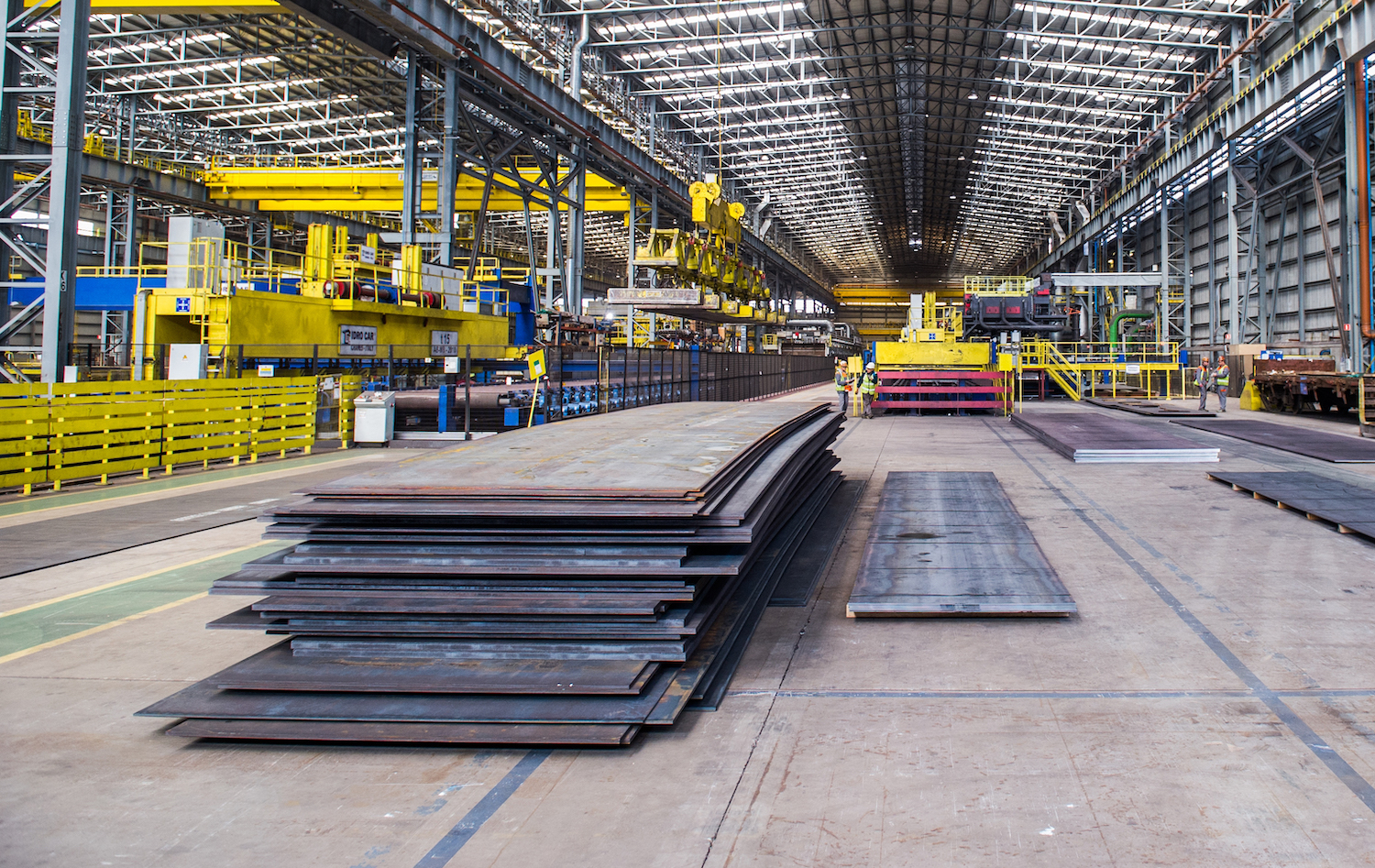
European heavy plate prices rise even as CBAM, year-end caution keeps buyers on sidelines
European domestic heavy plate prices rose in the week ending Dec. 5, although market activity remained muted as buyers weighed CBAM developments and year-end order visibility.
Producers continued to float higher Q1 offers during the week, but actual transactions largely reflected existing commitments rather than fresh buying.
Platts assessed domestic plate at Eur645/mt ex-works Italy, up Eur15 on the week, and at Eur705/mt ex-works Ruhr, up Eur10 on the week.
Platts assessed imported slab at $510/mt CIF Italy, stable on the week.
Italian S275 plate tradable values were reported at Eur650-660/mt ex-works for February delivery, while offers stretched to Eur700/mt for select material.
S235 plate in Northern Europe saw offers at Eur720-740/mt ex-works Ruhr, with DAP quotes for S355 reaching Eur750-785/mt. Market participants emphasized that elevated levels were mostly aspirational, with end-user demand described as subdued.
Slab prices held steady, with Asian- and Brazil-origin material heard at $500-520/mt CIF Italy. Sources noted that forward bookings for Q1 remained limited, as buyers awaited greater clarity on CBAM documentation and potential safeguard adjustments.
Several market sources highlighted a lack of import interest for coils and plate, citing regulatory uncertainty and existing coverage for January deliveries. One Italy-based mill noted that “buyers are covered and will receive material; there is no urgency until March.”
A European trader added that project-related demand was the only segment showing any movement.

Green steel market remains muted in Europe amid limited demand
Fastmarkets’ methodology defines European green flat steel as “steel produced with Scope 1, 2 or 3 emissions at a maximum of 0.8 tonnes of CO2 per tonne of steel.”
During the assessment week, a deal for 100 tonnes of green hot-rolled coil (HRC) was heard done with a premium of €180 ($210) per tonne in Germany.
Buyer sources estimated achievable premiums at €70-150 per tonne for green flats, while sellers claimed achievable prices were higher – at €150-180 per tonne, depending on tonnage.
Producers continued to offer such material at €200-210 per tonne and even as high as €300 per tonne from one Nordics-based supplier, but such premiums were rarely achieved in trades.
The wide price spread again highlighted that, although green steel has been discussed for some time, the market is still in its early stages, with demand remaining very niche.
“Green steel [demand] is still very much project-based; nobody buys it [green steel] for stock,” a seller in Europe said.
“The number of projects in Europe that genuinely require green steel – at least for now – is very small, and the pool of buyers remains limited,” a source at a German steel service center told Fastmarkets.
Fastmarkets’ weekly assessment of the green steel domestic, flat-rolled, differential to HRC index, exw Northern Europe, meanwhile, was set at €100-180 per tonne on Thursday, widening up from €100-170 per tonne seven days ago.
Fastmarkets’ assessment of the flat steel reduced carbon emissions differential, exw Northern Europe was €40-50 per tonne on Thursday, stable week on week.
For steel produced in blast furnaces with reduced carbon emissions of 1.4-1.8 tonnes of CO2 per tonne of steel, offers for premiums were reported at €60-70 per tonne during the assessment week.
Buyers’ estimates of tradable prices were around €30-50 per tonne, with no new trades reported.
Green longs
In the long steel segment, it remains much harder for producers to push through premiums among customers, owing to the initially more environmentally friendly nature of production.
Fastmarkets’ methodology defines European green long steel as steel produced with Scope 1, 2 or 3 emissions at a maximum of 0.5 tonnes of CO2 per tonne of steel.
Premium offers varied within the wide range of €20-50 per tonne, depending on producer, but getting this level appears nearly impossible.
“In fact, when a customer chooses a rebar supplier, those who have emissions higher than 0.45 tonnes of CO2 [per tonne] of steel provide discounts and those who have the required level of emissions or below that number sell at the standard price,” a producer source said.
Fastmarkets green steel, differential to steel reinforcing bar (rebar) domestic, delivered Northern Europe narrowed to €20-30 per tonne on December 3 versus €15-50 per tonne a week prior on November 26.
The assessment reflects the lowest offers targeted by suppliers.


Polish steel rebar prices rise slightly amid low demand, regulatory uncertainty
According to a distributor source, there are expectations that scrap will be “more expensive in January,” which they say could also drive up prices for long steel products.
However, growth remains limited, with sources saying that demand is still weak.
According to a second distributor source, buyers are already “stocked up” as they anticipate “higher prices” next year with the introduction of new trade rules, including the EU’s Carbon Border Adjustment Mechanism (CBAM).
Over the week to Friday, estimates of workable levels for rebar were heard hovering around 2,400-2,450 zloty ($661-675) per tonne CPT, with an offer heard at 2,450 zloty per tonne CPT.
Fastmarkets’ weekly price assessment for steel reinforcing bar (rebar) domestic, cpt Poland was 2,400-2,450 zloty per tonne on Friday, narrowing upward from 2,380-2,450 zloty per tonne one week prior.
Meanwhile, wire rod prices remained stable during the week.
Fastmarkets’ weekly price assessment for steel wire rod (drawing quality), domestic, delivered Poland was 2,600-2,650 zloty per tonne on Friday, unchanged week on week.

Thyssenkrupp Steel to reduce production, cut 11.000 jobs
German steelmaker Thyssenkrupp Steel has announced that it has concluded a collective restructuring agreement with the IG Metall union and employee representatives, marking a decisive breakthrough in the company’s multi-year transformation program.
The agreement covers the reconciliation of interests, a social plan, and several company-level arrangements that will guide restructuring through September 30, 2030.
The deal removes the final barriers to implementing Thyssenkrupp Steel’s long-planned industrial concept and provides a binding framework for restructuring measures and workforce adjustments.
Thyssenkrupp Steel’s industrial concept forms the backbone of the agreement. It includes: a market-driven reduction of production capacity to 8.7-9 million mt of shipped steel, elimination or outsourcing of around 11.000 jobs, a portfolio of investment projects, including the new direct reduction (DRI) plant now under construction in Duisburg.
Implementation of the restructuring program begins immediately, with the company aiming to quickly improve efficiency, lower costs and strengthen long-term competitiveness. Despite the cuts, Thyssenkrupp Steel emphasized that its long-term goal remains carbon-neutral steel production.


Eurofer forecasts growth in EU steel consumption for 2026; outlook for 2025 bleak
Eurofer said apparent steel consumption would grow by 3% in 2026, revising down its previous forecast of 3.1% growth and leaving it well below pre-pandemic levels. That growth, however, depends on the performance of the industrial sector and the easing of geopolitical tensions.
Eurofer also confirmed its earlier projection for 2025 of a 0.2% drop in apparent steel consumption to 128 million tonnes, with a 0.5% decline in consumption by steel-using sectors, revised from a previously forecast decline of 0.7%.
The downward trajectory in steel consumption follows previous drops observed in the market, with apparent steel consumption falling by 1.8% year on year in the second quarter of 2025, according to Eurofer.
Flat steel prices experienced some growth in the third quarter of 2025 in response to the EU’s impending Carbon Border Adjustment Mechanism (CBAM) and the introduction of new steel safeguards, which are expected to reduce import volumes when they come into effect in 2026.
A lack of end-user demand, however, paired with cheap overseas imports, has kept growth limited.
“European steelmakers cannot yet see the end of the tunnel,” Eurofer director general Axel Eggert said.
According to Eggert, new trade measures must be implemented “as a matter of urgency” to prevent further “stockpiling of cheap imports,” which, he added, would “nullify the effectiveness of the measures for the entire year.”
Fastmarkets’ steel hot-rolled coil index domestic, exw Northern Europe averaged €610.48 ($708.84) per tonne in November, a 3.58% increase from an average of €589.40 per tonne in October.
End-user outlook
Automotive
The output of the EU automotive industry is expected to drop by 3.8% in 2025, following the decline of 9.7% seen in 2024, according to Eurofer data. Meanwhile, a modest growth of 1.4% is expected for 2026.
Eurofer said the auto industry remains highly exposed to trade disruptions and is set to suffer from growing uncertainty, especially following the implementation of new trade tariffs by the US.
Construction
The European construction sector also remains under pressure despite some limited growth in steel consumption. According to Eurofer figures, output in the sector has grown by a modest 0.1% in 2025 and is expected to grow significantly in 2026 by approximately 2.2%.
But Eurofer said construction output in the EU continues to be affected by growing costs for construction materials, lack of labor and worsening economic conditions across the region, despite support from public initiatives like the NextGenerationEU package.
Fastmarkets’ price assessment for steel reinforcing bar (rebar) domestic, delivered Northern Europe averaged €591.25-626.25 per tonne in November, a 0.04% increase from an average of €597-620 per tonne in October.

Producer prices in French industry stable in October 2025 from September
In October this year, producer prices in French industry remained stable month on month and were down by 0.8 percent year on year, according to the statistics released by France’s National Institute of Statistics and Economic Studies (INSEE). Producer prices for manufactured products in France fell by 0.1 percent in October compared to September and were up by 0.5 percent year on year.
In the given month, prices for exported manufactured products increased by 0.1 percent and prices of exported transport equipment rose by 0.4 percent, both month on month. On year-on-year basis, in October prices of exported manufactured products went down by 0.8 percent, while prices of exported transport equipment remained stable.
Meanwhile, import prices for manufactured products in France in October increased by 0.1 percent month on month and were down by 0.8 percent year on year.