


AI boom to drive steel demand in Philippines, Taiwan
A rapidly growing AI sector represents a major demand driver for steelmakers in the Philippines and Taiwan, industry participants said May 19 at the 2026 South East Asia Iron and Steel Institute Conference and Exhibition in Singapore.
The Philippines and Taiwan are both semiconductor hubs, and their steel sectors will play a crucial role in fueling the AI rush, which has sparked a surge in data center construction, semiconductor production, and the buildout of ancillary facilities.
“All AI projects need infrastructure, which requires steel,” Geraldine Santos, public relations officer of the Philippine Iron and Steel Institute, told Platts, part of S&P Global Energy.
“AI projects are not just virtual, you will need infrastructure to develop them,” Santos said.
The US-led Pax Silica supply chain initiative is expected to spur AI investments in the Philippines. Under the framework, the US plans to build a 4,000-acre industrial hub in the country to secure US supply chains for AI, semiconductors and critical minerals.
“What really makes Pax Silica especially important for the industrial and steel sectors is its targeted focus,” Santos said. “Ultimately, Pax Silica reflects a broad direction of the Philippine economy moving towards high-value industries, stronger industrialization and deeper integration into the global manufacturing efforts.”
Producing specialty steel for AI and other high-tech applications is also key for Taiwanese steelmakers to remain competitive amid the influx of Chinese steel in the market, according to Victor Chen, general manager of marketing at China Steel Corp. (Taiwan).
“Unless you can produce steel products as effectively or as cheap as [those produced by] Chinese manufacturers, I think we all have to find a way to be differentiated in our products,” Chen said. “Now we’re talking about robots and all these new high-tech [products] that require more special steel.”
The production ramp-up of Taiwan Semiconductor Manufacturing Co. Ltd., one of the world’s largest semiconductor manufacturers, bodes well for Taiwanese steelmakers, Chen said.
Platts, part of S&P Global Energy, assessed SAE1006 grade hot-rolled coil at $580/metric ton CFR Southeast Asia May 19, down $5/mt day over day and a $9/mt decrease from the previous week.


Spain: Steel production drops 21% in Q1; lowest in 6 years
Spain’s steel production slipped 21% year over year in the first quarter of 2026 to 2.59 million metric tons, according to data published May 21 by industry association Unesid.
The volume was the lowest for the period on record since 2020, the data showed, with production curtailed by a blast furnace outage at the country’s largest production site in Gijon since the start of the year.
In March 2026, Spanish steel output reached 967,000 mt, down 19% year over year and marking an eighth consecutive monthly decrease, according to Unesid.
Trailing 12-month volume was down 9% year over year to 11.1 million mt, the smallest underlying volume since November 2023, the data showed.
Spain is Europe’s fourth-largest steel producer, behind Germany, Italy, and France, with a maximum capacity of around 23 million mt per year.
Spain’s scrap recycling volume was 2.25 million mt in the first quarter, according to Unesid data, a 13% year over year decline.
Scrap volume covered 87% of the Q1 production total, the highest Q1 share on record, the data showed.
However, total scrap volume declined 18% year over year in March to 800,000 mt, reversing a positive evolution since April 2024, the data showed.

World steel production declines for eighth month with 2% drop in April
World steel production continued to slow in April, falling 1.9% year over year, the World Steel Association reported May 22. The data covers 69 member countries.
Some 153.4 million metric tons of crude steel were produced in April. This was 3 million mt less than in the same month last year and 7.2 million mt, or 4.5%, less than in March. China, with its 86 million mt, accounted for just over 55% of that total.
The world’s monthly production has been declining year over year for the eighth straight month since September 2025, according to World Steel data.
Gains in most of the top ten steel-producing countries failed to offset declines in several major contributors. India’s output grew 3.9% year over year, or more than 500,000 mt. The US, South Korea, Turkey and Germany also posted significant increases totaling almost 1.5 million mt. However, these were not enough to offset a 2.4 million mt fall in China, a 700,000 mt fall in Russia and a 1.4 million mt drop in the Middle East.
The results for the top 10 steelmaking countries over January-April showed highly uneven changes, ranging from a 12% drop to a 9.4% gain.
The world’s total over January-April fell by 2%, or 12.5 million mt, year over year to 613.3 million mt, mainly due to 4.1% lower output in China and an estimated 12% fall in Russia’s output. Over the four-month period, China cut production by 14.1 million mt to 331.1 million mt, and Russia by 2.8 million mt to 20.6 million mt.
The decrease was partially offset by 9.4%, or 5 million mt, higher production in India and 6.6%, or 1.7 million mt, growth in the US. Over January-April, India made 58.7 million mt of crude steel, and the US produced 28 million mt, making them the second- and third-largest steel-producing countries behind China.
The period also saw single-digit increases in Turkish and German production, with the countries producing, almost on par, 13 million mt and 12.5 million mt, respectively. However, the total for the EU-27 fell by 2.2% to 42.8 million mt.
By region, the 12.8% fall in Middle East production, which shrank to 16 million mt, marked the largest decline over January-April, while the largest percentage gain was in Africa, where output expanded 8.7% year over year to 8.4 million mt.

Germany’s crude steel production increase in april


Uğur Dalbeler: EU’s new steel quota will challenge Turkish exports

US Department of Commerce issues dumping ruling on Belgian steel plate imports
Calls grow for UK steel quota revisions
Calls are growing for revisions to be made to the proposed changes to the UK’s steel tariff-rate quota (TRQ) allowances, Kallanish learns from market players.
Gareth Stace, director general of UK Steel, tells Kallanish he is “almost certain” there will be changes to the import quota levels in the final determination.
“The whole purpose of publishing these provisional measures is to invite feedback and representation from market players and organisations. This process ensures that the final numbers will more accurately reflect the import levels needed across the many different categories,” he says.
UK Steel, among others, continues to engage with the Department for Business and Trade (DBT) after the announcement of the proposals back in March. The construction and manufacturing sectors have also been seeking alterations, with numerous letters written by the British Construction Steelwork Association (BCSA) and the Confederation of British Metalforming (CBM).
The British Chambers of Commerce (BCC) has also issued warnings over rising manufacturing costs, while the Construction Leadership Council confirmed a government meeting had taken place in April to discuss concerns.
These changes are already pushing up prices for flat products, with a substantial rise already seen on UK HRC. For many buyers, it comes at a time of tepid demand and elevated costs due to the Middle East conflict.
A petition, created by Giles Throup of Coker Engineering, with suggested quota changes has gathered more than 1,500 signatures in less than a week. Throup tells Kallanish he hopes the petition acts as a spotlight to give more weight to the argument for adjusting quotas, and increases visibility of the problem. He adds that SMEs in the UK often lack a voice despite being exposed to just as much risk as the bigger companies.
He also notes that for some steel products there “aren’t even the capabilities to manufacture in this country but the commodity codes are on the list”. Throup also highlights the lag between bringing idled capacity online and the material coming onto the market.
A government spokesperson tells Kallanish: “The new steel trade measure aims to strike the right balance between protecting UK steel production and maintaining secure supply. We continue to take feedback from industry, including UK Steel and CBM, on it to ensure the best outcomes to protect UK industry, and we will also conduct a formal review after 12 months to ensure it remains effective.”
The DBT has previously said it would explore a transitional arrangement under which the new tariff would not apply to goods under contract agreed before 14 March and imported to the UK between 1 July and 30 September 2026.
However, importers say they do not feel the government is listening to their concerns, or understands the impact they are facing. A growing area of concern are steel derivatives and the circumnavigation of the new quotas. The BCSA says the exclusion of fabricated steelwork from the quotas is a “glaring omission”.
At the same time, the EU is preparing to reduce its own TRQs, causing concern for UK exports. Stace has previously expressed concern over this, as 80% of UK exports go to the region. These negotiations are believed to also be ongoing.


EU institutions agree US deal, steel ‘derivatives’ relief
The European Council presidency and Parliament have reached a provisional agreement on the tariff elements of the EU-US trade deal. This includes enabling the EU to suspend tariff preferences for the US if the latter continues to apply a tariff rate higher than 15% on so-called steel and aluminium “derivatives” imports from the EU beyond end-2026.
The agreement is now valid through 2029, compared to the previous draft which envisaged expiry in March 2028, with an extension possible through a legislative proposal, Kallanish notes.
In August 2025, the US added 407 product categories to the list of derivative steel and aluminium products subject to tariffs. Parliament considered that these new tariffs increased the level of trade instability and pushed for this issue to be addressed in the main regulation.
The Commission will also be able to suspend tariff preferences if the US fails to address the Union’s concerns regarding the tariff treatment of Union exports which until 24 February 2026 benefitted from the 15% all-inclusive tariff ceiling, the European Parliament says.
These products include semiconductors and autos and auto parts. Since the provisional Turnberry deal signing last July, EU vehicles are temporarily levied with a 15% duty in the US; however, US President Donald Trump has been threatening in recent weeks to reinstate the full 25% Section 232 duty if the EU does not quickly agree to the US trade deal.
The co-legislators also agreed to establish a safeguard mechanism in the event that the tariff preferences granted to the US lead to increases in imports that threaten to cause serious injury to EU industry.
Six months after the regulation enters into force and every three months thereafter the Commission will report any changes in trade volumes and values of US exports to the EU of the goods covered by the regulation. Six months before expiry, the Commission will present a comprehensive assessment of the regulation’s impact.
The International Trade Committee (INTA) will now organise an extraordinary committee to discuss and vote on the outcome of negotiations. This will take place on 2 June.
Following the vote in committee, the file can be tabled for a vote at the following Parliament plenary on 15-18 June. It will then be the turn of the Council to approve the agreed text.
Once the text has been formally approved by the co-legislators, the new legislation will enter into force on the day after its publication in the EU’s official journal.

EU coil price dip blamed on distributors
Some market participants in the northwestern European flat products market are blaming the recent dip in coil prices on distributors rather than mills.
While mills have brought down their prices also, it is the distributors that moved first, causing mills to follow, one southern German manger is sure. “The pressure on prices came from the distributors, not the mills,” he says.
He cites one German market group which, among others, “sold a lot, and at low prices”. According to him, the low offers originally came from service centres “from purchases made earlier at lower prices, and now sold for less than they would pay the mills for a refill.”
He tells of sales prices for sheet and slit strip of around €800/tonne ($930/t), which would calculate back to a mill base price of €700, plus customary surcharges, transport and cutting/slitting services.
Although he says he has not received mill offers of €700/t or less, big buyers did, with prices in the range of €680-710/t ex-works for several weeks now, they tell Kallanish.
One Benelux service centre manager confirms that “various service centres and distributors have had to lower their selling prices slightly to remain in line with the market”. He refers to low demand and reservation among steel users, although he refrains from admitting that the service centres were the first to make price concessions.
Observers largely agree that inventories are full enough to allow service centres sales without margins, for the sake of cash flow, and apparently many are quite busy, especially in Benelux.
According to another German buyer, lead times for sheet can now easily be three to four weeks, rather than three to four days. And while service centres enjoy business on the sale side, they continue to postpone their intake of new coil from mills, German as well as Benelux sources say.
Italian steel rebar prices unchanged on weak demand, stable conditions in European long steel market
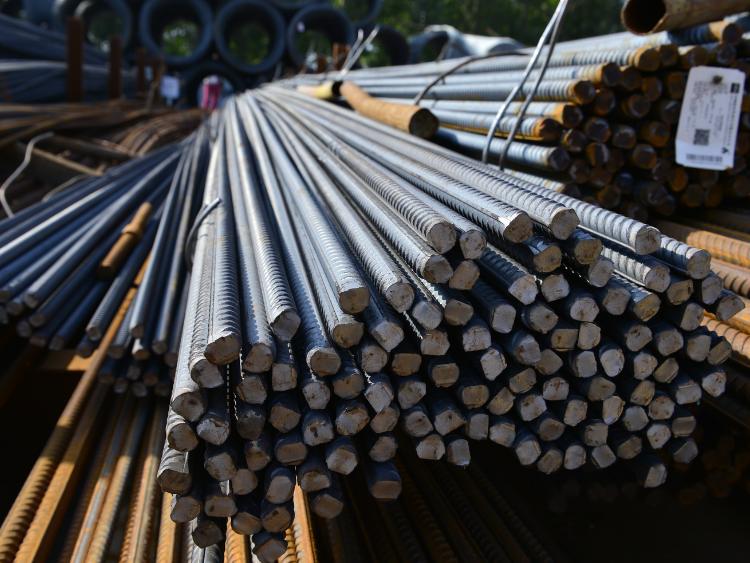
European domestic prices for steel rebar remained stable in the week to Wednesday May 20, despite some attempts by Italian mills to push for higher prices, with market acceptance constrained by weak demand conditions.
Market participants reported that demand was still weak, with limited buying activity due to high prices and adverse weather conditions, which led major construction sites to restart work only toward the end of May.
“Domestic producers are all reducing production to guarantee an optimum demand/supply balance,” one seller source told Fastmarkets.
Deals continued to be concluded within earlier established ranges, with buyers showing resistance to higher prices and taking a wait-and-see-approach.
In Italy, tradable prices varied within the wide range of €710-770 ($832-903) per tonne ex-works, depending on the region. In the north, price ranges were €710-730 per tonne ex-works, unchanged week on week. In the south, tradable levels were within the range of €750-770 per tonne ex-works, but no meaningful volumes were traded at the upper end of the range.
A few higher indicative offers were heard in the range of €850-860 per tonne, but no deals were agreed to support them.
Fastmarkets’ weekly price assessment for steel reinforcing bar (rebar), domestic, ex-works Italy, was €710-750 per tonne on May 20, unchanged week on week.
In Spain, tradable prices for steel reinforcing bar (rebar), domestic, delivered Spain, were reported at €750 per tonne delivered (16mm base), indicating stable market conditions, which was reflected in Fastmarkets’ assessment.
In Germany, prices for domestic rebar were reported within the range of €710-730 per tonne delivered, with limited variations across the market and subdued trading.
Fastmarkets’ weekly price assessment for steel reinforcing bar (rebar), domestic, delivered Northern Europe, was €710-730 per tonne in the week to May 20, unchanged from the previous week.
Steel wire rod prices remained largely stable across Europe in the week.
In Northern Europe, tradable prices were reported within the range of €705-720 per tonne delivered, with no significant change from the previous week.
Fastmarkets’ weekly price assessment for steel wire rod (mesh quality), domestic, Northern Europe, was €705-720 per tonne delivered on May 20, unchanged week on week.
In Southern Europe, wire rod prices were reported within the range of €690-720 per tonne delivered, with offers within that range.
Fastmarkets’ weekly price assessment for steel wire rod (mesh quality), domestic, delivered Southern Europe, was €690-720 per tonne on May 20, also unchanged week on week.
European sections and beams
European domestic section prices were reported stable at €800-840 per tonne delivered, which was reflected in Fastmarkets’ monthly price assessment for steel sections (medium), domestic, delivered Southern Europe.
The corresponding monthly assessment for steel beams domestic, delivered Northern Europe, was €790-820 per tonne, rising from €780-810 per tonne in April.
Domestic beam prices edged upward month on month, with tradable prices reported at €790-820 per tonne delivered across Europe, with a deal heard at €815 per tonne.
