EUROMETAL co-signs joint statement calling for broad CBAM extension to downstream products
EUROMETAL has joined 19 other European industry associations and industriAll European Trade Union in signing a joint statement calling for the broadest possible extension of the Carbon Border Adjustment Mechanism (CBAM) to downstream products.
Ahead of the next trilogue negotiations, scheduled for 20 October, the signatories urge the European Parliament, Council and Commission to reach an ambitious agreement that protects European industrial value chains, investment and quality jobs.
The statement highlights the competitive pressures facing European manufacturers as carbon costs increase and free allowances under the EU Emissions Trading System are progressively phased out. Without broader CBAM coverage, manufacturers using steel and aluminium in Europe risk facing higher costs while competing finished and semi-finished products imported from third countries may enter the EU market without equivalent carbon costs.
This imbalance could increase the risk of European production being replaced by imports or relocated outside the EU, undermining investment in cleaner industrial production.
The sectors identified in the statement include construction, mobility, machinery, energy, packaging, home appliances, clean technologies and other metal-intensive industries. Their exposure demonstrates the importance of addressing carbon leakage across interconnected industrial value chains.
For EUROMETAL, representing European steel, tube and metal distribution, the competitiveness of downstream manufacturing is closely linked to the strength of the wider European steel value chain. By co-signing the statement, EUROMETAL supports a coordinated approach to ensuring that products manufactured in Europe are not disadvantaged by the carbon costs imposed by EU legislation.
The signatories call on EU policymakers to agree on comprehensive downstream coverage and place European industrial production, investment and quality jobs at the centre of the final agreement, recognising their contribution to Europe’s economic security, prosperity and climate transition.
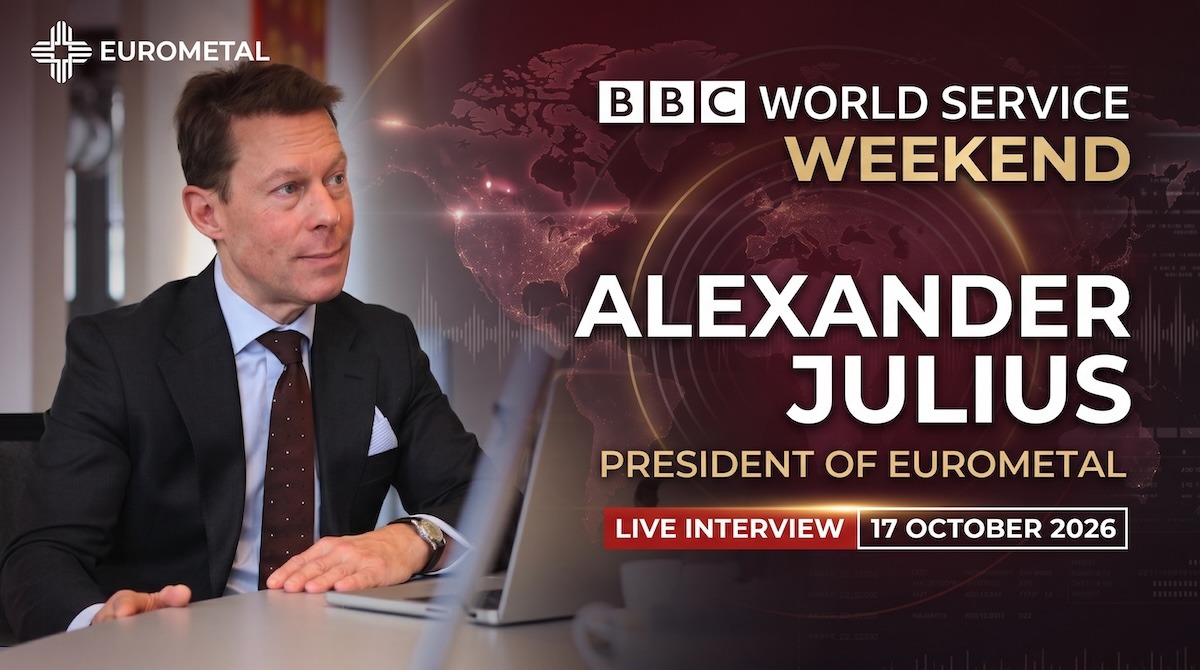
Protecting Europe’s industrial base: EUROMETAL President live on BBC World Service
EUROMETAL President Alexander Julius joined BBC World Service’s Weekend programme on Saturday, 17 October 2026, to discuss the mounting challenges facing European industry, the EU’s trade relationship with China, and the measures needed to safeguard Europe’s industrial competitiveness.
Speaking live following the European Union Summit in Brussels, Alexander Julius addressed some of the most pressing questions surrounding the future of European manufacturing, including the growing trade imbalance with China, the EU’s evolving approach to electric vehicle imports, and the effectiveness of proposed “Made in Europe” public procurement rules.
Against the backdrop of a record trade deficit with China, the interview examined the challenges facing European manufacturers as they compete with imported products in an increasingly complex global trading environment.
For Europe’s steel distribution and processing sector, these developments are particularly significant. Steel distributors, service centres and traders operate at the heart of European industrial supply chains, connecting steel production with manufacturers across sectors such as automotive, construction, machinery and engineering.
Maintaining a competitive European industrial base is therefore essential not only for steel producers but also for the thousands of companies that depend on reliable, competitive and sustainable steel supply chains.
These questions reflect a broader challenge for European policymakers: how to preserve open and competitive markets while ensuring that European companies can compete on fair terms with products manufactured outside the EU.
For EUROMETAL, the competitiveness of the entire industrial value chain remains a central priority. Trade and industrial policies must consider their impact not only on upstream steel production but also on downstream manufacturers, processors, distributors and steel-consuming industries.
Watch the full BBC World Service interview below:

Italian longs market sees stable prices locally, export segment performs better
The Italian domestic long steel segment has remained largely stable this week, although attempts to raise prices have been observed in exports.
Producers’ price requests have therefore shown limited changes, with rebar prices standing in a range of €480-490/mt ex-works base (€740-750/mt ex-works including regular extras), with the lower end up slightly by €10/mt compared to the levels reported by SteelOrbis last week.
However, with previous orders concluded at €440-460/mt ex-works base (€700-720/mt ex-works including regular extras), the new levels are struggling to gain acceptance. In the meantime, the complex domestic and international scenario has been compounded by increases in fuel and transportation costs. Recently, estimated freight rates by truck from northern to southern Italy have reached €65-70/mt, up by around 10 percent compared to the previous levels. In fact, strikes and transportation blockades in response to high fuel prices are expected from October 16 to October 20, particularly in southern Italy.
In addition, slowing construction activity and high inventory levels are leading to lower demand in the Italian domestic market, and not only in the rebar segment.
At the beginning of this week, a market participant in the wire rod segment stated that he is observing “some tension” due to “rising electricity and transportation costs and stagnant orders”. As for prices, the range for wire rod in the Italian domestic market in October is expected to stand at €675-680/mt for drawing quality and €660-670/mt for mesh quality, both delivered, indicating only very slight changes compared to the previous month.
“Customers are limiting their purchases to immediate requirements, as business activity has declined significantly,” a trader commented.
Italian producers are therefore seeking to ease the pressure in the domestic market by focusing on exports, particularly to the Mediterranean region and eastern Europe. According to reports, the latest Italian rebar export offers to these destinations stand at €590-600/mt FOB, amid increased inquiries from Ukraine. However, the latest confirmed deals appear to have been concluded at around €590/mt FOB or slightly above. The latest wire rod offers have also been issued at the same level, though they have failed to attract interest from end-users. Accordingly, the average Italian wire rod export price may be estimated at around €580/mt FOB.
Author: SteelOrbis Editorial Team


European longs prices uneven amid weak demand and widespread caution
The European long steel market has shown differing trends over the past week. Producers continue to defend their price requests amid high energy and logistics costs, but downstream demand remains insufficient to support the widespread consolidation of increases.
While the Italian longs market has remained largely lacking in momentum, Polish mills have raised their rebar quotations to €630-640/mt CPT from €620-635/mt CPT in the previous week, with increases of €10/mt and €5/mt at the respective ends of the range. According to sources, distributors have followed this movement, offering material at €640-650/mt CPT. However, the increase has taken place in a context of cautious purchasing, with no indications of a sharp acceleration in consumption.
In Spain, market participants have reported a recovery to €735-740/mt, following previous levels of around €720/mt, all ex-works, with peaks of up to €750/mt ex-works. However, Spanish distributors remain cautious regarding the possibility of sales returning to normal by the end of the year. In addition to the slowdown in the local market, they have also reported greater difficulties in shipping material to other European countries such as Bulgaria and Romania due to insurance restrictions and the reduced willingness of shipowners to operate on these routes.
In Germany, a general slowdown in production and a shortage of material have been reported, as the low water levels of the Rhine continue to prevent deliveries by river and to drive up freight rates.
Apart from Italian offers, exports are currently available mainly from Greece, standing at €630-640/mt FOB for rebar and €620-650/mt FOB for wire rod. Rebar in coils from the same origin is being offered at around €650/mt FOB. “We have also been forced to seek increases due to high energy costs,” a Greek source stated.
As for imports, Turkish offers have been reported at €585-595/mt CFR for rebar and €595-605/mt CFR for wire rod, both down by €5-10/mt week on week. Both ranges mainly refer to shipments in November. Some Indonesian wire rod offers have also been reported at €510/mt CFR for shipment in January. Finally, Egypt is offering rebar at €580-590/mt CFR and wire rod at €590-600/mt CFR, while Algeria continues to remain largely absent from negotiations, except for a few small sporadic deals.
Overall, sentiment in Europe remains cautious. Mills are trying to preserve their margins, while distributors and end-users are limiting purchases to their actual requirements. Opportunities in eastern Europe provide a partial outlet, but market feedback does not indicate enough demand to absorb producers’ price requests.
€1 = $1.12
Author: SteelOrbis Editorial Team

Romanian flats spot trading continues at moderate pace, prices largely stable
Romania’s flat steel spot market has maintained a relatively balanced trading environment this week, with demand remaining at acceptable levels despite the absence of any noticeable recovery.
Purchasing activity has continued at a moderate pace, allowing traders to maintain their recently increased quotations without significant downward pressure. However, further upward adjustments have proven difficult to achieve, as buyers are becoming more reluctant to accept additional increases. Although some suppliers are still attempting to raise their offers, the market has shown little movement overall, with transactions largely continuing at last week’s levels.
In the domestic spot market, HRS prices have remained at €780-790/mt ex-warehouse, while CRS quotations have held at €890-900/mt ex-warehouse, with both ranges unchanged week on week. Some traders are still testing increases of €5-10/mt, although these higher quotations have attracted little interest from buyers so far.
Meanwhile, Romania’s sole flat steel producer, Liberty Galați, continues to face financial and operational difficulties. In the latest development, Romanian trade union confederation Cartel Alfa has called for investigations into alleged irregularities involving the sale of plant assets, mounting debts and unpaid wages. With production still suspended, uncertainty over the plant’s future persists.
In the import segment, buying activity has remained quiet, with no fresh transactions reported despite the circulation of offers from several origins. Ukrainian suppliers have revised their quotations upward, with HRS now offered at €800-810/mt CPT Romania, compared with around €800/mt CPT last week, while CRS prices have reached €890-900/mt CPT, up from approximately €890/mt CPT. Meanwhile, a Slovakian producer has been heard offering HRS at €737-760/mt FCA Slovakia, equivalent to approximately €787-810/mt delivered to Romania after adding around €50/mt for transportation. Turkish HRC export quotations have shown no further movement, remaining at $630-645/mt FOB, or approximately $655-675/mt CFR Romania based on estimated freight costs of $25-30/mt. However, despite the availability of foreign offers, import activity remains limited, as EU quota restrictions and additional CBAM-related costs continue to make fresh purchases from overseas suppliers more difficult for Romanian buyers.
Author: SteelOrbis Editorial Team

Steel claims 31% of European construction-stage H2 demand
Steel accounts for 31% of planned clean hydrogen end-use demand from electrolysis projects currently under construction in Europe, Kallanish finds from a new report by trade body Hydrogen Europe.
A total of 3.7 gigawatts of electrolytic capacity is now under construction, with refineries constituting 54% of the end-use demand, followed by clean steel, notes the Clean Hydrogen Monitor 2026 report. Of the total capacity under construction, 78% is concentrated in just five countries: Germany, Sweden, Spain, the Netherlands, and France.
Within steel, demand is largely driven by a single project, Stegra’s Boden green steel plant in Sweden, which accounts for around 20% of the total production under construction. The prospective steelmaker installed the final module of the 740-megawatt electrolyser in April. The plant is designed to produce up to 5 million tonnes/year of green steel by 2030. However, Stegra last month flagged additional capital requirements to complete the project, as estimated costs soared.
Hydrogen demand in industry is currently dedicated mostly to fertiliser and chemical products, the trade body points out. “Under the Industrial Accelerator Act, the European Commission has proposed the creation of lead markets for clean steel, cement, and aluminium, which could strengthen the business case of green products and support investment into hydrogen-based steelmaking,” it notes.
Last month, Hydrogen Council said that while clean hydrogen remains a key decarbonisation solution for steelmaking, near-term deployment is favouring alternative technologies. Its annual report found steel accounts for just 5% of binding clean hydrogen offtake agreements globally.

ArcelorMittal advances Dunkirk EAF, Mardyck electrical steel projects
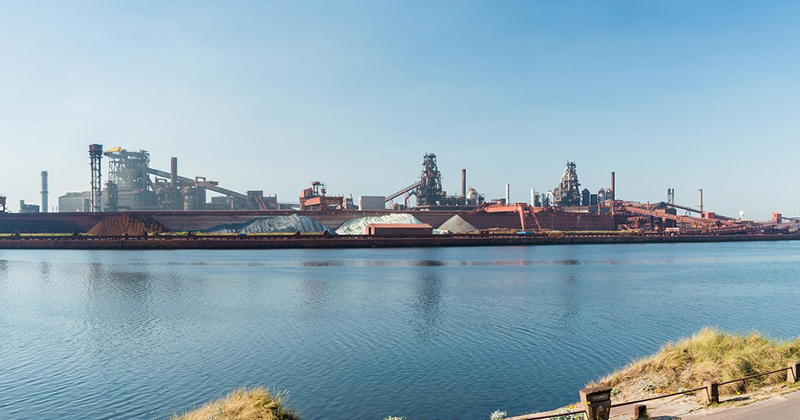
ArcelorMittal has advanced two significant investments at its Dunkirk and Mardyck sites in northern France, a new electric arc furnace at Dunkirk and new electrical steel production line at Mardyck, the company says.
At Dunkirk, ArcelorMittal is building a 2 million tonnes/year EAF and a ladle furnace. Preparatory work has been under way for several months, and €300 million ($336m) has already been spent on preparing the site and securing equipment.
The public consultation held with France’s National Commission for Public Debate (CNDP) has been published, and permit applications have been filed. A further public consultation opened on 15 October, with a first public meeting scheduled for 16 October, the company details in a note obtained by Kallanish.
The EAF will produce steel emitting three times less CO2 than the blast furnace route, at 0.6t of CO2/t of steel. It will run on a mix of scrap, HBI or DRI, and pig iron.
At Mardyck, the first three lines of the new electrical steel unit started operating in March and now employ 200 people. Two more lines, an annealing and pickling line and a reversing mill, are under construction. Equipment installation is nearly complete, and first tests are expected in spring 2027. Once these lines start up, the unit will be fully integrated.
All of ArcelorMittal’s electrical steel in Europe is now produced in France, at Mardyck and Saint-Chély-d’Apcher. Electrical steel is a key material for electric motors and generators.
“In Mardyck, our teams are continuing to ramp up a new strategic production line to support the decarbonisation of our customers. In Dunkirk, the milestones already reached and the work now visible demonstrate the concrete progress of our low-CO₂ steel production project,” notes general director of ArcelorMittal France Bruno Ribo.
The Dunkirk and Mardyck projects represent investments of €1.3 billion and €500 million, respectively. They are ArcelorMittal’s largest in Europe in the past ten years (see Kallanish passim).

French processors caught between mills and weak demand
A tug of war is under way in France between mills and the downstream sector. Long and flat steel processors are caught between weak demand from their customers on one side, and mills pushing for increases on the other, Kallanish hears.
Mills are said to be putting pressure on customers to accept higher prices, particularly for flat products, but the wider picture keeps darkening. Credit insurance is tight for many companies, and processors must cut their own prices or lose sales, several sources say.
Long product prices are mostly stable on-month. For tube and sheet, however, there is a strong push for increases in line with rising coil prices. Service centres are struggling to keep pace with coil increases and are sometimes forced to decrease their prices to hold on to orders. “If these increases do not slow, customers will end up buying lower volumes because they cannot afford the high prices,” a purchasing group source says.
Customers are resisting longs price increases, while tight credit insurance availability also leaves them unable to buy large volumes.
Demand has been weak since the second half of June. July was subdued, August was seasonally dead, and September never really got going after the holidays. October is confirming the downward trend for both longs and flats.
“There is turbulence in France, the economy is seriously slowing and we will see the situation of orders worsening with the upcoming elections. Companies will buy for their immediate needs to await the result of the elections,” another source says.
Long product consumption remains limited as companies try to reduce their exposure. Domestic merchant bar is stable at €300-320/tonne ($335-358/t) base delivered, excluding size extras of around €410/t.
Despite several attempts to raise sections prices in recent months, first category material is holding at €810/t delivered on average, against producers’ asking prices of €830/t. Rebar is also flat on-month at €690-710/t delivered, amid an uncertain market and small order volumes, sources suggest.

Stegra selects three new logistics partners in Europe