


Industries urge ‘broadest possible’ CBAM extension, trilogues begin
Multiple associations including Eurofer and EUROMETAL have called on EU policymakers to agree on the “broadest possible” extension of CBAM to downstream products, with the first trilogue negotiation on extending CBAM scheduled for 20 October.
The signatories, which also include the European Non-Integrated Wire Rod Processors Association (Eunipra), IndustriALL and Steel for Packaging Europe, have also called for authorities to put European industrial production, investments and quality jobs at the centre of the final agreement. They must recognise their “fundamental contribution to Europe’s economic security, prosperity and climate transition”, reads the joint statement seen by Kallanish.
“Products covered by CBAM will benefit from a more level playing field, supporting their continued production in Europe. Products left outside its scope will face growing risks of being replaced by imports or having their production relocated to third countries, where producers are not subject to equivalent carbon costs. This risk will become increasingly pronounced as free allowances under the EU Emissions Trading System (ETS) are progressively phased out,” it continues.
Sectors including energy, mobility, machinery, cookware, cutlery, catering equipment, packaging, construction, clean tech, defence, home appliances, hand tools and metal goods are increasingly exposed to competition from imports, the associations point out.
“For EUROMETAL, representing European steel, tube and metal distribution, the competitiveness of downstream manufacturing is closely linked to the strength of the wider European steel value chain. By co-signing the statement, EUROMETAL supports a coordinated approach to ensuring that products manufactured in Europe are not disadvantaged by the carbon costs imposed by EU legislation,” the distributors association notes.
Author: Adam Smith

Iberian HRC price holds steady, demand remains weak
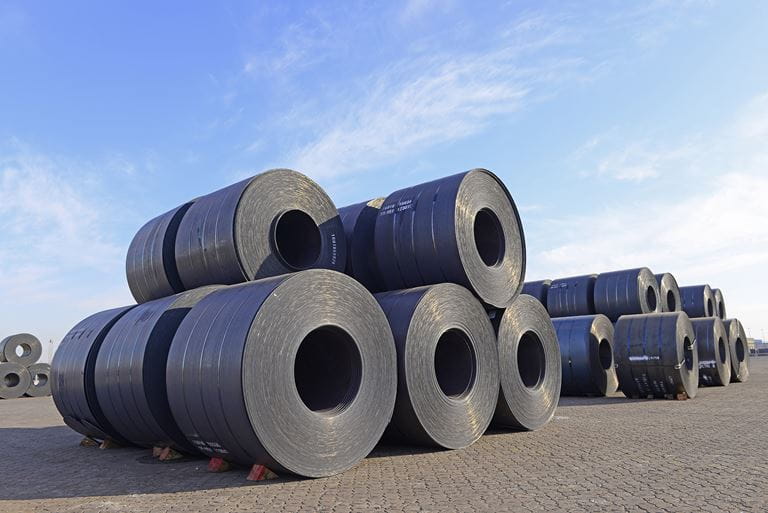
Hot-rolled coil prices have remained stable in the Iberian market so far in October. Demand from major consuming industries, including automotive and renewable energy, is not recovering, market sources tell Kallanish.
“Prices in Spain are high, and buyers are not accepting current offers,” says one distributor. “Centres are reducing their stock and, given the lack of demand, will limit their replenishment volumes, relying on spot purchases.”
Higher HRC prices reflect rising energy costs linked to geopolitical uncertainty, which remains producers’ biggest challenge, a steel processor says.
“Our production and transport costs range from €100 to €120/tonne, pushing the price of processed steel products well above €810/t once cutting, slitting, drilling and other services are included,” he explains. This is putting pressure on customers, who are limiting purchases to small, routine orders. “Although distributors have agreed to reduce their profit margins, the market in general seems to have reached a limit in terms of what price adjustments they are willing to accept, and sales remain mostly limited to small volumes at spot prices,” the source concludes.
Prices have remained broadly stable since the start of the month. Demand from the automotive and renewable energy sectors has yet to recover.
Spanish HRC prices stand at €740-760/t ex-works, while distributors’ levels are surpassing €800/t delivered.

Green steel production needs electricity, European plan: Rauber
Green steel production depends on resolving issues related to energy costs and electricity production, according to Saarstahl’s chief executive and chairman of SHS, Stefan Rauber.
He told the Green Steel Challenge podcast, co-produced by Kallanish, that he has no doubt that they will “get this thing running”, but Europe needs a common plan for this process.
The company’s first phase aims to put new DRI and EAF facilities into full operation, producing roughly 3.5 million tonnes of carbon-reduced steel annually by 2028–2029.
“To produce green steel, you have to be competitive, which depends on several things,” he said. “Are we doing our homework and is the political framework created in a way that makes things for competitive industry possible, because we already face too many challenges,” he questioned.
This includes electricity and hydrogen prices in the future, CBAM, which has to be an effective instrument and maintaining existing trade measures against chip imports.
Securing critical raw material supply is also very important, with the company already increasing its purchases of ferrous scrap, he added.
“We need a European plan not only for the steel industry, but also for the entire industry in Europe,” Rauber noted. “Europeans are building more and more wind farms and solar parks for the production of electricity and we need more.”
He also noted the concerns over natural gas supplies, which have become crucial due to the war in Ukraine and the stopped Russian supplies.
“To solve this problem, you need to have a plan and I would like to see that plan,” he added.
According to him, nuclear energy would also solve many issues after recent sector innovation. “It’s a difficult question in Germany, because we are closing down such capacities after the politicians decided this, but we use now nuclear power from France. And in Belgium they are building new nuclear plants, so it is a serious dilemma,” he claims.
“Energy prices are directly connected to hydrogen prices and to the future of decarbonisation,” the ceo noted. “I think that currently this is an underestimated problem in Europe. In the end we need competitive international prices in all European countries, because now they are very different in every state in the region.”
To divert from traditional steel output to green production it is a long engineering process, but it is forming the future and is happening right now, he said.

EU quota uncertainty stalls Turkish HRC exports
Turkish flat steel markets remained subdued amid weak domestic and export demand, while uncertainty over EU quota-related import costs continued to deter buyers and curb exports to the bloc, Kallanish hears from market participants.
Heavy rainfall and flooding risk in Istanbul are further disrupting domestic market activity, adding to already weak demand.
“[Turkish] export is idle. All are busy with import costs,” a Turkish producer says.
Uncertainty over the final import cost encourage European buyers to switch to domestic sourcing, potentially supporting EU steel prices.
Estimates of additional costs vary. One producer expects an additional cost of around 12.55%, while another market participant suggests it could reach €100/tonne.
Uncertainty also surrounds the allocation of residual quotas. “We are waiting for the tonnages at ports, first day, and how many tonnes will be used from others’ quotas,” a source says. The source indicates it remains unclear which countries’ shipments will qualify against the remaining allocations.
“Turkish hot-rolled coil was oversubscribed at 236%, which means an effective duty of about 29%,” an industry participant commented on social media.
Some market participants believe volumes already accumulated at EU ports could remain uncleared until the next quota period begins in January.
Turkish HRC export offers were heard at $620-640/t fob.
Chinese import offers remained largely unchanged at around $550/t cfr Türkiye.
Russian HRC suppliers, having redirected shipments through northern ports, were heard offering at $490-495/t fob St Petersburg or Ust-Luga. Freight to İzmir was indicated at $59-63/t for 40,000t cargoes.
Meanwhile, Russian slab offers for November production were heard at $545-550/t cfr İzmir/Marmara, with loading ports at the mills’ discretion.
Indonesian slab was indicated at $480/t fob, while Chinese slab offers into Italy were heard at $570-580/t cfr.
UK unveils indicative CBAM calculation values for 2027
The UK government has published indicative calculation metrics for its incoming Carbon Border Adjustment Mechanism (CBAM), 16 October, demonstrating a significantly lower cost burden than under the EU’s own CBAM model.
HMRC has published the guidance on its official webpages in the form of “illustrative rates” for in-scope sectors, including steel, calculated using the UK CBAM methodology on latest UK Emissions Trading Scheme (ETS) data.
The UK’s CBAM framework takes a simplified approach as compared to the EU system – where the EU CBAM demands that importers trace the emissions embedded in their goods back at high CN-code level specificity, or face highly punitive origin-dependent default value costs, the UK’s version of the carbon leakage instrument instead adopts sector, or global averages for its calculation values.
Calculating UK CBAM liabilities works as follows: an importer assesses their initial liability in reference to either verified actual emissions values, or a globally averaged product-specific default value, then multiplies that liability by the “CBAM rate”. Following HMRC’s publication of the UK CBAM default values, and illustrative rates, importers can assess their potential liabilities with much greater confidence – the government has also committed to publishing 2027’s first quarter rates before year’s end.
The ‘CBAM rate’
The CBAM rate adjusts importer liabilities to mirror what domestic producers pay to the UK ETS, which – due to the historical ‘free allocation’ of UK Allowances (UKAs) to industrial operators – involves establishing a coverage ratio of free allocation supply, to demand, for UK operators.
The EU CBAM establishes this using a benchmark approach, translating the EU ETS’ various steel-producing benchmarks (representing the top 10% of EU installations) to the product level to calculate free allocation adjustments specific to the production process of each imported good. For example, hot-rolled coils have a different benchmark reduction from cold-rolled coils, or other steel product categories, in line with the EU’s actual emissions performance for each production process. These EU CBAM benchmarks are then further split by production route (e.g blast furnace vs electric-arc furnace, further split by scrap or DRI), and even have separate listings for when using process-specific ‘actual’ values, or assumption-based defaults.
The UK’s simplified approach instead looks at an entire sector – such as steel – and assesses the proportion of emissions reported by that sector’s operators, and how many of those emissions were covered by free allocation. This value is then multiplied by the relevant UK ETS price average, to establish the ‘CBAM rate’.
HMRC’s “illustrative rate” has been published at GBP9.69/t.
Default Emissions Values
The UK’s default values – published alongside the illustrative CBAM rates – come as something as a surprise to UK market participants, who were largely expecting a single, globally averaged default value per sector.
Instead, the UK government has published product-specific default values down to the CN code level – at higher granularity than the EU, in some cases – though the values are averaged across all trading partners, at odds with the EU’s country-specific approach.
The UK’s default values are themselves “based on EU data” – presumably the EU’s default value dataset – adjusted using “trade-weighted” averages to “reflect the composition of UK imports,” excluding EU origin data. According to the government’s associated communications, this is line with “the commitment expressed by the UK and EU to link their emissions trading schemes, which will result in EU-origin goods being exempt from UK CBAM,” and should help the default value averages better reflect the emissions profiles of origins that are more likely to use them, likely due to the established maturity of EU verification practices.
The below table illustrates the emissions variance across CN/Commodity Codes for core steel products between the UK and EU systems. It is important to note that the emissions spreads within categories are largely due to variance in CN code in the non-origin-specific UK dataset, while emission spreads in the EU’s system are due to country-specific listings for each CN code. Groupings by product category are for illustrative purposes, and include only those CN or commodity codes under each 4-digit heading (excl. agglomerated iron ore).
| Product Category | CN/Commodity Code | UK CBAM DV (tCO2e/t) | EU CBAM DV (tCO2e/t) | Comment |
| Agglomerated iron ore | 26011200 | 0.494 | 0.090 – 1.610 | Highest EU = Russia |
| Pig iron | 7201xxxx | 1.331 – 2.698 | 1.110 – 7.920 | Highest EU = Indonesia |
| DRI | 7203xxxx | 1.149 | 0.450 – 4.200 | Highest EU = India |
| Semifinished (slab/billet) | 7207xxxx | 2.803 – 4.752 | 0.130 – 8.230 | Lowest BF route DV (Canada) = 1.330 t CO2e/t |
| HRC | 7208xxxx | 2.582 – 4.675 | 0.140 – 8.230 | Lowest BF route DV (USA) = 1.400t CO2e/t |
| CRC | 7209xxxx | 1.584 – 4.511 | 0.140 – 8.250 | Lowest BF route DV (USA) = 1.440t CO2e/t |
| HDG | 7210xxxx | 2.391 – 3.537 | 0.140 – 8.250 | Lowest BF route DV (USA) = 1.440t CO2e/t |
| Rebar | 7214xxxx | 2.518 – 3.867 | 0.130 – 8.230 | Lowest BF route DV (Canada) = 1.330 t CO2e/t |
| Wire rod | 7213xxxx | 1.529 – 4.396 | 0.140 – 8.230 | Lowest BF route DV (Canada) = 1.330 t CO2e/t |
Source: HMRC, European Commission
ETS linkage, and methodological frictions
A UK-EU summit is scheduled for November, and media reports that an ETS linkage agreement has already been reached ahead of the discussions. Market participants hope that this would result in reciprocal CBAM exemptions when trading between the two jurisdictions, but methodological discrepancies between the respective carbon leakage instruments raise questions, especially where UK CBAM costs fall well below EU CBAM projections.
As Dow Jones Energy previously reported, the UK government is actively considering aligning its CBAM rules toward the EU’s model in future reforms, and this latest release confirms that the government is looking to move toward country-specific default values from 2029.
Importantly, the government’s statement does not mention a reciprocal exemption for UK-origin goods exported to the EU – only for EU-to-UK trade – and the EU’s steelmakers already fear that the simplified nature of the UK CBAM could result in the UK becoming a circumvention route for higher EU CBAM costs.
As an example of cost discrepancies between the two systems, the per ton default value of an Indian-origin 72083700 code hot-rolled coil imported into the UK CBAM in 2027 on HMRC’s data is 3.314t CO2e/t, which is then multiplied by the illustrative CBAM rate of GBP9.69/t CO2e to give an indicative liability of GBP32/t.
Importing the same goods under the EU CBAM methodology (on equivalent ETS price data), this calculation would alternatively require taking the EU’s marked-up default value of 5.136t CO2e/t, then deducting the adjusted free allocation benchmark of 1.302t CO2e/t, resulting in a per ton financial liability of EUR314.43/t – over eight times the cost of the UK system on latest EUR-GBP exchange rates.
Even taking the UK’s highest iron and steel default value – 9.121t CO2e/t for code 72191210 stainless coils – results in only a GBP88/t cost using HMRC’s illustrative CBAM rate. By comparison, the lowest possible default value for an origin exporting the same goods under the EU CBAM in 2027 is that of Azerbaijan, which has an EU default value of 2.570t CO2e/t for the 721912 CN code, yet still generates a liability of EUR160/t. The EU CBAM generates almost double the cost of the UK system on the UK’s highest default value CN code, despite a default emissions gap of 6.5t CO2e/t.
This is even before further deductions for Carbon Price Relief (UK), or Carbon Prices Already Paid (EU), which allow importers to subtract from their liability for carbon prices paid earlier in the production process, and similarly operate differently between the UK, and EU systems. In the EU, this deduction is made from the emissions volume, while in the UK it is deducted from the price itself, potentially offering greater reductions within the UK system.
Initial calculations informed by the UK and EU default emissions values datasets are contained in the table below, demonstrating that even the highest of HMRC’s illustrative UK CBAM default value costs are closer to the low-end of costs generated by the EU CBAM. Calculations test the illustrative UK CBAM rate against the highest UK default value within the selected CN code groupings, and compare against the highest, and lowest default value origins for that same CN code under the EU framework (at the EU’s Q3 CBAM price of Eur82). New, low-carbon listings for Azerbaijan were created in the European Commission’s summer corrections to its default value dataset, assessed against scrap-EAF route benchmark deductions, but the majority of origins generally sit well-above the UK CBAM liability assessments.
UK/EU CBAM illustrative default value costs
| Product | UK high-end DV cost (GBP/t) | Euro equivalent (Eur/t) | EU low-end DV cost (Eur/t) | EU high-end DV cost (Eur/t) |
| Agglomerated iron ore | 4.79 | 5.68 | 2.16 (Canada) | 151.72 (Russia) |
| Pig iron | 26.14 | 31.01 | 14.97 (Canada) | 685.07 (Indonesia) |
| DRI | 11.13 | 13.20 | 13.35 (USA) | 382.35 (India) |
| Semifinished | 46.05 | 54.61 | 0 (Azerbaijan) | 680.96 (Indonesia) |
| HRC | 45.30 | 53.73 | 8.17 (Azerbaijan) | 703.11 (Indonesia) |
| CRC | 43.71 | 51.84 | 5.36 (Azerbaijan) | 698.22 (Indonesia) |
| HDG | 34.27 | 40.65 | 2.79 (Azerbaijan) | 695.65 (Indonesia) |
| Rebar | 37.47 | 44.44 | 8.63 (Azerbaijan) | 703.58 (Indonesia) |
| Wire rod | 42.60 | 50.52 | 8.63 (Azerbaijan) | 703.58 (Indonesia) |
Source: HMRC, European Commission, Dow Jones Energy’s Default Values CBAM Calculator
Overall the UK CBAM appears to impose a far lower cost on embedded steel emissions than the EU system, which raises questions as to how future exemptions between the EU and UK systems would operate in practice. Certainly, the UK government seems to be moving toward alignment with the EU framework, as seen in its ETS merger initiative, stated shift to country-specific default values in 2029, and policy discussions on adopting the EU’s ‘benchmark’ approach to free allocation deductions in future methodology reforms.
Alignment could ultimately be in the UK, and EU’s best interest, as research suggests that reciprocal CBAM exemptions could assist in creating a low-carbon steel trading ‘club’ between like-minded countries, aiding efforts against both climate, and overcapacity-related pressures.
Dow Jones Energy chaired a customs panel in Belfast in early October, as part of Allied Group’s Beyond Borders Summit, focusing on potential dual market access opportunities for businesses based in NI as a result of cost discrepancies between the UK and EU CBAMs. Imports to Northern Ireland would be subject to the UK’s version of CBAM, but as confirmed by European authorities, would not be subject to the EU CBAM “where released for free circulation in Northern Ireland.”
Attendees speculated that this could potentially facilitate free transit from Northern Ireland, into the EU, at the UK’s lower CBAM cost, though the imposition of the EU’s steel TRQs via the Windsor Agreement could undermine any benefit for steel goods. Regardless, speculative importers have already been eyeing the UK’s CBAM as a potential opportunity, even before its lower cost burden was clarified, and will certainly be looking for means to land steel in the UK or EU at minimal CBAM liabilities.
Author: Benjamin Steven


European coil and green steel round-up: EU coil largely stable on slow apparent demand
Domestic steel coil prices in Europe remained largely unchanged in the week to 16 October, while distributors were focused on reducing inventory volumes and restocking was limited.
Bullish sentiment, however, prevails in the market, as buyers will have to rely more on domestic producers when they replenish their stocks due to the effects of regulations restricting access to imports – tariff-rate quotas (TRQs), which have been in place in the EU since July this year.
Carbon Border Adjustment Mechanism (CBAM) duties have also made prices of imported coil comparable to those from European mills, and some buyers have switched to less risky local suppliers.
“The additional costs related to CBAM and potential tariffs if the quota is exceeded will be triple-digit, and I am not sure that the supply chain could digest such an additional burden from imports,” a German service center said.
Transactions for domestic hot-rolled coil (HRC) in Northwest Europe have been settled at EUR740-760/t ex-works. In Italy, the material has been available at EUR750/t delivered.
Some Northwest European steelmakers have been more active in the Italian and Spanish markets, taking market share previously occupied by overseas suppliers.
Domestic prices are expected to start rising after distributors’ stocks decrease. The severe competition among distributors as they focus on destocking by the year-end and generate cash flow prevents a price recovery at both mill level and further down the supply chain.
“The current situation in distribution is tough – there is a battle for volumes and severe competition to reduce stocks by the year-end. But there is an understanding that the next round of restocking will be done at higher prices,” an Italian distributor said.
European steelmakers have started negotiating long-term contracts with end consumers, notably the automotive industry. The mills seek an increase of EUR100/t for contracts covering the first half of 2027 compared with those for the second half of 2026. Market sources believe that the long-term agreements will be settled with an increase, but it is unlikely to reach the target of EUR100/t.
Some market participants also reported increases in extras for coil grades and sizes of around EUR50/t, particularly for downstream products, pushing for further increases in effective prices.
Imports have been limited, and prices offered on a DDP basis were largely uncompetitive. In addition, some origins, such as Turkey, are expected to exhaust their quota for the first quarter of next year.
HRC offers from Japan and South Korea have been heard at EUR640-650/t CIF Italy, while offers from Asian suppliers have been reported at EUR740-760/t DDP South European ports.
Green steel market
Demand for green steel coil in the spot market remains subdued, with deals mainly limited to small trial batches. Automotive and construction companies remain the main sources of demand for low-emissions steel.
Premiums for trial volumes have averaged around EUR150/t, while spot premiums for green hot-rolled coil (HRC) produced via the electric-arc furnace (EAF) route have been reported at around EUR100/t.
Most buyers remain focused on adjusting to new trade restrictions and securing sufficient supplies of conventional steel. Distributors continue to show limited appetite for low-CO2 material, typically purchasing it on a back-to-back basis against confirmed orders from end users.
| Weekly European steel coil | |||||
| EUR/t | Term | 16-Oct-26 | Change | ||
| Weekly Northwest Europe steel coil | |||||
| Northwest Europe ex-works HRC | EX-WORKS | 750.00 | 5.00 | ||
| Northwest Europe ex-works CRC | EX-WORKS | 865.00 | 0.00 | ||
| Northwest Europe ex-works HDG | EX-WORKS | 850.00 | 0.00 | ||
| Northwest Europe CIF HRC | CIF | 640.00 | 10.00 | ||
| Northwest Europe DDP port HRC | DDP Port | 750.00 | 10.00 | ||
| Weekly South Europe steel coil | |||||
| Italy ex-works HRC | EX-WORKS | 730.00 | 0.00 | ||
| South Europe CIF HRC | CIF | 640.00 | 10.00 | ||
| South Europe DDP port HRC | DDP Port | 750.00 | 10.00 | ||
| South Europe CIF CRC | CIF | 720.00 | 0.00 | ||
| South Europe DDP port CRC | DDP Port | 840.00 | 15.00 | ||
| Show less… | |||||
| Source: McCloskey by OPIS. | © 2026 Dow Jones Energy Limited. | ||||
| Weekly green steel | |||
| EUR/t | Term | 16-Oct-26 | Change |
| Green Northwest Europe HRC premium (scopes 1-3 CO2 under 0.8t) | 100.00 | 0.00 | |
| Green Northwest Europe ex-works HRC (scopes 1-3) | EX-WORKS | 850.00 | 5.00 |
| Green HRC premium (scopes 1-2 CO2 under 0.5t) | 100.00 | 0.00 | |
| Green Northwest Europe ex-works HRC (scopes 1-2) | EX-WORKS | 850.00 | 5.00 |
| Green HRC reduced carbon price (scopes 1-3) | 62.62 | 4.82 | |
Author: Benjamin Steven & Maria Tanatar

Metinvest calls on EU to exempt Ukrainian steel from import restrictions


WV Stahl calls for maintaining incentives for low-emission steel in the automotive sector

Steel heavy plate prices remain broadly stable in Europe; imports lose competitiveness due to higher risks
European steel heavy plate prices remained stable in the week to Thursday October 15 amid moderate demand and slow trading activity, while import activity was limited due to higher delivery and CBAM-related risks, sources told Fastmarkets.
Southern Europe
In Italy, steel plate prices were unchanged during the week, with most indications reported by sources within €740-750 ($830-841) per tonne ex-works. Higher levels were indicated by a trade source at €750-760 per tonne ex-works, but no trading activity was confirmed at the upper end of the range.
Offers for material were heard in the range of €760-780 per tonne ex-works, but no deals were done at these levels as well.
“Market activity in Italy has remained relatively stable, albeit at a low level, for around a month,” a trade source said, adding that plate re-rollers in the region were facing difficult times, as “demand has simply disappeared.”
A producer in Italy said that the projected cost of production for plate was closer to €780-790 per tonne ex-works, based on the latest slab prices and deposit requirements linked to the Carbon Border Adjustment Mechanism (CBAM) for imports in the first quarter of 2027.
“Energy tariffs are also pumping up the cost of production additionally,” the same producer said, adding that it has closed some plate orders with delivery in the first quarter of 2027 at €780-820 per tonne ex-works, but “not much and not [with] purely commercial specifications.”
Because of this and the delivery period exceeding Fastmarkets’ methodology window of up to six weeks, these higher deal levels were discarded from the weekly assessment.
As a result, Fastmarkets’ weekly price assessment for steel domestic plate 8-40mm, exw Southern Europe was €740-750 per tonne on Thursday October 15, stable week on week.
Slab import prices into Italy declined slightly during the week due to lower Chinese offers, while no major trading activity was reported.
Fastmarkets’ weekly price assessment for steel slab import, cif Italy was $580-595 per tonne on Thursday, widened downward by $10 per tonne from $590-595 per tonne a week earlier.
Meanwhile, plate import offers from India and Indonesia to Spain were reported at €720-760 per tonne cost and freight (CFR) during the week, but were not attracting customers’ interest, according to sources.
“CBAM, import regulations [are] causing immense problems, therefore, buyers and end users abstain lately from placing import orders,” a trade source said.
However, a producer in Italy said they heard Indonesia selling plate at €800 per tonne delivered duty paid (DDP) Antwerp and Spain, despite the deposit requirements for imported material linked to CBAM. This price was discarded from Fastmarkets’ CFR-based price assessment.
“Apparently, they decided to ignore the matter of the €250 ($280) per tonne deposit for CBAM for now. How it will work for them eventually, let’s wait and see,” the same producer said.
Thus, Fastmarkets’ weekly price assessment for steel plate (8-40mm), import, cfr main port Southern Europe, was €710-750 per tonne on Thursday, stable week on week.
Northern Europe
In Northern Europe, sources reported indications of workable levels for commodity plate in the range of €840-880 per tonne ex-works during the week, mostly unchanged from previous levels.
Offers were reported at €840-870 per tonne ex-works in the region. A trade source said demand was not booming, but it was also not bad, linking this to infrastructure and demand for downstream products made from plate.
Some mills were fully booked by the end of 2026 and offering in 2027 already, while others still had capacity left for this year, the same source said, also reporting orders for S355-grade plate at €900-940 per tonne delivered, which were discarded from the assessment covering S235-grade.
The trade source added that plate delivery from Italy to Northern Europe was mainly being done by truck or train at around €90-100 per tonne, with deals concluded for 1,000-3,000 tonnes.
According to an Italian re-roller, plate prices for deliveries from Italy were around €830-840 per tonne carriage paid to (CPT) for S235-grade and at €860-870 per tonne CPT for S355-grade in Germany. These prices were not included in the assessment, which covers domestic plate production.
Fastmarkets’ latest weekly price assessment for steel domestic plate 8-40mm, exw Northern Europe was €840-880 per tonne on October 15, unchanged from the previous week.
On the import side, only the deal from Indonesia was heard at €800 per tonne DDP Antwerp, while a trade source said that shipments in the region were “still delayed as main rivers like Rhine and Danube [were] facing serious low waters.”
For this reason, Fastmarkets’ weekly price assessment for steel plate (8-40mm), import, cfr main port Northern Europe, was €710-750 per tonne on Thursday, stable week on week.
Vlada Novokreshchenova in Dnipro, Ukraine, contributed to this article.

Polish domestic rebar prices rise amid growing costs, exports to Ukraine
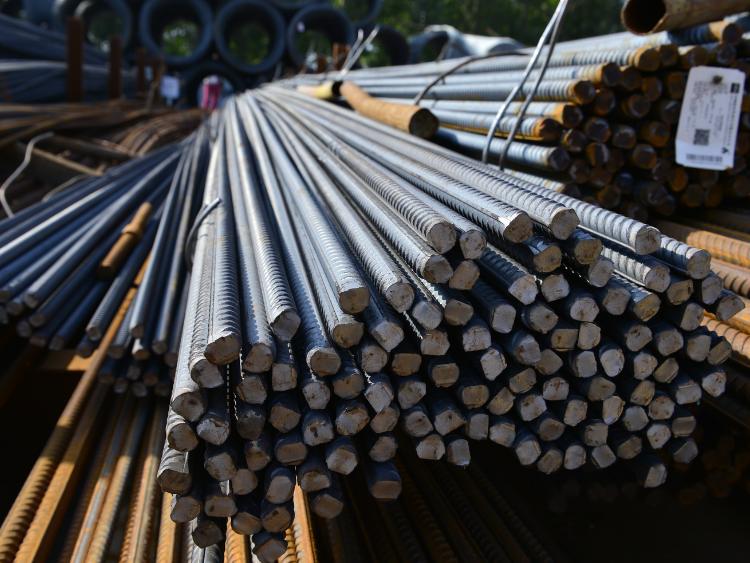
Polish domestic rebar prices were rising in the week to Friday October 16, pushed by growing production costs and lower availability due to exports to Ukraine, sources told Fastmarkets.
One market source reported indications from local suppliers within the range of €630-640 ($706-718) per tonne CPT, which is equivalent to 2,773-2,780 zloty per tonne.
A seller source, meanwhile, reported tradeable levels to vary within 2,800-2,850 zloty per tonne CPT.
A buyer source reported that offers this week were coming at 2,800 zloty per tonne CPT with offer validity until October 16 and new offers coming at 2,850-2,900 zloty per tonne CPT, while 2,800 zloty per tonne CPT became the new minimum tradeable level.
In such conditions, Fastmarkets’ weekly price assessment for steel reinforcing bar (rebar), domestic, CPT Poland rose to 2,773-2,850 zloty per tonne, from 2,750-2,780 zloty per tonne the previous week.
“Polish producers are facing the lack of billet and growing energy and labor costs,” one source said.
Another market source reported reduced availability of rebar in the Polish domestic market amid increased exports to Ukraine following Russian attacks on Ukrainian steel mills in August and September this year, causing critical damage to infrastructure.
“Ukrainian traders booked big volumes of rebar in Turkey and Egypt, but ships cannot reach Ukrainian ports now. In such conditions Poland is becoming the most important supplier,” he said.
A source in Ukraine reported Polish rebar being offered at $850 (€757) per tonne CPT in the country.