


Northern European mills stick with higher rebar prices despite weak demand; wire rod prices tumble
Despite weak demand, mills have raised and then maintained offer prices since their summer reopening, sources said.
Fastmarkets’ weekly price assessment for steel reinforcing bar (rebar), domestic, delivered Northern Europe was €635-645 ($700-711) per tonne on Wednesday, up by €10-15 per tonne from €620-635 per tonne week on week.
Customers were only reported to be restocking minimal tonnage with short lead times.
Mills were able to resist a price downtrend by offering higher prices for these small-volume trades, sources said.
Demand was reported to be extremely depressed, aside from a few small-tonnage trades.
The corresponding Fastmarkets’ weekly price assessment for steel wire rod (mesh quality), domestic, delivered Northern Europe was €605-630 per tonne on Wednesday, down by €10-20 per tonne from €615-650 per tonne week on week.
Offer prices edged downward in the wire rod market amid weak demand, market uncertainty and depressed sentiment, sources said.
“The steel mills of Europe are coming from a long period of suffering due to low demand from the construction and automotive sectors combined with high costs of energy,” a wire rod producer source said.
Meanwhile, scrap prices edged upward week on week but were still under pressure from lower-priced billet offers from Asia, Fastmarkets reported.
Fastmarkets’ calculation of its daily index for steel scrap HMS 1&2 (80:20 mix) North Europe origin, cfr Turkey was $365.19 per tonne on Wednesday, up by $5.32 per tonne week on week but down by $8.49 per tonne month on month.
Published by: India-Inés Levy


Eurofer calls for implementation of Draghi’s EU Economic Competitiveness Plan
A new, nearly 400-page report from former ECB president Mario Draghi outlining steps to revive EU economic competitiveness should be integrated into the upcoming Clean Industrial Deal and urgently implemented, says European steelmakers association Eurofer. The report says the EU faces “slow agony” unless it catches up with competitors.
The report, which aims to boost EU investment by €800 billion ($881.7 billion) per year, recognises a number of steel-relevant issues.
The phasing out of free allowances and the replacement of the current Emissions Trading System (ETS) with the Carbon Border Adjustment Mechanism (CBAM) entail high delocalisation risks. Additional fixes are needed to make CBAM effective, coupled with close monitoring to avoid circumvention and resource shuffling, a solution for EU exports and the extension of CBAM to downstream sectors, Eurofer says in a note sent to Kallanish.
Despite the growing share of renewables in the grid, households and businesses do not yet benefit from low energy prices, it continues. The European steel industry expects urgent measures that lead to this objective in the short term.
“There are insufficient financial incentives and resources for the industrial transition, as the EU Innovation Fund alone is not enough, while only a fraction of ETS revenues is currently invested in the decarbonisation of energy-intensive sectors such as steel,” Eurofer points out. Support is needed for both capital and operational expenditure via the earmarking of ETS allowances. The Hydrogen Bank and Carbon Contracts for Difference should also be used to support the transition.
The introduction of a minimum quota in public procurement and auctions for locally produced clean tech products and components is strongly recommended.
Moreover, the EU should maintain a flexible trade defence policy to react quickly to market distortions while also working on structural solutions.
“Economic growth in Europe has been weak compared to the US and China for a long time, but the sense of urgency around economic reform outside of crises was lacking,” ING Bank says of Draghi’’s report. “In recent years, the global context around the economy has changed. The energy crisis, increased global competition and geopolitical risks have exposed threats to the European economic model, resulting in a louder wake-up call for change.”
“Getting political support for the proposed plans will be the biggest challenge in the current political climate. The European parliamentary elections already indicated that the political mood in Europe is rather shifting to less Europe instead of more Europe,” ING warns.
Adam Smith Poland


European CRC, HDG prices slide on poor demand
Weak demand from key end-user industries, especially the automotive and construction sectors, kept trading quiet in both the cold-rolled coil and hot-dipped galvanized steel markets across Europe, Fastmarkets understands.
In Italy, one supplier offered CRC at €680-690 ($750-761) per tonne delivered, equivalent to €670-680 per tonne ex-works, but no transaction was reported in the assessment week.
Lead times were reported within four to six weeks.
Buyers’ estimates of tradeable prices were heard at €650-660 per tonne ex-works.
Fastmarkets’ weekly price assessment for steel cold-rolled coil domestic, ex-works Southern Europe was €660-670 per tonne on Wednesday, down by €20-30 per tonne from €690 per tonne last week.
Sources pointed out that the European market for commodity-grade CRC was dominated by imports due to a price disparity.
“Some Asian suppliers struggle to sell [hot-rolled coil] to Europe anymore because of new safeguard rules or looming anti-dumping cases, so they compensate by increased CRC sales,” a buyer in Italy said.
Offers from Japan and South Korea for late-October shipment CRC to Southern Europe were heard at €625-635 per tonne CFR in the week to Wednesday.
Meanwhile, in Italy and Spain, offers for HDG were heard at €700 per tonne delivered, which nets back to €690 per tonne ex-works.
Buyers’ estimates of achievable prices were heard around €670-680 per tonne ex-works.
Trading for HDG was also very slow. Buyers said they had sufficient stocks, considering weak order intake from end-user sectors, and therefore were postponing bookings.
Fastmarkets’ price assessment for steel hot-dipped galvanized coil domestic, ex-works Southern Europe was €680-690 per tonne on Wednesday, down by €10-20 per tonne from €700 per tonne on September 4.
Import offers from Vietnam and India were reported at €690-705 per tonne CFR to Italy and Spain in the assessment week.
A booking of HDG with 0.5 mm thickness and Z100 coating was reported at $775 per tonne CFR to the Iberian market about two weeks earlier.
Published by: Julia Bolotova
German mechanical engineering sector lowers 2024 forecast
Production in Germany’s mechanical and plant engineering sector fell well short of expectations in the first seven months of 2024, reporting a decline of 6.8% year-on-year, says industry association VDMA.
“The economy was rather disappointing in this period. Although we had not expected a recovery, we had banked on a sustained stabilisation at a low level,” says VDMA chief economist Ralph Wiechers. This failed to materialise: incoming orders and numerous business sentiment indicators suffered significant setbacks, he adds. VDMA has therefore reduced its production forecast for full-year 2024 from a 4% decline to an 8% drop on-year.
According to economic research institute IFO, machine capacity utilisation at companies was 79.4% in July. The figure is significantly below the average range – 84.4% to 89.1% – and therefore well below the so-called comfort zone, VDMA emphasises.
Incoming orders in the first seven months were 11% below the previous year’s figure in real terms. While there were signs of a trough in both foreign and domestic orders up to and including April, “the picture changed for the worse from May onwards”, Kallanish hears from Wiechers.
He cautions that a noticeable improvement in the situation is currently not expected, in view of uncertainty in the global economy, due for example to wars and trade disputes. “Assuming that incoming orders will bottom out towards the end of this year, we will have to prepare for downturns in downstream production compared to the previous year for at least the first half of 2025,” he predicts.
Wiechers nevertheless sees a silver lining in that inflation might continue to fall almost worldwide. “There is therefore a legitimate chance that positive monetary policy will stimulate the economy at the end of the year and over the course of 2025,” he concludes.
Christian Koehl Germany
UK demand to improve, 2025 restocking gradual: panellists
UK steel demand is likely to improve from sectors such as construction in 2025, but restocking will be gradual, Kallanish heard from panellists at the UK Metal Expo in Birmingham on Wednesday.
“We are seeing pockets of improvement in underlying demand, particularly in construction, so we’ve seen some construction projects which were previously delayed being restarted, which is good,” said Christiane Taylor, pricing manager, Tata Steel UK.
“The PMI indices in Europe reflect the lower level of activity we see in mainland Europe, so the UK is in a better macroeconomic position,” she added.
This improvement in sentiment was also echoed by another panellist.
“It’s probably been a year and a half of subdued demand in the UK, but the PMI improvement and reduction in interest rate – we’ve initially already seen an increase in enquiries in the construction sector also,” noted Mike Nielsen, commercial manager, Salzgitter Mannesmann UK. This is likely to be “companies preparing ready for next year, with lots of projects on pause due to high finance costs, and [we] expect those to gather pace as we go into next year.”
Despite orders not immediately increasing following the positive PMI reading, 2025 looks more optimistic, he added.
”2025 should see some upward trajectory on demand. I think it should gradually get better but, currently, it’s still tough,” lamented Tom McDougall, commercial director, All Steels Trading.
He also noted ongoing destocking due to high interest rates, which have made borrowing expensive, while demand levels and falling prices have also contributed to people looking to lowering their stock levels.
However, he also spoke of concerns over the speed at which demand could increase.
“You’ve got to hope we don’t have the same situation we had post Covid where you get an almost fake level of demand, overbuying again, and that flops back on itself, so hopefully people will have learnt from that situation and people will gradually increase stock levels,” he added.
Taylor agreed that stocks are currently low, but there could be restocking as demand increases. “There has been a trend maybe towards leaner stocks, and right now, service centres are holding off restocking … but maybe a little longer than planned, so when we see the sentiment change again, there will be a need to restock more, which could help with the apparent demand over the next few months,” she noted.
As a result of the leaner stocks, there is opportunity in the market. “There are pockets of issues in terms of finding relevant stocks; this is where stockholders, in general, can make a bit of money if they think they might be the only player out there with those stocks, but stock levels are definitely down,” McDougall concluded.
Carrie Bone UK

Stainless trader criticises Belgian Customs for ‘arbitrary’ conduct
The European Commission’s numerous new market protection measures have led to increasing bureaucracy and rising costs for importing companies, says Gerber Group, a German-based trader of stainless steel.
In an opinion article in its newsletter, The Stainless Espresso, the group deems the new measures “unnecessary” and notes they overburden European customs authorities. “This overburdening of the EU customs authorities, as is currently the case in Belgium, for example, unfortunately gives the fatal impression of official arbitrariness,” Gerber says in the piece seen by Kallanish.
Belgian customs clearance, especially, does not have the appropriate care or the necessary expertise, and often refers to lawyers and courts, the group claims. “This has even gone so far that important documents that are required for imports are no longer even checked and the anti-dumping customs hammer is simply swung straight away,” it notes.
Gerber tells of a recent case in which Belgian Customs simply arbitrarily changed the customs code when importing Taiwanese stainless steel without carefully checking the facts. The authority then asked for high anti-dumping duties from the receiving importer.
The “piquant detail” is that these are specifically the anti-dumping duties from the EU’s new and “questionable” anti-circumvention proceedings against flat rolled stainless steel imports from Vietnam, Turkey and Taiwan, Gerber notes.
Belgian Customs could not be immediately contacted for comment.
Gerber notes this is an not isolated case, pointing at reports in July that incorrect TARIC codes were used by EU customs authorities and anti-dumping duties were levied unlawfully.
Christian Koehl Germany
Tata Steel UK gets $654 million government grant to fund green transition
The grant, which was formally signed on Wednesday September 11, was obtained under the former Conservative administration, but details are yet to be finalized and remain subject to negotiations with the new Labor government.
The investment is part a Tata Steel’s £1.25 billion plan overhaul the Port Talbot facility. The company will invest additional £750 million.
“The new assets will reduce the UK’s entire industrial carbon emissions by 8% (and Port Talbot’s by 90%) while setting a benchmark in circularity, utilizing UK scrap,” Tata Steel said in its announcement.
Tata Steel Europe’s decarbonization plan for the Port Talbot steelworks includes the construction of a new electric-arc furnace (EAF) with 3.2 million tonnes per year capacity — which is expected to come online in 2027 — replacing two blast furnaces (BFs) with total capacity of 5 million tpy of crude steel.
A spokesperson for Tata Steel, however, told Fastmarkets previously that the capacity of the new EAF was comparable to the current hot metal output from Port Talbot.
BF4 will be decommissioned by the end of September 2024 and BF5 was decommissioned in June.
The company has already launched a public consultation on specific activities and is working closely with the authorities to apply for planning approvals by November 2024.
“The supply chain arrangements [are] in place to serve customers through the transition period until the EAF is commissioned,” Tata steel said,
Market sources told Fastmarkets they expect the company to use imported slab and slab produced at its own assets in the Netherlands to feed the hot-strip mill in Port Talbot.
UK steel industry to become more energy-intensive
In the past year, two key UK steelmakers, British Steel in England and Tata Steel in Wales, announced ambitious plans to replace their old BF-basic oxygen furnace-based steelmaking capacities with EAFs.
EAFs could be a strong alternative to the prevailing integrated steelmaking business model in the UK given the country’s large surplus of steel scrap and the lack of domestic consumers for such material, Fastmarkets understands.
But industry sources see high energy prices as a threatening factor that could undermine British steelmakers’ competitiveness.
Sources said that the share of electricity costs in EAF-based steelmaking is about 15-20%, while for the BF-BOF route it is only about 4%.
“To meet these [decarbonization] ambitions, the next step on the path to growth will be government action to deliver affordable electricity prices. UK Steel’s analysis, released this September, found that UK steel producers pay up to 50% more than competitors in France and Germany, adding £37 million to the UK steel sector costs. With a switch to more EAFs, it is expected that the sector’s electricity consumption will roughly double,” UK Steel, the trade association for the country’s steel industry, said in a statement seen by Fastmarkets.
For example, in 2023, the average non-household electricity price paid by UK steelmakers was about £113 per MWh. In Germany and France, the corresponding price was around £61 per MWh.
“To ensure that their significant investment yields returns for our nation, the [UK] government must now also deliver the right business environment. Steel businesses need competitive electricity prices, access to good quality steel scrap and fair competition from international trade,” UK Steel director general Gareth Stace said.
UK steel sector in figures
The latest UK Steel report shows that UK steel production hit a new low of 5.6 million tonnes in 2023, down from 6.1 million tonnes in 2022.
UK production in 2022 had already reached the lowest level since the Great Depression, but it dropped further by 6% in 2023.
Primary steelmaking in the UK is represented by British Steel, Tata Steel and Celsa.
British Steel has installed capacity of 4.3 million tonnes per year of pig iron and four BFs at its ironmaking site in Scunthorpe, in northeast England. The company produces sections, wire rod, rail, beam and plate. Of the four BFs at the site, only two are still operational, according to industry sources.
British Steel also plans to switch to EAFs by 2025.
Tata Steel’s Port Talbot produces hot-rolled and cold-rolled coil, as well as tubes.
Celsa Group in Cardiff, also in south Wales, has two EAFs with total capacity of 1.2 million tpy. The company focuses on long steel production.
Published by: Julia Bolotova

Feralpi diversifies energy procurement
Italian long steel producer Feralpi is prioritising the transition to renewable energy in order to reduce its carbon footprint. The company recently entered into a ten-year Power Purchase Agreement (PPA) with energy provider Enfinity Global, which will see the latter supply 23 gigawatt hours of solar energy annually.
Feralpi is set to benefit from a 15.5 megawatt solar power plant in Emilia Romagna, located in northern Italy. The plant is currently being constructed and is projected to become operational by the end of 2025. With this supply, the steelmaker will be able to reduce its annual CO2 emissions by 8,625 tonnes.
Feralpi plans to make substantial engineering investments to electrify its production cycle and enhance overall efficiency. It has made a firm commitment to significantly reduce carbon emissions from its production process. By 2030, it aims to cut scope 1, 2, and 3 emissions by 50% for its hot rolled steel, compared to 2022 levels.
It has also committed to decreasing the remaining scope 3 greenhouse gas emissions associated with the procurement of goods and services, activities involving fossil fuels and energy, distribution and transport, and waste generated during processing. The goal is to reduce scope 3 greenhouse gas emissions by 25% by 2030, in comparison to 2022.
As part of its decarbonisation plan for the coming years, Feralpi will incorporate the goals of the European Science Based Targets Initiative (SBTi). The firm has received official approval from the SBTi for its decarbonisation objectives.
The SBTi initiative assists companies in their transition to a low-emission economy. It is the result of collaboration between the ex-Carbon Disclosure Project (CDP), United Nations Global Compact, World Resources Institute (WRI), and WWF. SBTi has established the “core boundary” which outlines the reporting perimeter encompassing the key emissions of the steel supply chain (see Kallanish passim).
Italy’s steelmakers are facing significant challenges due to soaring energy prices. Feralpi’s rival, Alfa Acciai Group, reported its financial performance in 2023 was affected by high energy costs. Meanwhile, Arvedi Acciai Speciali Terni has made the decision to temporarily suspend one of two electric arc furnaces at the Terni site for a week (see separate article).
Natalia Capra France
Arvedi Acciai Speciali Terni to idle one EAF on energy costs
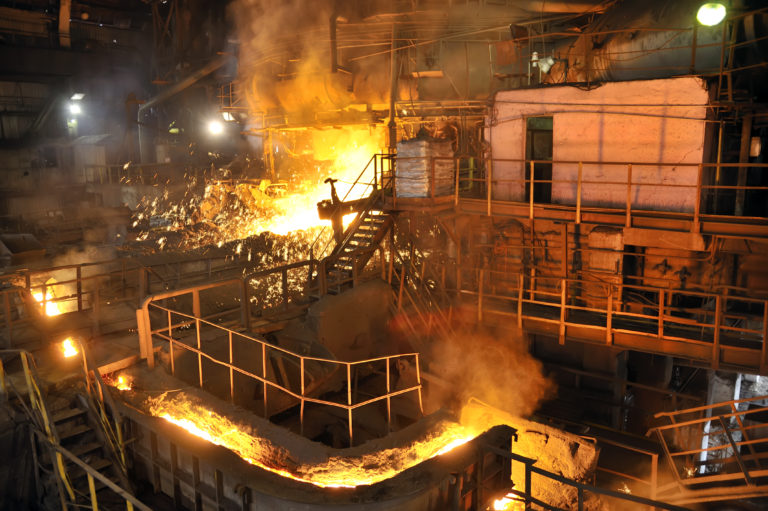
Arvedi Acciai Speciali Terni (AAST) has decided to temporarily halt one of the two electric arc furnaces (EAFs) at the Terni site for a week, according to a company representative.
Italy has been grappling with soaring energy costs since August, which has led to the current stoppage. The company has scheduled a temporary shutdown of an EAF for approximately one week, starting at the end of September.
It states in a note obtained by Kallanish that the high cost of electricity in Italy, which is three times higher than in other European countries where AAST’s competitors are located, is negatively affecting the relaunch of the Umbrian plant.
This is causing frustration as it hampers the progress made in efficiency improvements and undermines the benefits of the significant investments already made.
In an effort to offset the rising energy prices, the company implemented various cost control measures, including the purchase of more affordable Asian slabs. Nevertheless, the competitiveness gap persists not only in comparison to Asian producers, but also to other European steel producers who enjoy considerably lower energy costs.
From 1 January to 31 July, the Terni plant had an average payment of €97 per megawatt-hours ($107). In comparison, stainless steel producers in France paid €21/MWh, Germany paid €32/MWh, Finland paid €35/MWh, and Spain paid €62/MWh.
“This results in a significant distortion of competition, leading to severe consequences for the majority of Italian producers of stainless steel,” AAST warns.
The company is advocating for the matter to be discussed at national and European levels, with the backing of Umbria Region, in order to secure a reasonable energy cost. AAST previously generated electricity on-site until the government seized control of the power plant and shut it down.
The steelmaker is requesting permission from authorities to resume on-site electricity production by restoring the original conditions of self-production through the existing direct connection to the ENEL plant in Galleto. This would ensure a reliable and cost-effective supply of electricity that is comparable to similar supply in European countries (see Kallanish 9 September).
Natalia Capra France
Negative sentiment prevails among buyers in European HRC market; trading limited
Buyers refrained from trading due to their expectations that HRC prices in Europe will continue to decrease, Fastmarkets understands.
Fastmarkets calculated its daily steel hot-rolled coil index domestic, exw Northern Europe at €580.00 ($642.91) per tonne on Monday, down by €0.75 per tonne from €580.75 per tonne on Friday September 6.
The index was down by €10.00 per tonne week on week and by €38.88 per tonne month on month.
Mills in Northern Europe were heard offering October-delivery coil at €580-600 per tonne ex-works.
Buyers’ estimates of the workable price were lower, at €560-580 per tonne ex-works, depending on the tonnage. the lower end of the range was deemed “unworkable” by suppliers, however.
“The tradeable market level is below €570 per tonne ex-works,” a buyer source told Fastmarkets, adding that they expect prices to slide further.
European mills struggled to stabilize prices, but there was not enough demand in the market, the buyer said, adding: “Final consumers are not restocking and are waiting to see how the market will develop by the end of September and the beginning of October.”
“I think that, this year, we will see prices below €500 per tonne ex-works,” a second buyer source told Fastmarkets. “The main problem is and will still be low demand.”
This, combined with decreasing prices of main raw materials and strong competition from imports, will continue to have a negative effect on prices, according to the second buyer.
“China is offering [HRC] at €550 per tonne CFR Antwerp, including all customs and taxes. And with the end of the year approaching, [European] mills will look for production capacity utilization, and prices will drop further,” the second buyer said.
A third buyer source said that prices would continue to decrease but was not sure at what levels the rock bottom would be reached.
In terms of imports, Vietnamese HRC was heard offered to Northern Europe at €525 per tonne CFR, but this price was not largely confirmed by market participants.
According to Fastmarkets’ sources, such offers would remain unattractive for the European market due to long delivery times — around four months from the initial order — and possible complications related to the anti-dumping duties.
In Southern Europe, Fastmarkets calculated its corresponding daily steel hot-rolled coil index domestic, exw Italy at €578.33 per tonne on Monday, down by €1.91 per tonne from €580.24 per tonne on Friday.
The Italian index was down by €11.67 per tonne week on week and by €39.80 per tonne month on month.
Sentiment in the Italian market was also largely negative, sources told Fastmarkets.
Offers of HRC in Italy were heard at €600 per tonne CPT from domestic and European suppliers for material with October lead times.
But buyers’ estimates of the tradeable price were at €570-580 per tonne ex-works.
Trading in the region remained limited and buyers in the Italian market also thought prices would continue to plummet, sources said.
Published by: Darina Kahramanova
